The Repair Routine Feels Like Doing Nothing. That Is Why People Abandon It.
A wrecked barrier is the most common self-inflicted skin condition and the one with the clearest fix — the difficulty is that the routine which caused it feels productive and the one that repairs it feels like giving up.
Read the preview
From the DermApproved blog, in Skin Barrier Repair: the standard advice is to pile on ceramides. In the foundational experiments, ceramides without their two partner lipids slowed repair — the skin got the wrong parts list and assembly failed. So the product you bought to fix this may be why it isn't fixing. And the cleanser is worse. For the full breakdown, visit dermapproved.com/blog.
What is actually broken
The stratum corneum is often described as bricks and mortar, and for once the metaphor earns its place — because the interesting failure is in the mortar. Between the corneocytes sit lamellar bilayers made of three lipid classes: ceramides, cholesterol and free fatty acids, secreted from lamellar bodies and assembled into sheets by enzymes working in the extracellular space. Those sheets are what stop water leaving and irritants entering.
Damage that structure and you get a specific, recognisable syndrome: skin that stings on contact with water or with formulas it used to tolerate, a face that goes red for no reason and stays red longer than it should, tightness that a moisturiser fixes for twenty minutes, and a slow drift into reacting to everything. Underlying it is measurably increased water loss through skin that has lost its seal.
The cause is almost always cumulative rather than singular. Acids several times a week, a retinoid every night, a foaming cleanser twice a day, a scrub at the weekend, plus whatever new serum arrived — each defensible alone, collectively a schedule of insults delivered faster than the repair machinery can work. Which is why the person who has done the most work on their skin is so often the one whose skin is worst, and why the question of whether your own routine is causing the rash deserves an honest answer before you buy anything to fix it.
Why 'more ceramides' is not automatically the answer
The single most useful piece of evidence in this field is also the most counterintuitive, and it is thirty years old. When researchers perturbed the barrier and then applied lipids topically, individual lipids and two-component mixtures — fatty acid plus ceramide, cholesterol plus fatty acid, cholesterol plus ceramide — all delayed barrier recovery relative to complete mixtures. Electron microscopy showed why: incomplete mixtures produced abnormal lamellar bodies and disordered intercellular membranes. The skin was being handed the wrong parts list, and assembly failed. Only complete mixtures of ceramide, fatty acid and cholesterol allowed normal repair.
A follow-up study refined it further. An equimolar mixture allowed normal recovery; a mixture with cholesterol as the dominant lipid accelerated it, including in the skin of human subjects around eighty years old. A fatty-acid-dominant mixture significantly delayed recovery. Ratio, not merely presence.
The consumer translation is not 'buy the highest ceramide percentage'. It is that formulas built as complete physiological lipid systems have a mechanistic reason to work, and a product marketed on one hero lipid does not. This is where ceramides as a category are routinely oversold and cholesterol is barely mentioned despite being the lipid the ratio experiments singled out. Practically, the well-made barrier creams do include all three — CeraVe Moisturizing Cream and La Roche-Posay Toleriane Double Repair are both built that way, and our ceramide ranking for compromised barriers screens on that basis rather than on a number on the front of a box.
The cleanser is doing more damage than the actives
Most repair advice focuses on what to stop applying. The step that gets overlooked runs twice a day and is rinsed off, which makes it feel consequence-free.
It is not. Work published in the Journal of Investigative Dermatology showed that raising stratum corneum pH — independent of hydration, using chemically unrelated bases — produced barrier abnormalities through two distinct mechanisms. Within twenty minutes, serine proteases were activated, degrading desmoglein 1 and dismantling the corneodesmosomes that hold corneocytes together. Separately, permeability barrier recovery was delayed because β-glucocerebrosidase activity fell, which is the enzyme step that converts precursors into the ceramides the bilayers are made from. Neutralising the surface both loosens the bricks and stalls the mortar production line.
So the first substitution in a repair routine is the wash. Something low-pH and non-stripping — CeraVe Hydrating Facial Cleanser, La Roche-Posay Toleriane Hydrating Gentle Cleanser or the plainly unexciting Cetaphil Gentle Skin Cleanser — and once a day rather than twice while things are bad. Water alone in the morning is a legitimate option and not a failure of hygiene.
What stays in, and what the fortnight actually looks like
The elimination phase is short and should be genuinely severe, because a half-measure produces an ambiguous result you cannot interpret. Out: all acids, all retinoids, vitamin C, benzoyl peroxide, physical scrubs, cleansing devices, essential oils, and anything described as resurfacing, brightening or clarifying. Out also, temporarily, anything you cannot name the purpose of.
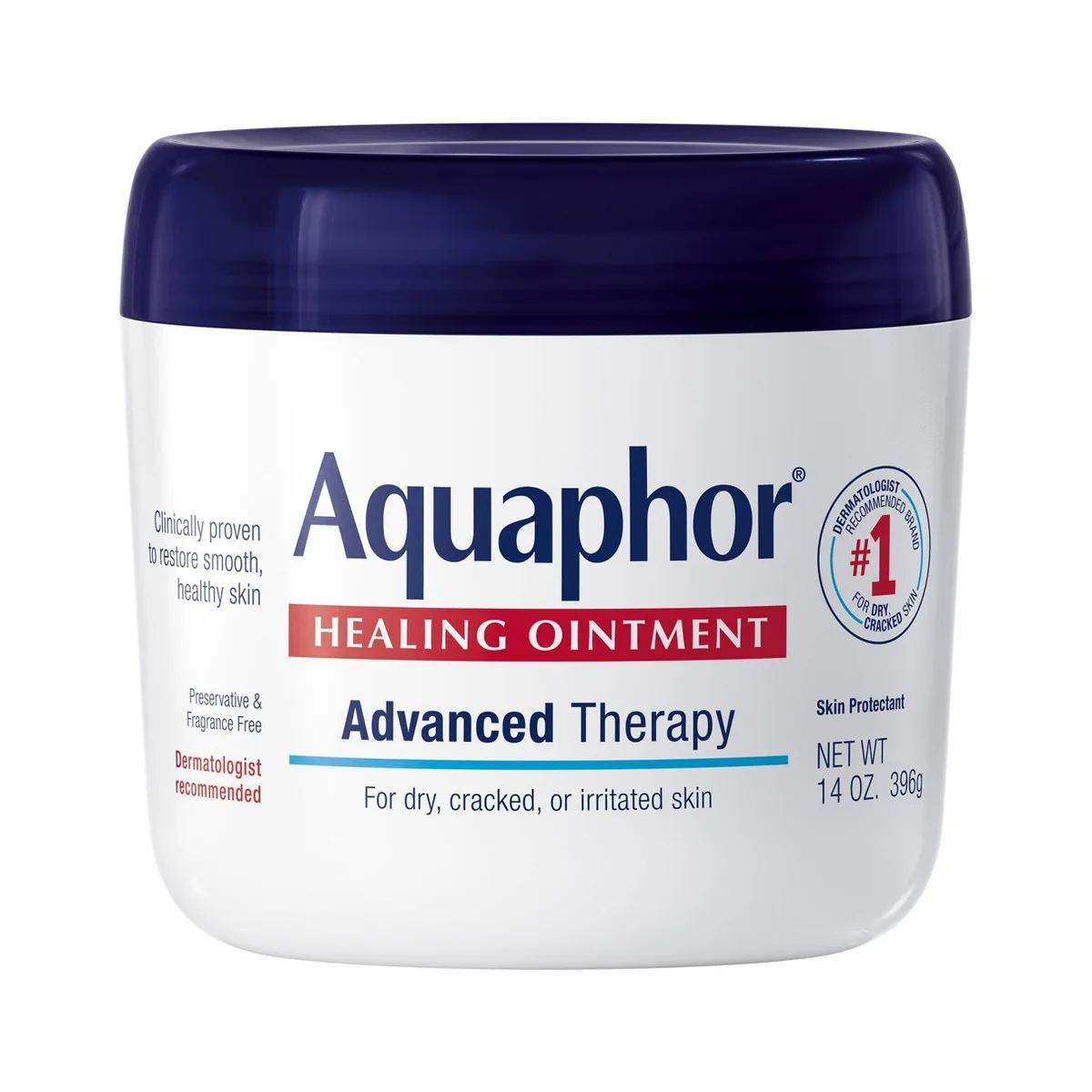
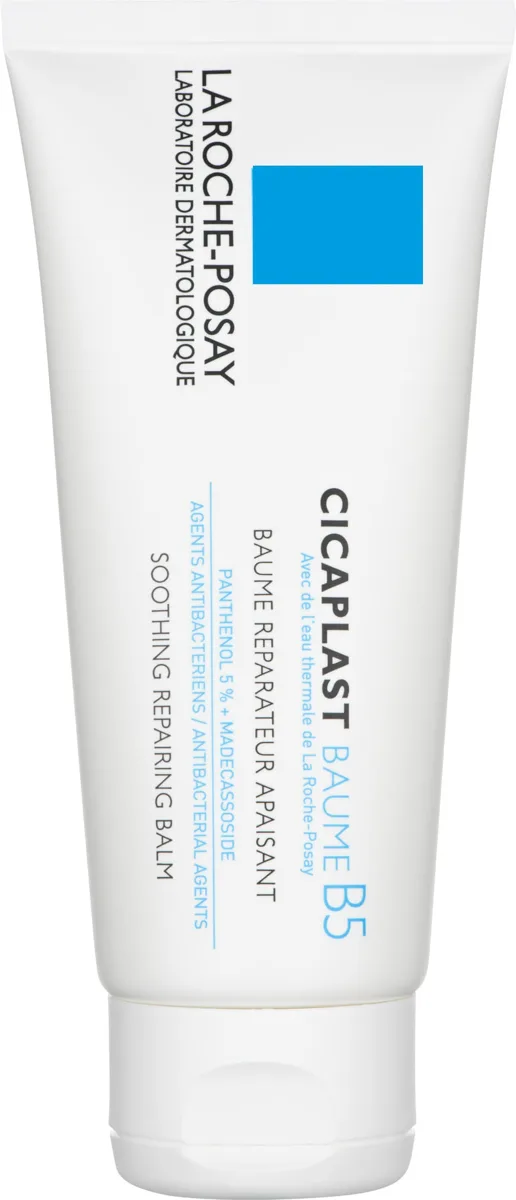
In: a gentle cleanser once daily, a complete-lipid moisturiser applied more often than feels necessary, an occlusive over the worst areas at night — Aquaphor Healing Ointment or La Roche-Posay Cicaplast Baume B5+ where the skin is raw rather than merely dry — and sunscreen, which is the one active step that stays because compromised skin burns more easily and post-inflammatory marking is the thing you will be complaining about in three months. A mineral option like Vanicream Mineral Sunscreen SPF 50 is the least likely to sting. That is the entire protocol, and the barrier-repair routine is it, written out with the sequence and frequencies filled in.
On timeline, be honest with yourself about what the research measures. After a single controlled insult, barrier function in young human skin returns to about 50% at 24 hours and 80% at 72 hours — and in subjects over eighty, only about 15% at 24 hours, with the deficit persisting over the following week. That is one insult, in a laboratory. A real damaged barrier is the product of months of daily insults, so the recovery you care about is not one repair curve but many, and two to four weeks is a realistic horizon. Age genuinely changes it, which is worth knowing before you conclude that yours is uniquely broken.
The milestones, in order: stinging on application settles first, usually within days. Redness follows over one to two weeks. Reactivity — the thing where a formerly boring product suddenly causes trouble — settles last, and its return to normal is the actual finish line. Stinging on a bland moisturiser is not evidence the moisturiser is wrong, which is exactly what the stinging question addresses; it is a readout of where you are on the curve. The Skin Flare Diary is a better judge of that than memory, because slow improvement is invisible day to day.
Reintroduction is where people undo it
The predictable failure comes at week three. The skin looks fine, the routine feels absurdly minimal, and everything goes back at once — retinoid, acid, vitamin C, the lot — because they were all tolerated before. Two weeks later the same person is back at the start, and concludes their skin has become 'sensitive'.
The rule is one addition at a time with a fortnight of observation, lowest strength and lowest frequency first, and no second addition until the first is boring. That is slow, and it is the only version that produces information: with two changes in the same week, a reaction tells you nothing about which one caused it. Our answer on reintroducing products without ruining the experiment sets out the schedule, and what a strip-back actually means is worth reading first if the elimination phase feels too drastic to attempt.
Two tools make the reintroduction less superstitious. The Patch Test Log turns 'I'll try it on my jaw for a bit' into a protocol with a schedule and a verdict, and the Conflict Checker catches the pairings that are a bad idea to reinstate on the same evening. The Routine Finder is worth running afterwards, not because the rebuilt routine should be complicated, but because the failure mode that got you here was quantity — and the sequence you end up with should be one you can defend step by step.
Except when it isn't barrier damage
The reason to give this a defined endpoint is that a stripped-back routine is also a diagnostic test. If four weeks of doing almost nothing has not meaningfully improved things, the working hypothesis was wrong, and continuing to do nothing is no longer a plan.
Three conditions impersonate barrier damage convincingly. Rosacea presents as facial redness, flushing and a face that stings at everything — the overlap is close enough that telling rosacea from a face that simply goes red is one of the most-asked questions we have, and why everything stings has a different answer when it is rosacea. Seborrhoeic dermatitis produces redness and fine scaling in the nasolabial folds, brows and hairline, follows a relapsing course, and needs an antifungal rather than an emollient; the sequencing problem it creates is covered in building a facial routine around seb derm treatment. And allergic contact dermatitis to something still in the routine will not resolve on elimination if the culprit is one of the products you kept — which is precisely the scenario where asking whether the routine caused it stops being rhetorical.
The useful frame is that barrier repair is cheap, fast to try, and self-limiting in cost. Four weeks of a minimal routine either fixes the problem or rules out the most likely cause, and both outcomes are worth having. What is not worth having is the version most people run: three weeks of minimalism, an impatient reintroduction of everything, and a permanent belief that their skin is fragile — when what it was, was busy.
Products mentioned
Independently reviewed and scored — the real products behind this piece.



- Routine Barrier Repair Routine for Damaged Skin The protocol in this post with sequence and frequencies filled in.
- Ranked list Best Ceramide for a Compromised Barrier Screened on complete lipid systems rather than on a headline percentage.
- Ranked list Best Moisturizers for a Compromised Barrier For the leave-on step that does most of the work during repair.
- Ingredient Ceramides Necessary, routinely oversold, and useless in isolation according to the lipid experiments.
- Ingredient Cholesterol The lipid the ratio studies singled out, and the one nobody markets.
- Ingredient Petrolatum (Petroleum Jelly) The occlusive baseline for skin that needs the water loss stopped while it rebuilds.
- Question Is my acne routine causing this rash? The question to answer honestly before buying anything to fix it.
- Question What does stripping my routine back actually mean? What the elimination phase actually involves, if it sounds too drastic.
- Question Is stinging from a bland moisturiser normal? Stinging as a readout of recovery rather than a fault in the product.
- Question How do I reintroduce products without ruining the experiment? The one-at-a-time schedule that keeps reintroduction informative.
- Question Did my skincare routine cause this? For the case where elimination fails because the culprit was kept.
- Question Is this rosacea or just a face that goes red? The impersonator that a strip-back will not fix.
- Question Why does everything sting on my face? Same symptom, different answer when rosacea is behind it.
- Question What should my face routine look like during treatment? Redness and scaling that needs an antifungal, not an emollient.
References
- Exogenous lipids influence permeability barrier recovery in acetone-treated murine skin — Archives of Dermatology, 1993
- Optimal ratios of topical stratum corneum lipids improve barrier recovery in chronologically aged skin — Journal of the American Academy of Dermatology, 1997
- pH directly regulates epidermal permeability barrier homeostasis, and stratum corneum integrity/cohesion — Journal of Investigative Dermatology, 2003
- The aged epidermal permeability barrier. Structural, functional, and lipid biochemical abnormalities in humans and a senescent murine model — The Journal of Clinical Investigation, 1995
- EEMCO guidance for the assessment of transepidermal water loss in cosmetic sciences — Skin Pharmacology and Applied Skin Physiology, 2001
Every cited link is verified to resolve to the paper named. Where a source could not be independently confirmed, it is listed without a link rather than pointing you somewhere wrong.
Frequently asked
How long does a damaged barrier take to recover?
Plan on two to four weeks, not days. Laboratory data on a single controlled insult shows roughly 50% recovery at 24 hours and 80% at 72 hours in young skin, but a real barrier problem is months of repeated daily insult rather than one event. Age matters too — in subjects over eighty, recovery at 24 hours was around 15%.
Should I buy the product with the highest ceramide content?
Not on that basis. In the foundational experiments, individual lipids and two-lipid mixtures delayed barrier recovery and produced abnormal membrane structures, while complete ceramide-cholesterol-fatty acid mixtures allowed normal repair. A formula built as a complete lipid system has a mechanistic case; a single-lipid hero claim does not.
Does my cleanser really matter that much?
More than the actives you removed, arguably. Raising stratum corneum pH activates serine proteases within twenty minutes, degrading the protein junctions holding corneocytes together, and simultaneously slows the enzyme step that produces ceramides for the bilayers. A low-pH, non-foaming wash used once daily is the highest-value substitution in the whole routine.
My moisturiser stings. Is it the wrong one?
Usually not. Sensory irritation from bland formulas is a barrier readout — compromised skin registers stinging from things intact skin ignores, and that sensitivity settles first as repair progresses. If a specific product stings persistently after two weeks while others do not, that is a different signal worth investigating separately.
How do I put my actives back without triggering it again?
One at a time, lowest strength and lowest frequency, with a fortnight of observation before the next addition. Adding two things in one week guarantees an uninterpretable result. Almost everyone who cycles through barrier damage repeatedly is reinstating a full routine the moment the skin looks normal.