The Active-Ingredient Ceiling: Why More Serums Stops Working Sooner Than You Think
There's a real limit on how many actives skin can absorb before benefit flips to barrier damage — and it's lower than the shelfie crowd believes. The rule for staying under it is simpler than any ingredient chart.
Read the preview
From the DermApproved blog, in Building a Routine: how many active ingredients is too many? Picture the shelfie — fifteen serums, glowing under ring light, sold to you as sophistication. Here's the uncomfortable truth: there's a hard ceiling on what your skin can actually use, and it sits far lower than that counter suggests. Cross it, and something genuinely strange happens — your products don't just stop adding benefit, they start erasing the benefit you already had. We'll show you the specific warning signs that you're already over the line, the two categories of products that change everything once you can tell them apart, and a fix so simple it doesn't ask you to give up a single ingredient. The rule is easier than any conflict chart — and the elegant routine was never the crowded one. What your skin can really handle, at dermapproved.com/blog.
More actives is not more results — and the math is against you
The shelfie aesthetic sells a seductive lie: that a bathroom counter lined with fifteen serums is a sign of skincare sophistication. In practice, it is usually a sign that someone is about to torch their barrier. There is a hard ceiling on how many active ingredients skin can productively use in a single session, and past it, each additional acid or retinoid does not add a proportional benefit — it adds irritation.
The reason is that benefit and harm scale differently. A well-formulated active delivers most of its effect at a sensible dose; doubling up on acids does not double your exfoliation, because the skin can only shed so fast, and the receptors and enzymes involved saturate. Irritation, on the other hand, keeps climbing. Research on topical retinoids has measured exactly this: cumulative irritation potential rises with repeated and stacked exposure, so the fourth active on your face is contributing far more to the redness column than to the results column.
That asymmetry is the whole game. You are not building a stack of independent benefits; you are spending a fixed irritation budget, and every active draws it down. The sophisticated routine is not the one with the most actives — it is the one that spends that budget where it buys the most and stops before the returns go negative.
What actually happens when you overload the barrier
To see why the ceiling is real, you have to look at the barrier as a system under load. Actives like retinoids and hydroxy acids work in part by disrupting the status quo — accelerating turnover, loosening corneocytes, remodeling the epidermis. In moderation that disruption is productive. Piled up, it becomes injury.
The mechanism is inflammatory. Studies of retinol-induced irritation show it generates broad, chronic inflammation — immune-cell infiltration, release of cytokines and signaling proteins like IL-8 and MCP-1, and breakdown of the cornified envelope that holds the barrier together. Now add an acid, then a second acid, then a vitamin C at low pH on top. Each is independently tolerable; together they can push the barrier past its capacity to repair between applications. Once transepidermal water loss climbs and the barrier is inflamed, a critical thing happens: every active you own starts underperforming, because compromised skin absorbs erratically, stings on contact, and can't tolerate the very ingredients meant to help it.
This is the counterintuitive core of the whole topic. Over-stacking doesn't just fail to add benefit — it subtracts the benefit you already had. A barrier in distress turns your retinoid into an irritant and your vitamin C into a burn. The 2024 formulation literature is largely about engineering around this exact problem, encapsulating and buffering retinoids specifically to lower the inflammatory tax. The at-home version of that engineering is simpler: don't levy the tax in the first place.
The signs you've already crossed the line
The tricky part is that over-actived skin often masquerades as 'purging' or 'my products stopped working,' which tempts people to add more. Learn to read the real signals instead, because they are fairly specific.
The earliest tell is sensation: actives that used to apply neutrally now sting, tingle, or burn on contact. That is not 'working' — it is a barrier reporting damage. Next comes tightness and a papery feel, often with fine flaking that looks like dryness but doesn't resolve with moisturizer, because the problem isn't lack of water, it's a broken seal letting water escape. Then unexplained redness, blotchiness, or a rash-like reactivity in areas that were previously calm. And the paradoxical one: products that seem to 'stop working,' when in reality the barrier is too inflamed to use them.
If two or more of those are present, the answer is never another serum. It is to strip the routine back to a gentle cleanser, a bland barrier moisturizer, and sunscreen for one to two weeks until skin calms, then reintroduce actives one at a time. A soothing, non-active support serum like SKIN1004 Hyalu-Cica Blue Serum — centella and hyaluronic acid, nothing exfoliating — is a useful bridge during that reset, because it hydrates and calms without asking the barrier to do any more work.
A framework simpler than any conflict chart
Forget memorizing which acid fights which vitamin. The durable principle is about quantity and spacing, and it fits in a sentence: run roughly one to two true actives per session, buffer them with barrier support, and give skin time to adapt.
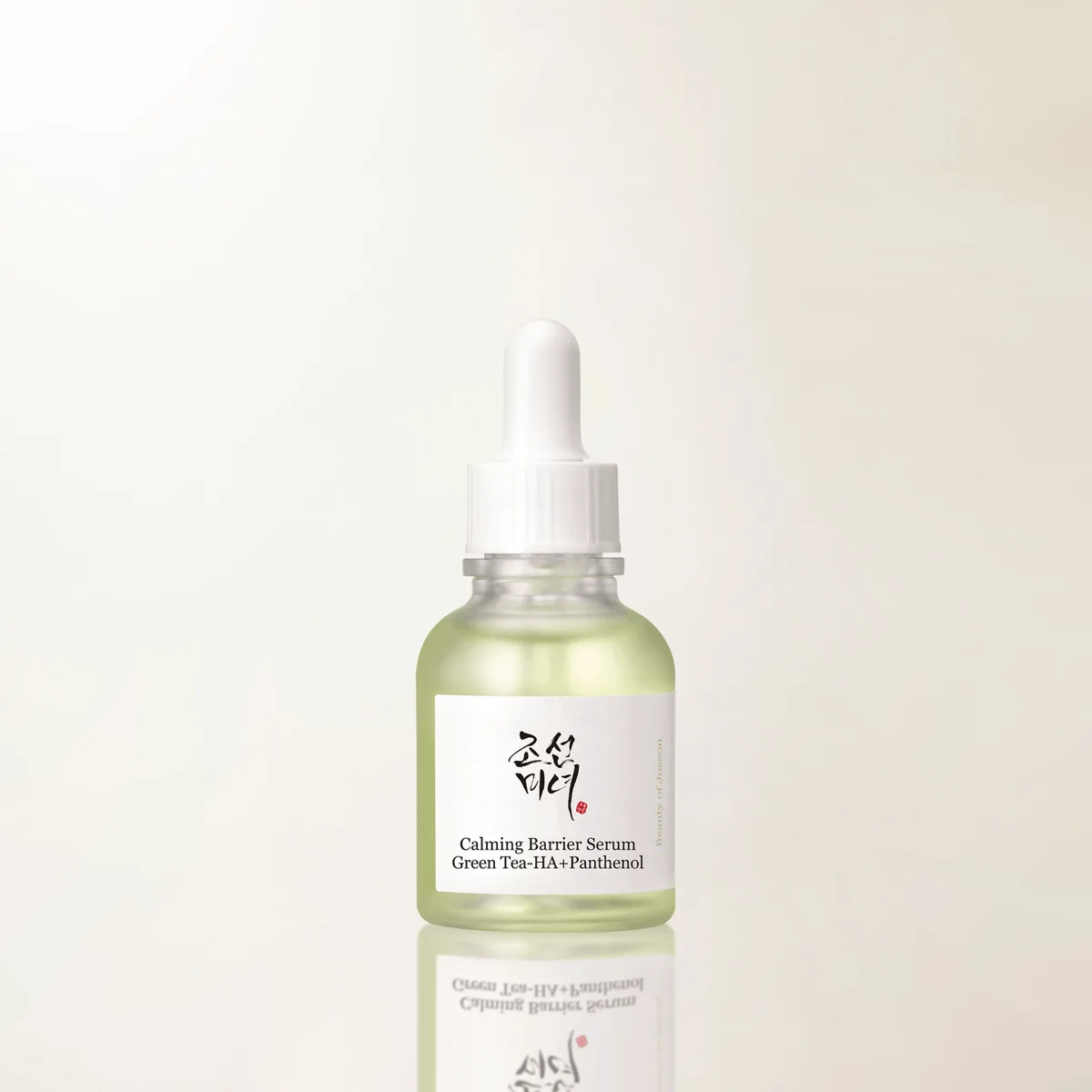
Start by separating your products into two categories, because only one of them counts against the ceiling. True actives are the ingredients that force change and carry an irritation cost: retinoids, AHAs and BHAs, benzoyl peroxide, high-strength vitamin C, azelaic acid. Support ingredients are the ones that hydrate, soothe, and rebuild without an irritation tax: hyaluronic acid, glycerin, panthenol, centella, ceramides, niacinamide at typical strengths. You can layer as many support ingredients as you like — a hydrating serum such as Beauty of Joseon Calming Barrier Serum is essentially free against your budget and actually raises your tolerance for the actives you do use. It's the true actives you cap.
One to two true actives in a given routine is the sweet spot for most people — for example, a morning vitamin C like e.l.f. Bright Icon Vitamin C + E + Ferulic Serum and a nighttime retinoid, with acids used sparingly rather than nightly. New actives get introduced one at a time, a couple of weeks apart, so that if something reacts you know the culprit. And when you genuinely aren't sure whether two specific products fight each other, that's the narrow case a tool like the conflict-checker is built for — not to run your whole routine, but to settle a specific pairing before you layer it.
When to cycle instead of stack
Here is the move that dissolves most 'too many actives' problems without giving any of them up: stop thinking of a routine as a single stacked night, and start thinking of it as a week. If you want a retinoid and an exfoliating acid and a vitamin C in your life, you do not have to force all three onto your face at once. You alternate them across nights.
This is the logic behind skin cycling — a structured rotation, popularized as a four-night cycle: exfoliate one night, retinoid the next, then two nights of pure recovery with only moisturizer and barrier support. The point isn't the specific schedule; it's the principle that time is a free ingredient. Spacing actives across nights delivers the same weekly dose of each with a fraction of the cumulative irritation, because the barrier gets scheduled recovery instead of a nightly assault. Someone whose skin can't tolerate a nightly retinoid layered under acids often does beautifully with the exact same products spread across the week. A dedicated skin-cycling planner can lay out that rotation for you if you'd rather not build it by hand.
So the honest answer to 'how many actives is too many' is not a fixed number on a chart — it's however many push your skin past what it can repair before the next application. For most people that ceiling is one to two per session, raised by barrier support and by spreading actives across nights, and lowered by stacking them all at once. The elegant routine was never the crowded one. It was the one that respected the ceiling and used time, not more product, to fit everything in.
Products mentioned
Independently reviewed and scored — the real products behind this piece.


References
- Cumulative irritation potential of topical retinoid formulations — Journal of Drugs in Dermatology, 2008
- The mechanism of retinol-induced irritation and its application to anti-irritant development — Toxicology Letters, 2003
- A Comprehensive Review of the Strategies to Reduce Retinoid-Induced Skin Irritation in Topical Formulation — Dermatology Research and Practice, 2024
Every cited link is verified to resolve to the paper named. Where a source could not be independently confirmed, it is listed without a link rather than pointing you somewhere wrong.
Frequently asked
How many active ingredients can I safely use at once?
For most people, roughly one to two true actives per session — meaning retinoids, exfoliating acids, benzoyl peroxide, or strong vitamin C. Hydrators and barrier-support ingredients like hyaluronic acid, panthenol, and centella don't count against that limit and actually raise your tolerance. Beyond two actives in one sitting, you mostly buy irritation rather than added benefit.
What are the signs I'm using too many actives?
Watch for stinging or burning when products go on, persistent tightness and flaking that moisturizer doesn't fix, new unexplained redness, and the paradox of products seeming to 'stop working.' Those signal a compromised barrier, not purging. The fix is to pare back to a gentle cleanser, moisturizer, and sunscreen for one to two weeks, then reintroduce actives one at a time.
Does layering more actives give better results?
No. Benefit plateaus because skin can only turn over so fast and the relevant pathways saturate, while irritation keeps climbing with each added active. Studies of retinoids show cumulative irritation rising with repeated and stacked exposure. Past a low ceiling, extra actives subtract results by inflaming the barrier so nothing absorbs or performs properly.
Should I layer actives or alternate them on different nights?
Alternating usually wins once you want more than two actives. Spacing a retinoid, an exfoliant, and a vitamin C across different nights delivers the same weekly dose of each with far less cumulative irritation, because the barrier gets scheduled recovery. Structured rotations like skin cycling exist precisely to let you use several actives without stacking them all at once.
Do hydrating serums count toward my active limit?
No. Hyaluronic acid, glycerin, panthenol, ceramides, and centella hydrate and soothe without an irritation cost, so you can layer them freely. They're the buffer that makes true actives more tolerable, which is why a barrier-support serum alongside a retinoid often improves both comfort and results rather than adding to the load.