



Lemon Juice, Baking Soda, Toothpaste: Three Kitchen Remedies That Reliably Damage Skin
Two of them attack the same property of skin from opposite directions, and the third is a rinse-off oral product being left on a face for eight hours.
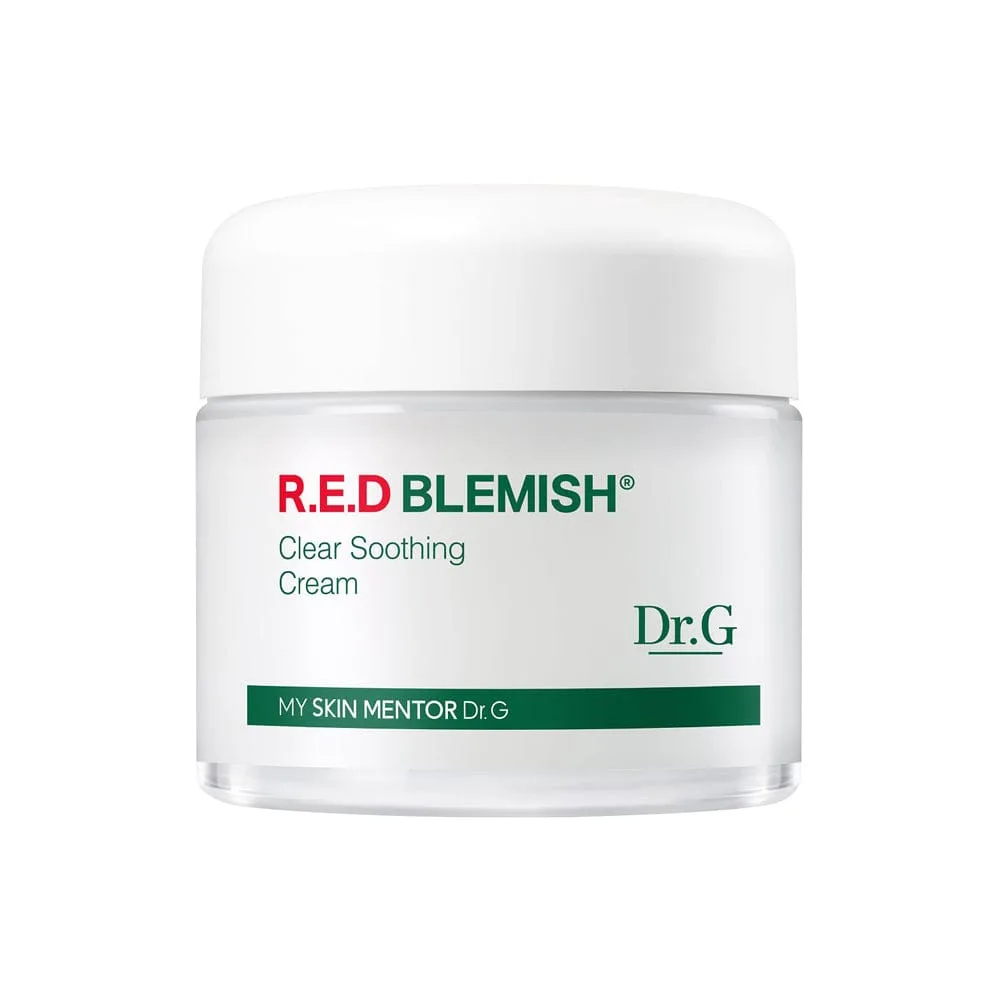
Most centella creams stop at whole-plant extract. Dr.G built this around the full 5-cica complex — the whole extract plus all four isolated triterpenoid actives — and then layered a functional 5% niacinamide dose on top, so it's handling immediate soothing and long-term post-acne mark fading in one product. That's genuinely unusual for a sensitive-skin cream at this price.
The Dr.G workhorse — a gel-cream moisturizer that combines a full 5-cica centella complex with a functional 5% niacinamide dose, calming reactive and acne-prone skin while supporting long-term post-inflammatory fading. Widely considered one of the strongest K-beauty sensitive-skin creams at its price.
The case for it
What would change this: Trial evidence for the active on this concern would move this from a bet to a recommendation.
Same rule for everyone. “Supporting role” is the verdict on 8,197 of 45,024 concern verdicts across the catalog; rule R8a decided 1,489 of them. Unchanged since September 5, 2026, engine 5.1.1.
Brand or formulator? Disclose a concentration or correct a fact →
The studies behind the evidence row
The case for it
What would change this: Trial evidence for the active on this concern would move this from a bet to a recommendation.
Same rule for everyone. “Supporting role” is the verdict on 8,197 of 45,024 concern verdicts across the catalog; rule R8a decided 1,489 of them. Unchanged since September 5, 2026, engine 5.1.1.
Brand or formulator? Disclose a concentration or correct a fact →
The studies behind the evidence row
The case for it
What would change this: A declared concentration would move this to a firmer reading of the dose.
Same rule for everyone. “Good choice” is the verdict on 1,938 of 45,024 concern verdicts across the catalog; rule F2 decided 1,938 of them. Unchanged since September 5, 2026, engine 5.1.1.
Brand or formulator? Disclose a concentration or correct a fact →
The studies behind the evidence row
The case for it
What would change this: A declared concentration would move this to a firmer reading of the dose.
Same rule for everyone. “Supporting role” is the verdict on 8,197 of 45,024 concern verdicts across the catalog; rule R8a decided 1,489 of them. Unchanged since September 5, 2026, engine 5.1.1.
Brand or formulator? Disclose a concentration or correct a fact →
The studies behind the evidence row
The case for it
Same rule for everyone. “Good choice” is the verdict on 9,564 of 45,024 concern verdicts across the catalog; rule R5 decided 9,072 of them. Unchanged since September 5, 2026, engine 5.1.1.
Brand or formulator? Disclose a concentration or correct a fact →
The studies behind the evidence row
The case for it
Same rule for everyone. “Good choice” is the verdict on 9,564 of 45,024 concern verdicts across the catalog; rule R5 decided 9,072 of them. Unchanged since September 5, 2026, engine 5.1.1.
Brand or formulator? Disclose a concentration or correct a fact →
The studies behind the evidence row
The case for it
What would change this: Guideline or regulatory standing for the active on this concern would move this from a promising bet to a recommendation.
Same rule for everyone. “Promising” is the verdict on 7,858 of 45,024 concern verdicts across the catalog; rule R9p decided 7,858 of them. Unchanged since September 5, 2026, engine 5.1.1.
Brand or formulator? Disclose a concentration or correct a fact →
The studies behind the evidence row
Does the jobDoes what a moisturizer is for: draws in water, right weight for the job.
Where our review and the verdict differ. The review below was written on the formulation and the published trials; the verdicts above apply the stricter standing test in our methodology — an active earns a recommendation only with guideline or regulatory standing for the concern. Where the two disagree, the verdict is DermApproved’s position.
A verdict is DermApproved’s assessment of how well a product’s ingredients fit a concern — never a claim about what the product treats. Evidence dots and collected reviews sit beside it and are never blended in. Rules 0.5.1 · evidence table ev-2026.09-r228 · how we decide
Every conversation about Dr.G eventually circles back to one cream. This is the product that built the entire Red Blemish line and the reason most people know the brand at all, and it has been sitting in Korean drugstore bestseller charts for the better part of a decade, accumulating tens of thousands of reviews along the way. That kind of staying power usually means a product is doing something right that's easy to overlook on the label, and that's exactly the case here. Dr.G has been a dermatologist-developed sensitive-skin brand since 2003, and this cream is the formulation work it produces when it's taking the calming angle genuinely seriously rather than chasing a trend.
The soothing architecture is the headline, and it's more thorough than most. The cream is built on centella asiatica extract plus all four of its isolated triterpenoids — madecassoside, asiaticoside, asiatic acid, and madecassic acid — which the brand markets as a 5-cica complex. That matters because most cica creams stop at the whole-plant extract and skip the isolated compounds, which cost more to include. The practical argument for using both is sound: the whole extract delivers the synergistic phytochemistry of the plant, while the isolated molecules provide higher-purity doses of the best-characterized anti-inflammatory actives, and the centella evidence base for calming inflamed, post-breakout skin is promising and well-documented. Dipotassium glycyrrhizate stacks a second soothing mechanism on top, a licorice-derived compound that works through a mild cortisol-like pathway without the downsides of a topical steroid, while panthenol supports barrier recovery and curbs the trans-epidermal water loss that makes irritated skin spiral.
It's worth dwelling on why doubling up on centella the way Dr.G does is more than a marketing flourish. Whole-plant extracts and isolated actives behave differently: the extract carries the broad mix of compounds the plant naturally produces, which tends to deliver a gentler, more rounded soothing character, while purified madecassoside and its siblings provide concentrated, predictable doses of the molecules with the strongest individual evidence for calming inflammation and supporting recovery. By including both, the cream gets the synergistic breadth of the extract and the potency of the isolates rather than forcing a choice between them. Most brands stop at the extract because the isolated triterpenoids are the expensive part, so the fact that this sits at a fair mid-range price while including all four is a genuine point in its favor.
The part people miss is the niacinamide. It sits fifth on the ingredient list, reported around five percent, which is unusually prominent and squarely in the functional range. This is what makes the cream useful beyond acute calming: for acne-prone users it handles two jobs at once, soothing active flare-ups while gradually fading the post-inflammatory marks left behind, and that second half is exactly the work most cica creams skip entirely. The base is built on isoparaffins and silicones rather than heavy oils or butters, which is why the texture is a lightweight gel-cream that suits combination and oily skin as readily as reactive skin, finishing semi-matte and non-greasy and playing well under sunscreen and makeup. It's fragrance-free, alcohol-free, fungal-acne safe, and broadly comfortable, a rare combination of restraint and breadth in one moisturizer.
There's a quiet usefulness in how the cream slots into a larger routine, too. Because it's calming, fragrance-free, and non-greasy, it works beautifully as the recovery step after a retinoid or an acid treatment — the kind of buffer step that lets you keep using your actives without your barrier staging a revolt. Pairing it with those stronger products is arguably where it does some of its best work, soaking up the collateral irritation while the actives do the heavy lifting elsewhere in the routine.
The limits are honest and easy to predict from the texture. This lightweight base gives enough hydration for most skin types, but it's not a heavy occlusive, so very dry skin or a compromised barrier in deep winter may want a richer cream layered on top. The seventy-milliliter tube is on the small side and tends to empty in two to three months with twice-daily use. The silicone finish, while pleasant for most, won't appeal to anyone who prefers oil-based moisturizers. And while the cream genuinely supports skin through moderate-to-severe acne or rosacea, it doesn't replace prescription treatment for those cases — it's a recovery and maintenance step, not a standalone cure. The score reflects all of this honestly, landing high on irritation tolerance, suitability breadth, and overall quality precisely because the formula does so much without overreaching.
Where this cream genuinely shines is as an everyday soothing moisturizer for skin that flares periodically. Combination-oily users juggling breakouts and the dark marks they leave behind. Early-stage rosacea. Reactive skin that gets angry from weather, stress, or one product too many in a rotation. Anyone who has overdone the actives and needs a calm, repairing step to climb back from. For all of those, this is one of the most reliable single-product purchases in K-beauty, backed by over a decade of market validation and the kind of review volume that lets you talk about its effects with confidence rather than guesswork. Expect immediate comfort and a calmer flush, visible improvement in redness and reactivity within two to three weeks, and gradual fading of post-acne pigmentation over the longer eight-to-twelve-week arc the niacinamide drives. At its price, with that track record and that formulation discipline, it has more than earned its reputation as a sensitive-skin staple.
The hero actives that drive this product's performance.
| Ingredient | Function | Evidence |
|---|---|---|
| Niacinamide (5%) | Sits at the fifth position in this formula, unusually prominent — it pulls double duty here, handling both the barrier-supporting and mild brightening functions that make the cream useful for post-inflammatory hyperpigmentation after acne clears. It also anchors the broader calming story at a genuinely functional concentration. | Established mechanism for Compromised Skin Barrier · established mechanism |
| Centella Asiatica Extract | The core soothing ingredient in Dr.G's Red Blemish architecture, included alongside its isolated triterpenoids to deliver both whole-plant synergy and high-purity active compounds in one cream. In this formulation it's the direct answer to the red, inflamed, post-breakout skin the product targets. | Limited for Rosacea |
| Madecassoside | The isolated triterpenoid from centella that targets specific inflammatory pathways. Paired with asiaticoside, asiatic acid, and madecassic acid in this formula, it delivers the full '5-Cica Complex' the brand markets around — all four centella compounds plus the whole extract. | Limited for Rosacea |
| Panthenol | Pro-vitamin B5 that works alongside the centella actives to support barrier repair and reduce trans-epidermal water loss in irritated skin. In this cream it helps hold the soothing effect over time rather than letting it fade after application. | Limited for Post-Procedure |
| Dipotassium Glycyrrhizate | Licorice-derived anti-inflammatory that targets acute redness through a mild cortisol-like pathway. Its presence here stacks a second soothing mechanism on top of the centella complex, making this cream more immediately calming than centella alone would provide. | Limited for Rosacea |
Ingredient standings describe the active at treatment-level doses and vehicles; this product's own condition grades weigh its actual formula.
Water (Aqua/Eau), Glycerin, Butylene Glycol, C13-16 Isoparaffin, Niacinamide, C12-14 Isoparaffin, 1,2-Hexanediol, Hydrogenated Polydecene, Pentylene Glycol, Vinyl Dimethicone, Caprylyl Methicone, Hydroxyethyl Acrylate/Sodium Acryloyldimethyl Taurate Copolymer, Panthenol, Acrylates/C10-30 Alkyl Acrylate Crosspolymer, Dimethiconol, Polymethylsilsesquioxane, Tromethamine, Dipotassium Glycyrrhizate, Glyceryl Acrylate/Acrylic Acid Copolymer, Ethylhexylglycerin, Xanthan Gum, Disodium EDTA, Beta-Glucan, Centella Asiatica Extract, Madecassoside, Pyrus Malus (Apple) Fruit Extract, Epigallocatechin Gallate, Asiaticoside, Asiatic Acid, Madecassic Acid
moisturizer
AM & PM
Apply after serum and before sunscreen in the morning, or as the final step at night. The gel-cream texture spreads easily — a small amount covers the whole face. Can be used as a spot treatment on acne-prone areas if a richer moisturizer is preferred for the rest of the face.
Immediate comfort and reduced flush. Visible improvement in redness and barrier-related reactivity typically emerges within 2-3 weeks. Post-inflammatory hyperpigmentation fading from the niacinamide component takes 8-12 weeks.
This cream's formulation reflects two well-supported strands of dermatology research applied in combination. Centella asiatica's triterpenoid compounds — madecassoside, asiaticoside, asiatic acid, and madecassic acid — have documented anti-inflammatory and wound-healing effects, with research in journals including Archives of Dermatological Research examining their role in reducing inflammatory cytokines and supporting epidermal barrier repair. Studies on madecassoside specifically have shown effects on TGF-beta signaling and collagen synthesis relevant to post-inflammatory recovery. The brand's decision to include both the whole extract and the isolated triterpenoids is supported by the phytochemical observation that whole-plant synergy differs from single-compound potency, so including both approaches provides a broader mechanism of action than either alone. Niacinamide at approximately 5% is within the well-studied range for barrier support, reduction of trans-epidermal water loss, sebum regulation, and mild interference with melanosome transfer for post-inflammatory hyperpigmentation. Clinical research published in the British Journal of Dermatology has documented visible improvement in pigmentation and barrier function at this concentration over 8-12 weeks. Dipotassium glycyrrhizate is a water-soluble licorice derivative with demonstrated anti-inflammatory effects through inhibition of 11-beta-hydroxysteroid dehydrogenase, producing a gentle cortisol-like soothing effect. Panthenol is a pro-vitamin B5 converted in skin to pantothenic acid, a well-documented humectant and barrier-support ingredient used in clinical wound-healing products.
Dermatologists commonly recommend centella-based moisturizers for patients with post-inflammatory redness, mild-to-moderate rosacea, and acne-related reactivity. The combination of centella and niacinamide in a single product aligns with clinical patterns where dermatologists pair these ingredients for acne-prone patients who also need barrier support and post-inflammatory mark management. Dermatologists frequently suggest fragrance-free and alcohol-free moisturizers for reactive and compromised skin, and this cream meets both criteria. Clinicians note that while soothing creams like this one don't substitute for prescription treatments in moderate-to-severe conditions, they serve an important supporting role in comprehensive regimens by reducing baseline reactivity and supporting barrier function during active treatment. Dr.G's Red Blemish line is commonly referenced in Korean dermatology clinics as a solid over-the-counter option for sensitive-skin patients.
Apply after cleansing, toning, and any serums in your routine. Dispense a pea-sized amount and warm briefly between fingertips before patting onto the face and neck. The gel-cream texture spreads easily — a small amount covers the whole face. Use in the morning before sunscreen and at night as the final step (or before a heavier occlusive if your skin needs more hydration). Can be used as a targeted soothing treatment on active breakouts or irritated areas if you prefer a different moisturizer for the rest of the face.
At around $30 for 70ml, the cream is fairly priced for an imported K-beauty product with this level of formulation depth. Compared to Western brands offering centella-plus-niacinamide moisturizers in the same category — many of which are priced $40-60 for similar formulations — Dr.G is meaningfully cheaper while delivering comparable or better actives. A 70ml tube lasts roughly 2-3 months with twice-daily facial use, putting monthly cost around $12, which is reasonable for a daily moisturizer in the sensitive-skin category. Larger sizes and occasional value packs are available through Korean retailers at slightly better per-unit pricing for committed users.
Combination, oily, and normal skin types dealing with acne-related redness, post-acne marks, mild rosacea, or reactive skin. Also a strong choice for anyone using retinoids or exfoliants who wants a soothing companion moisturizer, or for sensitive skin that flares periodically from stress, weather, or product rotation.
Very dry skin in winter conditions will find this cream too lightweight to handle hydration needs alone. Likewise, pass on this if you have moderate-to-severe rosacea or acne that requires prescription treatment — this cream supports those regimens but doesn't substitute for them.
Ready to try Dr.G Red Blemish Clear Soothing Cream?
Buy at Amazon ♥Lightweight gel-cream that spreads into a cushioned, semi-matte finish
Neutral, essentially odorless
Standard squeeze tube
First week users typically notice reduced afternoon flush and softer post-breakout marks. The gel-cream absorbs within 30 seconds to a semi-matte finish. No tingling, stinging, or adjustment period — the product is explicitly designed to not add irritation to already-reactive skin.
About 2-3 months applied morning and night facial use
All Year
The Red Blemish Clear Soothing Cream became Dr.G's line-anchor product shortly after its mid-2010s launch, riding the Korean skincare wave of centella-focused 'cica' products. It's been reformulated multiple times to add more isolated cica actives and remains one of the most consistently recommended products in Korean sensitive-skin forums nearly a decade later.
Dr.G was founded in 2003 as a dermatologist-developed Korean brand specializing in sensitive-skin care. The Red Blemish Clear Soothing Cream has been the brand's flagship product for nearly a decade, consistently ranking in Korean drugstore bestseller charts.
Cica creams are only useful for rosacea.
Centella's anti-inflammatory mechanism is non-specific — it's useful for any inflammatory redness, including post-acne, post-retinoid, post-sun, and post-procedure. This cream is marketed for 'blemish' users specifically.
The niacinamide in this cream is too low to do anything.
At the fifth position in the INCI list, the concentration is meaningful — widely reported as around 5%, which is well within the functional range for barrier support and modest brightening.
It doesn't treat acne directly, but the 5% niacinamide supports sebum regulation and barrier function, and the centella complex calms inflammation around active breakouts. It also helps fade post-acne marks over 8-12 weeks of consistent use.
Yes for combination, oily, and normal skin — the gel-cream texture provides enough hydration for those skin types. Very dry skin may need to layer a richer cream on top or use a heavier night cream in addition.
Yes — the fragrance-free, alcohol-free formulation with concentrated centella and dipotassium glycyrrhizate targets the exact inflammatory pathways relevant to rosacea redness. It's widely used in Korean rosacea care routines.
Generally yes — the formula is largely free of the fatty alcohols, esters, and polysorbates that feed malassezia. Individual tolerance varies, so patch test if you're actively managing fungal acne.
The essence is a lighter, watery step for layering under other products. The cream is a complete moisturizer with a slightly heavier gel-cream texture. Use the essence as a serum step and the cream as your moisturizer if you want both.
Yes — this is actually one of the better layering companions for retinol. The centella and panthenol help offset retinoid irritation, and the niacinamide supports barrier function during adjustment.
No. The gel-cream dries down to a non-greasy, semi-matte finish thanks to the silicone content. It wears comfortably under makeup and sunscreen.
Recurring themes our editors read across retailer reviews of this product — summaries in our words, not quotations, and not a substitute for your own patch test.
Calms redness quickly
Lightweight gel-cream texture
Doesn't break out acne-prone skin
Helps fade post-acne marks
Fragrance-free
Not moisturizing enough for very dry skin
Small 70ml tube
Silicone finish not for everyone
Verified answers from our questions library — the nuance a product page cannot carry.