Lemon Juice, Baking Soda, Toothpaste: Three Kitchen Remedies That Reliably Damage Skin
Two of them attack the same property of skin from opposite directions, and the third is a rinse-off oral product being left on a face for eight hours.
Read the preview
From the DermApproved blog, in DIY & At-Home: lemon juice, baking soda, toothpaste. Skin sits near pH 4.7, and the scale is logarithmic — lemon juice isn't slightly acidic, it's hundreds of times more so. But the strangest finding isn't the burn. It's that one of these leaves the exact mark it was meant to remove. For the full breakdown, visit dermapproved.com/blog.
One number, attacked from both ends
Three remedies dominate kitchen skincare advice, and it is worth noticing that two of them are chemical opposites yet produce the same category of injury.
Lemon juice arrives at roughly pH 2. A baking soda paste sits around pH 9. Toothpaste is generally alkaline as well, with abrasive and detergent in the mix. Healthy facial skin sits at about pH 4.7. Because the pH scale is logarithmic, lemon juice is not 'somewhat more acidic' than skin — it carries on the order of five hundred times the hydrogen ion concentration. Baking soda paste is on the order of a hundred times more alkaline in the opposite direction.
What unites all three, and what makes them so durable as advice, is a shared inference: that a strong sensation means a working ingredient. Lemon stings, so it must be exfoliating. Baking soda squeaks, so it must be cleaning. Toothpaste tingles and dries the spot overnight, so it must be treating it. Every one of those inferences is reading an irritation response as a therapeutic one.
The good news is that this is the most conclusively answerable myth in DIY skincare, because the mechanism has been measured rather than argued about.
The acid mantle is not a marketing term — it is an enzyme environment
The definitive characterisation came from a multicentre study of 330 volunteers, who had their forearm pH measured before and after refraining from washing and applying products for twenty-four hours. Average pH dropped from 5.12 to 4.93 over that period, from which the authors estimated the true untouched skin surface pH at about 4.7.
That study did two other things worth knowing about. It showed that skin sitting below pH 5 was in better condition than skin above it, measured across barrier function, moisturisation and scaling. And it tested how pH affects the resident microbial community: an acidic surface, around pH 4 to 4.5, keeps commensal flora attached to the skin, while an alkaline surface of pH 8 to 9 promotes their dispersal. The bacteria you want stay put in acid and leave in alkali. Plain tap water — usually around pH 8 — raises skin pH for up to six hours before it drifts back down.
The reason any of this matters sits one level deeper, in enzymology. The stratum corneum runs two opposing enzyme systems with different pH preferences. The lipid-processing enzymes that convert precursors into barrier ceramides, beta-glucocerebrosidase and acid sphingomyelinase, work best in acid. The serine proteases that dissolve corneodesmosomes so dead cells can shed prefer neutral to alkaline conditions.
When researchers held the stratum corneum at an elevated pH for a sustained period, both basal barrier function and barrier recovery kinetics deteriorated. The cause was traced precisely: raised pH sustained serine protease activity, and that protease activity degraded the lipid-processing enzymes themselves, while also chewing through corneodesmosomes and their constituent protein desmoglein 1. Co-applying a protease inhibitor reversed it. So the damage is not simply 'drying' — it is the barrier's own maintenance machinery being switched off and its structural rivets being cut. And the effect runs both ways: work in atopic dermatitis has shown that deliberately maintaining an acidic skin surface improves barrier function, which is the same finding read from the useful end.
Lemon juice produces the exact thing it is used to treat
Lemon juice is recommended overwhelmingly for one purpose: fading dark spots. It is the single worst choice available for that purpose, and not merely because it fails.
Citrus fruits carry furocoumarins — psoralens. These compounds are inert on skin in the dark. Under ultraviolet light they become phototoxic, producing a reaction that requires no allergy, no prior sensitisation and no individual susceptibility. The clinical result is phytophotodermatitis: sharply demarcated erythema, blistering, oedema and then hyperpigmentation, in the drip lines and finger marks left by whatever spilled. It is a chemical burn triggered by sunlight, and the plant families responsible are well catalogued.
Here is the part that ought to settle the argument. Two cases reported in Annals of Dermatology describe patients who developed sudden, sharply defined pigmentation on the hands after handling citrus and then strong sunlight — with no preceding inflammation whatsoever. The authors note this presentation is particularly likely in people with darker skin, and that it is easily misdiagnosed because there was never a visible burn phase to point to.
Sit with the implication. A person applies lemon juice to fade hyperpigmentation. They may never see redness or blistering. What they get is new, well-demarcated, sun-exposed hyperpigmentation, and no obvious event connecting cause to effect. The remedy manufactures its own indication, silently, on the skin type where post-inflammatory pigment is hardest to shift.
The efficacy argument is empty too. The vitamin C in lemon juice is present at a modest, wildly variable concentration, unbuffered, unstabilised, and oxidising from the moment the fruit is cut. What is left is citric acid at a pH that no formulator would ever choose for a leave-on product. The lemon entry and our answer on lemon juice and turmeric for dark spots both go further; the hyperpigmentation pathway sets out what actually shifts pigment and in what order.
If you want the same intent done properly, The Ordinary Azelaic Acid Suspension targets pigment through tyrosinase inhibition without a photosensitiser attached, and The Ordinary Ascorbic Acid with Alpha Arbutin is vitamin C at a stabilised concentration in a formulated base. Azelaic acid is the one to read first if you are pigment-prone and reactive.
Baking soda: the part that is true, and the part that is not
It would be easy and wrong to file sodium bicarbonate under nonsense, so start with the concession.
Sodium bicarbonate appears by name in the US over-the-counter skin protectant monograph, 21 CFR 347, alongside colloidal oatmeal and petrolatum — and unlike most of the entries it carries no concentration ceiling at all. A bicarbonate bath is a recognised, unremarkable soothing measure. Anyone who has used one for chickenpox or a heat rash was not doing folk medicine; they were using a listed skin protectant. Dermatology's habit of dismissing baking soda outright loses credibility precisely here, and it should not.
What has no support is the other thing people do with it: a thick gritty paste, worked into facial skin as a scrub or a mask, several times a week.
That delivers two insults simultaneously. The first is alkalinity — a saturated bicarbonate slurry sits near pH 9, which is squarely in the range shown to detach resident flora and, held for long enough, to trigger the protease cascade that dismantles barrier lipids and corneodesmosomes. The second is mechanical. Bicarbonate crystals are irregular and hard, and rubbing them across a face produces micro-abrasion in a distribution nobody controls, on skin whose enzymatic defences have just been suppressed by the pH of the very same paste.
The reported experience makes sense in that light. Skin feels remarkably smooth immediately, because a layer has been removed. Then it gets tight, shiny, reactive and prone to stinging with products that never used to sting — the recognisable signature of a barrier that has been stripped faster than it can rebuild. And because the immediate result feels like success, the usual response is to do it again.
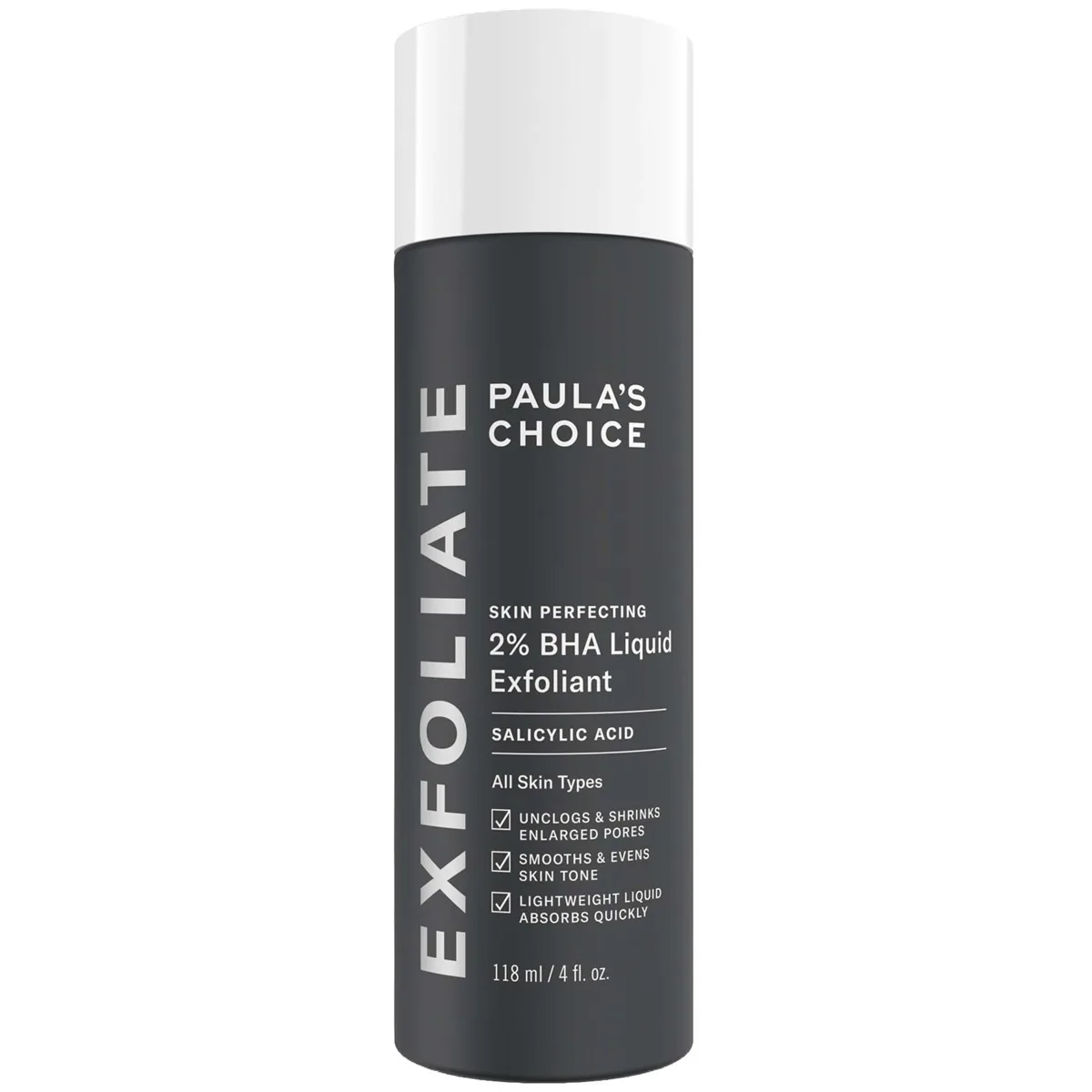
The intent behind it — exfoliation, decongestion, a reset — is entirely reasonable. Chemical exfoliation just does it at the correct end of the pH scale and without the grit: a formulated BHA like Paula's Choice 2% BHA Liquid Exfoliant works at a low pH by design, gets into sebaceous pores because it is lipophilic, and does not touch the skin's alkaline threshold at all. Salicylic acid carries the evidence for that.
Toothpaste on a spot: read the tube
This one is not really a pH story, though the alkalinity contributes. It is a product-category error.
Toothpaste is engineered for enamel, in a wet mouth, for two minutes, then spat out. A tube typically contains an abrasive system such as hydrated silica or calcium carbonate, a foaming detergent — usually sodium lauryl sulfate — humectants, thickeners, a fluoride salt, and a strong flavouring package built on mint oils, menthol and often cinnamal. None of that was designed for eight hours of occluded contact with inflamed facial skin.
The flavouring is the sharpest hazard. Allergic contact dermatitis and stomatitis from cinnamic aldehyde in toothpaste has been documented in the dermatology literature since the 1970s, and cinnamal remains one of the more frequently implicated fragrance allergens in patch testing. Sodium lauryl sulfate is a reference irritant — it is literally what researchers apply when they need to provoke a controlled irritant reaction for study purposes. Applying it deliberately, overnight, to broken skin over a papule is running that experiment on yourself.
What the sting is not is an antibacterial effect on Cutibacterium acnes. The overnight flattening people report is desiccation and inflammation: the spot is drier and the surrounding tissue is angrier. On skin prone to post-inflammatory pigmentation, that trade is disastrous — you exchange a lesion lasting several days for a brown mark lasting several months.
The correct replacement is not exotic. Benzoyl peroxide genuinely is antibacterial against C. acnes, has decades of trial evidence, and is one of the cheapest actives in the pharmacy: Neutrogena Stubborn Acne AM Treatment uses it at a lower strength precisely because higher is not better for tolerability. Benzoyl peroxide's evidence page and the acne pathway set out where it sits relative to everything else, and if you are not sure whether a reaction is treatment purging or the treatment itself misfiring, our purging or breakout tool asks the questions that distinguish them.
What to do instead, and why the instinct was sound
The three intended uses map cleanly onto three replacements, and the honest observation is that none of them is expensive.
For fading pigment: azelaic acid, stabilised vitamin C, or one of the tyrosinase-targeting actives — plus daily sun protection, without which nothing in this category works, because the pigment you are trying to fade is being re-stimulated every afternoon. For exfoliation and congestion: a formulated hydroxy acid at a pH the formulator chose deliberately. For an inflamed spot: benzoyl peroxide, or a hydrocolloid patch if the lesion is open. And underneath all three, a cleanser that does not undo them — a mild, pH-appropriate one such as CeraVe Hydrating Facial Cleanser rather than a high-foaming bar, since the same alkalinity argument applies to the step nobody thinks about.
It is worth ending on what the kitchen remedies got right, because the instinct behind them is not stupid. It says a single cheap ingredient should be able to do a defined job, without a nine-step routine or a luxury markup. That is correct. It happens to describe benzoyl peroxide, salicylic acid, azelaic acid and adapalene exactly — drugstore-priced single actives, decades of trials each, and every one of them formulated at a pH that somebody measured before it went in the tube.
The difference between those and a lemon is not that one is natural and the other synthetic. It is that one of them had its pH checked. If you want to see which of your current products are working at a pH that makes sense for what they contain, the ingredient decoder will read the list back to you, and the answer on whether natural acne remedies are safer takes the general version of this question apart.
Products mentioned
Independently reviewed and scored — the real products behind this piece.




- Therapy guide Acne Where benzoyl peroxide sits relative to everything else, for readers replacing toothpaste.
- Therapy guide Hyperpigmentation What actually shifts pigment and in what order, for readers replacing lemon juice.
- Ingredient Lemon Extract (Citrus Limon) The furocoumarin problem behind the most photogenic DIY injury.
- Ingredient Salicylic Acid (BHA) Chemical exfoliation at the correct end of the pH scale.
- Ingredient Benzoyl Peroxide The genuinely antibacterial spot treatment toothpaste is imitating.
- Ingredient Azelaic Acid The pigment-targeting active for reactive skin, replacing citrus juice.
- Question Does lemon juice or turmeric fade dark spots? The direct myth answer on lemon juice and turmeric for dark spots.
- Question Are natural acne remedies safer than medicated ones? The general form of the safety inversion this post documents three times.
References
- Natural skin surface pH is on average below 5, which is beneficial for its resident flora — International Journal of Cosmetic Science, 2006
- Sustained serine proteases activity by prolonged increase in pH leads to degradation of lipid processing enzymes and profound alterations of barrier function and stratum corneum integrity — The Journal of Investigative Dermatology, 2005
- pH directly regulates epidermal permeability barrier homeostasis, and stratum corneum integrity/cohesion — The Journal of Investigative Dermatology, 2003
- Maintenance of an Acidic Skin Surface with a Novel Zinc Lactobionate Emollient Preparation Improves Skin Barrier Function in Patients with Atopic Dermatitis — Dermatology and Therapy, 2024
- New Insights Concerning Phytophotodermatitis Induced by Phototoxic Plants — Life, 2024
- Asymptomatic Hyperpigmentation without Preceding Inflammation as a Clinical Feature of Citrus Fruits-Induced Phytophotodermatitis — Annals of Dermatology, 2018
- Allergic contact dermatitis and stomatitis caused by a cinnamic aldehyde-flavored toothpaste — Archives of Dermatology, 1976
- Cinnamon spice and everything not nice: many features of intraoral allergy to cinnamic aldehyde — Dermatitis, 2015
Every cited link is verified to resolve to the paper named. Where a source could not be independently confirmed, it is listed without a link rather than pointing you somewhere wrong.
Frequently asked
Why is lemon juice worse than a formulated acid if both are acidic?
Two reasons. Its pH is far below anything a formulator would choose for leave-on use, and it carries furocoumarins, which are phototoxic under UV and cause phytophotodermatitis — a burn that needs no allergy or prior sensitisation. A formulated hydroxy acid has a controlled pH, a buffered vehicle, and no photosensitiser in it.
Can lemon juice cause dark spots even if my skin never looked burned?
Yes, and this is the most under-appreciated part. Case reports describe sudden, sharply demarcated hyperpigmentation on sun-exposed skin after citrus contact with no preceding inflammation at all, a presentation the authors note is especially likely in darker skin. The pigment appears without any visible burn to link it back to.
Is baking soda always bad for skin?
No — and it is worth being accurate here. Sodium bicarbonate is a listed active in the US over-the-counter skin protectant monograph, with no concentration ceiling, and a bicarbonate bath is a legitimate soothing measure. What is unsupported is a concentrated paste near pH 9 scrubbed into facial skin, which combines alkalinity with abrasion.
What does alkaline pH actually do to skin, physically?
It flips an enzyme balance. Raising stratum corneum pH sustains serine protease activity, and those proteases degrade beta-glucocerebrosidase and acid sphingomyelinase — the enzymes that build barrier ceramides — while also cutting the corneodesmosomes that hold corneocytes together. Applying a protease inhibitor alongside reversed the damage in experimental work, which is how the mechanism was pinned down.
Does toothpaste dry out a pimple faster?
It desiccates the lesion and inflames the surrounding skin, which is not the same thing as treating it. The sting comes from the detergent and flavouring, not from any effect on Cutibacterium acnes, and cinnamal in toothpaste is a documented cause of allergic contact dermatitis. On pigment-prone skin you trade a few days of spot for months of post-inflammatory mark.