Beef Tallow Went Viral as Skincare. The Evidence Stayed in the Kitchen.
The lipid-similarity argument is the most persuasive thing anyone has said for tallow — and it points at the wrong lipids.
Read the preview
From the DermApproved blog, in DIY & At-Home: rendered beef fat, on your face. The whole case rests on one line — that tallow resembles human sebum. It contains no wax esters and no squalene, roughly two-fifths of the real thing. And the deeper problem isn't the similarity claim. It's which lipid layer that claim points at. For the full breakdown, visit dermapproved.com/blog.
The argument that made this trend credible
Most viral skincare arrives with no argument at all, just a before-and-after and a discount code. Tallow arrived with a syllogism, which is why it travelled so far past the usual audience for rendered animal fat.
The syllogism runs: human skin makes its own oil; that oil is mostly fatty acids and glycerides; beef tallow is mostly fatty acids and glycerides in a broadly similar spread; therefore tallow is what skin already recognises, and everything else is a synthetic imitation of it. Add the ancestral framing — our great-grandparents used it, industrial cosmetics replaced it with petroleum — and you have a story that satisfies both the mechanism-curious and the industry-sceptical at once.
It deserves a serious answer rather than a sneer, because the instinct underneath it is sound. Over-formulated products with twenty-eight ingredients and four fragrances genuinely do cause more trouble than they solve, and a two-ingredient balm genuinely is easier to reason about. The problem is not that the reasoning is stupid. It is that the reasoning is checkable, and it does not check out — for reasons that turn out to be more interesting than the trend.
What is actually in the jar
Start with the composition, because it is not in dispute. USDA reference data for beef tallow puts it at roughly 49.8 grams of saturated fat per 100 grams, of which about 24.9 grams is palmitic acid and 18.9 grams stearic acid. Monounsaturates come to about 41.8 grams, dominated by oleic acid at roughly 36 grams. Polyunsaturates are minor, around 4 grams, mostly linoleic acid.
Now set that against human sebum. Sebum is a mixture of triglycerides and free fatty acids, wax esters, and squalene — and wax esters plus squalene together account for something in the region of two-fifths of it. Tallow contains neither. Not a reduced amount: none. Wax esters are a sebaceous-gland product, and squalene is synthesised in the human sebaceous pathway; a cow's subcutaneous fat depot is a storage tissue with an entirely different job and an entirely different output.
That is not a quibble about percentages, and a broad review of mammalian sebum makes the point plainly: sebaceous glands produce sebum with species-specific compositions, and those differences track real differences in skin disease susceptibility between species. The signature free fatty acid of adult human sebum is sapienic acid, a monounsaturate with its double bond in a position most other mammals do not produce. 'Similar to human sebum' is the kind of claim that sounds like chemistry and functions as vibes.
And here is the part that undoes the argument even if you grant the similarity: sebum is not the layer that holds water in. If you want to know what your own formulas contain versus what their front labels imply, the ingredient decoder will read an INCI list back to you in plain terms.
The barrier does not run on sebum — and this is where the trial data lives
The permeability barrier is the stratum corneum's lipid matrix, and it is built from three things: ceramides, cholesterol, and free fatty acids, secreted from lamellar bodies and organised into stacked lamellae. Sebum sits on top of that structure. It is not the structure.
The experimental work here is old, specific, and unusually decisive. Applying all three lipid classes to barrier-disrupted skin in an equimolar ratio permits normal recovery, and skewing any one of them up to threefold accelerates recovery further. But applying only one or two of the three does not merely underperform — it delays barrier recovery compared with leaving the skin alone. That is the finding tallow advocates have to answer, and it is not a hostile framing: it is the same body of work that gave us ceramide-dominant moisturisers in the first place.
The honest complication, which nobody on either side quotes: the same paper found that triglycerides substitute effectively for the free fatty acid arm of that triad. So tallow can plausibly cover one of the three legs. It has no ceramides and no cholesterol to cover the other two. One or two legs is precisely the condition shown to slow recovery down.
This is why a formula built around the actual triad, like CeraVe Moisturizing Cream, is not simply 'the industrial version of a balm'. It is a different intervention aimed at a different layer. Our ceramides page carries the evidence grading, and the eczema pathway sets out where barrier-directed treatment sits relative to prescription options — because for anyone applying tallow to eczema specifically, that ordering matters more than the fat does.
The oleic acid problem, and the trial that should have ended the 'natural oils' assumption
Roughly a third of beef tallow is oleic acid, and oleic acid has an inconvenient reputation in barrier science: it is a well-characterised penetration enhancer, which is a polite way of saying it disorders stratum corneum lipid packing. Work on hairless mouse stratum corneum documented both structural and functional disruption from oleic acid decades ago, and it is still used experimentally for exactly that purpose.
The cleanest human demonstration is a forearm-controlled study that pitted two plant oils against each other. Volunteers applied olive oil — high in oleic acid — to one forearm, and sunflower seed oil, high in linoleic acid, to the other, twice daily for four weeks. Olive oil significantly reduced stratum corneum integrity and induced mild erythema, in people with and without a history of atopic dermatitis. Sunflower seed oil preserved integrity and improved hydration. Same volunteers. Same protocol. Opposite direction.
The authors' conclusion was blunt: the use of olive oil for dry skin and infant massage should be discouraged, and the findings challenge the belief that all natural oils benefit skin. Tallow's oleic fraction sits in the same neighbourhood as olive oil's. Nobody has run the equivalent forearm study on tallow, which is not evidence that it behaves better — it is the absence of the experiment.
There is a second-order concern for anyone acne-prone. Malassezia yeasts cannot synthesise their own long-chain fatty acids and depend on lipids supplied at the skin surface, which is the mechanism behind fungal acne flaring under rich occlusive fats. A tallow balm is a generous, uninterrupted supply. Running your products through the pore-clog checker will not settle it on its own, but it will tell you which of your other steps are stacking onto the same problem — and the plant oils overview covers which fatty acid profiles behave better on acne-prone skin.
What the evidence base actually contains
In 2024 a scoping review set out to answer, formally, what research exists on tallow and skin. The authors searched EMBASE and PubMed under PRISMA extension guidelines, screened 147 studies and included 19 — a mixture of comparative studies, basic science and animal work.
Their conclusion is the entire story: while evidence supports tallow's use in animal feed, cooking, soap and biofuel, there are significant research gaps in how it can be used on human skin, and specifically more research is needed on tallow as a cosmetic product in humans. On side effects — the objective that matters most to anyone reading a marketing page — they reported the greatest discrepancy between sources of any question they asked.
Nineteen papers, none of them a controlled cosmetic trial in people. That is not a scandal; plenty of ingredients start there. It is simply incompatible with the confidence of the claims being made, and it means every 'tallow healed my eczema' account is currently doing the work that a trial would otherwise do.
There is also a manufacturing dimension the ancestral framing quietly skips. Rendering quality varies enormously between a validated industrial process and a stockpot, and unsaturated fat oxidises. An anhydrous fat resists bacterial growth well — that part of the DIY case is genuinely strong — but it does not resist rancidity, and oxidised lipids and their aldehyde breakdown products are pro-inflammatory on skin. A jar with no antioxidant, no light protection and no expiry testing is a jar with an unknown oxidation state by month four.
Concede the true part, then say what it is not
Tallow is an occlusive. Spread a semi-solid fat over skin and transepidermal water loss falls, the stratum corneum rehydrates from beneath, and dry skin feels dramatically better within a day. That is real, it is not placebo, and people reporting it are reporting something true.
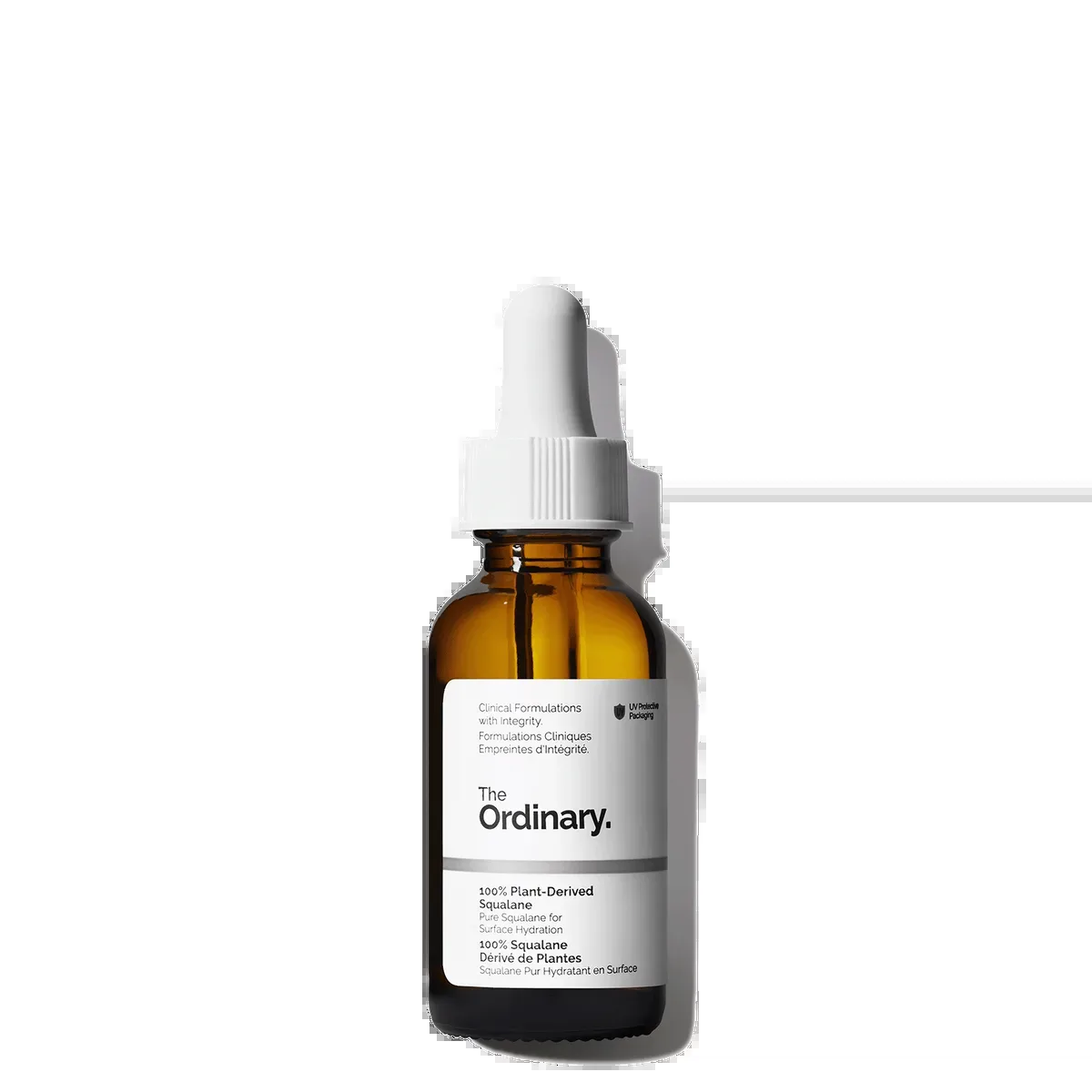
But that is a claim about physics, not about cows. Every occlusive does it, and the ones with the longest safety record do it without a third of their mass being a known penetration enhancer. CeraVe Healing Ointment is petrolatum-led and does the same job with no oxidation risk worth speaking of; petrolatum's record is one of the least glamorous and best-supported in dermatology. If the appeal is a short ingredient list and a single lipid you can pronounce, The Ordinary 100% Plant-Derived Squalane is the version of the sebum-mimicry argument that actually works — squalane is the stable, hydrogenated form of squalene, which is genuinely a major human sebum component rather than a resemblance to one. And for barrier-compromised or eczema-prone skin where the underlying instinct is usually right, La Roche-Posay Lipikar Eczema Cream pairs shea butter with colloidal oatmeal in a preserved base; shea gets closer to the tallow texture people are chasing without the oleic load.
So: is tallow going to ruin your face? Almost certainly not, for most people, on most body skin. Is it a barrier repair agent, a sebum analogue, or the thing industrial cosmetics suppressed? No, no, and no. It is a competent occlusive with an unusual origin story, a fatty acid profile that leans the wrong way for facial skin, and a research base of nineteen papers that do not include the one study anybody actually needs. If it is working for you on dry limbs, carry on. If you are treating a condition with it, the eczema answer on natural remedies is the more useful place to spend the next ten minutes.
Products mentioned
Independently reviewed and scored — the real products behind this piece.



- Therapy guide Eczema Where barrier-directed moisturising sits relative to prescription escalation, for readers using tallow on eczema.
- Ingredient Ceramides The barrier lipid class tallow contains none of.
- Ingredient Petrolatum (Petroleum Jelly) The occlusive benchmark against which tallow's real, physical benefit should be judged.
- Ingredient Squalane The stable form of squalene — the sebum-similarity claim that actually holds.
- Ingredient Shea Butter The plant-fat texture readers are chasing, with a friendlier fatty acid profile.
- Ingredient Plant & Seed Oils Why fatty acid profile, not naturalness, predicts how an oil behaves on skin.
- Question Are natural creams and oils better for eczema? The direct answer for the motive behind most tallow use.
References
- Tallow, Rendered Animal Fat, and Its Biocompatibility With Skin: A Scoping Review — Cureus, 2024
- Optimization of physiological lipid mixtures for barrier repair — The Journal of Investigative Dermatology, 1996
- Effect of olive and sunflower seed oil on the adult skin barrier: implications for neonatal skin care — Pediatric Dermatology, 2013
- Structural and functional effects of oleic acid and iontophoresis on hairless mouse stratum corneum — The Journal of Investigative Dermatology, 2000
- A review of sebum in mammals in relation to skin diseases, skin function, and the skin microbiome — PeerJ, 2023
- Different utilization of neutral lipids by Malassezia furfur and Malassezia sympodialis — Medical Mycology, 1998
Every cited link is verified to resolve to the paper named. Where a source could not be independently confirmed, it is listed without a link rather than pointing you somewhere wrong.
Frequently asked
Is it true that beef tallow matches human sebum?
Not in the way the claim implies. Tallow contains no wax esters and no squalene, which together make up a large share of human sebum, and mammalian sebum composition is species-specific rather than interchangeable. The overlap is in triglycerides and common fatty acids — which most plant fats also share.
If tallow is not repairing my barrier, why does my skin feel better?
Occlusion. Any semi-solid fat spread over skin slows water loss, letting the stratum corneum rehydrate from below, and that produces a real and rapid improvement in dry skin. It is the same mechanism as petrolatum, and it does not require any similarity to sebum at all.
Why does oleic acid matter if it is in olive oil too?
That is exactly the concern. Beef tallow is roughly a third oleic acid, and a forearm-controlled trial found olive oil significantly reduced stratum corneum integrity and caused mild erythema while sunflower seed oil, high in linoleic acid instead, preserved integrity and improved hydration. Oleic acid is used experimentally as a penetration enhancer because it disorders barrier lipids.
Can tallow cause breakouts or fungal acne?
It is a plausible risk on acne-prone and Malassezia-prone skin. Malassezia yeasts cannot make their own long-chain fatty acids and rely on surface lipids, so a heavy uninterrupted fat layer supplies exactly what they need. Nobody has quantified tallow's comedogenicity in a controlled human study, which is part of the broader evidence problem.
How much research actually exists on putting tallow on skin?
A 2024 scoping review searched EMBASE and PubMed, screened 147 studies and included 19 — comparative, basic science and animal work. The authors concluded that significant research gaps remain for human skin and that side effects showed the most disagreement between sources. There is no controlled human cosmetic trial to point at.