



The Truth About Pore Strips, Pore Vacuums, and 'Shrinking' Your Pores
You cannot shrink a pore. But you can change how visible it is — and almost everything sold to 'minimize' pores is pulling the wrong lever.
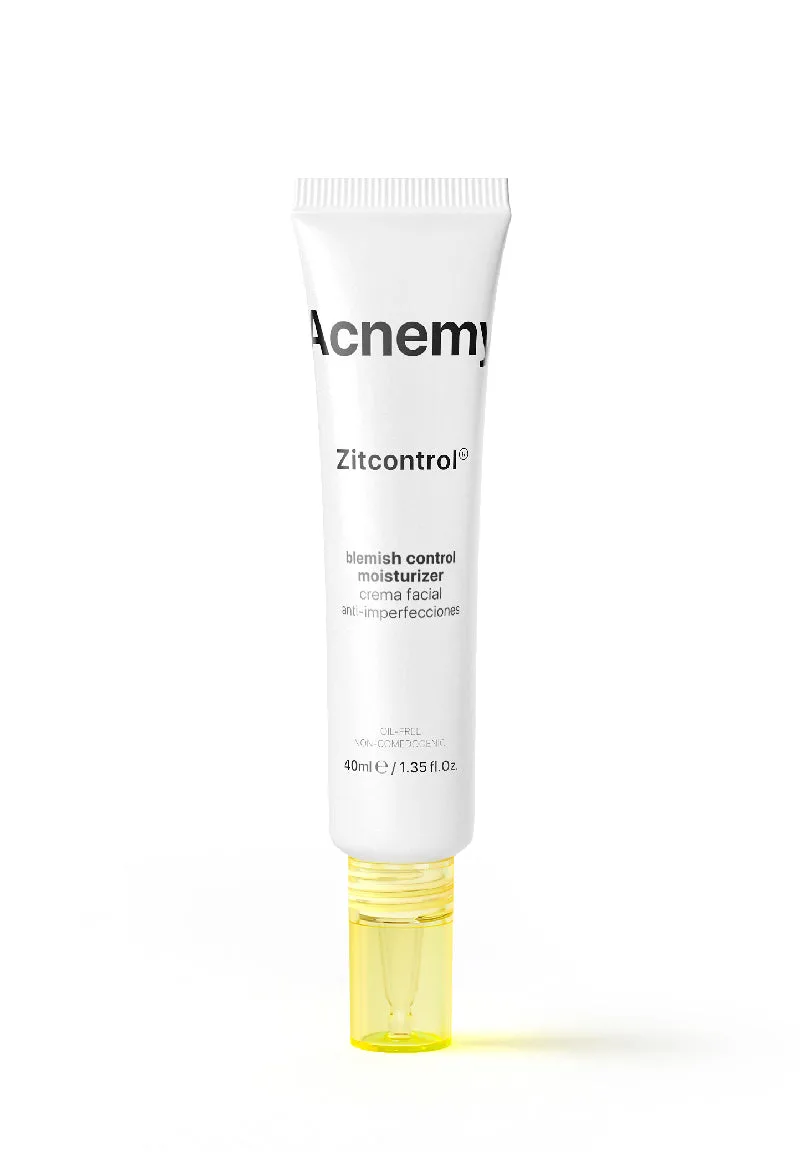
Most daily acne serums force a choice between 'gentle and ineffective' or 'effective and barrier-damaging.' Zitcontrol threads the needle with meaningful niacinamide and liposomal BHA paired with a skin-identical lipid complex that actively supports the barrier during treatment. The formulation logic is unusual in the acne category and is the product's real differentiator.
Zitcontrol is the kind of daily acne treatment that quietly outperforms flashier products in the category. Meaningful niacinamide, liposomal salicylic acid, zinc PCA, and — most unusually for an acne serum — a ceramide-cholesterol-phosphatidylcholine lipid complex that supports the barrier while the actives do their work. At roughly $19 for 40ml it's fairly priced for the formulation depth. Not strong enough for severe acne, but for the mild-to-moderate majority, it's a legitimate workhorse.
Available since about 2021, Zitcontrol holds several hundred reviews (around 520) across European retailers at a 4.5 average. The rating leans on a transparent ingredient profile (niacinamide, liposomal BHA, zinc PCA, barrier lipids) consistent with current acne-management thinking; what's missing is the multi-year, large-volume validation that would lift it to high confidence.
The case for it
Cautions: fungal-acne triggers.
What would change this: A declared concentration would move this to a firmer reading of the dose.
Same rule for everyone. “Strong choice” is the verdict on 1,459 of 45,024 concern verdicts across the catalog; rule R3 decided 567 of them. Unchanged since September 5, 2026, engine 5.1.1.
Brand or formulator? Disclose a concentration or correct a fact →
The studies behind the evidence row
The case for it
Cautions: fungal-acne triggers.
What would change this: A declared concentration would move this to a firmer reading of the dose.
Same rule for everyone. “Strong choice” is the verdict on 1,459 of 45,024 concern verdicts across the catalog; rule R3 decided 567 of them. Unchanged since September 5, 2026, engine 5.1.1.
Brand or formulator? Disclose a concentration or correct a fact →
The studies behind the evidence row
The case for it
Cautions: fungal-acne triggers.
What would change this: A declared concentration would move this to a firmer reading of the dose.
Same rule for everyone. “Promising” is the verdict on 7,858 of 45,024 concern verdicts across the catalog; rule R9p decided 7,858 of them. Unchanged since September 5, 2026, engine 5.1.1.
Brand or formulator? Disclose a concentration or correct a fact →
The studies behind the evidence row
The case for it
What would change this: A declared concentration would move this to a firmer reading of the dose.
Same rule for everyone. “Good choice” is the verdict on 9,564 of 45,024 concern verdicts across the catalog; rule R5 decided 9,072 of them. Unchanged since September 5, 2026, engine 5.1.1.
Brand or formulator? Disclose a concentration or correct a fact →
The studies behind the evidence row
The case for it
What would change this: A declared concentration would move this to a firmer reading of the dose.
Same rule for everyone. “Promising” is the verdict on 7,858 of 45,024 concern verdicts across the catalog; rule R9p decided 7,858 of them. Unchanged since September 5, 2026, engine 5.1.1.
Brand or formulator? Disclose a concentration or correct a fact →
The studies behind the evidence row
The case for it
What would change this: A declared concentration would move this to a firmer reading of the dose.
Same rule for everyone. “Promising” is the verdict on 7,858 of 45,024 concern verdicts across the catalog; rule R9p decided 7,858 of them. Unchanged since September 5, 2026, engine 5.1.1.
Brand or formulator? Disclose a concentration or correct a fact →
The studies behind the evidence row
A verdict is DermApproved’s assessment of how well a product’s ingredients fit a concern — never a claim about what the product treats. Evidence dots and collected reviews sit beside it and are never blended in. Rules 0.5.1 · evidence table ev-2026.09-r228 · how we decide
Here's a small but significant formulation problem in the acne-skincare category: the treatments that work best tend to damage the skin barrier, which creates the reactive inflammation and oil rebound that makes acne worse over time. Benzoyl peroxide dries skin aggressively. Salicylic acid in most formats strips lipids. Alcohol-heavy acne lotions compromise barrier function. The dermatology literature has been aware of this trade-off for years, and the field has gradually moved toward gentler treatments paired with barrier-supportive ingredients. But most commercial acne products haven't caught up. They're still formulated around the idea that acne treatment should feel aggressive.
Acnemy's Zitcontrol is one of the smaller number of products that has. Read the INCI and niacinamide sits in second position, immediately after water — which means it's at a meaningful concentration, almost certainly in the 4–5% range where clinical research supports its effects on sebum, inflammation, and post-inflammatory hyperpigmentation. Liposomally encapsulated salicylic acid follows a little further down, delivered through the brand's Nichosome vesicles, which improve targeting into the follicle while lowering surface irritation. Zinc PCA — zinc bound to pyrrolidone carboxylic acid, one of skin's own natural moisturizing factors — adds sebum modulation through a different pathway again. That alone would make a competent daily acne serum.
The surprising thing is what comes next on the list. Ceramide NP, hydrogenated phosphatidylcholine, phosphatidylcholine, dimyristoyl phosphatidylcholine, lecithin and cholesterol — a full skin-identical lipid complex sitting in the middle of an acne treatment. Barrier lipids are so rarely included in this category that finding them here is genuinely unusual. The standard approach is to treat the acne first and repair the collateral damage separately, layering ceramides over the top afterward. Acnemy builds the support into the treatment itself, which matters because the lipids are being deposited during the exact window when the actives are working.
Is a lipid complex inside a serum as effective as a dedicated ceramide moisturizer? Almost certainly not — a richer leave-on cream simply has more to deposit. But the inclusion is meaningful for a subtler reason: it buffers the immediate barrier impact of the actives at the moment of application, blunting the early irritation flare that drives so many people to abandon acne treatment in week two. People who've quit harsher products because of redness or stinging tend to find that this one delivers the benefit without demanding the toll.
The supporting cast is Acnemy's house signature. Morinda citrifolia (noni) callus culture lysate and Daucus carota sativa (carrot) root cell culture lysate appear across the brand's line. Evidence for plant callus lysates is emerging rather than robust — lab work suggests antioxidant and anti-inflammatory activity, but the clinical translation at topical concentrations remains unclear. They sit deep enough on the deck to read as supportive character rather than functional load-bearing. Coco-caprylate/caprate provides a light, dry-touch emollience; glycerin does the humectant work; tocopherol guards the lipids from oxidation; and a pair of gentle glucoside surfactants keeps the whole thing dispersed. It's a tidy formula with no filler doing damage.
The experience matches the philosophy. Three or four pumps of a lightweight fluid, faintly creamier than a pure aqueous serum thanks to those lipids, dispensed from a pump that keeps the liposomes away from air. No sting, no scent, no tint. Skin feels comfortable immediately, and within the first week most people notice midday oiliness dropping and the surface reading smoother under a fingertip — which is also, unsurprisingly, the most common thing reviewers say about it across the several hundred reviews it has accumulated.
The limitations deserve naming clearly. Zitcontrol is a mild-to-moderate acne treatment. It will not clear severe cystic acne, nodular breakouts, or rapidly progressing inflammatory disease. Those cases belong with a dermatologist and prescription tools — tretinoin, adapalene, topical antibiotics, spironolactone, isotretinoin — and no over-the-counter serum is going to compete with them. The much larger group dealing with persistent mild-to-moderate breakouts, clogged pores, oiliness and lingering post-acne marks is where this formula earns its keep, on a timeline of six to twelve weeks rather than six to twelve days. Reviewers who report disappointment almost always report it early.
That slowness is not a flaw so much as the entire thesis. The category myth that acne treatment must feel aggressive to be working has cost a lot of people their barriers, and the rebound oil and inflammation that follows tends to undo whatever the harsh product accomplished. A serum that quietly modulates sebum, keeps follicles clear, and hands the skin back the lipids it needs is playing a longer game on purpose.
Routine placement is simple: clean, dry skin, before moisturizer, morning and evening. Pat rather than rub, give it half a minute, then moisturizer and sunscreen in daylight. What it will not tolerate is being stacked with other leave-on acids, benzoyl peroxide, or a retinoid in the same application — alternate those across mornings and evenings or separate days, because the barrier lipids here are a buffer, not a license.
At roughly $19 for 40 ml, running two to three months at twice-daily use, the monthly cost lands under ten dollars. The bottle is smaller than some, and availability outside European markets is patchy, both of which are fair complaints. But what you're paying for is formulation depth and a barrier-supportive philosophy that the price bracket rarely bothers with.
The people who respond best to Zitcontrol tend to be the ones who have already been through the aggressive products and come out the other side looking for something that doesn't punish them. Their acne isn't severe, but it is persistent, and every harsh treatment has made things worse before it made them better. For that person this is exactly the right move. For the extremes — skin barely breaking out, or skin that genuinely needs a prescription — it's the wrong fit for opposite reasons. The middle is where this product does its best work, and the middle is where most people actually live.
The hero actives that drive this product's performance.
| Ingredient | Function | Evidence |
|---|---|---|
| Niacinamide | Sits second on the INCI, immediately after water, which tells you this is at a meaningful concentration — almost certainly in the 4-5% range where niacinamide is clinically supported for acne, sebum modulation, and post-inflammatory hyperpigmentation. This positioning is the reason Zitcontrol actually works as a daily treatment rather than being a token formula. | Emerging for Hyperpigmentation |
| Salicylic Acid (Liposomal) | Delivered via Acnemy's Nichosome liposomal system for improved follicular penetration and reduced irritation compared with free salicylic acid. In a leave-on serum, this means the BHA has the time and delivery to reach the sebaceous follicle where the comedone is forming, which is exactly where it needs to act. | Regulator-approved for Acne · emerging certainty |
| Zinc PCA | A water-soluble form of zinc linked to pyrrolidone carboxylic acid, one of the skin's natural moisturizing factors. Zinc PCA has some evidence for sebum reduction and mild anti-inflammatory activity in acne, and it pairs naturally with the niacinamide — zinc and niacinamide work through somewhat complementary pathways on sebum and inflammation. | Limited for Acne |
| Carrot Cell Culture Lysate & Noni Cell Culture Lysate | Two plant cell culture lysates — carrot root cells and noni fruit cells — that are Acnemy's house signature botanicals across their line. Evidence for plant callus culture lysates is emerging rather than well-established, and these sit deep enough on the INCI that their contribution is supportive. They're also what makes Acnemy products aesthetically distinctive in the crowded acne category. | Not yet assessed |
| Barrier Lipid Complex | Ceramide NP, cholesterol, and multiple phosphatidylcholine variants form a skin-identical lipid complex tucked into the serum. Because this is a leave-on product rather than a rinse-off, these lipids have genuine time to deposit onto the skin and contribute to barrier repair — unusual for an acne treatment, which typically damages rather than supports the barrier. | Not yet assessed |
Ingredient standings describe the active at treatment-level doses and vehicles; this product's own condition grades weigh its actual formula.
Aqua (Water), Niacinamide, Coco-Caprylate/Caprate, Glycerin, Salicylic Acid, Zinc PCA, Morinda Citrifolia Callus Culture Lysate, Daucus Carota Sativa Root Cell Culture Lysate, Ceramide NP, Ethylhexylglycerin, Hydrogenated Phosphatidylcholine, Phosphatidylcholine, Dimyristoyl Phosphatidylcholine, Mannitol, Lecithin, Stearamine, Cholesterol, Xanthan Gum, Sodium Acrylates Copolymer, Sodium Acrylates Crosspolymer-2, Olive Oil Polyglyceryl-6 Esters, Sorbitan Oleate, Tocopherol, Lauryl Glucoside, Decyl Glucoside, Sodium Chloride, Citric Acid, Sodium Benzoate, Potassium Sorbate, Phenoxyethanol
treatment
AM & PM
Apply to clean, dry skin after cleansing and before moisturizer. Use morning and evening. Pairs well with a gentle cleanser like Zitclean and can be used alongside spot treatments for active pimples. Avoid stacking with other leave-on acids, benzoyl peroxide, or retinoids on the same application — alternate them in different routines.
Reduction in oiliness and surface smoothness within 1-2 weeks. Reduction in breakout frequency and post-inflammatory hyperpigmentation builds over 6-12 weeks of consistent twice-daily use.
The formulation logic in Zitcontrol reflects a specific philosophy: layer multiple gentle-but-evidence-backed actives rather than relying on a single aggressive ingredient. The research supporting this approach has accumulated over the last decade as dermatology has moved toward combination-product thinking for acne management.
Niacinamide at 4-5% concentrations — the range implied by its INCI position in Zitcontrol — has substantial clinical evidence for effects on acne. Work appearing in dermatology journals has shown that topical niacinamide reduces inflammatory lesion counts, modulates sebum production, and significantly improves post-inflammatory hyperpigmentation, with effect sizes comparable to some prescription options for mild-to-moderate acne. The mechanism involves multiple pathways: inhibition of inflammatory mediators, reduction of sebum secretion, and inhibition of melanosome transfer from melanocytes to keratinocytes.
Salicylic acid's role in acne is well-established — it's a beta-hydroxy acid with follicular penetration that loosens the keratin plugs forming comedones. The liposomal delivery system in Zitcontrol addresses one of BHA's formulation limitations: improving targeted delivery to the sebaceous follicle rather than just surface exfoliation. Liposomal delivery research in pharmaceuticals has shown improved skin penetration and reduced irritation compared with free BHA formulations, and the principle applies to cosmetic formulations as well.
Zinc has a long history of clinical use in acne, both topically and orally. Zinc PCA specifically is a water-soluble form that has shown some evidence for sebum reduction in clinical studies, though the effect is more modest than oral zinc. Its pairing with niacinamide makes formulation sense because the two ingredients work through different pathways and have additive rather than redundant effects.
The ceramide NP, cholesterol, and phosphatidylcholine complex reflects the so-called '3:1:1 ratio' philosophy popularized by ceramide-focused brands — the approximate ratio of these three lipid classes in healthy skin. Research on topical lipid replacement has shown meaningful barrier improvement and reduction in transepidermal water loss, and the principle of including these lipids during acne treatment is that it can offset the barrier disruption that comes with topical actives.
Dermatologists generally view layered acne serums like Zitcontrol favorably as the foundation of a daily acne management routine for mild to moderate cases. From a clinical standpoint, niacinamide, salicylic acid, and zinc together address multiple drivers of acne through complementary mechanisms, and that the inclusion of barrier-supportive lipids is an intelligent formulation choice that isn't common in the category. For patients whose acne has failed gentler approaches or who have severe disease, dermatologists escalate to prescription topicals like tretinoin or adapalene, or oral options like spironolactone and isotretinoin, with serums like Zitcontrol serving supportive rather than primary roles.
Apply 3-4 pumps to clean, dry skin after cleansing and before moisturizer. Use morning and evening. Pat gently into the face and neck rather than rubbing. Allow 30-60 seconds to absorb before following with moisturizer and sunscreen during the day. Avoid layering with other strong leave-on actives like benzoyl peroxide, retinoids, or additional AHA/BHA products in the same application — alternate them across morning/evening or different days to manage irritation risk.
At $19 for 40ml, Zitcontrol is fairly priced for the formulation depth. The closest direct comparisons are The Ordinary Niacinamide 10% + Zinc 1% (cheaper, simpler, higher niacinamide but no BHA or lipids) and Paula's Choice Clear Anti-Redness Exfoliating Solution (similar price, BHA-focused, different formulation philosophy). Acnemy's distinct contribution is the barrier-supportive lipid complex and the layered active approach, which you don't find at this price from mass-market brands.
Mild to moderate acne-prone skin looking for a daily treatment serum that works without damaging the barrier. Sensitive skin that has failed harsher acne products. Users who want a formula that targets active breakouts and post-inflammatory hyperpigmentation at the same time.
Severe cystic or nodular acne needs dermatologist care — this serum alone won't resolve it. Very oily skin that wants a more aggressive treatment may find Zitcontrol too gentle. Users with extremely barrier-compromised skin should focus on barrier repair before adding any BHA-containing acne treatment.
Ready to try Acnemy Zitcontrol Draining Purifying Serum?
Buy at Amazon ♥Lightweight fluid serum with a slight creamy feel from the lipid complex.
Essentially scentless.
Pump bottle that preserves the liposomal actives from air exposure.
First use feels lightweight and slightly creamier than a pure aqueous serum, thanks to the lipid complex. There's no sting, no fragrance, and no visible tint. Skin feels comfortable immediately after application, and within the first week most users notice reduced midday oiliness and a softer surface texture.
About 2-3 months with twice-a-day use of 3-4 pumps per application.
All Year
Zitcontrol was designed as the daily-treatment anchor of Acnemy's routine — the step where the ongoing acne-management work happens. Niche Beauty Lab's formulators layered multiple gentle-but-meaningful actives rather than relying on a single aggressive one, reflecting the Spanish pharmacy skincare tradition of supportive, layered treatment. The inclusion of a ceramide-cholesterol-phosphatidylcholine complex in a leave-on acne product was the specific formulation decision that set Zitcontrol apart from more typical harsh acne treatments.
Acnemy is a Spanish indie brand from Barcelona-based Niche Beauty Lab, launched in 2020 with a focus on acne at different stages. Zitcontrol is positioned as the daily leave-on treatment in the routine — the step where the acne-management work actually happens, distinct from the drying lotion for spot use and the cleanser for wash support.
Acne treatments should feel aggressive to work.
Aggressive treatments often damage the barrier, which worsens inflammation and triggers compensatory oil production. Modern acne management favors gentle-but-consistent actives over harsh short-term treatments.
You need prescription strength to actually treat acne.
For severe acne, yes — prescription treatments like tretinoin, adapalene, spironolactone, or isotretinoin are often necessary. For mild to moderate acne, well-formulated OTC products with meaningful active concentrations can deliver real improvement when used consistently.
It's a daily leave-on treatment applied after cleansing and before moisturizer, used morning and evening. Think of it as the foundation of a routine — pair it with a gentle cleanser, moisturizer, and sunscreen for comprehensive daily acne management. Spot treatments like Acnemy Dryzit handle individual pimples, while Zitcontrol does the ongoing work.
Yes, with care. Avoid layering on the same application — apply Zitcontrol in the morning and retinoid at night, or alternate nights. Stacking multiple leave-on actives at once increases irritation risk without proportional benefit.
Both use niacinamide and zinc for acne and sebum modulation. The Ordinary is cheaper and delivers higher niacinamide at 10% but no BHA, fewer supporting actives, and no lipid complex. Acnemy includes salicylic acid, a ceramide-cholesterol lipid blend, and multiple botanical extracts — it's a more complete formula at a slightly higher price. Both are legitimate choices depending on what you're prioritizing.
Yes — the fragrance-free formulation, gentle active concentrations, and supportive ceramide lipid complex make this one of the more sensitive-friendly daily acne serums available. Patch test first if you have a history of reactions.
No. For moderate to severe cystic acne, you need dermatologist-led treatment — oral antibiotics, hormonal therapy, or isotretinoin. Zitcontrol can serve as supportive topical therapy alongside prescription treatment, but it isn't strong enough to resolve cystic acne on its own.
Reduced oiliness within 1-2 weeks. Measurable reduction in breakout frequency and post-inflammatory hyperpigmentation typically builds over 6-12 weeks of consistent twice-daily use. Acne treatment results are almost always slower than people expect — patience and consistency matter more than aggressive short-term use.
Yes — always follow with a non-comedogenic moisturizer, even if your skin is oily. The lipid complex in Zitcontrol helps, but a proper moisturizer seals everything in and supports the barrier more effectively than the serum alone can.
Recurring themes our editors read across retailer reviews of this product — summaries in our words, not quotations, and not a substitute for your own patch test.
Noticeable reduction in oiliness within 2 weeks
Gentle enough for daily use
Meaningful improvement in post-acne marks
Fragrance-free and comfortable
Lightweight non-greasy texture
Won't resolve severe cystic acne
Results build slowly
40ml bottle is smaller than some competitors
Won't replace prescription treatment for severe acne
Verified answers from our questions library — the nuance a product page cannot carry.