



You're 34 and Breaking Out on Your Jaw — Stop Treating It Like You're 14
Adult hormonal acne and teenage acne are different beasts, yet grown women keep drying out deep jawline cysts with teenage products and wondering why it spreads.
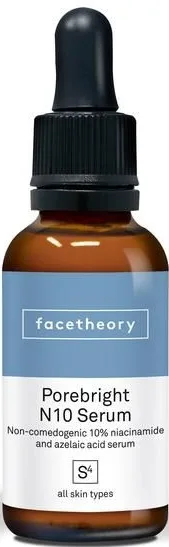
Most 10% niacinamide serums in the budget tier — including The Ordinary's reference product — are essentially niacinamide and a thickener. This serum adds low-dose azelaic acid for pigmentation support and a small salicylic acid contribution for comedolytic backup, plus sodium hyaluronate and aloe for hydration. It's the same 10% niacinamide dose at the same price point, with a more thoughtful supporting cast.
A 10% niacinamide serum with the unusual addition of low-dose azelaic and salicylic acid that quietly outperforms the budget niacinamide reference product in its category. Strong on pore size, tone-evening, and post-inflammatory pigmentation, at a price that genuinely undercuts comparable multi-active brightening serums.
The case for it
What would change this: Guideline or regulatory standing for the active on this concern would move this from a promising bet to a recommendation.
Same rule for everyone. “Promising” is the verdict on 7,858 of 45,024 concern verdicts across the catalog; rule R9p decided 7,858 of them. Unchanged since September 5, 2026, engine 5.1.1.
Brand or formulator? Disclose a concentration or correct a fact →
The studies behind the evidence row
The case for it
Same rule for everyone. “Good choice” is the verdict on 9,564 of 45,024 concern verdicts across the catalog; rule R5 decided 9,072 of them. Unchanged since September 5, 2026, engine 5.1.1.
Brand or formulator? Disclose a concentration or correct a fact →
The studies behind the evidence row
The case for it
What would change this: Guideline or regulatory standing for the active on this concern would move this from a promising bet to a recommendation.
Same rule for everyone. “Promising” is the verdict on 7,858 of 45,024 concern verdicts across the catalog; rule R9p decided 7,858 of them. Unchanged since September 5, 2026, engine 5.1.1.
Brand or formulator? Disclose a concentration or correct a fact →
The studies behind the evidence row
The case for it
What would change this: Guideline or regulatory standing for the active on this concern would move this from a promising bet to a recommendation.
Same rule for everyone. “Promising” is the verdict on 7,858 of 45,024 concern verdicts across the catalog; rule R9p decided 7,858 of them. Unchanged since September 5, 2026, engine 5.1.1.
Brand or formulator? Disclose a concentration or correct a fact →
The studies behind the evidence row
The case for it
What would change this: Guideline or regulatory standing for the active on this concern would move this from a promising bet to a recommendation.
Same rule for everyone. “Promising” is the verdict on 7,858 of 45,024 concern verdicts across the catalog; rule R9p decided 7,858 of them. Unchanged since September 5, 2026, engine 5.1.1.
Brand or formulator? Disclose a concentration or correct a fact →
The studies behind the evidence row
The case for it
What would change this: A declared concentration would move this to a firmer reading of the dose.
Same rule for everyone. “Strong choice” is the verdict on 1,459 of 45,024 concern verdicts across the catalog; rule R3 decided 567 of them. Unchanged since September 5, 2026, engine 5.1.1.
Brand or formulator? Disclose a concentration or correct a fact →
The studies behind the evidence row
The case for it
What would change this: A concentration inside the studied range would raise this a step.
Same rule for everyone. “Good choice” is the verdict on 9,564 of 45,024 concern verdicts across the catalog; rule R4 decided 84 of them. Unchanged since September 5, 2026, engine 5.1.1.
Brand or formulator? Disclose a concentration or correct a fact →
The studies behind the evidence row
The case for it
What would change this: A declared concentration would move this to a firmer reading of the dose.
Same rule for everyone. “Strong choice” is the verdict on 1,459 of 45,024 concern verdicts across the catalog; rule R3 decided 567 of them. Unchanged since September 5, 2026, engine 5.1.1.
Brand or formulator? Disclose a concentration or correct a fact →
The studies behind the evidence row
A verdict is DermApproved’s assessment of how well a product’s ingredients fit a concern — never a claim about what the product treats. Evidence dots and collected reviews sit beside it and are never blended in. Rules 0.5.1 · evidence table ev-2026.09-r228 · how we decide
Niacinamide is the boring, reliable workhorse of the active-ingredient world. It does not produce dramatic before-and-afters, it does not generate cult social media followings, and it almost never makes headlines. What it does, consistently and with the kind of clinical backing most actives can only dream about, is shrink the visible appearance of pores, fade post-inflammatory hyperpigmentation, calm redness, and support the skin's barrier function. Pretty much every skincare brand sells a niacinamide serum. Most are functionally identical: 10% niacinamide, a thickener, water, a preservative. The Facetheory Porebright N10 is the rare one that meaningfully improves on the template.
The interesting thing about this formula is what sits below the niacinamide on the INCI list. Sodium lactate is doing humectant and pH work. Salicylic acid is at a small enough concentration to act more as a buffering acid than a comedolytic, but it's there for backup pore-clearing support. Sodium hyaluronate covers the hydration angle that pure niacinamide can sometimes leave undone. And then, perhaps most importantly, azelaic acid shows up. Not at the headline 15% dose Facetheory's own Azeclear serum delivers, but at a low supporting concentration that meaningfully expands what this serum can address compared to a niacinamide-only product. Aloe vera and glycerin round out the calming-and-hydrating support.
The practical result of this thoughtful supporting cast is that the Porebright N10 reaches a wider set of skin concerns than a flat 10% niacinamide serum manages. Niacinamide alone is excellent for pore appearance and barrier function but works modestly on pigmentation. The low-dose azelaic addition expands the pigmentation work into clinically validated territory — both ingredients inhibit melanin transfer through different but complementary mechanisms, which is part of why their combination is one of the more evidence-based brightening pairings in dermatology. The trace salicylic adds gentle comedolytic support that helps the niacinamide's pore-size work register visibly faster, because keeping pores clear during the niacinamide treatment cycle is what makes the pore-appearance reduction obvious to the user.
In use, the experience over a typical eight-week course is the steady, low-drama kind of progression niacinamide is famous for. Day one through week one is mostly about texture: skin absorbs the lightweight serum quickly, applies smooth, doesn't tingle for most users (though a small subset feels the trace salicylic on broken or actively inflamed skin). By week two the redness halo around old acne marks starts softening, and oily and combination users notice less midday shine. Between weeks four and six is when the pore-size effect becomes visible — not dramatic, but consistent, especially on the nose and inner cheeks where T-zone congestion typically concentrates. By the eight-to-twelve-week mark, users dealing with post-inflammatory pigmentation see meaningful fading, and the cumulative effect on overall skin tone evens out.
Who actually wins from this serum? Combination, oily, and normal skin types in roughly the 18-to-45 age range dealing with enlarged-looking pores, mild post-inflammatory hyperpigmentation from old acne, or a generally uneven skin tone. The fragrance-free, alcohol-free, silicone-free, vegan formulation makes it a sensible AM-and-PM workhorse in routines that don't have a dedicated brightening or pore-targeting serum. The 10% niacinamide is enough active to register clinically without crossing into the niacinamide-rosacea-flare territory that occasionally bothers users at the 20% concentration level — anyone who has had paradoxical flushing from higher-dose niacinamide can usually tolerate this one.
Where the serum stops short is in handling severe pigmentation, active cystic acne, and deep textural concerns. The azelaic dose is too low to be the primary treatment for melasma — for that, this serum belongs in the routine as the daily maintenance layer, with a dedicated 15% azelaic product (Facetheory's own Azeclear or prescription Finacea) doing the heavy lifting. Severe sebaceous filaments and deeply embedded blackheads need the cleaner-strength salicylic of a 2% leave-on BHA rather than this serum's supporting dose. Pregnancy is also a hard no — the salicylic content, however small, puts the product in the conventionally contraindicated category for pregnant and breastfeeding users.
The value calculation is where this product genuinely stands out. At around $23 for 30 ml, it lines up at almost the same price as The Ordinary's reference 10% Niacinamide + 1% Zinc serum, with what is arguably a more useful supporting cast. Prestige niacinamide serums with this combination of actives — niacinamide plus azelaic plus salicylic plus HA plus aloe — typically retail $50-$90 for the same volume in clinical or K-beauty brands. The Facetheory undercuts them substantially while offering essentially the same INCI architecture, just without the prestige packaging or the in-store marketing.
The friendly skepticism cap: this is a competent, well-formulated workhorse serum, not a transformative product. Niacinamide does not deliver retinol-tier visible aging payoff. It does not fade deep melasma on its own. It does not dramatically clear cystic acne. What it does is the steady, low-irritation tone-evening and pore-refinement work that consistent users notice when they stop using the serum for two weeks and their skin looks visibly more congested. The Porebright N10 does this job particularly well because of the supporting cast of azelaic, salicylic, and hyaluronic acid that pushes it past the flat-niacinamide template most of the budget category occupies. That, plus the under-$25 price point, is the reason to consider it over The Ordinary's reference product if you're shopping niacinamide right now.
The hero actives that drive this product's performance.
| Ingredient | Function | Evidence |
|---|---|---|
| Niacinamide (10%) (10%) | The headline active here is positioned at the well-studied 10% concentration — the same dose as The Ordinary's reference product and at the upper end of the well-tolerated range for vitamin B3. In this formula it does the heavy lifting on visible pore size, post-inflammatory redness, and barrier ceramide synthesis, while also moderating the slight sting that the small azelaic and salicylic doses would otherwise produce. | Emerging for Hyperpigmentation |
| Azelaic Acid | Added in a low supporting dose to complement the niacinamide's brightening and pore-refining work. Azelaic functions here as both a tyrosinase inhibitor for post-inflammatory pigmentation and a mild antimicrobial against acne-causing Cutibacterium acnes — at this concentration it's a synergistic addition rather than the headline active, but it meaningfully expands what the serum addresses versus a niacinamide-only formula. | Regulator-approved for Rosacea · well-established certainty |
| Salicylic Acid | Included in a low concentration as a gentle BHA partner that helps keep pores clear for the niacinamide's pore-size work to register visibly. The pH of this formula sits well above the threshold where salicylic acid is fully active, so it's contributing modest comedolytic support and pH-buffering rather than the aggressive exfoliation a 2% leave-on BHA serum would deliver. | Regulator-approved for Acne · emerging certainty |
| Sodium Hyaluronate | The low-molecular-weight HA salt added for surface humectant payoff and to soften the slight tightness niacinamide-only serums can produce on dry skin. In this formula it pairs with glycerin and propanediol to provide a hydration buffer that lets the lighter-feeling serum work across normal, combination, and dry skin types without feeling stripping. | Plausible mechanism for Dullness |
| Aloe Vera Leaf Juice | Sits in the base water phase as a calming and mildly anti-inflammatory ingredient, useful for buffering the small azelaic and salicylic doses against any first-week tingling. Aloe's polysaccharides also contribute to the smooth, slippery slip of the serum, which is part of why this formula feels lighter on the skin than the typical 10% niacinamide product. | Not yet assessed |
Ingredient standings describe the active at treatment-level doses and vehicles; this product's own condition grades weigh its actual formula.
Aqua, Propanediol, Niacinamide, Sodium Lactate, Salicylic Acid, Glycerin, Sodium Anisate, Sodium Levulinate, Sodium Hyaluronate, Azelaic Acid, Aloe Barbadensis (Aloe Vera) Leaf Juice
serum
AM & PM
Apply on clean, damp skin after toner and before moisturizer. Compatible with most other serums in the routine, though avoid same-application layering with strong AHAs or BHAs to prevent stacking irritation. Pairs particularly well with ceramide moisturizers and SPF in the AM, retinol in the PM (apply this first, let it absorb, then layer retinol).
Immediate: skin feels slightly hydrated and looks marginally smoother. 1-2 weeks: a subtle calming of redness and a slight reduction in shine for oily users. 4-8 weeks: visibly smaller-looking pores, more even tone, softened post-inflammatory marks. 12+ weeks: full payoff on tone evening and barrier function for consistent twice-daily users.
The clinical case for this serum rests primarily on niacinamide's evidence base, which is unusually deep for a cosmetic active. A randomised double-blind study in the British Journal of Dermatology (Hakozaki et al., 2002) demonstrated that 5% topical niacinamide produced significant reduction in hyperpigmented spot intensity over 8 weeks of twice-daily application, with the mechanism attributed to inhibition of melanosome transfer from melanocytes to keratinocytes. Subsequent work has expanded the evidence base to include pore appearance reduction, sebum regulation, ceramide synthesis upregulation, and barrier function improvement — making niacinamide one of the few topical actives with reproducible clinical data across multiple skin concerns.
The 10% concentration in this serum sits at the upper end of the well-tolerated range. Notably, the dose-response curve for niacinamide flattens significantly above 5% — most of the clinical effect is achieved at 4-5%, with diminishing returns at higher concentrations. The justification for 10% versus 5% is partly marketing inflection and partly tolerance: 10% provides a safety margin in case absorption is variable across skin types or in the presence of barrier compromise. The 20% Pro variant Facetheory sells has the same dose-response logic applied — meaningfully more active, marginally more benefit, slightly higher flushing risk.
The azelaic acid addition is supported by separate but complementary research. Published studies on 15-20% azelaic acid show clinically meaningful improvement in post-inflammatory hyperpigmentation and rosacea, and the lower supporting dose in this formula is more like the maintenance-tier concentration than the primary treatment level. Where the science thins out is on the specific combination claim — there are no published clinical trials of this exact niacinamide-plus-low-dose-azelaic-plus-trace-salicylic combination, though each component's individual evidence base is strong. The salicylic content at the formula's pH (around 5.5) is operating more as a buffering and mild comedolytic ingredient than as a primary BHA exfoliant.
Dermatologists consider 5-10% niacinamide one of the most universally recommended cosmetic actives because of its strong evidence base, broad skin-type compatibility, and minimal irritation profile. Clinicians often suggest niacinamide as a first-line topical for patients dealing with mild post-inflammatory hyperpigmentation, visible pore appearance concerns, or general redness-prone skin. The addition of low-dose azelaic acid to a niacinamide serum is viewed favorably in dermatological literature as the two actives address pigmentation through complementary mechanisms. For patients seeking accessible at-home brightening without prescription overhead, this style of multi-active serum is commonly suggested as a daily maintenance product, often paired with a separate higher-dose treatment serum for active flares or stubborn pigmentation.
After cleansing and any water-based toner, apply 3-4 drops to damp face and neck. Press gently into the skin rather than rubbing. Wait 30-60 seconds before applying moisturizer. Use AM and PM for the full pore-size, tone-evening, and brightening payoff over 8-12 weeks. In the AM, layer under SPF 30+; in the PM, can be applied before or after retinol depending on tolerance — apply this first if your skin is sensitive to direct retinol contact. Compatible with most other serums, though avoid same-application layering with high-strength AHAs.
At roughly $23 for 30 ml, this serum is positioned at almost the same price point as The Ordinary's reference 10% niacinamide product while offering a meaningfully broader active list. Prestige niacinamide-plus-azelaic serums from clinical brands typically retail $50-$90 for the same volume. Facetheory does offer a larger 50ml size on some markets which improves the per-ml value further. The 30ml bottle lasts most users 6-8 weeks at twice-daily use, putting the cost-per-day in the same range as a budget retail moisturizer. For users running both AM and PM applications, the value is genuinely strong against any comparable multi-active serum.
Combination, oily, and normal skin types dealing with enlarged-looking pores, mild post-inflammatory hyperpigmentation, redness-prone skin, or a generally uneven tone. A particularly strong choice for users who have tried The Ordinary's 10% Niacinamide and want the next tier of formulation thoughtfulness without spending up to prestige tiers. Also fine for most sensitive skin once initial tolerance is confirmed.
Skip during pregnancy and breastfeeding due to the salicylic acid content. Skip if you have severely compromised barrier function — let the barrier rebuild before adding any acid-containing serum. Anyone with significant melasma or cystic acne should pair this with a dedicated higher-dose treatment serum or prescription product rather than relying on the Porebright alone.
Ready to try Facetheory Porebright Serum N10?
Buy at Amazon ♥Clear, lightweight aqueous serum with a slight viscous slip
Essentially scentless
Frosted glass bottle with dropper — protects niacinamide and azelaic acid from light degradation
First applications absorb quickly with no visible residue. A faint tingle may occur on broken or irritated skin from the small salicylic and azelaic content; it fades within 2-3 minutes. No purging is typical. Visible smoothing usually emerges within the first 1-2 weeks, with the larger pore-size and tone-evening payoff appearing between weeks 4 and 8 of consistent use.
6-8 weeks applied morning and evening, 3 months at once-daily use
All Year
Facetheory launched Porebright N10 as part of its early 2017 push to bring transparent-formulation actives into DTC skincare at a time when The Ordinary's 10% Niacinamide + 1% Zinc was the category benchmark. Facetheory's product distinguished itself by adding azelaic acid (then unusual at OTC concentrations) to the niacinamide base, building a parallel niche in UK skincare communities. The 'Pro' N20 variant was added later for users wanting a stronger 20% niacinamide dose.
Facetheory was founded in the UK in 2014 as a direct-to-consumer skincare brand built around formulation transparency and mid-priced actives. The Porebright N10 has been one of the brand's most-reviewed and longest-running serums, with a strong UK following as a niacinamide-plus-azelaic alternative to The Ordinary's 10% Niacinamide + 1% Zinc, though Facetheory's clinical track record is shorter than legacy pharmacy brands.
10% niacinamide is the maximum effective dose.
Most published research on niacinamide for pigmentation and pore size uses 2-5% concentrations, with the 10% level being a marketing inflection point rather than a clinical one. The dose-response curve is fairly flat above 5%, which is why this 10% serum performs comparably to the more aggressive 20% Pro variant for most users — the supporting actives matter more than the niacinamide concentration above 5%.
Niacinamide and azelaic acid can't be used together.
There's no formulation incompatibility between these two actives at the concentrations used in this serum. The opposite is actually true — niacinamide and azelaic acid both inhibit melanin transfer and reduce inflammation through complementary mechanisms, and the combination is one of the most evidence-based pairings for stubborn post-inflammatory hyperpigmentation.
Both deliver the same 10% niacinamide concentration at roughly the same price. Facetheory's Porebright N10 adds low-dose azelaic acid and salicylic acid plus aloe vera for additional brightening, pore-clearing, and calming support; The Ordinary's version uses zinc PCA instead. For users primarily targeting pigmentation alongside pore size, the Facetheory formula has the edge. For users wanting the gentlest possible 10% niacinamide, The Ordinary is the slightly safer pick.
Yes — niacinamide and vitamin C derivatives can be layered without efficacy loss. The decades-old 'niacinamide cancels vitamin C' myth doesn't apply to modern derivatives or finished formulations. Apply vitamin C first on dry skin in the AM, wait 60 seconds, then layer this Porebright on top before moisturizer.
Yes — the niacinamide is well-tolerated at twice-daily use for most skin types, and the low-dose azelaic and salicylic content stays within the comfort zone for daily use. AM-and-PM application is in fact recommended for full pore-size and tone-evening payoff over 8-12 weeks.
It can help with the redness and inflammation components of rosacea — both niacinamide and azelaic acid have well-evidenced anti-inflammatory effects on the condition. Severe papulopustular rosacea typically still benefits from a higher-dose azelaic product (Facetheory's Azeclear A15) or prescription Finacea, but for mild redness this serum is a reasonable starting point.
No — the salicylic acid content, even at the low concentration used in this serum, generally puts it in the contraindicated category for pregnancy and breastfeeding. Switch to a niacinamide-only serum (The Ordinary 10%, La Roche-Posay Pure Niacinamide 10) during pregnancy.
Typically no — the salicylic acid and azelaic acid are at sub-purging concentrations, and niacinamide doesn't accelerate skin turnover the way retinoids do. Any breakouts in the first 2-3 weeks are more likely irritation than purging. If breakouts persist past 4 weeks, the serum may not be a good match for your skin.
Recurring themes our editors read across retailer reviews of this product — summaries in our words, not quotations, and not a substitute for your own patch test.
Visibly reduces pore appearance and shine within 3-4 weeks
Pairs the brightening payoff of niacinamide with azelaic's pigmentation work
Lightweight, fast-absorbing texture suits oily and combination skin
Excellent value for the active stack
Tolerable for sensitive users despite the small acid additions
30 ml bottle feels small for twice-daily use
Slightly tacky finish before moisturizer applies on top
Brand's adjacent Porebright N20 Pro can confuse the buying decision
Salicylic acid content rules out pregnancy use
Verified answers from our questions library — the nuance a product page cannot carry.