You're 34 and Breaking Out on Your Jaw — Stop Treating It Like You're 14
Adult hormonal acne and teenage acne are different beasts, yet grown women keep drying out deep jawline cysts with teenage products and wondering why it spreads.
Read the preview
From the DermApproved blog, in Skin Concerns: adult hormonal acne — and the jawline breakouts that ambush you a decade after you thought this was over. Here's the trap almost everyone falls into. You reach for the products that saved you at fourteen — the scrubs, the astringents, the drying washes — and your grown-up skin gets angrier, spreads, and scars. Because adult acne isn't teen acne wearing the same name. It behaves differently, it's driven by something scrubbing can't touch, and the harder you fight it the teenage way, the worse it fights back. There's a new kind of cream that finally targets the real culprit, a barrier move you're almost certainly skipping, and a clear signal for when no cream will ever be enough. If your chin has a monthly schedule, this one's for you — at dermapproved.com/blog.
Same word, different disease
Acne at 14 and acne at 34 share a name and almost nothing else. Teenage acne is typically a whole-face, oil-slick affair driven by a puberty-wide surge in oil production, heavy on blackheads and whiteheads across the forehead, nose, and cheeks. Adult hormonal acne is more targeted and more sullen: fewer lesions, but they sit deep, hurt to touch, and cluster on the lower third of the face — the jawline, the chin, sometimes drifting down the neck. A 2019 clinical-practice review in Anais Brasileiros de Dermatologia describes this classic adult-female presentation as deep, painful lesions favoring the lower face, and it is remarkably consistent from person to person.
The timing gives it away too. Where teen acne is a steady background roar, adult hormonal acne tends to arrive on a schedule, worsening in the luteal phase — the week or so before menstruation — when the ratio of hormones shifts and the oil glands get a monthly nudge. If you can predict roughly when a tender bump will surface on your chin, you are almost certainly dealing with the hormonal pattern, not leftover teenage acne that never left. Recognizing which disease you have matters, because the two want opposite things from you.
Why the teenage playbook makes it worse
Most adults come to jawline acne armed with muscle memory from high school: foaming benzoyl peroxide washes, alcohol-soaked astringents, apricot scrubs, a 2% salicylic pad three times a day. That arsenal was built for oily teenage skin with a robust barrier and relentless sebum. Adult skin is a different substrate — barrier function and lipid production decline with age, skin is often simultaneously dry and breaking out, and the whole system is more easily provoked.
When you hit that skin with the teenage protocol, you don't win — you trigger a spiral. Over-cleansing and over-drying strip the barrier, the skin responds to that injury with inflammation, the inflammation feeds the acne, and the visible dryness tempts you to exfoliate harder still. Meanwhile the actual driver of hormonal acne — androgen stimulation of the oil gland — is completely untouched by any amount of surface scrubbing. You cannot dry your way out of a hormonal signal. The single most useful mental shift for adult acne is to stop treating oil as the enemy and start treating inflammation and the barrier as the priority. Calmer skin breaks out less; angrier skin breaks out more. It really is that direct.
The topical actives that actually earn their place
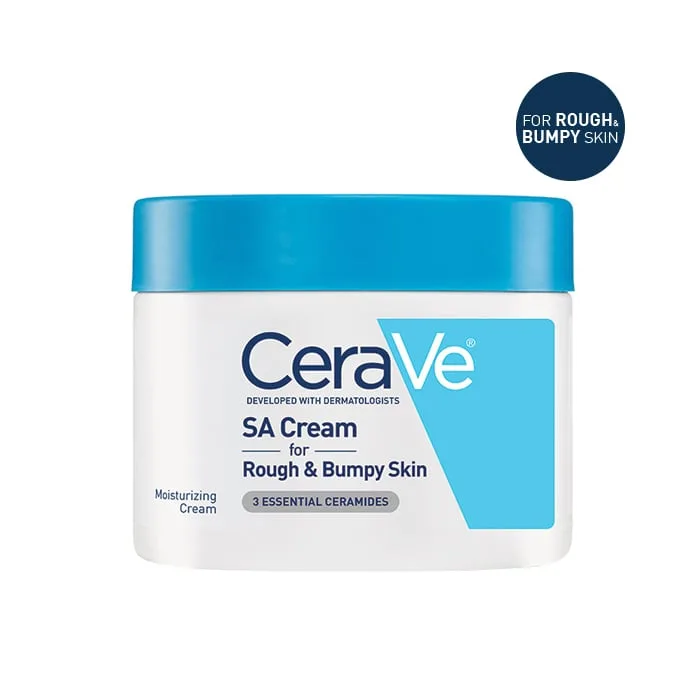
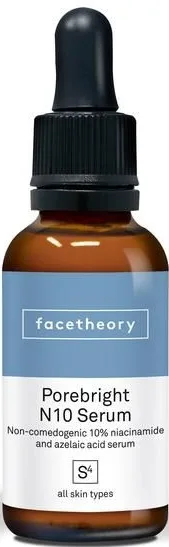
Effective adult-acne topicals are gentler than people expect and used with more restraint. A low-strength beta-hydroxy acid still helps by keeping pores clear, but the goal is control, not sandblasting — a measured formula like Versed Skin Refine Gentle Pore-Clearing Serum pairs mandelic and salicylic acids in a way adult skin tolerates, and a ceramide-buffered option such as CeraVe SA Smoothing Cream delivers salicylic acid alongside barrier lipids so you exfoliate and repair in one step. Azelaic acid deserves special mention because it does three jobs adults actually need: it is anti-inflammatory, mildly unclogs pores, and fades the brown post-acne marks that linger for months — and a niacinamide-and-azelaic serum like Facetheory Porebright Serum N10 targets both the breakout and its aftermath.
A retinoid remains the backbone of any serious acne routine, adult or teen, by normalizing how skin cells shed — but adults should ramp slowly, buffering with moisturizer to avoid the retinization flare. The genuinely new entry is clascoterone, a first-in-class topical anti-androgen cream cleared in the 2024 acne guideline update: it blocks androgen receptors in the skin itself, meaning for the first time you can target the hormonal driver of jawline acne with a topical rather than a pill. Before you combine any of these, run them through our conflict checker — layering a retinoid, a BHA, and an anti-androgen without a plan is how adults re-create the exact irritation spiral they were trying to escape.
Protecting the barrier so treatment doesn't cause the next flare
Barrier care is not the soft, optional part of an adult acne routine — it is the thing that lets the actives work without triggering the next round of inflammation. Every effective acne active is at least mildly irritating; the difference between a routine that clears skin and one that inflames it is usually how well the barrier is supported around those actives.
In practice that means a non-stripping cleanser, a genuine moisturizer even though the skin is oily and broken out, and calming ingredients that quiet reactivity — centella, panthenol, ceramides. A soothing barrier serum like Torriden Balanceful Cica Serum can sit under a moisturizer to buffer a retinoid or acid step, and it is exactly the kind of product adults skip because it doesn't feel like it's "doing" anything. It is doing the most important thing: keeping the skin resilient enough to tolerate treatment. Fragrance-free is the safer default here, and anything that stings on application is a signal to pull back, not push through. If you're rebuilding a routine from scratch, our routine finder can assemble a barrier-first sequence around the actives you're using so the pieces don't fight each other.
When topicals aren't enough
Here is the honest limit of any cream: topicals manage adult hormonal acne, but they cannot switch off the internal hormonal signal driving it. As a 2024 review in the International Journal of Women's Health emphasizes, androgen stimulation of the sebaceous gland is the central mechanism in adult female acne — and for many women, meaningfully quieting that requires reaching it from the inside.
So the decision rule is simple: give a well-designed, barrier-respecting topical routine a fair run — twelve weeks or so, applied consistently — and if deep, cyclical breakouts keep surfacing despite doing everything right, that plateau is the cue to talk to a clinician about systemic options rather than to crank up the exfoliation. The proven internal levers are anti-androgen therapy and certain combined oral contraceptives; the randomized SAFA trial in the BMJ, for instance, showed spironolactone meaningfully improved acne in adult women. None of that replaces good topicals — you keep the gentle actives, the retinoid, and the barrier support running underneath. The mistake to avoid is treating escalation and aggression as the same thing. The answer to stubborn hormonal acne is not harsher skincare. It is usually smarter, gentler skincare plus, when warranted, a treatment that actually reaches the hormone.
Products mentioned
Independently reviewed and scored — the real products behind this piece.


References
- Adult female acne: a guide to clinical practice — Anais Brasileiros de Dermatologia, 2019
- Unveiling the Nuances of Adult Female Acne: A Comprehensive Exploration of Epidemiology, Treatment Modalities, Dermocosmetics, and the Menopausal Influence — International Journal of Women's Health, 2024
- Effectiveness of spironolactone for women with acne vulgaris (SAFA) in England and Wales: pragmatic, multicentre, phase 3, double blind, randomised controlled trial — BMJ, 2023
Every cited link is verified to resolve to the paper named. Where a source could not be independently confirmed, it is listed without a link rather than pointing you somewhere wrong.
Frequently asked
How do I know if my jawline breakouts are hormonal acne?
The tell-tale signs are location and timing: deep, tender lesions concentrated on the lower face and chin that flare in the days before your period. Unlike teen acne, it involves fewer but more painful bumps and often persists into your thirties and beyond.
Why is my adult acne getting worse when I use strong acne products?
Adult skin has a more fragile barrier than teenage skin, so aggressive drying and scrubbing trigger inflammation that fuels more breakouts. Stripping products also do nothing about the hormonal driver behind jawline acne. Gentler, barrier-supporting actives usually clear it faster.
Can a cream treat hormonal acne, or do I need a pill?
Topicals can genuinely help, and clascoterone is a newer topical anti-androgen that targets the hormonal pathway in the skin. But creams can't switch off the internal hormonal signal, so if a good routine plateaus after about twelve weeks, systemic options are worth discussing.
Should I stop moisturizing if my acne skin is oily?
No — skipping moisturizer is a common adult-acne mistake. A compromised barrier drives inflammation and more breakouts, and most acne actives are drying. A non-stripping moisturizer keeps skin resilient enough to tolerate treatment, which is what actually clears it.
What order should I apply adult acne products?
Generally: gentle cleanse, treatment actives (a BHA or retinoid, not both at full strength the same night), then barrier support and moisturizer, with sunscreen every morning. Introduce one active at a time and buffer irritation with moisturizer to avoid a flare.