Rosacea Isn't One Thing — and That's Why Your 'Anti-Redness' Routine Isn't Working
Flushing, bumps, and visible vessels are three different problems hiding under one word, and treating them the same way is how most people make their skin angrier.
Read the preview
From the DermApproved blog, in Skin Concerns: rosacea — and why your anti-redness routine might be quietly betraying you. Here's the trap. Rosacea isn't one condition. It's at least four different problems wearing the same red mask — and the cream that helps one does absolutely nothing for another. So people fight the flushing with products built for the bumps, attack sensitive skin with something strong, and wonder why it keeps getting angrier. There's a microscopic culprit living in your pores that changes everything about one treatment, a popular flush-fix with a rebound catch nobody warns you about, and one kind of redness no bottle on earth will ever touch. We map which fix belongs to which feature, and the barrier-first move that calms more than any hero active. If your face won't stop reacting, start here — at dermapproved.com/blog.
One word, four different problems
The old system split rosacea into numbered subtypes, and it created a quiet disaster: people assumed they had "a type" and treated everything the same. The field has since moved to a phenotype approach — you treat the features a person actually has, because someone can have several at once, and each responds to something different.
There are four presentations worth knowing. Persistent facial redness and flushing is the vascular one: a background flush across the cheeks and nose, plus episodic flares that come and go. Papulopustular rosacea is the acne-like one: inflammatory bumps and pustules, often mistaken for adult acne, but without the blackheads acne brings. Phymatous rosacea is the thickening one — most familiar as a bulbous, enlarged nose (rhinophyma) — where skin tissue overgrows, and it needs procedural, not topical, management. And ocular rosacea is the one everyone forgets: gritty, burning, dry, red eyes, sometimes appearing before any skin symptom at all, and important to flag to a doctor because it can affect vision if ignored. The reason your routine may be failing is simple: a cream aimed at the bumps does nothing for the vessels, and a flush-reducer does nothing for the pustules.
What the evidence actually supports for the bumps
For the inflammatory papules and pustules, the data are unusually clean. A 2019 phenotype-based systematic review in the British Journal of Dermatology graded the certainty of each option, and topical azelaic acid and topical ivermectin both earned high-certainty support for reducing lesions. A 2024 network meta-analysis in JAAD International, pooling nineteen randomized trials and over 8,000 participants, put azelaic acid at the top for global improvement, with ivermectin, metronidazole, and lower-strength azelaic clustered close behind.
Azelaic acid is the workhorse: anti-inflammatory, gentle enough for reactive skin, and available in approachable formulas like Anua Azelaic Acid 10 Hyaluron Redness Soothing Serum or the barrier-friendly SKIN1004 Azelaic Acid 10 Ampoule. Ivermectin brings a different mechanism entirely — it is both anti-inflammatory and acaricidal, meaning it targets Demodex, the microscopic skin mites that live in everyone's follicles but appear in far greater numbers in papulopustular rosacea. That mite connection is one of the more fascinating threads in rosacea science, and it is why ivermectin sometimes works when metronidazole has stalled. The honest caveat: these are prescription or clinical-strength in their proven forms, they take six to twelve weeks, and none of them will touch the redness that isn't from bumps.
For moderate-to-severe or stubborn papulopustular cases, dermatologists frequently add a low, sub-antimicrobial dose of oral doxycycline — used at that dose for its anti-inflammatory effect rather than as an antibiotic, which sidesteps much of the resistance concern. It is a bridge, not a life sentence: the goal is to gain control quickly and then maintain with topicals alone, since long-term studies show topical azelaic acid, ivermectin, and metronidazole are effective for keeping remission going once the acute flare settles.
The redness and the vessels need completely different tools
Here is where most people go wrong. The background flush and the visible broken vessels look like the same problem — they are both "redness" — but they are mechanically distinct, and only one responds to anything in a bottle.
For the temporary, diffuse flush, topical brimonidine is the evidence-backed option: the 2019 review found high-certainty evidence that it reduces persistent erythema for about twelve hours by constricting small blood vessels. The catch is real and worth stating plainly — it wears off, some people get a rebound flush that looks worse than baseline when it does, and it treats appearance for a day rather than changing the disease. It is a tool for an event, not a cure. The visible, threadlike vessels (telangiectasias) are a different story: they are fixed, dilated capillaries, and no cream shrinks them. The only reliable fix is light-based — vascular laser or intense pulsed light (IPL), which selectively heat and collapse the vessels over a few sessions. If broken vessels are your main complaint, you are shopping for a provider, not a serum, and it is worth knowing that before you spend six months on creams that were never going to reach them.
Why your 'anti-redness' products may be the problem
Rosacea skin has a compromised barrier and a hair-trigger nervous and vascular response. That means the instinct to attack redness with something strong — a potent vitamin C, an exfoliating acid, a warming "detox" mask, a fragrance-heavy "soothing" cream — usually backfires, because irritation is the exact thing that drives a rosacea flare. The single highest-yield move for most people is subtraction: strip the routine down to a gentle cleanser, a bland barrier moisturizer, sunscreen, and whatever prescription active is doing the real work.
Barrier-first care means favoring calming, non-sensitizing ingredients — panthenol, centella, ceramides, colloidal oatmeal — and treating anything that stings as a warning, not a sign it is "working." A soothing step like the Anua Hyaluronic Acid Catechin Calming Pad can replace the harsh toners many rosacea sufferers are quietly making things worse with. Because everyone's triggers differ, patch-testing new products on a small area for a few days before committing is genuinely worth the delay here — our patch-test guide walks through how to do it properly, and the ingredient decoder helps you spot the fragrance and alcohol that hide in products marketed as gentle. The pattern to internalize: rosacea calms down when you do less to it, not more.
The unglamorous foundation: triggers and sun
No topical or laser holds if the fuel keeps getting added. Rosacea has well-known flare triggers — sun exposure, heat, spicy food, alcohol (red wine especially), stress, hot drinks, and abrupt temperature swings — and while you cannot avoid all of them, identifying your personal top two or three and managing them changes the baseline more than any product. A simple trigger diary for a few weeks usually reveals the culprits faster than guesswork.
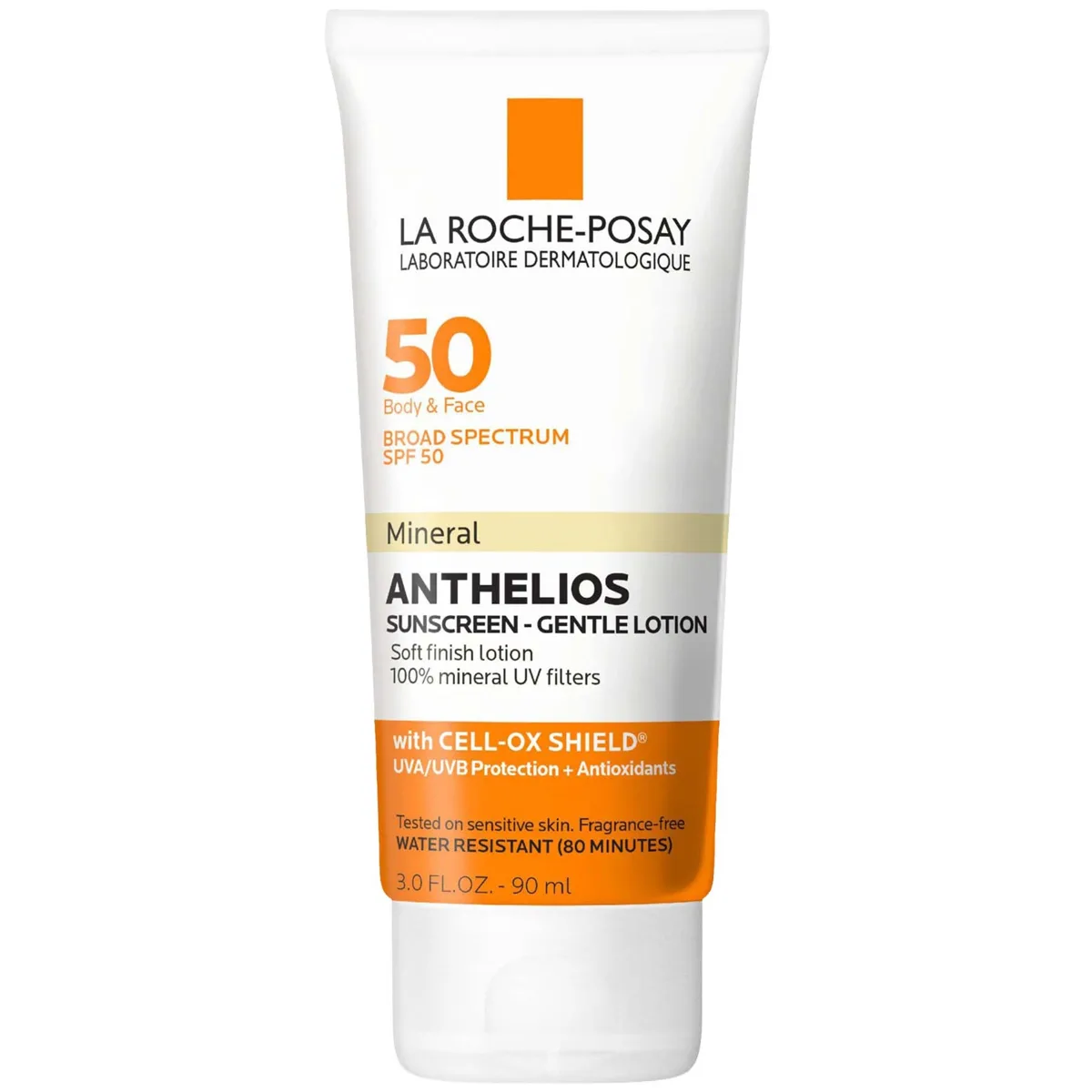
Sun is the biggest and least negotiable of them. UV both provokes flares and, over years, worsens the vessel damage, so daily broad-spectrum protection is foundational — and for reactive rosacea skin, mineral filters are the gentler bet, because zinc oxide and titanium dioxide are far less likely to sting than some chemical filters. A fragrance-free mineral option like La Roche-Posay Anthelios Mineral Gentle Sunscreen SPF 50 does the job without the burn, and our sunscreen finder can filter specifically for mineral, fragrance-free formulas if that one isn't your texture. The overall message of modern rosacea care is almost anticlimactic: match the treatment to the feature, keep the barrier intact, block the sun, and know your triggers. It is not exciting. It is what actually works.
Products mentioned
Independently reviewed and scored — the real products behind this piece.


References
- Interventions for rosacea based on the phenotype approach: an updated systematic review including GRADE assessments — British Journal of Dermatology, 2019
- The efficacy and safety of minocycline, metronidazole, ivermectin, and azelaic acid in moderate-to-severe papulopustular rosacea: A systematic review and network meta-analysis — JAAD International, 2024
- Topical Ivermectin in the Treatment of Papulopustular Rosacea: A Systematic Review of Evidence and Clinical Guideline Recommendations — Dermatology and Therapy, 2018
Every cited link is verified to resolve to the paper named. Where a source could not be independently confirmed, it is listed without a link rather than pointing you somewhere wrong.
Frequently asked
Why does my rosacea redness not respond to anti-redness creams?
Because 'redness' is really two different problems. A diffuse flush can be temporarily reduced with brimonidine, but fixed broken vessels don't respond to any cream — they need laser or IPL. If your creams aren't working, you may be treating the wrong feature.
Is azelaic acid or ivermectin better for rosacea bumps?
Both have high-certainty evidence and perform comparably in head-to-head analyses. Azelaic acid often tops global-improvement rankings, while ivermectin adds an anti-mite mechanism that can help when other treatments stall. The right choice depends on tolerance and prescriber guidance.
Can lasers get rid of visible blood vessels from rosacea?
Yes — vascular laser and intense pulsed light are the only reliable way to clear the fixed, threadlike vessels of rosacea. Topicals cannot shrink them. It usually takes several sessions, and results are best paired with ongoing sun protection.
What skincare should I avoid if I have rosacea?
Anything that stings or strips: strong exfoliating acids, high-strength vitamin C, fragrance, drying alcohols, and warming or 'detox' masks. Irritation drives flares, so a minimal barrier-first routine calms rosacea far more than aggressive 'treatment' products.
Does rosacea affect the eyes?
It can. Ocular rosacea causes gritty, burning, dry, or red eyes and sometimes appears before any skin symptoms. It should be flagged to a doctor because, left unmanaged, it can affect vision — it is not something to treat with skincare alone.