Your Rosacea Trigger List Is Wrong Because It's Somebody Else's
Sun, wine, stress, a hot shower — the famous rosacea triggers are real, but the map that matters is the one you draw yourself. Here's how to draw it.
Read the preview
From the DermApproved blog, in Rosacea and Redness: the trigger map nobody hands you. Sun, wine, spice, stress, a hot shower — you've seen the famous rosacea trigger list. Here's the problem: it's an average of a thousand strangers, and almost none of it is actually yours. Spicy food? Innocent for most people. That glass of red? Fine for nearly half. So why does your face still light up? Because your real triggers stack in a way no generic list can predict — and one of them you're probably applying with your own hands every morning. There's a simple method for finding yours, a line between skincare that calms and skincare that quietly inflames, and a hard limit where no diet on earth will help. We map the whole thing, at dermapproved.com/blog.
The list everyone hands you, and why it fails you
Ask the internet what triggers rosacea and you'll get the same tidy list every time: sun, heat, alcohol, spicy food, stress. It isn't wrong. In a National Rosacea Society survey of more than a thousand patients, sun exposure flared 81 percent of them, emotional stress 79 percent, and hot weather 75 percent, with wind, exercise, alcohol, and hot baths all clustered close behind. Those numbers are real and worth respecting.
But look closer and the same survey quietly undermines the way people use it. Not one trigger affected everyone. Spicy food lit up 45 percent — which means it did nothing for the majority. Alcohol flared 52 percent, so nearly half of rosacea patients can have a glass of wine in peace. The famous list is a population average, and you are not a population. Managing rosacea by memorizing someone else's triggers is like taking someone else's prescription because you have the same symptom.
The useful reframe is this: the standard list tells you what to test, not what to avoid. Your actual trigger map is a subset of it, in your own priority order, with its own weird personal entries the surveys never capture — a specific moisturizer, a particular commute, the exact point in your cycle. Finding that map is the real work of managing rosacea, and it's more detective story than shopping list.
Why so many different things cause the same red face
Sunlight, a chili pepper, a stressful meeting, and a hot shower have nothing obvious in common. So why do they all end at the same flushed, burning face? Because rosacea skin has a nervous and immune system set to a hair trigger, and most of these provocations funnel into the same final pathways.
The first pathway is neurovascular. Rosacea-prone skin is unusually rich in heat- and irritant-sensing nerve channels — the same family of receptors (TRPV1 among them) that fire when you eat a hot pepper, step into a hot shower, or feel your face warm with embarrassment. When they fire, they dilate blood vessels and release neuropeptides that recruit inflammation. That's why heat in any form — weather, exercise, a sauna, a steaming latte — is such a reliable trigger: it's literally the stimulus these channels evolved to detect.
The second pathway is immune. Rosacea skin overproduces an antimicrobial peptide called cathelicidin (LL-37), and it processes it into an abnormally inflammatory form. Research in the Journal of Investigative Dermatology showed that LL-37 ignites the NLRP3 inflammasome — a master switch for inflammation — driving the redness, swelling, and papules of rosacea. A broader review in Frontiers in Immunology traces how UV light, heat, microbes, and stress all feed this immune-plus-neurovascular loop. Understanding this is genuinely useful: it tells you that 'anti-inflammatory and anti-heat' is the strategy, and that your triggers are just the various on-ramps to the same highway.
Drawing your own flare map
Because triggers are individual and — critically — additive, the single most valuable tool in rosacea management isn't a product. It's a written record. Flares are frequently the result of stacking: the sunny afternoon alone was survivable, and the glass of red alone was survivable, but the sun plus the wine plus a bad night's sleep tipped you over. In the moment, you blame the wine. The diary shows you it was the third of three.
The method is unglamorous and it works. For a few weeks, log every flare and what preceded it in the prior few hours — food, drink, weather, exercise, stress, products, sleep, and where you are in your menstrual cycle if relevant. Patterns you'd never guess start to surface: maybe it's not 'spicy food' but specifically hot soup (heat, not spice). Maybe alcohol is fine except red wine, which contains histamine and vasodilating compounds many other drinks don't. Our [flare-diary] tool is built for exactly this kind of tracking, and pairing it with a saved skin profile in [my-skin] lets the site tailor its product and routine suggestions to your specific reactivity.
The encouraging part: the same survey research found that most patients who identified and managed their triggers meaningfully reduced their flare frequency. This is not busywork. It's the highest-leverage thing you can do, and it costs nothing but a few weeks of attention.
Skincare that calms versus skincare that lights the fuse
A weakened barrier is part of why rosacea skin is so reactive — irritants and provocations get in more easily, and the skin overreacts once they do. That makes your routine one of the biggest levers you have, in both directions. The wrong products are a daily trigger you apply with your own hands.
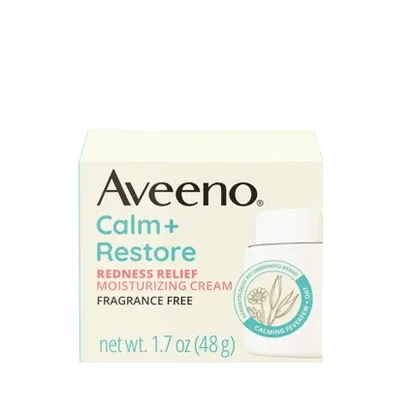
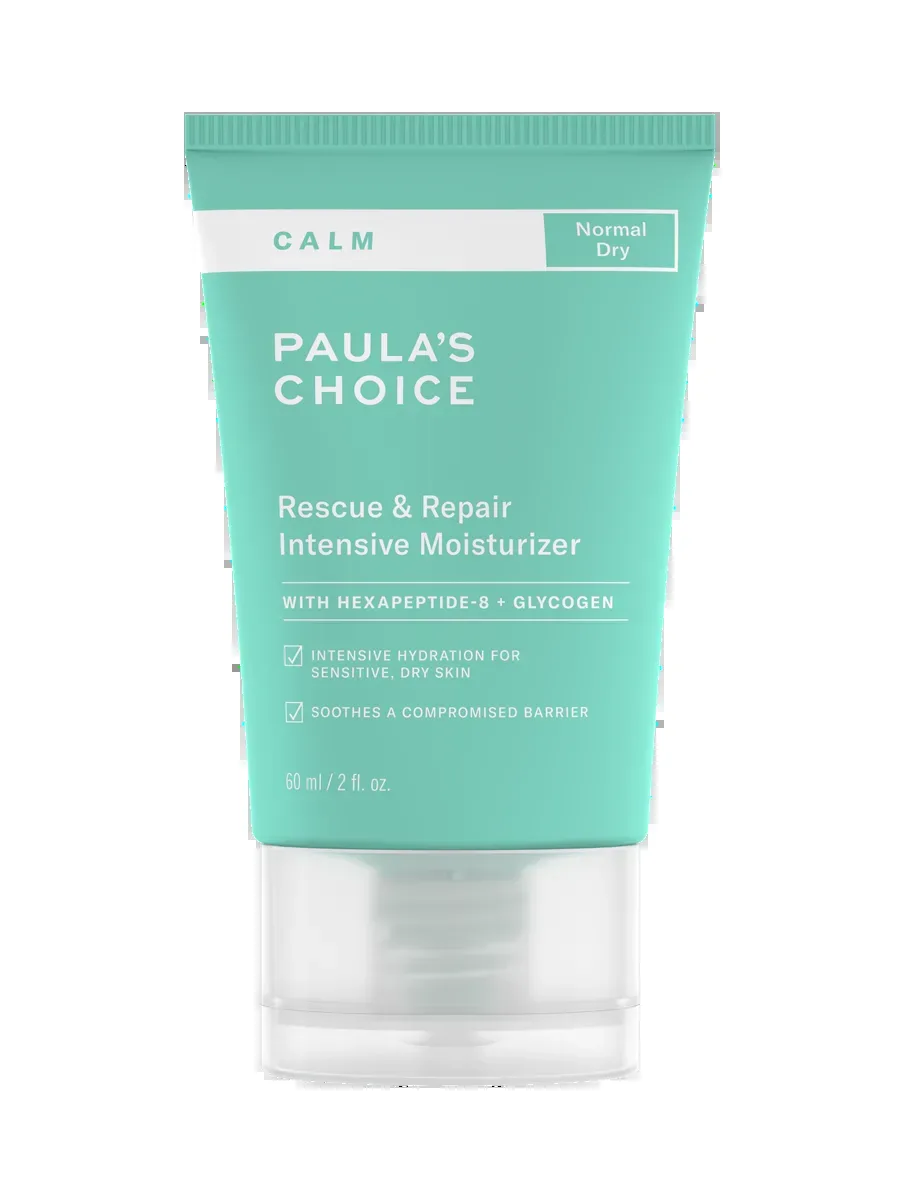
The calming side is straightforward: gentle, fragrance-free, barrier-supporting formulas that reduce reactivity over time. Ingredients with real evidence for redness include niacinamide, centella asiatica, colloidal oatmeal, azelaic acid, and licorice root. A centella-forward gel like Benton Goodbye Redness Centella Gel leans on soothing panthenol and allantoin without heavy occlusives, while an oat-and-ceramide cream such as Aveeno Calm + Restore Redness Relief Moisturizing Cream rebuilds the barrier with colloidal oatmeal and feverfew. For a lighter, ceramide-and-carnosine option, Paula's Choice Calm Redness Relief Moisturizer is formulated specifically for reactive skin. None of these is a cure — they lower the baseline so it takes more to tip you over.
The inflaming side is where good intentions go wrong. High-strength glycolic peels, physical scrubs, most fragrance (including 'natural' essential oils), high-percentage vitamin C, and stinging astringents can all provoke the very nerves and inflammation you're trying to quiet. If a product tingles, burns, or 'feels like it's working,' that sensation is often the trigger firing. Rosacea rewards restraint: fewer actives, gentler ones, patch-tested one at a time. And daily sunscreen isn't optional — UV is both the number-one surveyed trigger and a direct activator of the cathelicidin pathway.
When triggers aren't the whole story
The honest ceiling of all this detective work: trigger management controls flares, but it doesn't treat the disease. You can eat a perfect diet, live in air conditioning, and use flawless skincare, and still have the persistent background redness, the visible broken vessels, or the acne-like papules and pustules that define the more advanced subtypes. Those are structural and inflammatory changes, and no amount of avoidance reverses them.
That's the signal to escalate to a dermatologist. The prescription toolkit is genuinely effective and targets the mechanisms directly: topical ivermectin and metronidazole and oral tools for the inflammatory bumps, brimonidine or oxymetazoline to constrict the flushing vessels, low-dose anti-inflammatory doxycycline for stubborn cases, and vascular lasers or intense pulsed light for the fixed redness and telangiectasias that creams can't touch. Trigger avoidance makes all of these work better — it's the foundation, not the alternative.
The reframe to leave with: rosacea is a chronic inflammatory condition you manage, and trigger-mapping is the half of that management you control directly. Draw your own map, respect the heat-and-inflammation mechanism underneath it, keep your routine boringly gentle — and when the redness stops responding to any of that, stop tightening your diet and go get the treatment that actually addresses the disease.
Products mentioned
Independently reviewed and scored — the real products behind this piece.

References
- Cathelicidin LL-37 Ignites Primed NLRP3 Inflammasomes in Rosacea — Journal of Investigative Dermatology, 2021
- Therapeutic strategies focusing on immune dysregulation and neuroinflammation in rosacea — Frontiers in Immunology, 2024
Every cited link is verified to resolve to the paper named. Where a source could not be independently confirmed, it is listed without a link rather than pointing you somewhere wrong.
Frequently asked
If spicy food and alcohol don't seem to affect me, do I still have rosacea?
Very possibly. In surveys, spicy food triggers under half of rosacea patients and alcohol only about half, so plenty of people with genuine rosacea react to neither. Triggers are individual — yours might be heat, sun, or stress instead. The diagnosis rests on the skin signs, not on which triggers you happen to have.
How long do I need to keep a flare diary before it's useful?
Usually a few weeks. Because flares often come from several small triggers stacking up rather than one obvious cause, you need enough entries to see the pattern repeat. Log food, drink, weather, exercise, stress, sleep, products, and cycle timing after each flare, and the recurring combinations tend to surface within a month.
Can my moisturizer be causing my rosacea flares?
Yes — skincare products were a trigger for roughly 40 percent of patients in the National Rosacea Society survey. Fragrance, essential oils, high-strength acids, and stinging astringents are common culprits. If a product tingles or burns, treat that as a warning rather than a sign it's working, and switch to fragrance-free, barrier-supporting formulas.
Why does heat trigger my rosacea even when there's no sun involved?
Rosacea-prone skin is dense with heat-sensing nerve channels that dilate blood vessels and release inflammatory signals when activated. Hot weather, exercise, saunas, and even a steaming drink all hit those channels directly, which is why heat in any form is one of the most reliable triggers regardless of UV exposure.
If I avoid all my triggers perfectly, will my rosacea go away?
It will flare far less, but avoidance doesn't cure the underlying condition. Persistent redness, visible vessels, and inflammatory bumps are structural changes that need prescription treatment — topicals, oral therapy, or vascular laser. Trigger management is the foundation that makes those treatments work better, not a replacement for them.