Ocular Rosacea: The Half of the Diagnosis Nobody Treats
Gritty, burning, recurrently styed eyes get filed under screens and allergies. In a large share of people with rosacea they are the same disease as the redness — and the only part of it with a cornea at stake.
Read the preview
From the DermApproved blog, in Rosacea and Redness: rosacea in the eyes. Common, routinely missed, and in one person in five it arrives before the face does. The warm compress everyone is told to do fails on physics — a flannel never gets hot enough, for long enough, to do the one thing it exists for. For the full breakdown, visit dermapproved.com/blog.
Filed under screens, allergies and bad luck
The eye symptoms rarely arrive announcing themselves. They arrive as grittiness that feels like a contact lens problem, as burning that gets blamed on monitors, as eyes that water in the cold, as a stye that keeps coming back in the same spot, as lashes that crust overnight. Each of those has an innocent explanation available, and people reach for it.
The numbers argue for reaching further. A 2025 review in Cornea puts ocular involvement at between 10% and 50% of cutaneous rosacea cases, and notes that it is frequently underdiagnosed — particularly in older patients and in darker skin, where the facial erythema and telangiectasia that would prompt the question are harder to see in the first place.
Two findings from the same review make the miss easy to understand. The first is sequence: facial changes come first in about 53% of cases, skin and eye changes appear together in around 27%, and the eyes go first in up to 20%. One person in five has no facial diagnosis to connect their symptoms to at the moment the symptoms start. The second is calibration: the severity of ocular symptoms does not always correlate with the severity of the skin. Barely visible facial rosacea can sit alongside substantial ocular surface disease, and a florid face can come with comfortable eyes. Anyone using their cheeks as a gauge for their eyes is reading the wrong instrument.
This is also why it is worth logging. If you already track flares — and the flare diary exists for exactly this — adding grittiness, morning crusting and stye episodes to what you record turns a vague suspicion into something a clinician can act on, because the symptom list is specific and patterns show up faster on paper than in memory.
The oil, not the water
The intuitive model of dry eye — not enough tears — is the wrong model here, and getting it right changes what treatment makes sense.
Run a finger along the inner edge of your lower lid and you are tracing roughly two to three dozen meibomian glands, opening in a row just behind the lashes. They secrete meibum, an oily film that spreads across the tear layer every time you blink and slows evaporation. In rosacea, those glands inflame, their secretions thicken, and the orifices block. Tears are still produced; they simply do not stay. The clinical name for the result is evaporative dry eye, and the lid margin above it becomes the chronic blepharitis people recognise as redness, crusting and thickened lid edges.
Underneath that plumbing failure is the same immune dysregulation driving the skin. The Cornea review describes toll-like receptor activation and complement involvement producing chronic ocular surface inflammation, alongside alterations in the ocular microbiome — a picture that reads as recognisably rosacea rather than as coincidental dry eye. Demodex mites, already implicated in facial rosacea, colonise lash follicles and add to the lid-margin inflammation.
That single mechanism explains most of the symptom list at once. Fast evaporation produces grittiness that worsens through the day and reflex watering in wind or cold. Blocked glands produce recurrent styes and chalazia. Inflamed lid margins produce the crusting. And because tear film quality fluctuates, so does vision — the intermittent blur that clears on a hard blink, which people rarely mention because it does not feel like an eye problem. If your dry eye has felt oddly connected to your skin, this is the connection.
Why this is the part with real stakes
Most of rosacea negotiates with appearance. This part does not, and it is the reason the topic deserves more attention than it gets.
Sustained ocular surface inflammation can move from the lid margin to the cornea. The published progression runs through punctate epithelial erosions to peripheral infiltrates, then in more severe disease to corneal neovascularisation and keratitis, and at the far end to scarring, ulceration and perforation. These outcomes are uncommon. They are not theoretical, and they are what the referral advice exists to prevent.
The paediatric picture makes the argument most starkly. In childhood blepharokeratoconjunctivitis — ocular rosacea's presentation in children, routinely mistaken for allergic conjunctivitis or recurrent styes for years — the Cornea review reports that natural progression can reach irreversible corneal damage in up to 81% of affected eyes, with corneal opacification and irregular astigmatism among the results. Children are worse off here mainly because nobody thinks of the diagnosis.
The global ROSacea COnsensus panel, whose recommendations included ophthalmologists among the authors, put the practical rule plainly: lid hygiene and artificial tears alongside medication, and ophthalmological referral for all but the mildest ocular features. That is a lower bar for referral than most people apply to their own eyes.
Some symptoms skip the queue entirely. Pain rather than discomfort, light sensitivity, a persistent drop in vision or a red eye that is getting worse rather than fluctuating are not things to manage with a warm flannel — they are same-day problems. If a dermatology appointment is the more accessible route, the visit prep tool will help you present the ocular history in a form that gets acted on rather than noted.
The compress everybody does wrong
Warm compresses are the most-recommended and least-specified instruction in this entire condition. "Apply a warm compress" is not a dose, and the physics is unforgiving.
Meibum has to be warmed enough to liquefy and flow, which puts the target at the inner surface of the eyelid — the side facing the eye, where the glands actually sit — at roughly 40 °C or above. The instructive experiment is a 2008 study in Optometry and Vision Science that measured inner eyelid temperature under different compress methods. A fifteen-minute compress applied without reheating peaked at 38.8 °C on the inner lower lid: below the threshold, for the entire application. Reheating the compress every two minutes reached 40.4 °C, but took thirty minutes to get there. Optimising contact with the lower lid and reheating every two minutes reached 40.8 °C in twenty minutes, with the authors setting four minutes as the bare minimum to cross 40 °C at all and noting that severe obstruction needs longer.
The practical translation is that a flannel run under the hot tap, held on for two minutes, and abandoned when it cools is not a mild version of the treatment. It is a different activity. If you are doing compresses, use something that holds heat — a microwavable mask, or a cloth you actively rewarm every couple of minutes — press it into contact with the closed lid rather than resting it there, and give it real time. Then follow with lid hygiene: gentle cleaning along the lash line twice daily, which the Cornea review frames as cleaning the lids with a non-irritating cleanser, and which works better after the heat than before it.
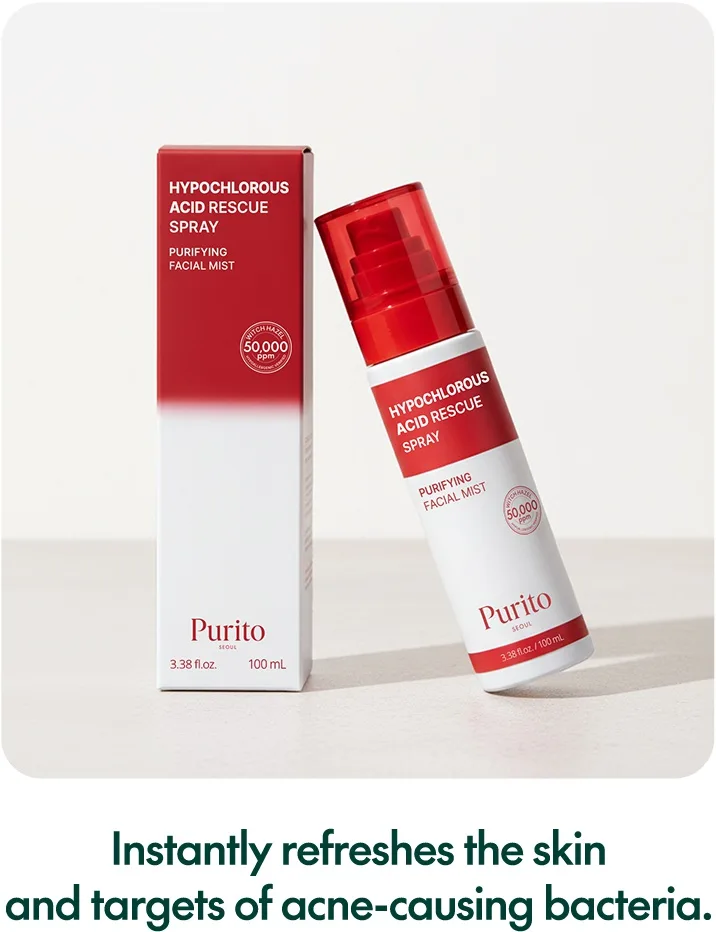
One note on the products marketed at this. Hypochlorous acid sprays are legitimately used around the lids, but an ophthalmic lid spray and a cosmetic facial mist are regulated differently and formulated differently. Something like Purito Hypochlorous Acid Rescue Spray is a reasonable calming mist for rosacea-prone facial skin; it is not an eye product, and the fact that it shares an active with one does not make it interchangeable.
What the prescriptions do — and one popular supplement that failed its trial
The pharmacology here is more interesting than "antibiotics for an infection", because for the most part it is not being used as an antibiotic at all.
Extended-release doxycycline at 40 mg daily is the standard systemic option, and the dose is the point: it sits below the antibacterial threshold and is used for its anti-inflammatory effect on the ocular surface, which is why it can be taken for months without the resistance arithmetic that would apply to a treatment dose. Higher conventional dosing, tapered, is used in more active disease. The reasoning behind the sub-antimicrobial dose is one of the more elegant pieces of rosacea therapeutics.
Beyond that, the reviewed options include topical cyclosporine at 0.05% to 0.1% twice daily for the inflammatory component, topical or oral azithromycin in short courses, and topical ivermectin on the facial skin where Demodex load is part of the picture. None of these are things to improvise; all of them are reasons the referral matters.
Then there is fish oil, which deserves its own paragraph because it is so widely recommended. Omega-3 supplementation at around 720 mg EPA and 480 mg DHA daily appears in the ocular rosacea literature, and it has the distinction of having been tested properly and failed. The DREAM trial, published in the New England Journal of Medicine in 2018, randomised patients with moderate-to-severe dry eye disease to omega-3 supplementation or placebo and found no significant benefit over placebo on symptoms. That does not make the supplement harmful, and it does not settle every sub-population question. It does mean anyone told that fish oil is a cornerstone of treatment is being handed something a large randomised trial declined to support, and the compress technique above is a considerably better use of the same enthusiasm.
The face routine that either helps your eyes or annoys them
Because both halves of the diagnosis are usually being treated at once, the facial routine has an ocular dimension that rarely gets discussed.
Start with what is neutral. A low-irritancy, fragrance-free cleanser used on the face will not upset the lid margin the way a foaming, fragranced one can when it inevitably runs into the eyes in the shower; La Roche-Posay Toleriane Hydrating Gentle Cleanser is the archetype of the category, and our rosacea cleanser ranking covers the rest of the field. For the thin periocular skin that gets dry and flaky when the eyes are inflamed and rubbed, a bland fragrance-free option such as La Roche-Posay Toleriane Dermallergo Eye Cream is doing a supporting job rather than a therapeutic one.
Then what needs a boundary. Facial actives that earn their place on rosacea skin — azelaic acid in a formulation like The Ordinary Azelaic Acid Suspension 10% among them — are for the cheeks, not the lid. Applying an active up to the lash line is how a good facial treatment turns into an eye complaint. Sunscreen is the other frequent offender: organic filters migrating into the eye sting reliably enough that many people quietly stop wearing any, which is the worst possible resolution. Switching to a mineral filter such as Vanicream Mineral Sunscreen SPF 50+ usually solves it, and the routine finder can rebuild the rest around that swap.
Makeup deserves one specific note. Eyeliner applied inside the lash line sits directly across the meibomian gland orifices — the exact structures that are already struggling — and old mascara is a poor thing to be reintroducing to an inflamed lid margin. Neither needs to be abandoned; both need to move outward and be replaced more often.
The honest summary is that ocular rosacea is a maintenance condition, not a course of treatment. Compresses and lid hygiene work while you do them and stop working when you stop, which is unglamorous and true of most of the rosacea pathway. What makes this half different is that skipping it does not just cost you comfort. Occasionally it costs cornea, and that is a category of risk the rest of the condition does not carry.
Products mentioned
Independently reviewed and scored — the real products behind this piece.


- Therapy guide Rosacea The escalation ladder the ocular half sits inside.
- Ranked list Cleansers That Suit Rosacea The rest of the low-irritancy cleanser field.
- Ingredient Azelaic Acid The facial active that helps the skin and belongs nowhere near the lid.
- Question What are the eye symptoms of rosacea? The specific symptom list worth logging.
- Question Are my dry eyes related to my rosacea? Why the dry eye and the skin are the same disease.
- Question Which eye symptoms need urgent attention? The symptoms that skip the queue entirely.
- Question What is the low-dose doxycycline for rosacea? Why the dose sits below the antibacterial threshold.
References
- Ocular Rosacea: An Updated Review — Cornea, 2025
- Inner eyelid surface temperature as a function of warm compress methodology — Optometry and Vision Science, 2008
- Rosacea treatment update: recommendations from the global ROSacea COnsensus (ROSCO) panel — British Journal of Dermatology, 2017
- Recommendations for rosacea diagnosis, classification and management: update from the global ROSacea COnsensus 2019 panel — British Journal of Dermatology, 2020
- n-3 Fatty Acid Supplementation for the Treatment of Dry Eye Disease — New England Journal of Medicine, 2018
Every cited link is verified to resolve to the paper named. Where a source could not be independently confirmed, it is listed without a link rather than pointing you somewhere wrong.
Frequently asked
Can I have rosacea in my eyes without much redness on my face?
Yes, and it is common enough that facial severity is a poor guide. Reviews report that ocular severity does not reliably correlate with cutaneous severity, and in up to a fifth of cases the eye involvement appears before any skin diagnosis exists. Subtle facial signs are also harder to spot in darker skin, which contributes to the condition being missed.
How long does a warm compress actually need to be?
Longer and hotter than most people do it. Measured inner-eyelid temperature after fifteen minutes without reheating reached only 38.8 °C, short of the roughly 40 °C needed to soften the oil. Reheating every two minutes and pressing the compress into contact reached the target, but took twenty to thirty minutes — four minutes being the absolute floor for crossing the threshold at all.
Is the low-dose doxycycline for my eyes or my skin?
Both, and it is not being used as an antibiotic in either. Extended-release doxycycline at 40 mg daily sits below the antibacterial threshold and is prescribed for its anti-inflammatory effect on the ocular surface and the skin, which is what allows it to be taken over months rather than in a short course.
Should I stop wearing eye makeup if I have ocular rosacea?
Not necessarily, but move it. Liner applied inside the lash line sits directly over the meibomian gland openings that are already blocked, and old mascara reintroduces bacteria to an inflamed lid margin. Keeping product outside the lash line, removing it thoroughly, and replacing eye products often addresses most of the problem without giving anything up.
Does fish oil help ocular rosacea?
The evidence is weaker than the recommendation implies. A large randomised trial published in the New England Journal of Medicine compared omega-3 supplementation with placebo in moderate-to-severe dry eye disease and found no significant benefit. It is unlikely to hurt, but it should not displace lid hygiene, proper compress technique or a referral.