Perioral Dermatitis: The Rash Your Skincare Is Probably Causing
The stubborn little bumps around your mouth that every acne product makes worse aren't acne — and the fix is to stop, not start.
Read the preview
From the DermApproved blog, in Skin Concerns: perioral dermatitis — the rash your skincare is probably causing. Here's the uncomfortable part. Those stubborn little bumps around your mouth and nose that every acne product seems to make angrier? They might not be acne at all. And if you're treating them like acne — acids, benzoyl peroxide, a good scrub — you may be feeding the exact fire you're trying to put out. Because this rash plays by opposite rules. There's one everyday product, sitting in almost every bathroom, that shows up again and again as the trigger — and almost nobody suspects it. There's a counterintuitive cure that involves doing dramatically less, and it gets worse before it gets better. And there's a tiny visual tell, a thin clear rim right at your lip, that quietly gives the whole thing away. We lay out how to recognize it, what to actually put on it, and how to rebuild a routine that won't relapse — at dermapproved.com/blog.
The rash that pretends to be acne
Picture a scatter of tiny pink bumps creeping out from the corners of the nose, fanning across the folds beside the mouth, sometimes climbing toward the lower eyelids. Some are flat and papular, some carry a faint scale, a few look almost like tiny pustules. It itches or burns more than it hurts. And crucially, there is often a narrow rim of completely clear skin hugging the lip border, as if someone drew an exclusion zone around the mouth itself. That spared rim is one of the most useful diagnostic tells in all of facial dermatology.
This is perioral dermatitis, and the reason it torments people is that it looks exactly like the thing it isn't. It reads as acne, or as an allergic breakout, so the instinct is to reach for the acne arsenal: a salicylic cleanser, benzoyl peroxide, a retinoid, maybe a physical scrub to buff the bumps away. Every one of those moves tends to pour fuel on the fire. It is most common in adult women roughly between their twenties and forties, though children and men absolutely get it too. A 2021 review in the Journal of Cosmetic Dermatology frames it as a distinct entity driven by an impaired skin barrier and follicular inflammation rather than the clogged-pore-and-bacteria story that defines true acne. Different disease, opposite playbook.
Why your actives are the arsonist
The most consistent thread running through the medical literature is uncomfortable for anyone with a maximalist routine: topical corticosteroids are the leading identifiable trigger. That includes prescription hydrocortisone dabbed on a random itch, a stronger steroid cream borrowed from a family member, and even the fine mist from an asthma inhaler or nasal steroid spray landing around the mouth and nose. The cruel twist is that steroids initially calm the redness — so people apply more, feel better, stop, and watch the rash roar back worse than before. That rebound loop is the signature of steroid-induced perioral dermatitis.
But steroids are not the only arsonist. Heavy occlusive layers, rich anti-aging creams, and a stacked deck of actives all appear repeatedly as aggravators, likely because they disturb the barrier and the follicular environment in a face already primed to overreact. Fluoride and tartar-control toothpastes are a recurring suspect for the specifically perioral cases, as are physical sunscreens and even long-term occlusion under masks. If you have been layering an acid toner, a vitamin C, a retinoid, and a thick occlusive night cream, your barrier isn't being fortified — it's being interrogated. Running your shelf through the [ingredient-decoder] can surface which products carry the usual aggravators, and the [conflict-checker] helps you see when you've simply stacked too much active onto one small, angry patch of skin.
Zero therapy: the cure is subtraction
The evidence-based approach to perioral dermatitis is almost philosophically opposed to how we treat everything else. The foundational move is called zero therapy, and it means exactly what it sounds like: stop nearly everything. Discontinue the steroid. Retire the actives. Drop the scrubs, the exfoliating pads, the fragranced washes, the ten-step ritual. Cleanse with lukewarm water or the blandest possible cleanser, and if you must moisturize, use something minimal.
Here is the honest part nobody enjoys: it usually gets worse before it gets better. When you stop a topical steroid, the rebound flare can be dramatic and demoralizing, sometimes lasting a week or two, occasionally longer. This is the phase where people panic and reintroduce the steroid, restarting the whole cycle. Riding out that rebound is the entire game. A 2010 evidence-based therapy review in Giornale Italiano di Dermatologia e Venereologia concluded that oral tetracyclines carry the strongest evidence for speeding resolution, with topical metronidazole, erythromycin, and azelaic acid as well-supported alternatives — which is why this is a rash genuinely worth seeing a clinician about rather than white-knuckling alone. But even the prescriptions work best on top of a stripped-back routine, not instead of one.
What to actually put on it
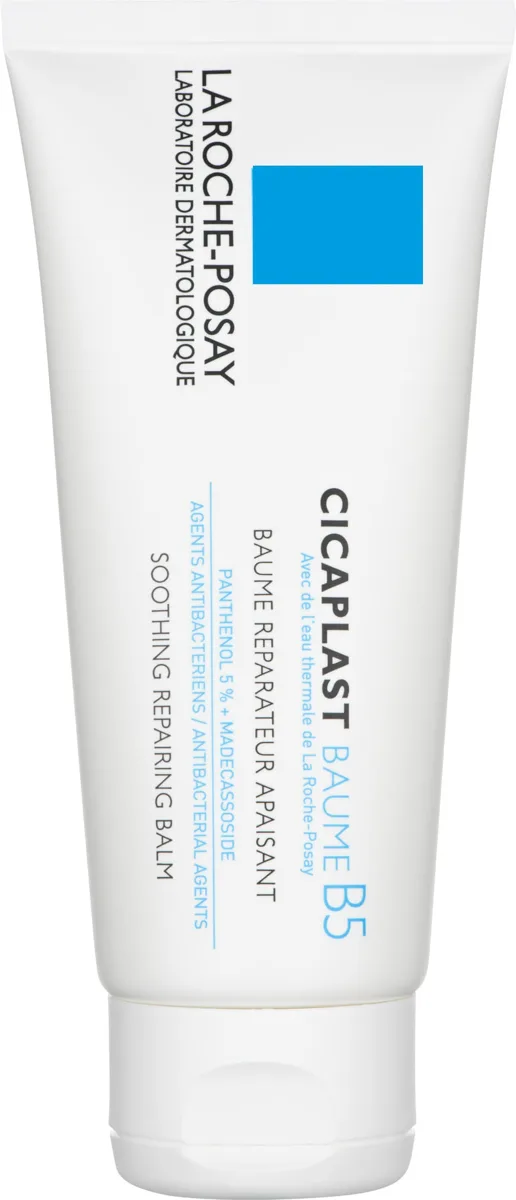
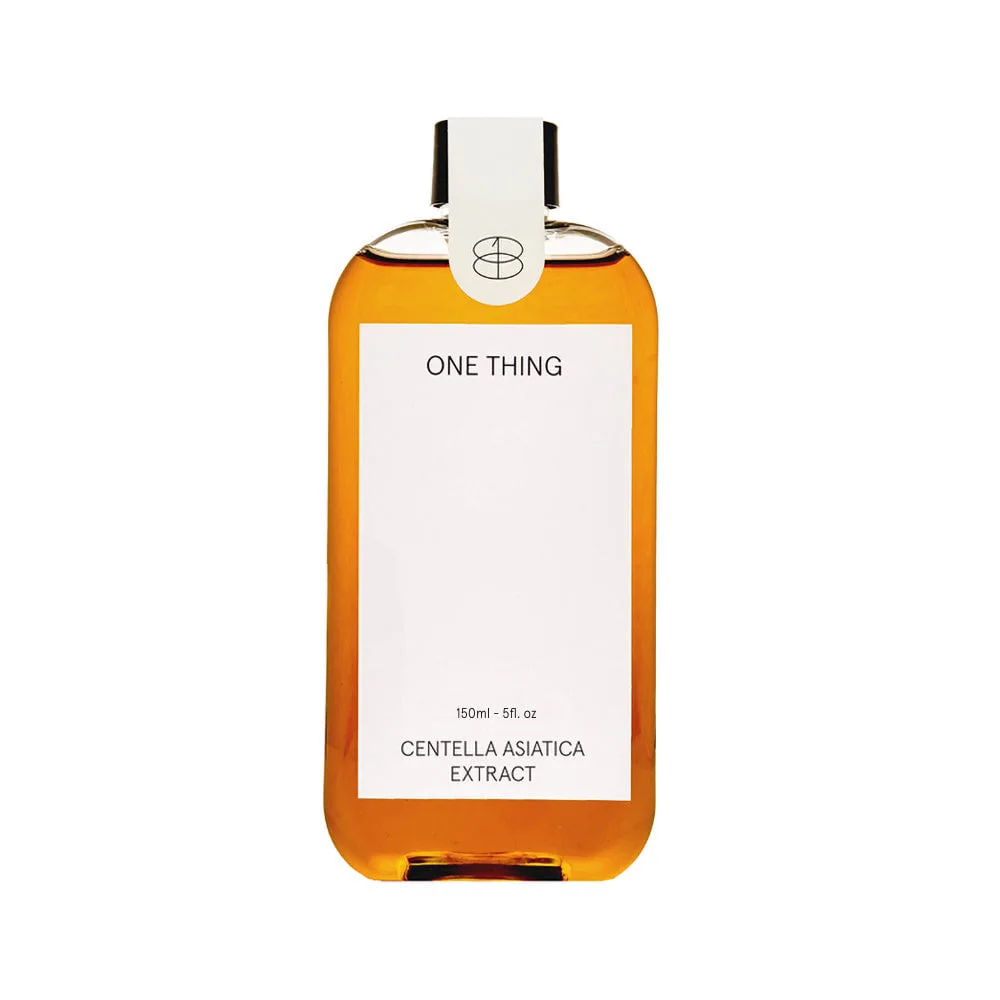
During a flare, the goal is to give the barrier a calm, boring environment and get out of its way. That means a non-foaming, fragrance-free, low-ingredient cleanser and, if skin feels tight, a simple soothing moisturizer — not a treatment, just a buffer. A pared-down centella or panthenol product is a reasonable choice here because the ingredient list is short and the intent is purely calming rather than exfoliating. Something like La Roche-Posay Cicaplast Baume B5+ is a sensible barrier balm for the tight, raw feeling that follows steroid withdrawal, and a bare-bones extract such as One Thing Centella Asiatica Extract delivers soothing centella without a stack of other actives riding along.
For cleansing, the assignment is to remove almost nothing aggressively. A gentle, glycerin-based wash like The INKEY List Glycerin Gentle Purifying Cleanser does the job without surfactant harshness or fragrance. Whatever you choose, patch-test it first — this is skin that has proven it will overreact, so introduce one product at a time and give it days, not hours, to declare itself. The [patch-test] tool walks through doing that properly. What you are emphatically not doing during a flare: acids, benzoyl peroxide, retinoids, vitamin C, physical scrubs, or a new 'barrier-repair' cream with twenty ingredients. Fewer inputs, less noise.
Rebuilding a routine that won't relapse
Once the rash has been quiet for a few weeks, the temptation is to sprint back to the full regimen. Don't. Reintroduce products one at a time, spaced by roughly a week each, so that if something reignites the rash you know exactly which culprit to banish. Start with the least provocative layer — a bland moisturizer, then a mineral or gentle chemical sunscreen — and only much later consider whether you truly need the actives that may have contributed in the first place.
Steroids should be treated as a hard boundary on facial skin unless a dermatologist specifically directs otherwise, and even then, briefly. Watch the incidental exposures too: rinse thoroughly after using a steroid inhaler, and consider switching away from tartar-control toothpaste if your rash clusters tightly around the mouth. Perioral dermatitis has a frustrating tendency to recur, and the people who keep it away long-term are usually the ones who accepted that their skin does better with a shorter routine, permanently. It is a strange lesson in a culture that sells more steps as more care — sometimes the most advanced thing you can do for your face is considerably less.
Products mentioned
Independently reviewed and scored — the real products behind this piece.


References
- Perioral dermatitis: Diagnosis, proposed etiologies, and management — Journal of Cosmetic Dermatology, 2021
- Evidence based review of perioral dermatitis therapy — Giornale Italiano di Dermatologia e Venereologia, 2010
Every cited link is verified to resolve to the paper named. Where a source could not be independently confirmed, it is listed without a link rather than pointing you somewhere wrong.
Frequently asked
How can I tell perioral dermatitis apart from acne?
Perioral dermatitis appears as clusters of small, uniform papules and tiny pustules around the mouth, nose, and sometimes eyes, often with a burning or itching sensation rather than the tenderness of a cyst. A classic clue is a thin rim of clear skin right at the lip border. Unlike acne, it tends to worsen with acids, benzoyl peroxide, and scrubs.
Will hydrocortisone cream clear up perioral dermatitis?
It may look better for a few days, then flare back worse when you stop — topical corticosteroids are the most consistently identified trigger for this rash. The initial improvement is a trap that leads to a rebound cycle. The recommended path is to stop the steroid and expect a temporary flare as the skin resets.
How long does perioral dermatitis take to go away?
With a stripped-back routine and, when needed, a prescription like an oral tetracycline or topical metronidazole, most cases clear over several weeks to a couple of months. If you are coming off a topical steroid, expect a rebound flare in the first week or two before it improves. Reintroducing products too quickly is the most common reason it drags on.
Can toothpaste really trigger a rash around my mouth?
For rashes that cluster tightly around the lips, fluoride and tartar-control toothpastes are a recurring suspect in the literature. If your perioral dermatitis is stubbornly perioral, trialing a simpler toothpaste for a few weeks is a low-cost experiment. It won't be the culprit for everyone, but it's worth ruling out.
Is it safe to use retinol or vitamin C during a flare?
No — during an active flare, potent actives including retinoids, vitamin C, exfoliating acids, and benzoyl peroxide tend to aggravate perioral dermatitis. The barrier is already inflamed, and these ingredients add more stress. Reintroduce them only after the rash has been calm for several weeks, one product at a time.