Closed Comedones: The Tiny Bumps That Aren't Really 'Acne'
Those flesh-colored forehead bumps ignore your acne spot treatments for a simple reason — there's nothing inflamed to treat.
Read the preview
From the DermApproved blog, in Acne and Breakouts: closed comedones — those little forehead bumps that laugh off every acne product you own. Here's the twist. They're not really acne. Nothing's inflamed, nothing's infected — so benzoyl peroxide, patches, tea tree, all of it, aiming at a problem your skin doesn't have. Meanwhile, half the bumps people fight this hard aren't even comedones — and telling them apart changes everything you should do next. There is a way to clear them. It's just slower than anyone selling you a product wants to admit, it runs through a phase that looks like it's failing, and the instinct that feels most satisfying is the one making it worse. Which actives, which timeline, and the bumps you should stop touching entirely — that's the full story, at dermapproved.com/blog.
The bumps that shrug off your acne routine
You run a fingertip across your forehead or chin and feel them before you see them: a constellation of small, flesh-colored bumps, no redness, no white head, no tenderness. So you do the logical thing and hit them with your acne arsenal — benzoyl peroxide, a pimple patch, maybe a tea tree dab — and weeks later they're exactly where they were. The reason isn't that your products are weak. It's that you're treating the wrong condition.
Those bumps are closed comedones, and the word that matters is 'closed.' A comedone is a follicle packed with a plug of dead skin cells and oil. When the pore stays open at the surface and the plug oxidizes, you get a blackhead — an open comedone. When a thin layer of skin seals the top, the plug sits trapped underneath as a small dome: a closed comedone, sometimes called a whitehead, though there's no pus involved.
Here's the crucial part: a closed comedone is not inflamed. There's no immune response, no bacteria running riot, nothing red and angry to calm down. It is, mechanically, a traffic jam. And you cannot treat a traffic jam with an anti-inflammatory. This is why the entire category of 'kill the bacteria, dry it out' acne products misses — they're solving a problem your skin doesn't currently have.
Comedone, milia, sebaceous filament: a field guide
Half the battle is correct identification, because three different things get lumped together as 'tiny bumps' and only one of them responds to comedolytic skincare.
A closed comedone is soft, slightly raised, and connected to a follicle; with the right actives, it will resolve over weeks. Milia are different animals — tiny, hard, pearly-white cysts of trapped keratin with no follicular opening to the surface. Because there's no channel out, topicals can't flush them; milia typically need physical extraction by a professional, and pelting them with acids for months is wasted effort. If a bump is rock-hard and white and never budges, suspect milia, not a comedone.
Sebaceous filaments are the most over-treated 'flaw' in skincare. Those tiny grayish dots on your nose that reappear the moment you extract them are not clogs at all — they're the normal, healthy lining of your pores channeling oil to the surface. Everyone has them. You can temporarily empty a pore, but the filament refills because it's supposed to. Chasing them with harsher and harsher products is how people wreck their barrier trying to fix skin that was never broken.
And true inflammatory acne — the red papules and pustules — is a separate track that layers antibacterial and anti-inflammatory treatment on top of comedolytics. Sorting which one you actually have saves months of aiming the wrong tool at the wrong target.
Comedolytics: the actives that actually unclog
If the problem is a plug of stuck-together dead cells inside a follicle, the fix is a class of ingredients called comedolytics — agents that normalize how skin cells shed so the follicle stops jamming and existing plugs work loose. There are three that matter.
Topical retinoids are the most effective comedolytics available, and they're first-line in the American Academy of Dermatology's acne guidelines for exactly this reason. Retinoids like adapalene reverse the abnormal 'sticky' shedding inside the follicle and dissolve the microcomedone — the invisible precursor that every comedone and pimple grows from. A maintenance study of adapalene 0.1% gel found it kept microcomedone counts down over twelve weeks of continued use, which is precisely the mechanism you want: fewer new clogs forming in the first place. An over-the-counter option like Differin Adapalene Gel 0.1% made this prescription-grade active a drugstore staple, and for closed comedones it's the single best starting point.
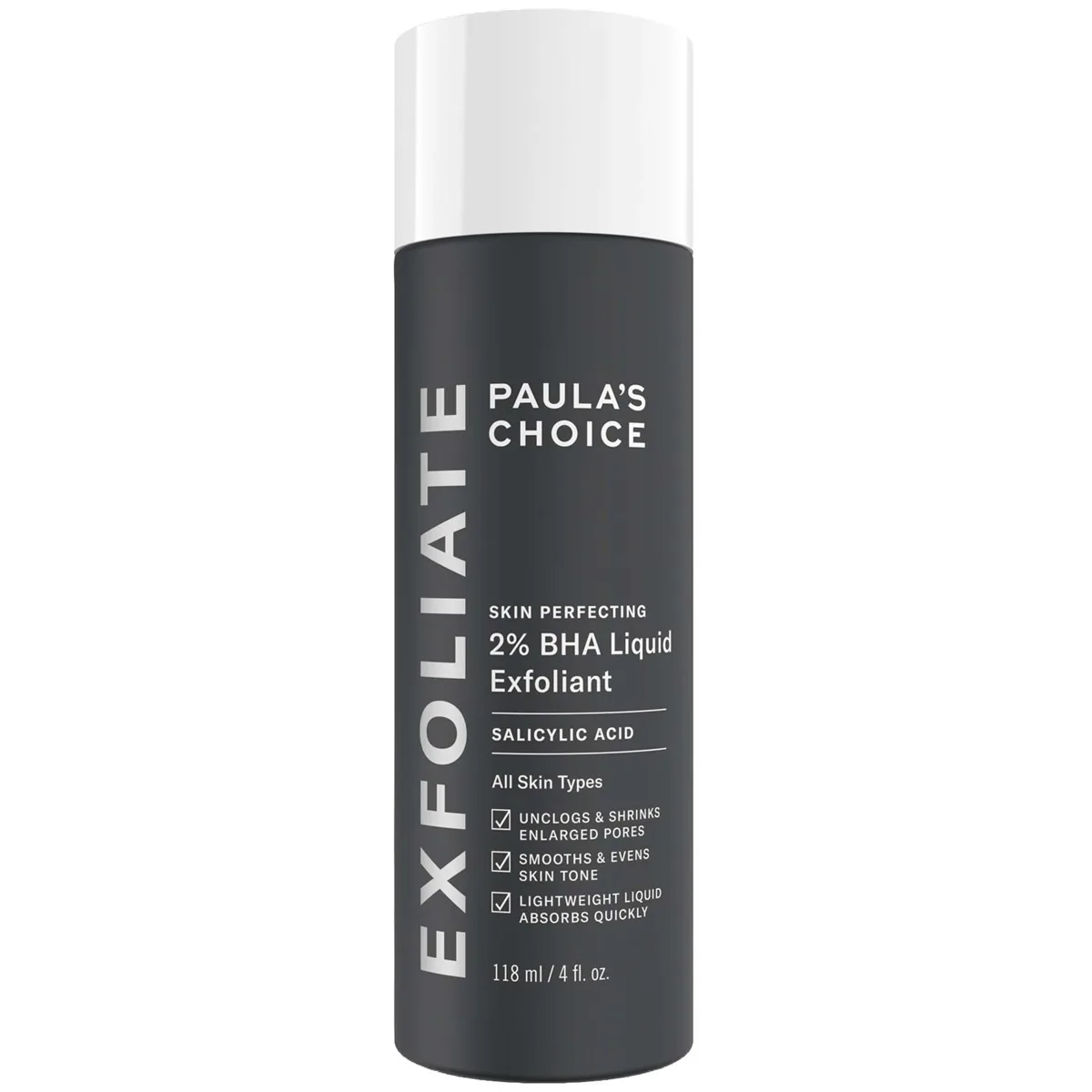
Salicylic acid comes at the plug from a different angle. It's a beta-hydroxy acid, and because it's oil-soluble it can penetrate into the sebum-filled follicle and loosen the desmosomes gluing dead cells together. A randomized split-face trial in comedonal acne found salicylic-acid-based peels meaningfully improved comedones, and a well-formulated leave-on like Paula's Choice 2% BHA Liquid Exfoliant delivers that comedolytic action daily without a peel appointment.
Azelaic acid is the quiet third option and a good one for sensitive or reactive skin. It normalizes the disturbed keratinization in the follicle and has comedolytic, antibacterial, and anti-inflammatory activity at once, which is why it's found a role across both comedonal and inflammatory acne. A gentle formula like The Ordinary Azelaic Acid Suspension 10% is an easy way to work it in — and it doubles as a treatment for the marks comedones can leave behind.
Why attacking them makes it worse
The intuitive response to a rough, bumpy forehead is to scrub it smooth — a grainy exfoliant, a stiff brush, a washcloth with intent. This is the single most common way people make closed comedones worse, and the mechanics explain why.
The plug you're trying to remove sits down inside the follicle, well below where a physical scrub reaches. Abrasion only works the surface, so it does nothing to the actual clog while stripping and micro-tearing the skin around it. The result is a compromised barrier that's more inflamed and reactive — which nudges oil glands and follicles toward exactly the dysfunction that produces more comedones. You can turn a field of quiet, flesh-colored bumps into an angry, irritated mess without dislodging a single plug.
The same logic applies to drying everything out. Comedones aren't caused by 'too much surface oil' in the way blackheads' reputation implies, and desiccating your face with harsh cleansers and alcohol just triggers a rebound and a wounded barrier. Gentleness isn't a soft consolation here — it's the strategically correct move. Let the comedolytics do the unclogging while you keep the skin calm enough to cooperate.
The unglamorous timeline nobody markets
Here is the part product marketing never leads with: comedolytics are slow, because they work by changing how your skin renews itself, and skin renews on the order of weeks. There is no active that unclogs a sealed follicle overnight. A retinoid has to shift the entire shedding pattern inside the pore, and that plays out over a full turnover cycle or two.
Realistically, budget eight to twelve weeks of consistent, near-daily use before you can judge whether a comedolytic is working. In the first few weeks, some people 'purge' — a wave of bumps that were already forming beneath the surface gets pushed up and out faster than usual. It looks like a breakout and feels like betrayal, but it's the treatment surfacing pre-existing microcomedones, and it settles. Bailing at week three, right in the purge, is how people conclude 'retinoids don't work for me' when they never gave the cycle time to complete.
Consistency beats intensity every time. Nightly low-strength retinoid use will clear comedones that occasional aggressive treatment never will, and it does so without wrecking your barrier along the way.
The plan that actually clears them
The honest verdict on closed comedones: pick one comedolytic, use it consistently, be patient, and stop assaulting your skin. A nightly retinoid is the highest-leverage choice; add a salicylic acid or azelaic product if you want, but don't stack every acid you own on top of a retinoid on day one — that's a fast track to irritation that stalls the whole project.
Before you combine actives, run them through our ingredient conflict checker so you're not layering a retinoid, a BHA, and an acid peel into a barrier emergency. And if you're not certain your bumps are comedones rather than milia or plain sebaceous filaments, the My Skin profile can help you frame what you're actually looking at before you commit to a routine. Get the diagnosis right, choose one comedolytic, and give it the eight weeks it genuinely needs.
Products mentioned
Independently reviewed and scored — the real products behind this piece.


References
- Control of microcomedone formation throughout a maintenance treatment with adapalene gel, 0.1% — Journal of the European Academy of Dermatology and Venereology, 2007
- Randomized trial comparing a chemical peel containing a lipophilic hydroxy acid derivative of salicylic acid with a salicylic acid peel in subjects with comedonal acne — Journal of Cosmetic Dermatology, 2011
- Azelaic Acid in Dermatology: A Review of Its Mechanism of Action — Cureus, 2025
- Guidelines of care for the management of acne vulgaris — Journal of the American Academy of Dermatology, 2024
Every cited link is verified to resolve to the paper named. Where a source could not be independently confirmed, it is listed without a link rather than pointing you somewhere wrong.
Frequently asked
How do I know if my bumps are closed comedones or milia?
Closed comedones are soft, slightly raised, and connected to a follicle, so they respond to comedolytic actives over weeks. Milia are hard, pearly-white keratin cysts with no follicular opening, which is why topicals can't clear them and they usually need professional extraction. If a bump is rock-hard and never changes with treatment, it's more likely milia.
Why don't benzoyl peroxide or pimple patches work on closed comedones?
Both target inflammation and bacteria, and a closed comedone is neither inflamed nor infected — it's simply a plugged follicle. There's nothing for an antibacterial or anti-inflammatory to act on, so the bump stays put. Comedolytics that normalize skin shedding, like retinoids and salicylic acid, are what actually unclog them.
Can I just scrub closed comedones away?
No, and it usually backfires. The plug sits deep inside the follicle where a physical scrub can't reach, so abrasion only irritates and damages the surrounding skin. A compromised, inflamed barrier tends to produce more comedones, not fewer — gentleness plus a consistent comedolytic is the effective route.
How long until closed comedones clear with a retinoid?
Plan on eight to twelve weeks of consistent use, because retinoids work by changing how skin renews and that takes a full turnover cycle or two. Many people purge in the first few weeks as pre-existing microcomedones surface faster, which looks like a breakout but settles. Quitting during the purge is the main reason people wrongly conclude retinoids don't work for them.
Are the tiny dots on my nose closed comedones too?
Probably not — those are usually sebaceous filaments, the normal lining of your pores channeling oil to the surface, and everyone has them. They refill after extraction because that's their function, so they can't be permanently 'treated' away. Chasing them with harsh products mostly damages your barrier.