




The Truth About Pore Strips, Pore Vacuums, and 'Shrinking' Your Pores
You cannot shrink a pore. But you can change how visible it is — and almost everything sold to 'minimize' pores is pulling the wrong lever.
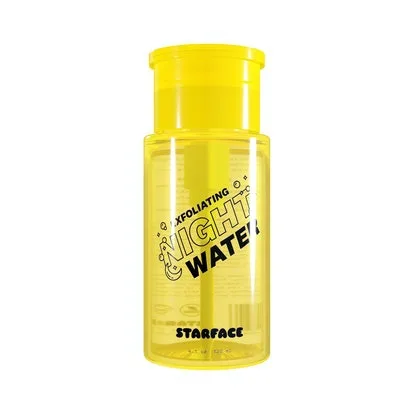
Most acid toners lean on a single AHA or BHA. This one stacks all three acid categories — lactic, salicylic, and gluconolactone — and buffers them with centella and niacinamide so the whole thing is designed for nightly use. The wave-shaped bottle is also unmistakably a Starface design choice.
A well-formulated nightly acid toner that uses three acid categories in buffered, sensible concentrations. Thoughtful formulation, playful Starface packaging, and a sensible positioning as the preventative counterpart to the brand's famous hydrocolloid patches. Priced a little above the drugstore competition but delivers.
Released in 2023, this toner has gathered roughly 500 to 800 independent reviews across Sephora, Ulta, and Starface's own channels, holding a 4.4 average. The assessment blends formulation analysis of its three-acid stack with that early feedback; how the buffered AHA/BHA/PHA blend performs over years of nightly use remains less documented than for older exfoliant lines.
The case for it
What would change this: A declared concentration would move this to a firmer reading of the dose.
Same rule for everyone. “Strong choice” is the verdict on 1,459 of 45,024 concern verdicts across the catalog; rule R3 decided 567 of them. Unchanged since September 5, 2026, engine 5.1.1.
Brand or formulator? Disclose a concentration or correct a fact →
The studies behind the evidence row
The case for it
What would change this: A declared concentration would move this to a firmer reading of the dose.
Same rule for everyone. “Strong choice” is the verdict on 1,459 of 45,024 concern verdicts across the catalog; rule R3 decided 567 of them. Unchanged since September 5, 2026, engine 5.1.1.
Brand or formulator? Disclose a concentration or correct a fact →
The studies behind the evidence row
The case for it
Same rule for everyone. “Good choice” is the verdict on 9,564 of 45,024 concern verdicts across the catalog; rule R5 decided 9,072 of them. Unchanged since September 5, 2026, engine 5.1.1.
Brand or formulator? Disclose a concentration or correct a fact →
The studies behind the evidence row
The case for it
Cautions: a photosensitising active — use sun protection.
What would change this: A declared concentration would move this to a firmer reading of the dose.
Same rule for everyone. “Good choice” is the verdict on 9,564 of 45,024 concern verdicts across the catalog; rule R5 decided 9,072 of them. Unchanged since September 5, 2026, engine 5.1.1.
Brand or formulator? Disclose a concentration or correct a fact →
The studies behind the evidence row
The case for it
What would change this: A declared concentration would move this to a firmer reading of the dose.
Same rule for everyone. “Promising” is the verdict on 7,858 of 45,024 concern verdicts across the catalog; rule R9p decided 7,858 of them. Unchanged since September 5, 2026, engine 5.1.1.
Brand or formulator? Disclose a concentration or correct a fact →
The studies behind the evidence row
Also listed for Dullness — the actives here (Niacinamide, Gluconolactone, Lactic Acid, Salicylic Acid) are in our research queue for that concern; there is no verdict until their evidence rows are written. That is a gap in our table, not a mark against the product.
A verdict is DermApproved’s assessment of how well a product’s ingredients fit a concern — never a claim about what the product treats. Evidence dots and collected reviews sit beside it and are never blended in. Rules 0.5.1 · evidence table ev-2026.09-r228 · how we decide
Starface made its name on a product that's essentially a visual joke: the Hydro-Star, a yellow star-shaped hydrocolloid pimple patch that turned a breakout from something to hide into something to stick on your face and walk around the grocery store wearing. That cultural shift — making acne care legible, cute, and unembarrassing — is the actual product Starface has been selling, and the patches themselves are the vehicle. So when the brand launched its first leave-on treatment with the Exfoliating Night Water, the question wasn't whether it would be well-designed aesthetically. Starface doesn't do ugly. The question was whether it would be well-formulated, or whether the brand was finally running into the limits of what playful branding can carry.
The answer, reassuringly, is that the formulation has real substance. The Night Water is built around a three-acid stack — salicylic acid, lactic acid, and gluconolactone — with each acid doing a different job and no single one pushed to a concentration that would require a twice-a-week use limit. Salicylic acid is the oil-soluble BHA, which penetrates sebum to clear the inside of congested pores and forms the anti-acne spine of the formula. Lactic acid is the AHA, gentler than glycolic and with humectant side effects that make it particularly well suited to skin that wants exfoliation but not dehydration. Gluconolactone is the PHA, working on the outermost layer with larger molecules that don't penetrate as deeply and adding another humectant effect on top of the lactic acid.
What keeps the three-acid stack from being an over-exfoliation trap is the buffering. Centella asiatica extract provides anti-inflammatory support, and while the exact form here isn't specified as the full TrueCICA complex, it contributes meaningful soothing activity. Niacinamide — already a standout for barrier reinforcement and post-inflammatory hyperpigmentation fading — handles the recovery side. Panthenol layers in another soothing element, and sodium hyaluronate with sodium lactate adds hydration that lactic acid would already be bringing on its own. The pH sits around 4.0, which is what you want for AHA efficacy without tipping into harsh territory.
On the skin, the texture is properly watery — a thin liquid you can dispense onto a cotton pad without drama. There's no fragrance, no alcohol, no surprising ingredients toward the end of the INCI. Application feels slightly cooling and mildly acidic but without the sharp sting that some single-ingredient AHA toners deliver. Most users can tolerate nightly use from the start, though sensitive skin should ramp up gradually — three or four nights a week for the first two weeks, then increase as tolerated. A brief purging window in the first fortnight is also normal for an acid product — congestion that was already forming surfaces faster — and should be distinguished from irritation, which arrives with redness and stinging rather than just extra pimples. Worth noting for the label-checkers: the formula is vegan, cruelty-free, and fungal-acne safe, a combination acne-prone shoppers rarely get from an exfoliant.
Results are in line with what the ingredient list promises. Surface texture smooths within a week. Blackhead clearance on the T-zone becomes visible around the two-week mark. Post-inflammatory marks from recent breakouts start fading after three to four weeks, though full fade requires consistent SPF use and patience. Active breakouts don't disappear overnight, but the rate of new breakouts slows noticeably over a month of use — which is the real win for a preventative product like this.
The one caveat worth flagging is the positioning relative to Starface's own ecosystem. The brand wants you to use the Exfoliating Night Water to prevent breakouts and the Hydro-Star patches to manage the ones that slip through anyway, which is a sensible approach. What it doesn't want you to do is layer this under a retinol routine you already have, because the combined acid-retinoid load will overwhelm most skin barriers. Similarly, combining it with vitamin C in the same PM routine is asking for irritation. This is a nightly treatment that claims the PM slot, and if you want to keep retinol in your rotation, you'll need to alternate. Benzoyl peroxide belongs on the same do-not-stack list. Two bigger flags sit outside the routine-design question entirely: the salicylic acid means this is not a product for pregnancy — unusually for Starface's generally low-stakes lineup, this one is a genuine skip until after — and daily SPF stops being optional the moment an exfoliating acid enters your evenings, since freshly resurfaced skin burns and pigments faster.
At around eighteen dollars for 100ml, this isn't the cheapest acid toner on the market — longer-established exfoliant specialists sell well-regarded formulations in the same price territory with different acid profiles. Starface is still an emerging brand without decades of clinical heritage, but the formulation choices here are well-considered and the brand's overall quality track record is solid. For users who already own and love the Hydro-Stars, the Night Water is a natural addition. For users shopping the acid toner category on merit, it holds its own. The 750 or so reviews averaging 4.4 stars back the merit case — nightly tolerability and visible texture gains lead the praise — while the recurring gripes are that it isn't muscular enough for severe acne, that the price runs above the category floor, and that the admittedly charming wave-shaped bottle is genuinely awkward to tip onto a cotton pad. Style has always been the Starface tax; here, at least, the substance underneath is real.
The hero actives that drive this product's performance.
| Ingredient | Function | Evidence |
|---|---|---|
| Lactic Acid | The AHA headline — lactic acid is a gentler, more hydrating alpha-hydroxy acid than glycolic, working here on surface cell turnover and fine texture smoothing as part of a three-acid stack. | Established mechanism for Rough Texture · established mechanism |
| Salicylic Acid | The oil-soluble BHA that penetrates sebum to clear the inside of congested pores — the targeted anti-acne mechanism in a formula otherwise focused on texture and tone. | Established mechanism for Rough Texture · established mechanism |
| Gluconolactone | A PHA that exfoliates the outermost layer with large molecules while adding humectant effects — the gentler third acid that lets this formula be used more frequently without barrier stress. | Not yet assessed |
| Niacinamide | Supports the barrier during repeated acid exposure and helps fade the post-inflammatory marks left by the acne this product targets. | Emerging for Hyperpigmentation |
| Centella Asiatica Extract | Buffers the three-acid stack with anti-inflammatory support, reducing the chance of irritation on reactive acne-prone skin. | Not yet assessed |
Ingredient standings describe the active at treatment-level doses and vehicles; this product's own condition grades weigh its actual formula.
Water, Glycerin, Butylene Glycol, Niacinamide, Gluconolactone, Lactic Acid, Salicylic Acid, Propanediol, Sodium Lactate, Centella Asiatica Extract, Allantoin, Panthenol, Sodium Hyaluronate, 1,2-Hexanediol, Citric Acid, Sodium Hydroxide, Disodium EDTA, Caprylyl Glycol, Ethylhexylglycerin
treatment
PM
Apply with a cotton pad on clean dry skin at night. Wait 1-2 minutes, then follow with hydrating serum and moisturizer.
Smoother texture after 1-2 applications. Reduced blackheads and breakout frequency within 2-3 weeks. Full tone and texture benefits at 6-8 weeks of consistent use.
This exfoliating toner's evidence base is strong across all three acid categories. Salicylic acid has decades of research in acne management, with studies in the Journal of the American Academy of Dermatology documenting its efficacy as a keratolytic and anti-inflammatory agent in mild to moderate acne. Its lipophilic nature allows it to penetrate sebaceous pores and clear them from the inside, which is why it's a first-line OTC recommendation for comedonal and inflammatory acne.
Lactic acid has been studied extensively as an AHA with dual action — cell turnover and hydration. Research in journals like Dermatologic Surgery and Cutis has examined its effects on photoaged skin, texture, and pigmentation. Unlike glycolic acid, which has a smaller molecule that penetrates more deeply, lactic acid's slightly larger molecular size produces gentler exfoliation and its natural humectant properties offset some of the dehydrating effects that plague higher-strength AHA use.
Gluconolactone and other polyhydroxy acids have been investigated more recently, with research published in the International Journal of Cosmetic Science suggesting that PHAs exfoliate more superficially, cause less transepidermal water loss than AHAs, and may be tolerated by users who can't handle glycolic or lactic acid. Including a PHA alongside traditional AHAs and BHAs is a reasonable formulation decision when the goal is broader exfoliation with manageable tolerance.
The buffering ingredients are equally well-supported. Niacinamide's role in barrier function and post-inflammatory hyperpigmentation fading is one of the best-documented cosmetic ingredients in dermatology. Centella asiatica's anti-inflammatory effects are supported by research on its triterpenes and leaf extracts. Panthenol's hydration and wound-healing effects are extensively studied. The combination of all these ingredients in a single product gives it a rational, evidence-backed structure that aligns with how modern acid toners should be built.
Dermatologists commonly recommend multi-acid exfoliating toners for patients dealing with mild to moderate acne, texture, and hyperpigmentation, particularly when the goal is maintenance rather than intensive treatment. Most dermatologists find that well-buffered formulations with low individual acid concentrations can be used nightly in most skin types, and that stacking BHA with AHAs and PHAs provides broader exfoliation coverage than any single acid would. This type of nightly acid toner is commonly suggested as a gentler alternative to prescription tretinoin for patients who can't tolerate retinoids, and as a complementary step in routines that already include a low-strength retinoid. Clinicians flag pregnancy as a contraindication for leave-on salicylic acid products.
At night, after cleansing and fully drying the face, apply a small amount to a cotton pad and swipe gently across the face, avoiding the eye area. Let absorb for 1-2 minutes before following with a hydrating serum and moisturizer. Start at 3-4 nights a week if you're new to nightly acid use, and build to nightly as tolerated. Always use SPF the next morning — acid exfoliation increases photosensitivity. Do not combine with retinol, prescription tretinoin, vitamin C serums, or benzoyl peroxide in the same routine; alternate instead.
At around eighteen dollars for 100ml, this sits in the mid-tier of the acid toner category — more expensive than The Ordinary's budget options and comparable to Paula's Choice staples. The formulation quality justifies the premium over drugstore alternatives through its three-acid stack and the thoughtful inclusion of centella and niacinamide as buffers. Starface is still building its clinical track record, so you're paying for formulation design rather than clinical heritage, but the formulation stands up to comparison with more established brands. For users who already appreciate Starface's aesthetic and want to extend their acne routine into preventative care, the value case is good.
Combination, oily, and normal skin types dealing with texture, mild acne, blackheads, and post-acne marks who want a leave-on nightly treatment. A particularly good pick for Starface fans already using the Hydro-Star patches, and for those who want a single product that covers BHA, AHA, and PHA mechanisms without building a multi-acid routine.
Very dry skin types may find nightly acid exfoliation too drying even with the PHA and humectant buffers. Pregnant users should wait. Anyone currently using retinol nightly will have trouble fitting this into the routine without over-exfoliating. And for severe cystic or nodular acne, a dermatology appointment is more productive than any OTC acid toner.
Ready to try Starface Exfoliating Night Water?
Buy at Amazon ♥Thin, watery clear liquid
Fragrance-free
Distinctive blue wave-shaped bottle with pointed applicator
First application feels cool and slightly acidic but without the sharp sting of a 10% AHA. Some users experience mild purging within the first 2 weeks — this is normal for an acid treatment. Expect texture improvements to appear before tone improvements.
Roughly 3-4 months at nightly use
All Year
Starface built its reputation on yellow star-shaped hydrocolloid patches aimed at destigmatizing breakouts for a younger audience. The Exfoliating Night Water extends that identity into active care — the brand's first leave-on treatment product aimed at preventing the breakouts the patches cover up.
Starface launched in 2019 with its yellow star-shaped hydrocolloid pimple patches and built a Gen Z-centered identity around playful acne care. The brand sits in the emerging tier — its formulations use well-studied actives, though independent long-term clinical validation is still limited.
Acid toners are too harsh for nightly use.
It depends on concentration and buffering. A well-formulated multi-acid toner with centella, niacinamide, and panthenol — like this one — is designed for nightly use on most skin types. Single-acid, high-concentration products are a different story.
Yes, most oily and combination skin types can tolerate nightly use thanks to the PHA buffering and centella support. Sensitive skin should start at 3-4 nights a week and increase as tolerated.
The patches are spot treatments that absorb pus from existing whiteheads. This is a preventative leave-on treatment that exfoliates congested pores before they become breakouts. They work together, not in competition.
Not on the same night. Alternate: retinol one night, Exfoliating Night Water the next. Stacking acid exfoliation with retinol increases the risk of over-exfoliation and barrier stress.
No — leave-on salicylic acid products are typically avoided during pregnancy. Consult your OB-GYN, but this product is best paused for the duration.
Completely different category. The Ordinary's peel is a 10-minute rinse-off treatment with high-concentration acids. Starface's Exfoliating Night Water is a leave-on nightly toner with lower individual acid concentrations. Think maintenance vs. intensive treatment.
Recurring themes our editors read across retailer reviews of this product — summaries in our words, not quotations, and not a substitute for your own patch test.
Gentle enough for nightly use
Noticeable texture improvement
Cute packaging
Pairs well with the Starface pimple patch lineup
Pricey compared to other acid toners
Not strong enough for severe acne
Bottle design isn't practical for pad dispensing
Verified answers from our questions library — the nuance a product page cannot carry.