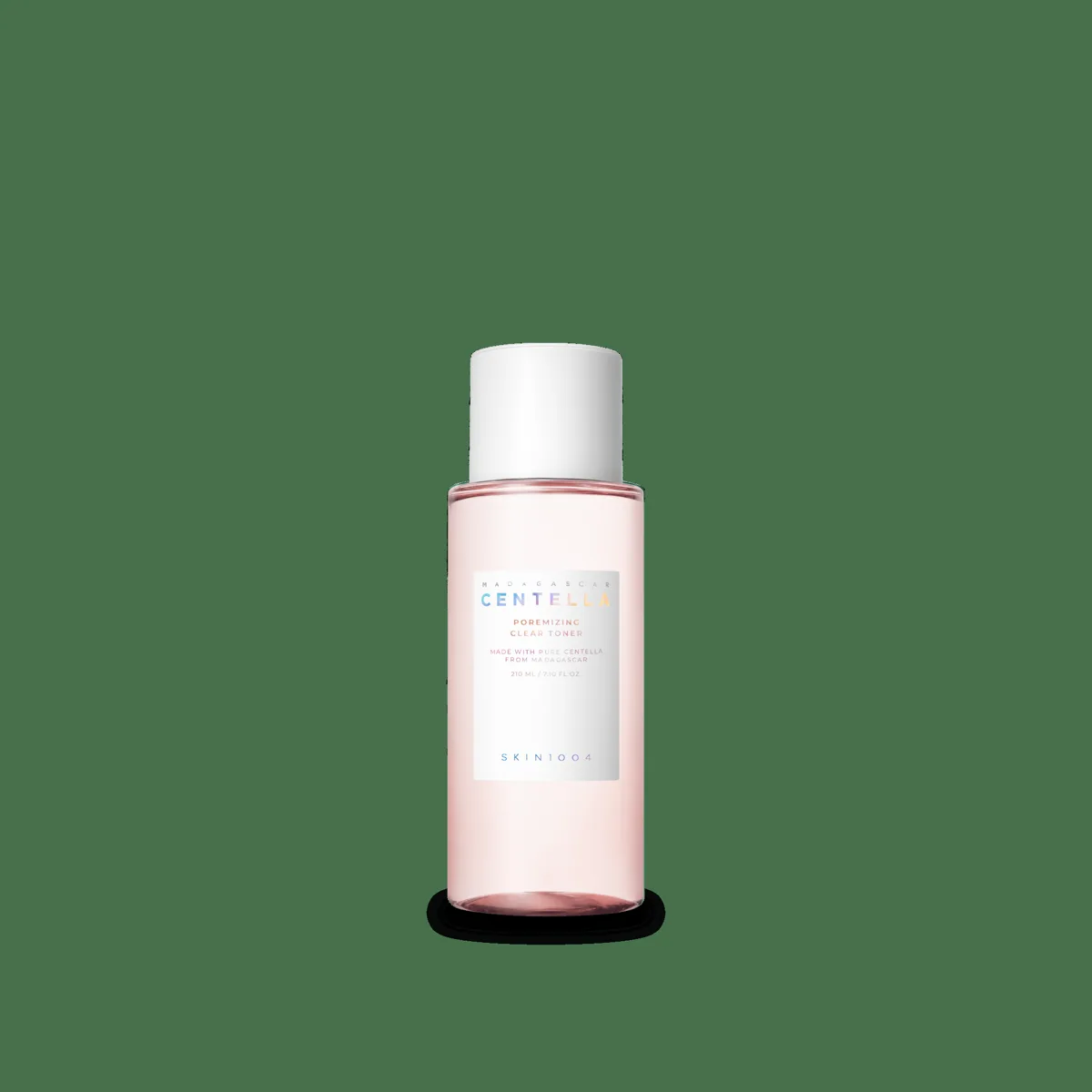
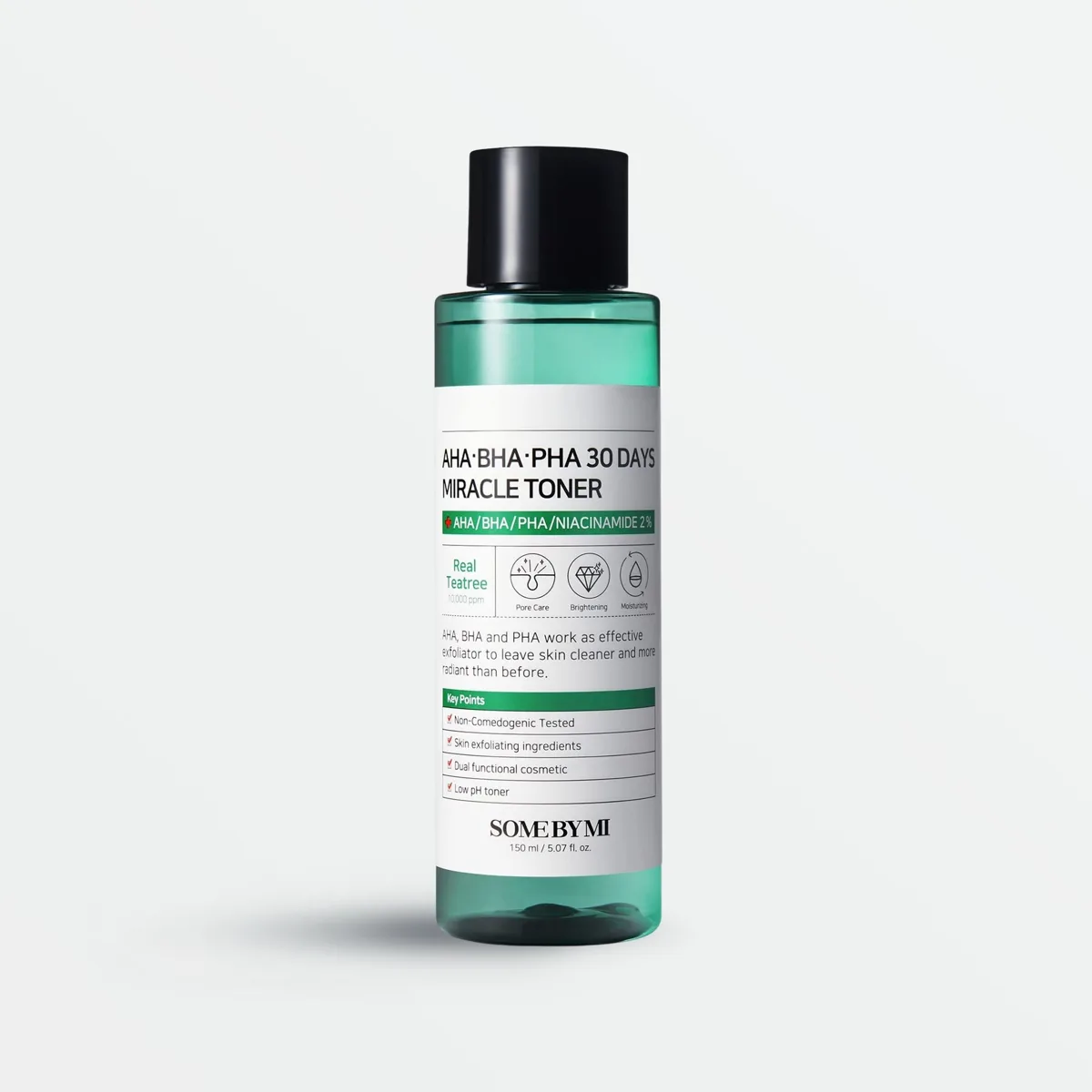
Most exfoliating toners pick a single acid and dose it as the headline. This one layers BHA, LHA, AHA, and PHA — four acid types across both the surface and pore-depth mechanisms — and adds centella and triple HA to keep the formula tolerable at daily use frequency rather than weekly-only.
A well-balanced multi-acid exfoliating toner that combines BHA, LHA, AHA, and PHA at gentle daily-use concentrations, with a meaningful centella and hyaluronic acid buffer system. Best for oily and combination skin dealing with congestion; the lavender extract and acid load make it a poor pick for reactive skin, but for the right user it's one of the more considered K-beauty pore toners in its price range.
Note: This toner has moderate review volume and has been on the market for about two years. Our assessment reflects the available feedback and ingredient analysis; we'll revisit as more long-term data accumulates.
Verdicts
How well it fits each concern
Verdict by concern tap a concern for the case
Not for thisfor Large PoresIn your profileYou chose · The actives here have been researched for large pores and the evidence does not support the claim.Not yet assessedStandard tolerability11 reviews collected
The case for it
Salicylic Acid + Capryloyl Salicylic Acid has been researched for this concern and the evidence does not support it.
It is plausibly present at a working level, though the concentration is not declared.
The formula carries no trigger this concern is sensitive to, with the cautions noted.
What would change this: A declared concentration would move this to a firmer reading of the dose.
Same rule for everyone. “Not for this” is the verdict on 488 of 45,024 concern verdicts across the catalog; rule R10 decided 488 of them.
Unchanged since September 5, 2026, engine 5.1.1.
Strong choicefor BlackheadsIn your profileYou chose · Salicylic Acid is an approved or monograph active for blackheads; this liquid carries it, though the concentration is not declared.Moderate evidenceStandard tolerability11 reviews collected
The case for it
Salicylic Acid + Capryloyl Salicylic Acid is a first-line active — approved, monograph-listed or named in current guidelines — for this concern.
It is plausibly present at a working level, though the concentration is not declared.
The formula carries no trigger this concern is sensitive to, with the cautions noted.
What would change this: A declared concentration would move this to a firmer reading of the dose.
Same rule for everyone. “Strong choice” is the verdict on 1,459 of 45,024 concern verdicts across the catalog; rule R3 decided 567 of them.
Unchanged since September 5, 2026, engine 5.1.1.
R3 — Undeclared but plausibly dosed (top-third INCI position, or a potent sub-1% active) — the verdict stands, and the sentence says what disclosure would add. A declared figure below range would have been sub-threshold. · the full register
Carrying active
Salicylic Acid + Capryloyl Salicylic Acid
Standing
first line — a regulator recognises it for this use; trials support it · per 21 CFR § 333.350 - Labeling of acne drug products. (US Code of Federal Regulations (Legal Information Institute, Cornell Law School)), opened July 27, 2026
Form
plausible — studied range 0.5–2%, from the OTC monograph or label; judge it after ~6 weeks
Tolerability
standard
Row checked
against its sources on July 27, 2026 (evidence table ev-2026.09-r228)
The studies behind the evidence row
OTC monograph, Topical Acne Drug Products — salicylic acid 0.5–2% recognized as an acne treatment active — US Food and Drug Administration
Unprovenfor Excess OilinessIn your profileYou chose · Salicylic Acid has early or mechanistic evidence for excess oiliness — a reasonable bet, not a recommendation; the other actives here are not yet assessed for it.Moderate evidenceStandard tolerability11 reviews collected
The case for it
Salicylic Acid + Capryloyl Salicylic Acid has early or mechanistic evidence for this concern, not trial-backed standing.
It is present below the studied range.
The formula carries no trigger this concern is sensitive to, with the cautions noted.
What would change this: A concentration inside the studied range would raise this a step.
Same rule for everyone. “Unproven” is the verdict on 1,111 of 45,024 concern verdicts across the catalog; rule R9 decided 1,111 of them.
Unchanged since September 5, 2026, engine 5.1.1.
R9 — Plausible-tier actives alone do not earn a recommendation, and 'not for this' would overstate the case against them. 'Unproven' with the evidence dots lets the reader judge the bet (added 0.2.0 after the first shadow run put a 10% niacinamide serum at 'not for this' for hyperpigmentation). 0.5.0: the closing clause reads the other heroes — "nothing else here addresses it" only when every other active has a researched 'none' row; "not yet assessed" when that is the truth. Rows whose dots read moderate or better now reach R9p first. · the full register
Carrying active
Salicylic Acid + Capryloyl Salicylic Acid
Standing
plausible — trials support it
Form
sub threshold — studied range 30%, from the trials on the row; needs leave-on contact; judge it after ~6 weeks
Tolerability
standard
Row checked
against its sources on July 17, 2026 (evidence table ev-2026.09-r228)
Good choicefor Rough TextureIn your profileYou chose · Salicylic Acid is a reference standard by mechanism for rough texture; this liquid carries it.Moderate evidenceStandard tolerability11 reviews collected
The case for it
Salicylic Acid + Capryloyl Salicylic Acid has trial-supported standing for this concern.
It is plausibly present at a working level, though the concentration is not declared.
The formula carries no trigger this concern is sensitive to, with the cautions noted.
What would change this: A declared concentration would move this to a firmer reading of the dose.
Same rule for everyone. “Good choice” is the verdict on 9,564 of 45,024 concern verdicts across the catalog; rule R5 decided 9,072 of them.
Unchanged since September 5, 2026, engine 5.1.1.
Supporting rolefor DullnessIn your profileYou chose · Glycolic Acid is a reference standard by mechanism for dullness, but this liquid carries it below the studied range — a supporting role at best.Moderate evidenceStandard tolerability11 reviews collected
The case for it
Glycolic Acid + Gluconolactone has trial-supported standing for this concern.
It is present below the studied range.
The formula carries no trigger this concern is sensitive to, with the cautions noted.
What would change this: A concentration inside the studied range would raise this a step.
Same rule for everyone. “Supporting role” is the verdict on 8,197 of 45,024 concern verdicts across the catalog; rule R7 decided 258 of them.
Unchanged since September 5, 2026, engine 5.1.1.
R7 — A supported active under-dosed cannot be recommended for the concern; if the category has a supportive job it may still help alongside treatment. · the full register
Carrying active
Glycolic Acid + Gluconolactone
Standing
supported — its mechanism is established
Form
sub threshold — studied range 4–10%, from the trials on the row; needs leave-on contact; judge it after ~8 weeks
Tolerability
standard
Row checked
against its sources on July 17, 2026 (evidence table ev-2026.09-r228)
The studies behind the evidence row
Harry's Cosmeticology / Baran & Maibach Textbook of Cosmetic Dermatology — humectant, emollient and occlusive classification — standard reference text
Strong choicefor AcneIn your profileYou chose · Salicylic Acid is an approved or monograph active for acne; this liquid carries it, though the concentration is not declared.Moderate evidenceStandard tolerability11 reviews collected
The case for it
Salicylic Acid + Capryloyl Salicylic Acid is a first-line active — approved, monograph-listed or named in current guidelines — for this concern.
It is plausibly present at a working level, though the concentration is not declared.
The formula carries no trigger this concern is sensitive to, with the cautions noted.
Cautions: fragrance.
What would change this: A declared concentration would move this to a firmer reading of the dose.
Same rule for everyone. “Strong choice” is the verdict on 1,459 of 45,024 concern verdicts across the catalog; rule R3 decided 567 of them.
Unchanged since September 5, 2026, engine 5.1.1.
R3 — Undeclared but plausibly dosed (top-third INCI position, or a potent sub-1% active) — the verdict stands, and the sentence says what disclosure would add. A declared figure below range would have been sub-threshold. · the full register
Carrying active
Salicylic Acid + Capryloyl Salicylic Acid
Standing
first line — a regulator recognises it for this use; trials support it · per § 333.310 Acne active ingredients. (U.S. Food and Drug Administration — 21 CFR Part 333 Subpart D (Topical Acne Drug Products), Code of Federal Regulations via GovInfo), opened July 27, 2026
Form
plausible — studied range 0.5–2%, from the OTC monograph or label; judge it after ~6 weeks
Tolerability
standard — fragrance load
Row checked
against its sources on July 27, 2026 (evidence table ev-2026.09-r228)
Does the jobDoes what a toner is for: adds something real, not alcohol-driven. Not measured from the label: restores skin pH, plays well with what follows.
A verdict is DermApproved’s assessment of how well a product’s ingredients fit a concern — never a claim about what the product treats. Evidence dots and collected reviews sit beside it and are never blended in.
Rules 0.5.1 · evidence table ev-2026.09-r228 · how we decide
Assessment
Pros & Cons
Pros
✓ Multi-acid system (BHA + LHA + AHA + PHA) at gentle daily-use doses
✓ Centella and triple HA meaningfully buffer the acid load
✓ Alcohol-free, unlike many traditional BHA toners
✓ Visible pore and texture improvement at 2-4 weeks
✓ Generous 210ml size for the price
✓ Water-based formula won't strip the skin barrier
Cons
✗ Contains lavender flower extract, a potential allergen
✗ Not suitable for sensitive, reactive, or compromised skin
✗ May cause purging in the first 2-3 weeks of use
✗ Cannot be used the same night as retinol or strong vitamin C
✗ Faint lavender-herbal scent won't appeal to fragrance-averse users
Review
Full Review
Five years ago, the standard advice about BHA toners was simple: use them once or twice a week, because anything more would strip your face. That advice was correct for the toners of that era, which typically paired one high-concentration salicylic acid with an alcohol base and a pH that made the acid maximally active. The category has evolved, though, and the new generation of exfoliating toners is designed around a different premise: use multiple gentle acids at lower individual concentrations, buffer them with calming ingredients and humectants, and let the skin tolerate daily-use frequency rather than weekly shock treatments. The SKIN1004 Poremizing Clear Toner is a reasonably thoughtful entry in that newer generation, and its value depends entirely on whether this evolved approach suits your skin type.
The acid panel is diversified. Salicylic acid and capryloyl salicylic acid (LHA) together form the BHA backbone, covering both surface-level and deeper sebum clearing — the two work differently enough that combining them isn't redundant, since LHA's lipophilic tail gives it better affinity for the oil sitting inside a congested pore. Glycolic acid handles a low-dose AHA role for keratolytic surface action, and gluconolactone adds PHA function for gentler surface exfoliation plus a useful humectant contribution. No individual acid is dosed aggressively; the total acid exposure is spread across mechanisms and kept at a level compatible with near-daily use. Willow bark extract contributes a low-level natural salicin note that reinforces the BHA story without significantly raising the acid load — though anyone who believes willow bark can stand in for real salicylic acid should know that the conversion is partial at best, which is precisely why this formula includes both rather than relying on the botanical alone.
The buffering system is where this toner earns its keep. Centella asiatica extract sits prominently as the fifth ingredient rather than buried mid-list, which is SKIN1004's consistent signature — the brand built its whole identity on Madagascar-sourced centella and hasn't abandoned it here. Panthenol adds barrier-softening humectant action. A triple hyaluronic acid complex — pure HA, hydrolyzed HA, and sodium hyaluronate — keeps the toner from leaving skin tight after use, which is the main failure mode of older-generation BHA toners. Allantoin contributes mild additional soothing, and a chestnut shell extract rounds out the botanical bench. The whole formula is alcohol-free, which is meaningful because alcohol-based BHA toners still dominate the legacy segment and this one explicitly opts out of that approach. It's also vegan and cruelty-free, for anyone tracking those boxes.
In use, the texture is what you'd expect from a modern K-beauty toner — thin, watery, absorbs in under ten seconds, leaves no visible residue. Applied with a cotton pad (the traditional method) or pressed in with clean hands (the K-beauty preferred method), it distributes evenly across the face without dragging or pilling. Most combination and oily skin users report no stinging or sting at most on the first few uses. After a week of consistent use, skin texture starts to visibly smooth; at two to four weeks, pore prominence reduces and blackheads become less obvious; by six to eight weeks, the cumulative effect on tone and surface consistency is meaningful. The sensible on-ramp is every other evening for the first fortnight, escalating to nightly only once your skin has voted in favor.
The honest complications are where sensitive-skin users should pay attention. First, the formula contains Lavandula angustifolia flower extract — lavender — which is a known potential irritant and allergen for a subset of users. Nothing about the inclusion is functional enough to justify it for lavender-sensitive people, and it's the main reason some reviewers who otherwise love the brand skip this specific product. Second, purging is realistic during the first two to three weeks. The BHA and LHA reach into pores to clear existing congestion, and that process can surface small breakouts before things improve. It's a temporary phenomenon, but if you're prone to clogged pores, budget mentally for a rough patch before the payoff. Third, this toner doesn't play well with retinol or high-concentration vitamin C on the same layer; stack them on different nights or at different times of day. And fourth, sensitive, rosacea-prone, or compromised-barrier skin should avoid this toner altogether — the multi-acid load, even at gentle doses, is too much stimulation for reactive skin, regardless of the buffering system.
One non-negotiable that applies to every user, tolerant or not: chemical exfoliation raises photosensitivity, so morning sunscreen stops being optional the day you start this bottle. Exfoliating at night and then walking into UV unprotected is a good way to trade a texture improvement for a pigmentation problem.
The fifteen hundred or so reviews on record land at a solid average and split exactly along the fault line this review has drawn. The satisfied camp reports smoother skin within a week and genuinely visible pore improvement; the dissatisfied camp is almost entirely people whose skin was too reactive for it, plus the lavender objectors. There is very little middle ground, which is what you'd expect from a product with a clear target and a clear disqualification.
On value, a 210ml bottle runs around $17-19 and lasts most users two to three months of nightly use. That per-month cost is well below comparable Western multi-acid toners when measured by equivalent functionality, and genuinely competitive within the K-beauty exfoliating toner category. The bottle is generous for the price, and there's no smaller size to tempt you into worse per-milliliter value. For users with oily, combination, or pore-congested skin who want a daily exfoliating toner that does real work without wrecking their barrier, this product earns its place. For anyone with sensitive skin, dry skin, or a preference for fragrance-free formulations, it's not the right fit, and there are better alternatives within SKIN1004's own centella-focused lineup.
Formula
Key Ingredients
The hero actives that drive this product's performance.
The BHA backbone of this toner uses two forms: traditional salicylic acid and LHA (capryloyl salicylic acid), which is a lipophilic derivative with greater sebum affinity. Pairing them means pores get both surface-level and deeper sebum clearing at gentler individual concentrations than a high-dose single BHA toner would require.
Established mechanismfor Rough Texture · established mechanism
Glycolic acid handles surface keratolysis at low-dose toner levels, while gluconolactone (a PHA) adds gentler chemical exfoliation with built-in humectant properties. The combo refines texture without the sting of a straight high-concentration glycolic toner — useful for daily or near-daily use rather than as a weekly treatment.
Established mechanismfor Rough Texture · established mechanism
Placed prominently as the fifth ingredient rather than buried, centella provides calming support that buffers the multi-acid action and makes this toner meaningfully more tolerable than a traditional BHA-only formulation at the same acid dose.
Willow bark contains natural salicin that converts partially to salicylic acid in skin, adding a low-level gentler BHA note alongside the synthetic salicylic acid. Its inclusion supports the overall exfoliating story without significantly raising acid concentration.
Three HA forms keep this from drying out the skin the way a straightforward acid toner would. The humectant layer doesn't interfere with the acid action but noticeably improves the after-feel, especially for combination skin that can go tight after exfoliation.
Plausible mechanismfor Dullness
Ingredient standings describe the active at treatment-level doses and
vehicles; this product's own condition grades weigh its actual formula.
Apply with a cotton pad or clean hands after cleansing. Start every other day to assess tolerance, then move to nightly use. Avoid applying on the same night as strong retinol or high-concentration vitamin C.
Results Timeline
Noticeably smoother skin within a week of regular use. Visible pore refinement and reduced blackhead prominence at 2-4 weeks. Cumulative texture and tone improvements at 6-8 weeks.
The multi-acid approach in this toner is well-supported by the cosmetic dermatology literature. Salicylic acid is the best-studied BHA with decades of peer-reviewed evidence for acne treatment, comedone clearing, and pore refinement. Capryloyl salicylic acid (LHA) has a growing research base showing lipophilic delivery advantages for sebum-filled pores, with studies in cosmetic dermatology journals describing better penetration into pore contents than standard salicylic acid. Glycolic acid is the most-studied AHA with strong evidence for surface keratolysis and texture improvement, and gluconolactone (a PHA) is described in dermatology literature as a gentler alternative with good tolerability even in sensitive skin applications. Combining these at low individual doses rather than stacking a single high-concentration acid is a well-established formulation approach, with research showing that cumulative acid exposure over time drives efficacy more than peak concentration. Willow bark extract contains salicin, which partially converts to salicylic acid in skin; its exact efficacy as a BHA replacement is debated in the research literature, but at the dose used here it functions as a supportive rather than primary BHA source. The centella asiatica content supports the buffering strategy — the research on madecassoside and asiaticoside for calming and barrier support is well-established, described in journals including Journal of Ethnopharmacology and various dermatology publications. The triple hyaluronic acid system contributes surface hydration that offsets the drying tendency of acid exfoliation, a layered approach well-documented in cosmetic HA literature.
Dermatologist Perspective
Dermatologists frequently recommend low-dose daily exfoliating toners for patients with pore congestion, oily skin, and mild to moderate comedonal acne. This toner fits that recommendation model reasonably well because the acid doses are conservative enough for daily use and the centella and HA content support tolerability. Many dermatologists typically caution about lavender or other essential-oil-derived ingredients in products aimed at acne-prone skin, since many acne-prone patients also have reactive skin — that's the main reason a dermatologist might steer a patient toward a simpler alternative. For patients with straightforward oily skin and no reactivity concerns, this is typically considered a reasonable daily toner, particularly when the routine is also using a retinoid on separate nights and consistent sunscreen during the day. Dermatologists generally advise against stacking multiple strong exfoliating products on the same layer or at the same time.
Guidance
Usage & Recommendations
How to Use
Start every other evening for the first two weeks to assess tolerance, then move to nightly use if your skin adjusts well. After cleansing, apply with a cotton pad or press into clean skin with your fingertips. Follow with hydrating serums and moisturizer. Do not use on the same night as retinol or high-concentration vitamin C — alternate nights instead. Always apply sunscreen the following morning; chemical exfoliation temporarily increases photosensitivity. If irritation or persistent redness develops, reduce frequency or discontinue.
Value Assessment
At roughly $17-19 for 210ml, this toner delivers two to three months of nightly full-face use at a per-month cost well below comparable Western multi-acid toners. The single 210ml size is the only option, which simplifies the value calculation — there's no smaller size to tempt buyers into worse per-milliliter value. What you're paying for is the diversified acid system and the meaningful buffering from centella and the HA complex, which is a step up from the single-BHA, alcohol-based toners that still dominate cheaper options. For users who fit the product's target (oily/combination, not highly reactive), the price-to-quality math is good. For those outside that fit, the toner isn't a value regardless of cost.
Who Should Buy
Users with oily, combination, or pore-congested skin who want a daily exfoliating toner that balances acid exfoliation with buffering ingredients. It's especially well-suited to people transitioning from harsher weekly BHA treatments to gentler daily use, and to anyone dealing with blackheads, texture, and surface dullness without significant reactivity.
Who Should Skip
Sensitive, reactive, dry, rosacea-prone, or compromised-barrier skin should skip this toner — the acid load plus the lavender extract is too stimulating for those skin types. Users avoiding essential oils or fragrance in skincare should also look elsewhere. Anyone already using strong retinoids or other daily exfoliants may find this overlap causes over-exfoliation.
Thin, watery liquid that spreads cleanly with a cotton pad and absorbs within 10 seconds
Scent
Faint lavender-herbal note from the botanical extracts
Packaging
Plastic screw-top bottle; 210ml
Finish
lightweightfast-absorbingnon-greasy
What to Expect on First Use
Applies cool with no noticeable sting for most users. A mild tingling is possible during the first few uses as skin adjusts to the acid content. Purging (a temporary uptick in small breakouts) can occur in the first 2-3 weeks for users prone to clogged pores, as the BHA and LHA bring existing congestion to the surface.
How Long It Lasts
About 2-3 months of nightly full-face use from the 210ml bottle
The Poremizing Clear Toner is SKIN1004's entry into the exfoliating-toner category, a step beyond the brand's original centella-only lineup. It reflects the K-beauty trend toward multi-acid daily toners that replaced the single-BHA weekly treatments of earlier generations.
About SKIN1004 Established Brand (5–20 years)
SKIN1004 launched in 2016 and built its reputation around Madagascar-sourced centella. The Poremizing range extends the brand into pore-care and mild exfoliation, leveraging willow bark and multi-acid blends that have become standard in K-beauty toners over the past several years.
Brand founded: 2016 · Product launched: 2023
Myth vs. Reality
Common Myths
Myth
Exfoliating toners should be used sparingly — once a week at most.
Reality
That guidance applies to high-concentration weekly peels. A properly formulated daily exfoliating toner like this one is designed for near-daily use at low individual acid concentrations — the cumulative effect is gentler and more consistent than weekly strong treatments.
Myth
Willow bark extract is a natural BHA replacement.
Reality
Willow bark contains salicin, which only partially converts to salicylic acid in skin. It contributes a low-level BHA note but is not a functional substitute for actual salicylic acid at effective doses — this toner uses both for that reason.
FAQ
Frequently Asked Questions
How often should I use the Poremizing Clear Toner?
Start every other day for the first two weeks to assess tolerance, then move to nightly use if your skin adjusts well. Avoid twice-daily use unless your skin is particularly resilient — morning-only or evening-only is usually sufficient for the acid load to do its work.
Can I use this toner with retinol?
Not on the same night. Stack this toner on one evening and retinol on another; alternating nights works well for pore-congested but not overly sensitive skin. If you notice dryness, reduce frequency of both.
Will this toner cause purging?
Possibly, during the first 2-3 weeks. Because the BHA and LHA reach into pores, existing congestion can surface as small breakouts early on. If breakouts continue beyond 4 weeks or worsen, reduce frequency or discontinue — that suggests irritation rather than purging.
Is this toner too strong for daily use?
Not for most combination or oily skin. The multi-acid approach spreads the exfoliation across several gentle acids rather than one strong one, making it appropriate for daily use. Sensitive skin should approach it cautiously or choose a simpler alternative.
Does it contain alcohol?
No. Many traditional BHA toners use alcohol as a solvent for the salicylic acid, which contributes to drying effects. This toner uses a water-based formulation with propanediol and glycerin instead, which is gentler on the skin barrier.
Can I use it with vitamin C?
Yes, just not on the same layer. Apply this toner first, allow it to absorb (60 seconds or so), then apply vitamin C serum. If combining gives you irritation, alternate them between morning and evening use instead.
Why is lavender extract in this formula?
Lavender flower extract is included at low concentration as a traditional herbal ingredient with mild antioxidant and anti-microbial properties. It's the main reason this toner isn't suitable for users with lavender or linalool sensitivity — if that's you, look for a lavender-free alternative.
Reviews
What Reviewers Tend to Say
Recurring themes our editors read across retailer reviews of this product — summaries in our words, not quotations, and not a substitute for your own patch test.
The whole case for salicylic acid rests on one unglamorous fact of chemistry: it dissolves in oil. Understand that, and you know exactly when it beats a glycolic acid — and when it's overkill.
The smallest AHA gets deepest and shows results soonest — which is precisely why routines built around it overshoot, and why the people who do best with it use it least.
A generation started using acids daily because the bottle said 'daily,' then wondered why their skin turned raw, shiny, and spotty. The right cadence is almost always lower than the label suggests.
May 28, 2026· 6 min
Questions people ask about Acne
Verified answers from our questions library — the nuance a product page cannot carry.
Products, answers, therapy guides, tools and articles in one search. Brand names,
slang and abbreviations all work — accutane finds isotretinoin, bacne finds truncal acne.