The Over-Exfoliation Epidemic: How Often Should You Really Exfoliate?
A generation started using acids daily because the bottle said 'daily,' then wondered why their skin turned raw, shiny, and spotty. The right cadence is almost always lower than the label suggests.
Read the preview
From the DermApproved blog, in Exfoliating Acids: the over-exfoliation epidemic, and why your smoothest skin might actually be your most damaged. Picture a face that looks flawless. Poreless, glassy, lit from within. Now picture it stinging at a splash of water and breaking out in little bumps that never leave. Same face. That glow isn't health, it's a warning light, and the strangest part is who this happens to. Not the careless. The conscientious ones, the people who read every label and followed it to the letter. Because the culprit is a single word printed on your acid bottle, a word a whole generation trusted a little too faithfully, and it was never calibrated to your skin. There's a hidden cost buried in over-exfoliated skin that has nothing to do with how it feels, and a reset that works precisely because the damage is more forgiving than you'd fear. How often you should really exfoliate, the signs you've crossed the line, and how to climb back, at dermapproved.com/blog.
Smoother is not the same as thinner
There is a specific kind of skin that has been exfoliated into submission. It looks, at a glance, flawless: poreless, shiny, almost lit from within. Then you notice it stings when anything touches it, flushes at the smallest provocation, and breaks out in tiny bumps that never quite resolve. That glow is not health. It is a stripped stratum corneum reflecting light off a surface that has lost its normal texture, and it is the signature of the over-exfoliation epidemic.
The cruel irony is that the people with this problem are usually the conscientious ones. They read the ingredient lists, they invested in the acids, and they used them exactly as instructed, which in most cases meant every single day. The trouble is that 'as instructed' and 'as your skin can tolerate' are two very different quantities, and the gap between them is where a huge amount of self-inflicted skin damage lives.
How acids actually work, and where it goes wrong
Chemical exfoliants are not sandpaper. An alpha-hydroxy acid like glycolic or lactic acid, or a beta-hydroxy acid like salicylic acid, works by loosening the molecular glue, the corneodesmosomes, that holds dead cells together at the skin's surface. Weaken that glue and the outermost layer sheds more readily, revealing the smoother cells beneath. Used well, this is elegant and safe. In one ultrastructural study, low-concentration glycolic acid triggered shedding only at the very outermost layer while leaving the deeper compacted layers and the lipid scaffolding intact, and transepidermal water loss stayed unchanged. The barrier, in other words, was never the target.
The problem is dose and frequency, not the mechanism. Push the concentration up or apply it daily and you stop shedding only the loose surface cells and start eroding into layers that were supposed to stay put. A comparison study found that a course of glycolic acid produced a significant rise in transepidermal water loss during the treatment period, the objective signature of a barrier under strain. That number is the difference between exfoliating the disposable top layer and picking at the wall underneath it. The acid didn't change. The frequency did.
The signs you've crossed the line
Over-exfoliation rarely announces itself as damage. It disguises itself as progress, which is why people accelerate rather than stop. Learn the tells. The first is sensation: a well-exfoliated face feels normal, while an over-exfoliated one stings or burns when you apply your serum, your moisturizer, even water. The second is that deceptive shine, a tight, waxy, over-smooth look that reads as 'glass skin' but is really a compromised surface.
Then come the breakouts, which fool everyone. When the barrier is impaired, skin becomes more reactive and inflamed, and you get small bumps and pimples that you promptly try to treat with more exfoliation, tightening the spiral. Add persistent redness, flaking that no amount of moisturizer fixes, and a sudden intolerance to products you used happily for years, and you have the full picture. There is also a hidden cost you can't feel: topical 10% glycolic acid applied for 12 weeks was shown to increase the skin's sensitivity to UV light and the formation of sunburn cells, and to lower the dose of UV needed to redden the skin. Over-exfoliated skin is not just raw; it is measurably more vulnerable to the sun, which is why daily SPF is non-negotiable for anyone using acids. Our conflict-checker can flag when you're unknowingly stacking acids with a retinoid or vitamin C in the same routine, a common way people quietly triple their exfoliation without realizing it.
Why the bottle says 'daily' and your skin says otherwise
It is worth being blunt about incentives. 'Use daily, morning and night' printed on an exfoliant is a usage-maximizing default, not a cadence a clinician calibrated to your barrier. A product used twice as often sells twice as fast, and a formula gentle enough to genuinely tolerate daily use, a low-percentage PHA, say, gets the same instruction as a punchy glycolic that absolutely does not warrant it. The label cannot see your skin type, your climate, or the three other actives already in your routine.
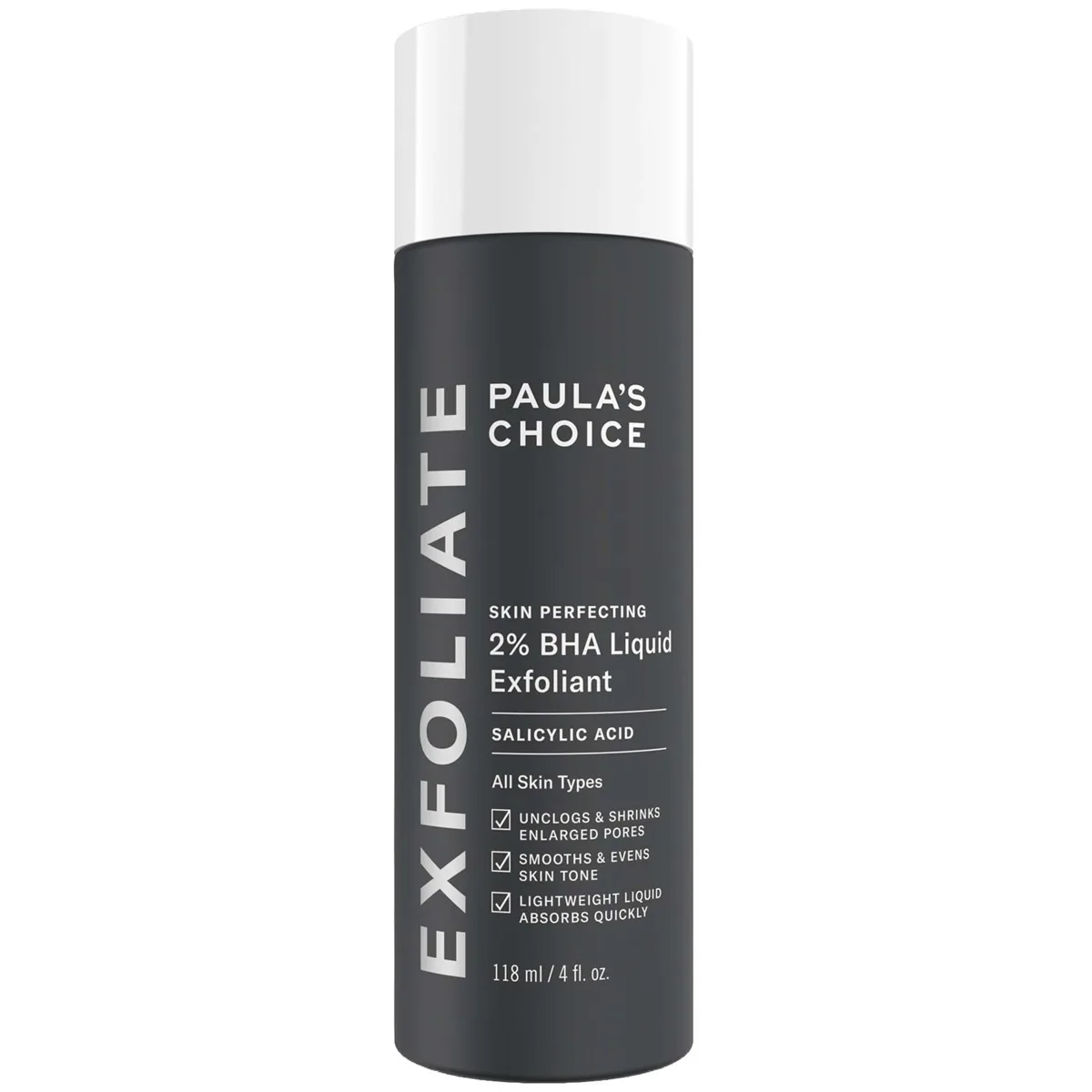
Cadence should be set by two things: the strength of the acid and the resilience of your skin. A gentle formula such as Geek & Gorgeous Calm Down 3.2% PHA + 0.8% BHA is built around polyhydroxy acids, which are larger, slower-penetrating, and far more forgiving, so a few times a week suits most people. A leave-on beta-hydroxy staple like Paula's Choice 2% BHA Liquid Exfoliant is excellent but should be titrated up from a couple of nights a week, and a brisk mandelic-plus-lactic blend such as Paula's Choice 6% Mandelic + 2% Lactic Liquid Exfoliant earns its results precisely because you are not using it every day. As a working rule: oily, resilient skin can often handle three sessions a week; normal-to-combination two; dry, sensitive, or rosacea-prone skin frequently does best at one, or with the gentlest acids only. When in doubt, do less; smoother is a result you build, not a race you win.
The repair reset when you've overdone it
The best news in all of this is that the barrier is forgiving if you let it recover. The same research that shows glycolic acid raising water loss during use also shows that the change reverses once you stop, and the UV-sensitivity effect fades within roughly a week of discontinuing. Your skin wants to rebuild; your only job is to stop interrupting it.
The reset is deliberately boring. Put every acid, retinoid, scrub, and brightening actives away completely, no exceptions, for two to four weeks. Strip your routine to a bland, non-stripping cleanser, a barrier-supporting moisturizer with ceramides, cholesterol, and fatty acids, and, in the morning, sunscreen, which matters more than ever while the skin is photosensitized. Skip anything with fragrance or additional actives while things calm down. The stinging usually settles within days; the redness and breakouts take a couple of weeks. When your skin tolerates plain moisturizer without complaint, reintroduce exfoliation at half the frequency you were using before, with the gentlest product you own, and build from there. A structured skin-cycling schedule, which spaces actives across the week with deliberate recovery nights, is the single easiest way to prevent a relapse, and our skin-cycling tool will build one around whatever exfoliant you keep.
The honest bottom line on exfoliation
Exfoliating acids are among the best-evidenced tools in skincare for texture, tone, and clogged pores. They are not the problem. Frequency is the problem, and 'daily' is the specific bad habit that turned a good ingredient into an epidemic of raw, reactive faces.
Treat exfoliation like seasoning, not a staple. Two to three times a week for most people, less for sensitive skin, always paired with diligent sun protection, and always dialed back the moment you feel a sting that wasn't there before. The goal is not the maximum amount of exfoliation your skin can survive. It is the minimum amount that gives you the result, applied often enough to matter and rarely enough to keep the barrier you're standing on intact.
Products mentioned
Independently reviewed and scored — the real products behind this piece.


References
- Mode of action of glycolic acid on human stratum corneum: ultrastructural and functional evaluation of the epidermal barrier — Archives of Dermatological Research, 1997
- Functional changes in human stratum corneum induced by topical glycolic acid: comparison with all-trans retinoic acid — Acta Dermato-Venereologica, 1995
- Dual Effects of Alpha-Hydroxy Acids on the Skin — Molecules, 2018
Every cited link is verified to resolve to the paper named. Where a source could not be independently confirmed, it is listed without a link rather than pointing you somewhere wrong.
Frequently asked
How do I know if I'm over-exfoliating?
The clearest signs are a sting or burn when you apply products or water, a tight waxy shine that looks smoother than natural skin, new small bumps or breakouts, and persistent redness or flaking. If your skin has become reactive to products you used to tolerate, treat that as over-exfoliation until proven otherwise.
Is it bad to use an exfoliating acid every day?
For most people, yes. The 'daily' instruction on many acids is a usage default, not advice calibrated to your barrier. Daily use of a strong acid raises water loss through the skin and heightens UV sensitivity; two to three times a week is plenty for most, and sensitive skin often needs less.
Do exfoliating acids make you more sensitive to the sun?
Yes, measurably. Topical 10% glycolic acid over 12 weeks was shown to increase UV sensitivity and sunburn-cell formation and to lower the UV dose needed to redden skin. The effect is reversible after stopping, but it makes daily sunscreen essential while you're using acids.
How long does it take to repair over-exfoliated skin?
Usually two to four weeks. Stinging often settles within days once you stop all acids and actives; redness and breakouts take a couple of weeks. The underlying barrier changes from acids are largely reversible, so a strict reset with a bland cleanser, a ceramide moisturizer, and sunscreen works reliably.
How often should each skin type exfoliate?
As a working rule, oily and resilient skin can often handle about three times a week, normal-to-combination twice, and dry, sensitive, or rosacea-prone skin once or with only the gentlest acids. Strength matters too: gentle PHAs tolerate more frequency than a strong glycolic. Always dial back at the first unfamiliar sting.