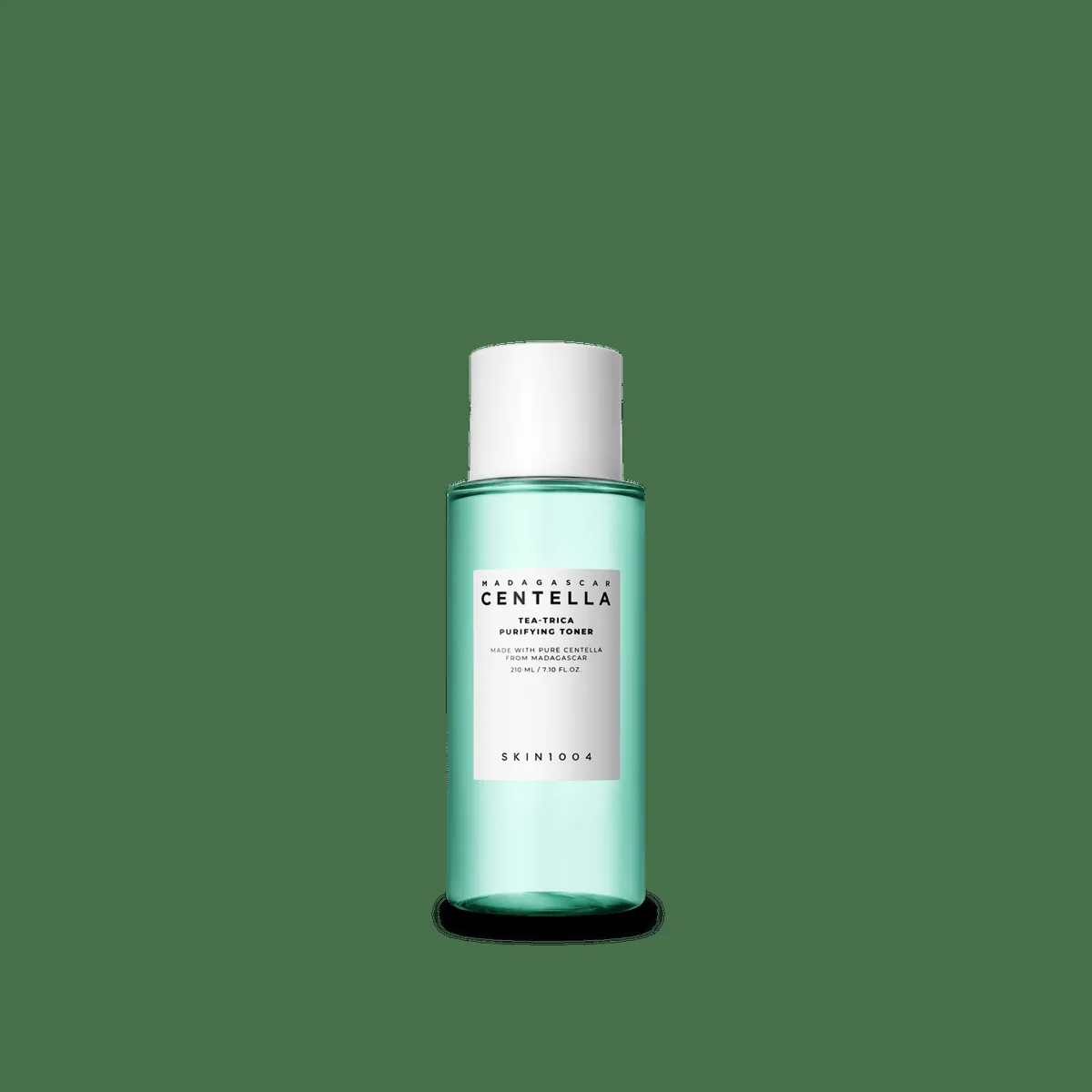
While most acid toners rely on a single exfoliant, this formula uses a triple-acid system (azelaic, salicylic, glycolic plus succinic acid) at gentle concentrations alongside a 7-component centella complex, ectoin, and ceramide NP. The result is daily-use clarification that does not require the recovery downtime that higher-concentration acid products demand — addressing both the 'treat' and 'protect' sides of the equation simultaneously.
A daily-use acid toner that manages the difficult balance between active clarification and gentle soothing — the triple-acid system at low concentrations clears pores and smooths texture without the irritation recovery that stronger acid products demand. The 250ml size at $22 makes it one of the best-value active toners in the K-beauty space, though the essential oils keep it from being truly universal.
Note: This liquid launched in 2025 with promising early reviews and a small clinical consumer study. Our assessment is based primarily on ingredient analysis and the brand's track record with its successful azelaic acid serum. A firmer judgment waits on a deeper pool of long-term user reports.
Verdicts
How well it fits each concern
Verdict by concern tap a concern for the case
Strong choicefor AcneIn your profileYou chose · Salicylic Acid is an approved or monograph active for acne; this liquid carries it, though the concentration is not declared.Moderate evidenceStandard tolerability10 reviews collected
The case for it
Salicylic Acid is a first-line active — approved, monograph-listed or named in current guidelines — for this concern.
It is plausibly present at a working level, though the concentration is not declared.
The formula carries no trigger this concern is sensitive to, with the cautions noted.
Cautions: fragrance.
What would change this: A declared concentration would move this to a firmer reading of the dose.
Same rule for everyone. “Strong choice” is the verdict on 1,459 of 45,024 concern verdicts across the catalog; rule R3 decided 567 of them.
Unchanged since September 5, 2026, engine 5.1.1.
R3 — Undeclared but plausibly dosed (top-third INCI position, or a potent sub-1% active) — the verdict stands, and the sentence says what disclosure would add. A declared figure below range would have been sub-threshold. · the full register
Carrying active
Salicylic Acid
Standing
first line — a regulator recognises it for this use; trials support it · per § 333.310 Acne active ingredients. (U.S. Food and Drug Administration — 21 CFR Part 333 Subpart D (Topical Acne Drug Products), Code of Federal Regulations via GovInfo), opened July 27, 2026
Form
plausible — studied range 0.5–2%, from the OTC monograph or label; judge it after ~6 weeks
Tolerability
standard — fragrance load
Row checked
against its sources on July 27, 2026 (evidence table ev-2026.09-r228)
Strong choicefor BlackheadsIn your profileYou chose · Salicylic Acid is an approved or monograph active for blackheads; this liquid carries it, though the concentration is not declared.Moderate evidenceStandard tolerability10 reviews collected
The case for it
Salicylic Acid is a first-line active — approved, monograph-listed or named in current guidelines — for this concern.
It is plausibly present at a working level, though the concentration is not declared.
The formula carries no trigger this concern is sensitive to, with the cautions noted.
What would change this: A declared concentration would move this to a firmer reading of the dose.
Same rule for everyone. “Strong choice” is the verdict on 1,459 of 45,024 concern verdicts across the catalog; rule R3 decided 567 of them.
Unchanged since September 5, 2026, engine 5.1.1.
R3 — Undeclared but plausibly dosed (top-third INCI position, or a potent sub-1% active) — the verdict stands, and the sentence says what disclosure would add. A declared figure below range would have been sub-threshold. · the full register
Carrying active
Salicylic Acid
Standing
first line — a regulator recognises it for this use; trials support it · per 21 CFR § 333.350 - Labeling of acne drug products. (US Code of Federal Regulations (Legal Information Institute, Cornell Law School)), opened July 27, 2026
Form
plausible — studied range 0.5–2%, from the OTC monograph or label; judge it after ~6 weeks
Tolerability
standard
Row checked
against its sources on July 27, 2026 (evidence table ev-2026.09-r228)
The studies behind the evidence row
OTC monograph, Topical Acne Drug Products — salicylic acid 0.5–2% recognized as an acne treatment active — US Food and Drug Administration
Good choicefor Rough TextureIn your profileYou chose · Salicylic Acid is a reference standard by mechanism for rough texture; this liquid carries it.Moderate evidenceStandard tolerability10 reviews collected
The case for it
Salicylic Acid has trial-supported standing for this concern.
It is plausibly present at a working level, though the concentration is not declared.
The formula carries no trigger this concern is sensitive to, with the cautions noted.
What would change this: A declared concentration would move this to a firmer reading of the dose.
Same rule for everyone. “Good choice” is the verdict on 9,564 of 45,024 concern verdicts across the catalog; rule R5 decided 9,072 of them.
Unchanged since September 5, 2026, engine 5.1.1.
Promisingfor Excess OilinessIn your profileYou chose · Salicylic Acid has trial-level evidence for excess oiliness but no guideline or regulatory standing yet — promising, short of a recommendation; the other actives here are not yet assessed for it.Moderate evidenceStandard tolerability10 reviews collected
The case for it
Salicylic Acid has trial-level evidence for this concern but no guideline or regulatory standing yet.
It is plausibly present at a working level, though the concentration is not declared.
The formula carries no trigger this concern is sensitive to, with the cautions noted.
What would change this: A declared concentration would move this to a firmer reading of the dose.
Same rule for everyone. “Promising” is the verdict on 7,858 of 45,024 concern verdicts across the catalog; rule R9p decided 7,858 of them.
Unchanged since September 5, 2026, engine 5.1.1.
R9p — 0.5.0: 'Unproven' beside three filled dots read as one question answered twice with opposite words (7,018 rows). The chip measures standing, the dots measure trial volume; where the row carries at least one RCT or a tier-2 source (moderate dots) and the active is present at a working level, the honest word is Promising. Unproven is reserved for plausible-standing rows with limited or weak evidence, or an under-dosed form. Same rank as Unproven — a bet either way; the dots order them. · the full register
Carrying active
Salicylic Acid
Standing
plausible — trials support it
Form
plausible — studied range 30%, from the trials on the row; needs leave-on contact; judge it after ~6 weeks
Tolerability
standard
Row checked
against its sources on July 17, 2026 (evidence table ev-2026.09-r228)
Not for thisfor Large PoresIn your profileYou chose · The actives here have been researched for large pores and the evidence does not support the claim.Not yet assessedStandard tolerability10 reviews collected
The case for it
Salicylic Acid has been researched for this concern and the evidence does not support it.
It is plausibly present at a working level, though the concentration is not declared.
The formula carries no trigger this concern is sensitive to, with the cautions noted.
What would change this: A declared concentration would move this to a firmer reading of the dose.
Same rule for everyone. “Not for this” is the verdict on 488 of 45,024 concern verdicts across the catalog; rule R10 decided 488 of them.
Unchanged since September 5, 2026, engine 5.1.1.
Supporting rolefor HyperpigmentationIn your profileYou chose · Azelaic Acid is a first-line active in current guidelines for hyperpigmentation, but this liquid carries it below the studied range — a supporting role at best.Moderate evidenceStandard tolerability10 reviews collected
The case for it
Azelaic Acid has trial-supported standing for this concern.
It is present below the studied range.
The formula carries no trigger this concern is sensitive to, with the cautions noted.
Cautions: a photosensitising active — use sun protection.
What would change this: A concentration inside the studied range would raise this a step.
Same rule for everyone. “Supporting role” is the verdict on 8,197 of 45,024 concern verdicts across the catalog; rule R7 decided 258 of them.
Unchanged since September 5, 2026, engine 5.1.1.
R7 — A supported active under-dosed cannot be recommended for the concern; if the category has a supportive job it may still help alongside treatment. · the full register
Also listed for Dullness — the actives here (Azelaic Acid, Salicylic Acid, Ectoin, Ceramides) are in our research queue for that concern; there is no verdict until their evidence rows are written. That is a gap in our table, not a mark against the product.
Does the jobDoes what a toner is for: adds something real, not alcohol-driven. Not measured from the label: restores skin pH, plays well with what follows.
A verdict is DermApproved’s assessment of how well a product’s ingredients fit a concern — never a claim about what the product treats. Evidence dots and collected reviews sit beside it and are never blended in.
Rules 0.5.1 · evidence table ev-2026.09-r228 · how we decide
Assessment
Pros & Cons
Pros
✓ Triple-acid system (azelaic, salicylic, glycolic) at gentle concentrations for daily use
✓ 7-component centella complex provides comprehensive soothing alongside the acids
✓ Ectoin and ceramide NP protect the barrier from cumulative acid exposure
✓ Generous 250ml size at $22 offers exceptional value per application
✓ Clinical consumer testing showed 90% satisfaction for soothing and texture at 4 weeks
✓ Lightweight watery texture absorbs instantly with no residue
Cons
✗ Contains rosemary and tea tree essential oils — potential sensitizers for reactive skin
✗ Not truly fragrance-free despite gentle positioning
✗ Multi-acid formula may cause purging in acne-prone skin during first 1-2 weeks
✗ Very new product (2025) with limited long-term data
✗ Small clinical study (21 participants) provides limited statistical confidence
Review
Full Review
The problem with acid toners is not the acid. It is the math. A toner sits at the beginning of your routine, applied to freshly cleansed skin at its most permeable, twice a day, 365 days a year. That cumulative acid exposure adds up fast. A 10% glycolic acid toner used twice daily delivers more total acid to the skin over a month than a weekly 30% glycolic peel. And yet most acid toners are formulated as if frequency does not matter — they pack the concentration and leave the soothing as an afterthought.
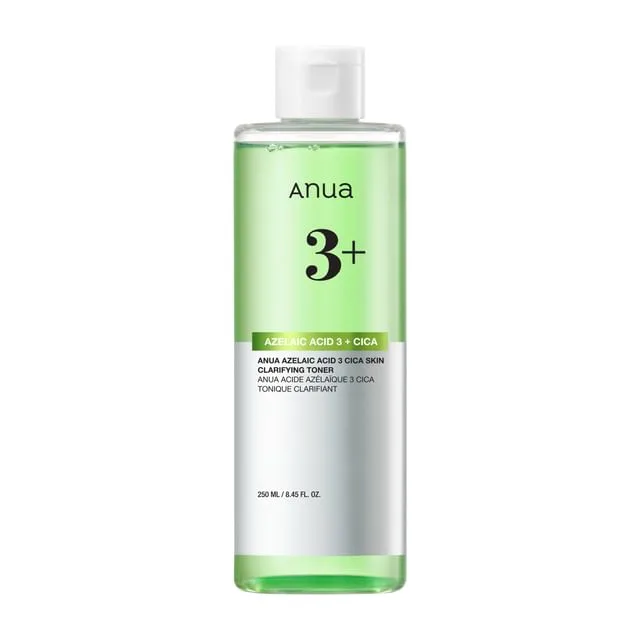
Anua took a different approach. The Azelaic Acid 3 Cica Skin Clarifying Toner is built around the principle that a toner's frequency demands a lower-concentration, higher-support formulation. The azelaic acid sits at 3% — enough to provide anti-inflammatory, brightening, and antimicrobial effects through daily accumulation, but gentle enough that twice-daily use does not overwhelm the skin barrier.
The acid system does not stop at azelaic. Salicylic acid penetrates into pores to dissolve the sebum-keratin plugs that cause blackheads. Glycolic acid provides surface-level exfoliation, smoothing texture and improving cell turnover. Succinic acid contributes antimicrobial activity against acne-causing bacteria through a pathway different from salicylic acid. Each acid addresses a different layer of the congestion problem, and together they create a comprehensive clarifying system at concentrations that are individually gentle.
What makes this formula genuinely thoughtful is the counter-programming. For every acid, there is a corresponding soothing or protective ingredient. The 7-Cica Complex — centella asiatica in seven forms including four isolated triterpenes — provides anti-inflammatory support at the cellular level. Ectoin creates a protective hydration shell around cells. Ceramide NP reinforces the lipid barrier. Panthenol and allantoin promote healing. Dipotassium glycyrrhizate and glycyrrhizic acid from licorice root calm irritation from two angles. This is not a formula that relies on the acids alone and hopes for the best — it actively manages the potential consequences of daily acid exposure. The INCI runs even deeper than the marketing bothers to mention: potassium azeloyl diglycinate — a water-soluble azelaic derivative — quietly doubles the azelaic story, zinc PCA adds sebum regulation, neem leaf and flower extracts bring their own traditional antimicrobial angle, polyglutamic acid deepens the hydration film, there's even a dose of docosahexaenoic acid (the omega-3), and totarol — a rare antimicrobial from the totara tree — anchors the preservative system. For $22, the formula density borders on showing off.
The texture is pure K-beauty: watery, lightweight, and fast-absorbing. The pale green tint comes from the botanical extracts and is purely cosmetic — it does not deposit any visible color on the skin. Application feels like water with a subtle herbal scent from the rosemary and tea tree leaf oils. These essential oils are the formula's most debatable inclusion. They contribute antimicrobial and soothing properties, but they are also known contact sensitizers for a subset of users. Truly sensitive skin — the kind that reacts to rosemary or tea tree — should patch test before committing to daily use. Rollout discipline matters with a leave-on acid stack: start evenings-only for the first couple of weeks, expect the possibility of a brief purge on congested skin as existing clogs surface, and keep other exfoliating acids, physical scrubs, and strong retinol out of the same routine.
The 250ml size is generous for an active toner, and at $22, the per-use cost is remarkably low. By comparison, most Western acid toners offer 100-200ml for $25-40 with simpler formulations. The value is particularly strong for those who use toner liberally — soaking cotton pads, multi-layering in the Korean fashion, or applying to neck and chest as well as face.
Results from the consumer clinical study — conducted with 21 participants over 4 weeks — showed 90% satisfaction for soothing and texture improvement. This is a small study, and the self-assessment methodology is less rigorous than controlled clinical trials, but the directionality aligns with what the ingredient profile predicts: gentle, cumulative clarification with minimal irritation. The launch reception is strong — around 650 reviews averaging 4.7 through the brand's 2025 Ulta expansion — with the praise concentrated on non-stripping exfoliation, the generous bottle, and visible pore work inside weeks, and the reservations exactly where this review puts them: the essential oils and the newness of the long-term data.
The honest gap in this formula is its audience constraint. The essential oils, while present at low levels, mean this is not truly a sensitive-skin product despite the centella and soothing complex. Those with known essential oil sensitivity should use the Heartleaf 77% Toner instead and rely on the 10% Azelaic Acid serum for their active treatment. For those who tolerate tea tree and rosemary without issue — which is the majority of oily and combination skin users — this toner delivers impressive daily clarification at a price and concentration that encourages the kind of consistent, long-term use that skin improvement actually requires.
Anua positioned this as the maintenance counterpart to their intensive 10% serum, and the pairing makes sense. The toner handles daily upkeep — keeping pores clear, maintaining texture, managing low-level redness — while the serum targets specific problem areas with a higher active dose. Together, they represent one of the most coherent azelaic acid systems available at any price point.
Formula
Key Ingredients
The hero actives that drive this product's performance.
At 3% in a toner format, this is a maintenance-level dose designed for daily use without irritation. Works to gently brighten post-blemish marks, reduce redness, and control excess sebum production. The lower concentration compared to the brand's 10% serum makes this suitable for sensitive skin that cannot tolerate higher azelaic acid doses.
A comprehensive centella system including centella asiatica extract, leaf extract, root extract, and four isolated triterpenes (madecassoside, asiaticoside, asiatic acid, madecassic acid). Provides multi-pathway soothing and barrier repair that buffers the mild exfoliation from the acid blend, keeping the skin calm while the actives clarify.
Penetrates into pores to dissolve the sebum and dead cell buildup that causes blackheads and breakouts. Works synergistically with the azelaic acid and glycolic acid to create a gentle triple-acid clarifying system — each acid addressing a different aspect of congestion.
Established mechanismfor Rough Texture · established mechanism
A natural extremolyte that forms a protective hydration shell around skin cells, shielding them from environmental stress. In this acid toner, ectoin prevents the over-stripping that multi-acid formulas can cause, maintaining cell-level hydration while the acids do their clarifying work.
Reinforces the skin's lipid barrier from within the toner step — an unusually early point in the routine to introduce ceramides. This proactive barrier support prevents the cumulative barrier weakening that daily acid toner use can cause over weeks and months.
Not yet assessed
Ingredient standings describe the active at treatment-level doses and
vehicles; this product's own condition grades weigh its actual formula.
Apply after cleansing as your toner step. Dispense onto a cotton pad or into palms and pat onto face, focusing on areas of congestion. Follow with serum and moisturizer. Can be used AM and PM but start with PM only if new to acid toners. Avoid layering with other exfoliating acids in the same routine.
Results Timeline
Initial skin-smoothing and pore-clearing effects noticeable within 1-2 weeks. Visible redness reduction and texture improvement at 4 weeks based on clinical consumer testing. Full clarifying and brightening results at 6-8 weeks of consistent use. Some users may experience mild purging in the first 1-2 weeks.
The multi-acid approach in this toner leverages three distinct mechanisms of action. Azelaic acid at 3% provides anti-inflammatory activity through inhibition of reactive oxygen species and antimicrobial effects against Propionibacterium acnes, as documented in the Journal of Drugs in Dermatology. While 3% is below the typical therapeutic concentration (15-20% for prescription use), daily application accumulates meaningful exposure — research published in the International Journal of Dermatology has demonstrated that lower concentrations with increased frequency can approach the efficacy of higher single-dose applications.
Salicylic acid (a beta-hydroxy acid) is oil-soluble, allowing it to penetrate into the lipid-rich environment of sebaceous follicles. Research in Clinical Therapeutics confirmed that even low concentrations of salicylic acid effectively dissolve the keratin plugs that cause comedones, while its anti-inflammatory properties reduce the perifollicular inflammation that turns blackheads into inflammatory acne.
The inclusion of ectoin is pharmacologically noteworthy. Published research in Skin Pharmacology and Physiology has demonstrated that ectoin forms a kosmotropic hydration shell around proteins and cell membranes, stabilizing their structure under stress conditions. In the context of an acid toner, this protective hydration mechanism helps prevent the cell membrane disruption that acid exposure can cause — essentially providing molecular-level protection from the formula's own active ingredients.
Ceramide NP supports the intercellular lipid matrix that acids can gradually deplete with daily use. A review in the Journal of Clinical and Aesthetic Dermatology confirmed that ceramide supplementation prevents the transepidermal water loss increase associated with regular acid exfoliation, maintaining barrier integrity during long-term treatment.
References
Low-concentration azelaic acid: efficacy through frequency — International Journal of Dermatology (2018)
Ectoin as a protective agent for skin cell membranes — Skin Pharmacology and Physiology (2016)
Dermatologist Perspective
Dermatologists note that daily-use acid toners should prioritize low concentrations with robust soothing support to avoid cumulative barrier damage. Dermatology professionals recognize that the combination of azelaic acid, salicylic acid, and glycolic acid at low concentrations can provide synergistic clarifying benefits — each acid addressing a different pathogenic factor in acne and congestion. The inclusion of ceramide NP and ectoin in an acid toner aligns with current dermatological guidance on maintaining barrier integrity during long-term exfoliant use. However, dermatologists advise that patients with active eczema or severe rosacea should avoid multi-acid products regardless of individual acid concentrations.
Guidance
Usage & Recommendations
How to Use
After cleansing, dispense a moderate amount onto a cotton pad or into palms. Gently pat or swipe across the face, focusing on areas of congestion, texture, or redness. Follow with serum and moisturizer. Can be used morning and evening, but start with once daily (PM) for the first week to assess tolerance. Always use sunscreen during the day when using acid toners. Avoid combining with other strong exfoliants (retinol, high-concentration AHA/BHA) in the same routine.
Value Assessment
At $22 for 250ml, this is one of the most cost-effective active toners in the K-beauty market. The per-use cost is approximately $0.05-0.10 — a fraction of what Western acid toners charge for smaller volumes with simpler formulations. The generous size encourages the consistent, long-term daily use that low-concentration actives require to deliver results. For the formulation complexity — triple acids, 7-cica complex, ectoin, ceramide NP — the value is exceptional.
Who Should Buy
Oily and combination skin types dealing with regular breakouts, blackheads, uneven texture, or post-blemish redness who want a gentle daily acid toner rather than harsh weekly peels. Ideal as a maintenance companion to the Anua 10% Azelaic Acid serum or as a standalone daily clarifier.
Who Should Skip
Very sensitive or eczema-prone skin that reacts to essential oils (rosemary, tea tree). Dry skin types who need their toner step to be purely hydrating. Anyone currently using strong retinoids or high-concentration acid products — adding another acid layer may tip into over-exfoliation.
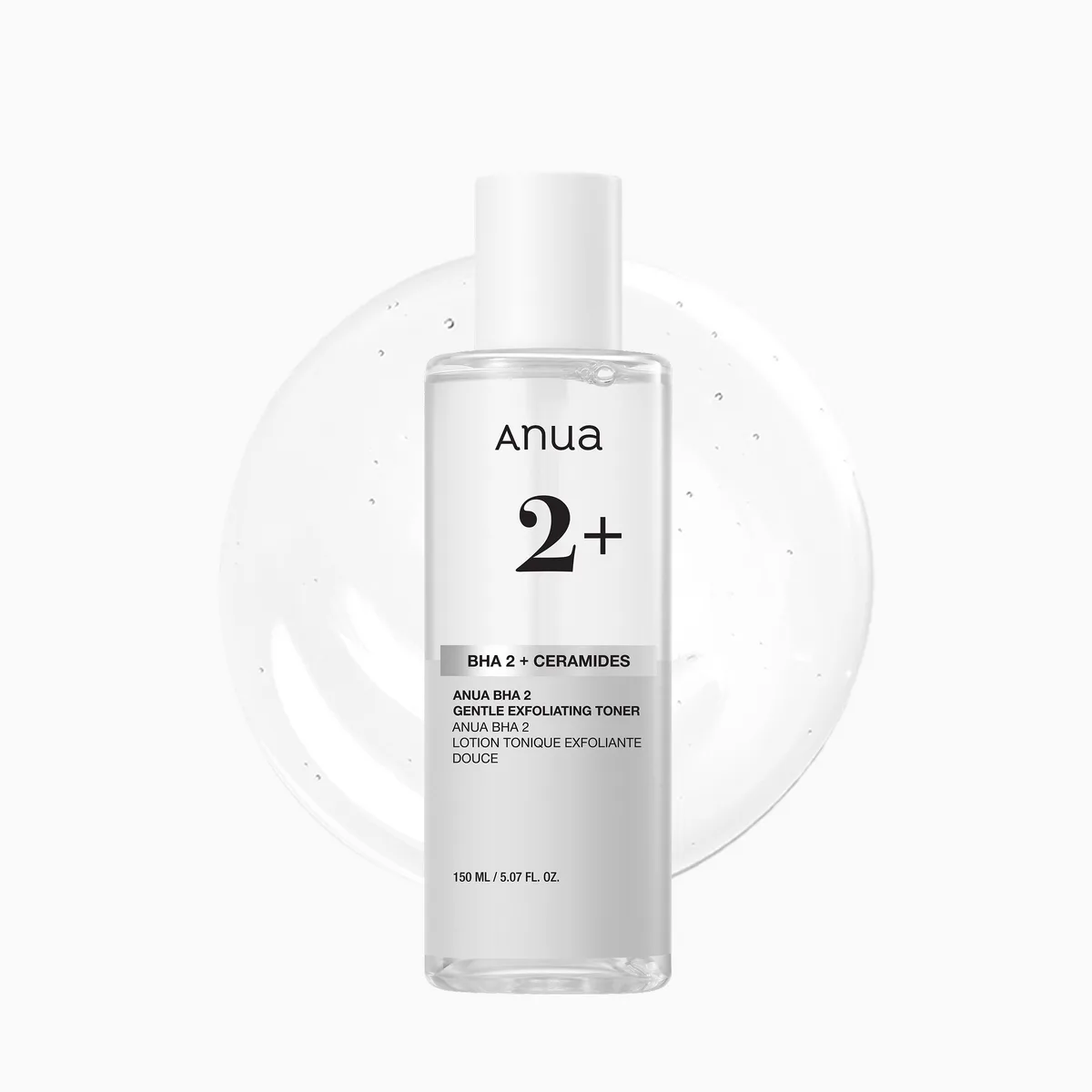
Lightweight, watery toner with a pale green tint from the botanical extracts. Absorbs quickly into skin with no residue.
Scent
Subtle herbal scent from the rosemary and tea tree leaf oils. Not overpowering but noticeable.
Packaging
Large plastic bottle with dispensing cap, 250ml. Generous size for a toner at this price point.
Finish
lightweightfast-absorbingnatural
What to Expect on First Use
Applies like water with a subtle herbal scent. No stinging or tingling for most users despite the acid content — the 3% azelaic acid concentration is gentle enough for comfortable daily use. Skin may feel slightly smoother immediately after the first few uses. Mild purging is possible in the first 1-2 weeks for acne-prone skin.
Following the massive success of their 10% Azelaic Acid serum, Anua recognized that many consumers wanted azelaic acid's benefits integrated into their daily toner step — where consistent, gentle exposure over a larger volume would complement the more intensive treatment of the serum. This toner represents the maintenance counterpart to the serum's intervention: lower concentration, higher frequency, broader soothing support.
About Anua Established Brand (5–20 years)
Anua was founded in 2019 and has rapidly expanded globally, entering Ulta Beauty stores in 2025. This toner builds on the brand's successful azelaic acid serum and signature centella complex. Clinical consumer testing with 21 participants showed 90% satisfaction for soothing and texture improvement at 4 weeks.
Brand founded: 2019 · Product launched: 2025
Myth vs. Reality
Common Myths
Myth
3% azelaic acid is too low to be effective.
Reality
At 3%, azelaic acid provides meaningful anti-inflammatory, brightening, and antimicrobial benefits with daily use — particularly when combined with complementary acids like salicylic and glycolic acid. The lower concentration allows for twice-daily application without irritation, accumulating therapeutic exposure over time.
Myth
You should not use multiple acids in the same product.
Reality
The acids in this toner (azelaic, salicylic, glycolic, succinic) are each at low concentrations and target different aspects of skin clarification. Combined thoughtfully with soothing agents and barrier-protective ingredients, multi-acid formulas can be gentler than a single acid at high concentration.
FAQ
Frequently Asked Questions
Can I use this toner with the Anua Azelaic Acid 10% serum?
Yes — the toner at 3% and the serum at 10% are designed to work as a system. Use the toner first for gentle daily clarification, then apply the serum on areas that need more intensive treatment. Start with alternating days before using both daily to assess your skin's tolerance.
Is this toner suitable for sensitive skin?
The 3% azelaic acid and the soothing centella complex make this gentler than most acid toners. However, the formula contains rosemary and tea tree essential oils, which can irritate very reactive skin. Those with known essential oil sensitivities should patch test first.
How does this compare to the Anua Heartleaf 77% Toner?
The Heartleaf Toner is a pure soothing and hydrating toner with no exfoliating acids. This Azelaic Acid toner is an active treatment toner designed for clarification, pore clearing, and redness reduction. Choose the Heartleaf for calming-only needs, this toner for active skin clearing.
Will this toner cause purging?
The salicylic and glycolic acid components can cause mild purging (temporary breakouts) in the first 1-2 weeks as they clear existing congestion from pores. This is normal and temporary. If new breakouts persist beyond 3 weeks, reduce usage frequency.
Can I use this toner every day?
Yes — the low acid concentrations and robust soothing complex are designed for daily use. Start with once daily (PM) for the first week, then increase to twice daily if your skin tolerates it well. Always follow with moisturizer and use sunscreen during the day.
Reviews
What Reviewers Tend to Say
Recurring themes our editors read across retailer reviews of this product — summaries in our words, not quotations, and not a substitute for your own patch test.
Common Praise
Gentle exfoliation that does not strip or over-dry skin
Generous 250ml size offers excellent value
Noticeable pore-clearing and texture improvement within weeks
Calming green-tinted formula feels soothing on application
Common Complaints
Contains essential oils (rosemary, tea tree) that some may react to
Multi-acid formula may be too active for very sensitive skin
Not fragrance-free despite gentle positioning
Limited long-term data as a new launch
Notable Endorsements
Available at Ulta BeautyClinical consumer study: 90% satisfaction for soothing and texture at 4 weeks
The whole case for salicylic acid rests on one unglamorous fact of chemistry: it dissolves in oil. Understand that, and you know exactly when it beats a glycolic acid — and when it's overkill.
The smallest AHA gets deepest and shows results soonest — which is precisely why routines built around it overshoot, and why the people who do best with it use it least.
Jul 30, 2026· 7 min
Questions people ask about Acne
Verified answers from our questions library — the nuance a product page cannot carry.
Products, answers, therapy guides, tools and articles in one search. Brand names,
slang and abbreviations all work — accutane finds isotretinoin, bacne finds truncal acne.