
The Truth About Pore Strips, Pore Vacuums, and 'Shrinking' Your Pores
You cannot shrink a pore. But you can change how visible it is — and almost everything sold to 'minimize' pores is pulling the wrong lever.
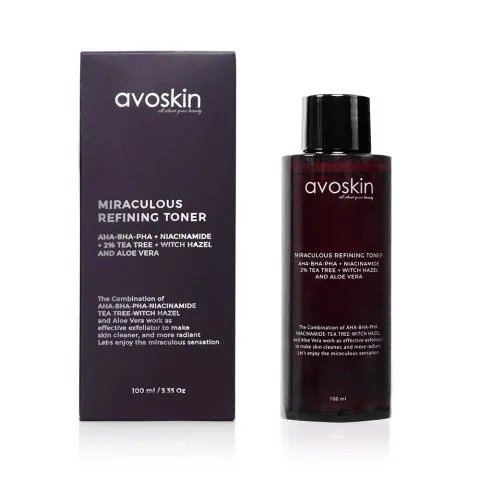
Rather than relying on a single exfoliating acid, this toner layers a 5% AHA, a 2% BHA, and a PHA together, then cushions them with niacinamide, polyglutamic acid, and soothing botanicals. The result is a genuinely strong multi-acid exfoliant tuned for oily, acne-prone skin that resurfaces and clears pores without the bone-dry aftermath a single high-strength acid often causes.
The multi-acid toner that built Avoskin's reputation, blending a 5% AHA, a 2% BHA, and a PHA into a genuinely effective resurfacing treatment for oily, acne-prone skin. It clears congestion and smooths texture without the bone-dry aftermath of a single strong acid, but it is potent enough to punish sensitive or dry skin and overuse. Used twice weekly with diligent sunscreen, it's a standout value.
Avoskin has sold this toner for several years to a large and vocal Southeast Asian audience, so its real-world track record is substantial — but most of that feedback lives on regional platforms rather than the global retailers that underpin our highest-confidence ratings. The score draws on the deep published evidence for glycolic, salicylic, and polyhydroxy acids together with that extensive regional user experience, while independent clinical testing of this specific formula remains unavailable.
The case for it
Cautions: fragrance; known irritants.
Same rule for everyone. “Strong choice” is the verdict on 1,459 of 45,024 concern verdicts across the catalog; rule R2 decided 892 of them. Unchanged since September 5, 2026, engine 5.1.1.
Brand or formulator? Disclose a concentration or correct a fact →
The studies behind the evidence row
The case for it
Same rule for everyone. “Strong choice” is the verdict on 1,459 of 45,024 concern verdicts across the catalog; rule R2 decided 892 of them. Unchanged since September 5, 2026, engine 5.1.1.
Brand or formulator? Disclose a concentration or correct a fact →
The studies behind the evidence row
The case for it
Same rule for everyone. “Good choice” is the verdict on 9,564 of 45,024 concern verdicts across the catalog; rule R5 decided 9,072 of them. Unchanged since September 5, 2026, engine 5.1.1.
Brand or formulator? Disclose a concentration or correct a fact →
The studies behind the evidence row
The case for it
What would change this: A declared concentration would move this to a firmer reading of the dose.
Same rule for everyone. “Promising” is the verdict on 7,858 of 45,024 concern verdicts across the catalog; rule R9p decided 7,858 of them. Unchanged since September 5, 2026, engine 5.1.1.
Brand or formulator? Disclose a concentration or correct a fact →
The studies behind the evidence row
The case for it
Same rule for everyone. “Good choice” is the verdict on 9,564 of 45,024 concern verdicts across the catalog; rule R5 decided 9,072 of them. Unchanged since September 5, 2026, engine 5.1.1.
Brand or formulator? Disclose a concentration or correct a fact →
The studies behind the evidence row
The case for it
Cautions: known irritants; a photosensitising active — use sun protection.
What would change this: A declared concentration would move this to a firmer reading of the dose.
Same rule for everyone. “Good choice” is the verdict on 9,564 of 45,024 concern verdicts across the catalog; rule R5 decided 9,072 of them. Unchanged since September 5, 2026, engine 5.1.1.
Brand or formulator? Disclose a concentration or correct a fact →
The studies behind the evidence row
The case for it
What would change this: A declared concentration would move this to a firmer reading of the dose.
Same rule for everyone. “Promising” is the verdict on 7,858 of 45,024 concern verdicts across the catalog; rule R9p decided 7,858 of them. Unchanged since September 5, 2026, engine 5.1.1.
Brand or formulator? Disclose a concentration or correct a fact →
The studies behind the evidence row
Does the jobDoes what a toner is for: adds something real. Not measured from the label: restores skin pH, plays well with what follows.
A verdict is DermApproved’s assessment of how well a product’s ingredients fit a concern — never a claim about what the product treats. Evidence dots and collected reviews sit beside it and are never blended in. Rules 0.5.1 · evidence table ev-2026.09-r228 · how we decide
Before Indonesian skincare became a regional force, the prevailing assumption was that the serious actives came from Korea, France, or the United States, and local brands filled in around the edges. The Miraculous Refining Toner is a big part of why that assumption no longer holds. Launched as Avoskin found its footing, it did something a homegrown label wasn't supposed to be able to do: formulate a sophisticated, three-acid exfoliant that genuinely worked, then win over a skeptical domestic audience on results rather than marketing. Word of mouth through Indonesian beauty communities did the rest, and the toner became one of the country's defining cult products — eight thousand-odd reviews later, it still averages four and a half stars. Strip away that origin story, though, and you still have a formula worth taking seriously on its own terms.
What makes it tick is the decision to use three exfoliating acids instead of one. The lead actor is glycolic acid at 5%, an AHA small enough to penetrate quickly and dissolve the bonds holding dull, dead cells at the surface — the engine behind the smoother texture and gradual fading of post-acne marks that fans rave about. Backing it is salicylic acid at 2%, the oil-soluble BHA that does what glycolic can't: slip into sebum-filled pores and clear the debris behind blackheads and breakouts. That AHA-plus-BHA pairing is what turns this from a simple surface-smoother into a real acne-targeted exfoliant. The clever third element is gluconolactone, a polyhydroxy acid that exfoliates more gently and superficially while doubling as a humectant. Its job is essentially to soften the blow — to round out the resurfacing and add hydration so the formula can be this strong without leaving skin feeling stripped and tight.
The cushioning goes further than the PHA alone. Niacinamide supports the barrier and moderates oil while the acids work. Polyglutamic acid — a humectant with several times hyaluronic acid's water-binding capacity — sits at the very end of the list holding moisture in against the transepidermal water loss that exfoliation reliably causes. Glycerin, aloe juice, amylopectin and dextrin add further hydration and slip. Chamomile and purslane calm; tea tree and witch hazel push in the clarifying direction; sugar maple extract quietly contributes a little more natural AHA activity. Tetrasodium EDTA chelates the metals that would otherwise destabilize the acids, and sodium hydroxymethylglycinate — a single, simple preservative — keeps the whole thing shelf-stable. This is an engineered formula, not a stack of acids in water, and the difference shows in how the skin feels the next morning.
In practice, it behaves exactly like the potent treatment it is. Swept over the skin on a cotton pad at night, it delivers a mild tingle or light sting that signals the acids working, and many users pass through a brief purge in the first weeks as cell turnover accelerates. Within a week or two of using it two or three nights a week, the surface feels smoother and pores look clearer; over a month or two, breakouts taper and tone evens out. The texture is a thin, faintly slippery liquid that absorbs without residue, and it carries a mild herbal-citrus scent from the extracts rather than added fragrance. None of this is subtle, and that is the point — but it is also the source of every legitimate criticism leveled at it.
Because here is the honest catch: this toner is strong, and strength cuts both ways. Three acids at a pH around 3.8 is a lot of exfoliation to ask skin to absorb — that pH is deliberate, since acids only work in their free-acid form and a gentler pH would neuter the whole formula, but it also means there is no hiding from the intensity. Sensitive, dry, or barrier-compromised complexions can find it genuinely too much: stinging, redness, and tightness instead of glow. The lemon fruit extract is a fair knock too; citrus extracts can photosensitize and irritate, and it sits in a formula that already demands respect. The single biggest mistake people make is treating the word 'toner' literally and reaching for it every night, which is a fast route to a damaged barrier and breakouts that mimic the acne they were trying to clear.
So treat the name as a misnomer. This is a two-to-three-times-a-week treatment wearing a gentle-sounding label. It goes on dry skin after cleansing, on a cotton pad, once — not swiped repeatedly until the pad is dry. It is the only strong active in that night's routine: no retinoid, no vitamin C, no benzoyl peroxide, no second acid. Hydrating essence and moisturizer follow, and sunscreen the next morning is non-negotiable, because acids increase UV sensitivity and unprotected sun exposure will undo the tone-evening you are paying for. It is also not a pick for fungal-acne-prone routines, and it is not one for pregnancy — leave-on salicylic acid is the standard thing to set aside for those months.
Use it correctly, though, and it is hard to fault what it accomplishes. For oily and combination skin fighting congestion, blackheads, and uneven texture, the multi-acid approach delivers results that genuinely rival pricier single-acid exfoliants, with less of the desert-dry aftermath. The buffering from the PHA, humectants, and barrier ingredients is the difference-maker — it lets the formula hit hard without leaving skin feeling flayed, which is exactly the balance most aggressive exfoliating toners miss. One expectation worth resetting: it does not shrink pores, because nothing does. It empties them, which makes them look smaller, and that effect reverses if you stop.
On value, it is a clear win for the right skin. You are getting a thoughtfully built, BPOM-registered and halal-certified multi-acid treatment in a generous 100 ml bottle at a price that undercuts most imported exfoliating toners, and used at a sane frequency it lasts two to three months. The caveats are real and worth repeating — wrong skin type, overuse, and skipped sunscreen will all turn this from a hero into a hazard — but none of them are flaws in the formula so much as warnings on the label. For oily, acne-prone skin willing to respect its strength, it earns its cult status.
The hero actives that drive this product's performance.
| Ingredient | Function | Evidence |
|---|---|---|
| Glycolic Acid (5% AHA) (5%) | Glycolic acid is the lead exfoliant and the reason this toner earned its cult following — at 5% and a low pH it dissolves the bonds holding dull, dead cells to the surface, smoothing texture and helping fade the look of post-acne marks. In this multi-acid blend it provides the surface resurfacing while the salicylic acid handles the pores and the gluconolactone softens the overall intensity, so the glycolic can work without the formula tipping into harshness. | Established mechanism for Rough Texture · established mechanism |
| Salicylic Acid (2% BHA) (2%) | The oil-soluble counterpart to the glycolic acid, salicylic acid penetrates into sebum-filled pores to clear the debris behind blackheads and breakouts. Its inclusion is what makes this toner an acne-targeted exfoliant rather than a purely surface-smoothing one — it works deeper than the AHA, and alongside the tea tree and witch hazel extracts it gives the formula its clarifying, oil-control character. | Established mechanism for Rough Texture · established mechanism |
| Gluconolactone (PHA) | A polyhydroxy acid that exfoliates gently while acting as a humectant and mild antioxidant, gluconolactone is the buffering third acid in this trio. Its larger molecular size means it works more slowly and superficially than the glycolic and salicylic acids, which lets it round out the exfoliation and add hydration so the combined formula resurfaces effectively without the tight, stripped feeling a straight AHA/BHA toner can leave. | Not yet assessed |
| Niacinamide | Sitting lower in the formula, niacinamide supports the skin barrier and helps regulate oil while the acids do the resurfacing — a sensible inclusion in an exfoliating toner, where barrier support offsets the disruption that frequent acid use can cause. It also contributes to the toner's tone-evening goals, complementing the glycolic acid's effect on post-acne discoloration. | Emerging for Hyperpigmentation |
Ingredient standings describe the active at treatment-level doses and vehicles; this product's own condition grades weigh its actual formula.
Water, Glycerin, Glycolic Acid, Butylene Glycol, Propylene Glycol, Gluconolactone, Melaleuca Alternifolia (Tea Tree) Leaf Extract, Hamamelis Virginiana (Witch Hazel) Leaf Extract, Niacinamide, Chamomilla Recutita (Matricaria) Flower Extract, Rubus Idaeus (Raspberry Fruit) Extract, Citrus Limon (Lemon) Fruit Extract, Salicylic Acid, Acer Saccharum (Sugar Maple) Extract, Portulaca Oleracea Extract, Aloe Barbadensis Leaf Juice, Amylopectin, Dextrin, Xanthan Gum, Tetrasodium EDTA, Sodium Hydroxymethylglycinate, Polyglutamic Acid
treatment
PM
Use it at night after cleansing, sweeping a soaked cotton pad over dry skin and then waiting for it to absorb before moisturizing. Because it combines AHA, BHA, and PHA at a low pH, do not layer it in the same routine as retinoids, vitamin C, or other exfoliating acids, and always follow with sunscreen the next morning since acids increase sun sensitivity.
A smoother surface and slightly clearer pores within the first week or two of 2-3 uses per week. Reduced breakouts and a more even tone build over 4-8 weeks. Pushing to nightly use too quickly tends to backfire with irritation rather than faster results.
The science here is the well-trodden ground of multi-acid chemical exfoliation, and this formula combines three acid classes that work at different depths. Glycolic acid, the smallest alpha-hydroxy acid, penetrates rapidly and weakens the corneodesmosomes binding corneocytes together, accelerating desquamation and, with continued use, supporting a thicker, more evenly pigmented epidermis — the basis of its well-documented effects on texture and superficial hyperpigmentation. Salicylic acid, a lipophilic beta-hydroxy acid, partitions into the sebaceous follicle where water-soluble AHAs cannot reach, making it the more relevant acid for comedonal and inflammatory acne; it also carries mild anti-inflammatory activity related to its salicylate structure. Gluconolactone, the polyhydroxy acid, has a larger molecular size that slows penetration and yields gentler, more superficial exfoliation, with the added properties of humectancy and free-radical scavenging that help explain why PHAs are often described as better tolerated than comparable AHAs. The efficacy of all three is pH-dependent, which is why the toner sits around 3.8 — low enough to keep a meaningful fraction of each acid in its active free-acid form. The supporting cast is mechanistically coherent: niacinamide has strong evidence for barrier support, sebum modulation, and tone evening, while polyglutamic acid and glycerin counter transepidermal water loss that exfoliation can worsen. The formulation's main evidence-based liability is the lemon (Citrus limon) extract, as citrus-derived components can contribute to photosensitization and irritation. No clinical trial exists for this specific product; the assessment rests on the substantial published literature for each individual acid and on extensive regional user data.
Dermatologists generally regard combination AHA/BHA exfoliants as effective tools for acne-prone and textural concerns, while stressing that potency demands restraint. Practitioners find that salicylic acid is particularly useful for comedonal acne because of its ability to penetrate sebaceous follicles, whereas glycolic acid is favored for surface texture and superficial pigmentation — making a formula that includes both versatile but also more capable of over-exfoliation. Clinicians commonly advise starting chemical exfoliants two to three times weekly and increasing only as tolerated, and they consistently emphasize daily broad-spectrum sunscreen, since AHA use can increase UV sensitivity and undermine the tone-evening goal if photoprotection is neglected. Many dermatologists also caution patients with sensitive skin, rosacea, or a compromised barrier to approach multi-acid products carefully or avoid them, and most recommend that pregnant patients avoid leave-on BHA exfoliants pending individual guidance.
Use it at night, two to three times a week to start. After cleansing, saturate a cotton pad and sweep it once over dry skin, avoiding the eye area and any broken or irritated patches, then let it absorb for a minute or two before applying a hydrating essence and moisturizer. Keep it as the only exfoliating or strong active in that night's routine — do not pair it with retinoids, vitamin C, or other acids in the same session. The morning after using it, broad-spectrum sunscreen is mandatory, since the acids leave skin more sun-sensitive. Increase frequency only if your skin stays calm; if you see persistent stinging, redness, or tightness, scale back.
For the skin types it suits, the value here is excellent. You are getting a deliberately engineered three-acid exfoliating treatment — complete with buffering humectants and barrier ingredients — in a generously sized bottle at a price that undercuts most imported single-acid toners, and at a sensible two-to-three-times-weekly cadence a bottle stretches across several months. The BPOM registration and halal certification add reassurance that the formula is regulated and consistent. The deductions are about fit rather than quality: it is wasted money, or worse, for sensitive and dry skin that can't tolerate it, and it obliges you to commit to daily sunscreen to use it safely. For oily, acne-prone, congestion-prone skin willing to respect those terms, the price-to-performance ratio is among the better ones in the exfoliating-toner category.
Reach for this if you have oily or combination, acne-prone skin dealing with congestion, blackheads, rough texture, or post-acne marks and you want a strong, well-buffered multi-acid exfoliant at a fair price. It rewards people who are comfortable treating it as a twice-weekly treatment and committing to daily sunscreen.
This is the wrong toner for sensitive, dry, rosacea-prone, or barrier-compromised skin, where its triple-acid strength is more likely to inflame than refine. Pass on it too if you are managing fungal acne, are pregnant, or know you'll be tempted to use it nightly — the formula punishes overuse, and a gentler single-acid option will serve those situations far better.
Ready to try Avoskin Miraculous Refining Toner?
Buy at Amazon ♥A thin, slightly slippery liquid with a faint viscosity from the glycerin and polyglutamic acid; it spreads wet across a cotton pad and absorbs into the skin within a minute or two without a sticky residue.
A mild herbal-citrus note from the tea tree, witch hazel, and lemon extracts rather than added fragrance — light and quick to fade.
A frosted or clear plastic bottle with a narrow pour spout that lets you control how much you dispense onto a cotton pad. Practical for a toner, though the wide-mouth pour means it is easy to over-dispense if you are not careful.
Expect a mild tingle or light stinging on application, especially in the first week — that is the acids working and should settle as your skin adjusts. Some users go through a brief purge as the exfoliation accelerates cell turnover. If the stinging is sharp or lingering, or skin turns red and tight, that is a signal to scale back frequency rather than push through.
2-3 months with 2-3 nighttime uses per week from the 100 ml bottle
All Year
The Miraculous Refining Toner is the product that put Avoskin on the map, arriving as homegrown Indonesian skincare was gaining ground against imported brands and proving a local label could formulate a sophisticated multi-acid exfoliant. Its word-of-mouth success across Indonesian beauty communities turned it into one of the country's defining cult skincare products.
Avoskin is an Indonesian skincare brand founded in 2014 that became one of the country's best-known local labels, with halal certification and BPOM (Indonesian FDA) registration. The Miraculous Refining Toner is its breakout product, widely reviewed across Southeast Asian platforms, though independent clinical validation outside that regional review ecosystem is limited.
A toner this effective should be used every night for fastest results.
With a 5% AHA, 2% BHA, and a PHA at a low pH, nightly use is too much for most skin and a fast route to a compromised barrier. Two to three nights a week is plenty to resurface and clear pores; overdoing it produces redness, stinging, and breakouts that look like the acne you were trying to treat.
Exfoliating toners shrink your pores permanently.
Pore size is largely genetic. What this toner does is clear the sebum and debris that make pores look larger and remove dead-cell buildup around them, so pores appear smaller and skin looks smoother. Stop using it and that congestion gradually returns — the refining effect is maintained, not permanent.
It combines a 5% AHA (glycolic acid), a 2% BHA (salicylic acid), and a PHA (gluconolactone) at a low pH around 3.8. That triple-acid blend makes it a genuinely strong exfoliant — effective on texture and breakouts, but potent enough that sensitive and dry skin should approach it cautiously.
Start with two to three nights a week and only increase if your skin tolerates it well. Despite its 'toner' name, the multi-acid formula functions as a treatment, and nightly use is too much for most people — overuse leads to stinging, redness, and barrier damage rather than faster clearing.
Not in the same routine. Layering this multi-acid toner with retinoids, vitamin C, or other exfoliating acids stacks too much irritation at once. Use it on its own exfoliating nights and keep your retinoid or vitamin C for separate days or the morning, and always wear sunscreen since acids increase sun sensitivity.
It is not ideal for fungal-acne-prone routines. While the acids themselves are not feeding ingredients, the formula includes botanical extracts and is generally categorized as not fungal-acne-safe. If you are specifically managing malassezia-driven breakouts, a simpler salicylic acid product is a safer choice.
We flag it as not recommended during pregnancy because it contains salicylic acid (a BHA) alongside a high-strength AHA. While topical exposure is low, many providers advise avoiding leave-on BHA exfoliants while pregnant, so anyone expecting should clear this with their doctor and likely choose a gentler option.
Recurring themes our editors read across retailer reviews of this product — summaries in our words, not quotations, and not a substitute for your own patch test.
Visibly smoother texture and fewer clogged pores within weeks
Effective on blackheads and active breakouts
Fades post-acne marks with consistent use
Multi-acid formula works without leaving skin overly dry
Strong value for the concentration and bottle size
Too strong for sensitive or dry skin and can sting
Easy to overuse and trigger irritation or purging
Lemon extract is a potential photosensitizer and irritant
Requires diligent daytime sunscreen to use safely
Not suitable for fungal-acne-prone routines
Verified answers from our questions library — the nuance a product page cannot carry.