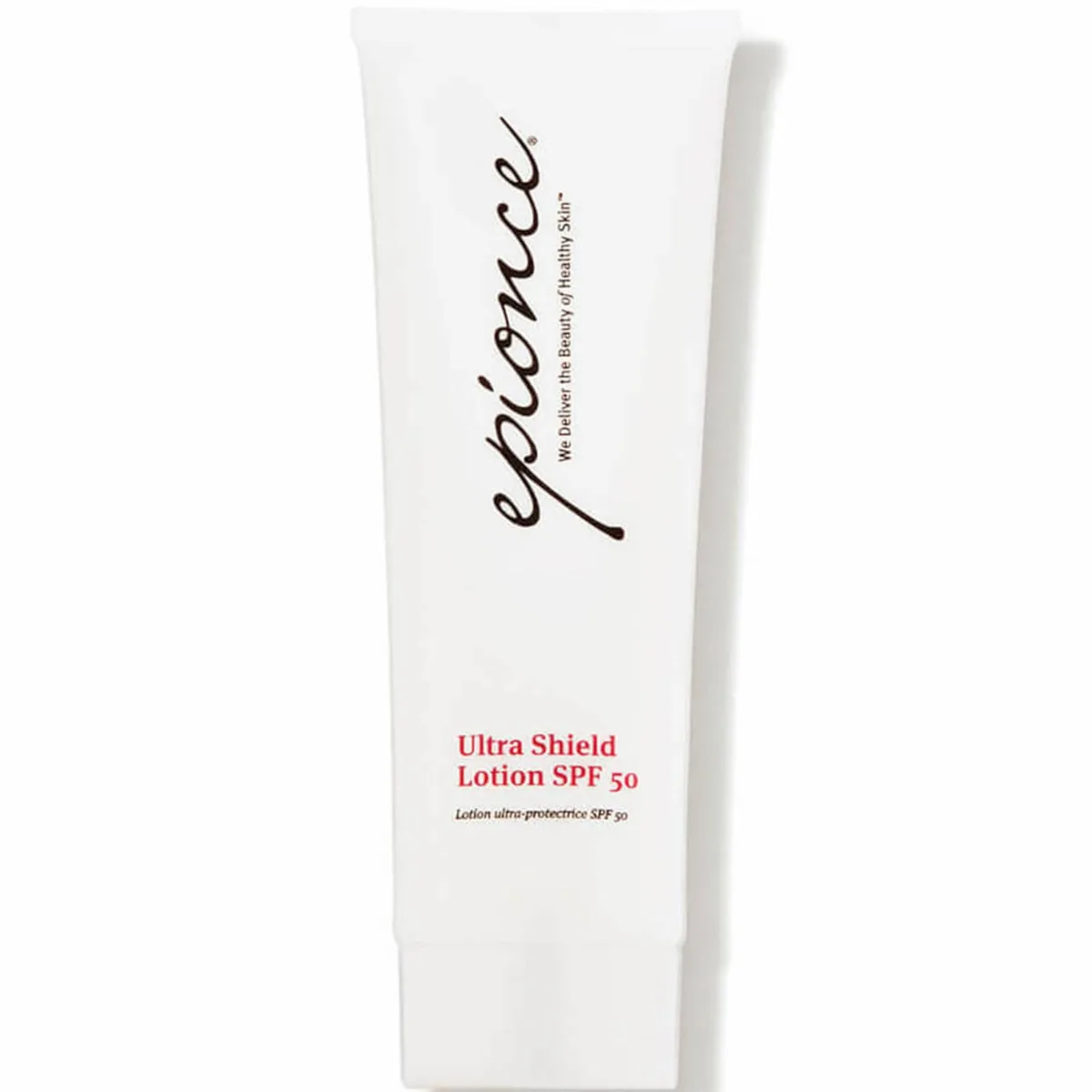
Most hybrid sunscreens pair a small mineral component with chemical filters as a cosmetic compromise — enough zinc to claim 'broad spectrum' but not enough to do meaningful UVA work. This formulation uses 10.1% zinc oxide as a primary filter alongside the chemical components, which makes the sunscreen more genuinely broad-spectrum than the typical hybrid approach. The Epionce botanical lipid complex on top of that is the brand's signature addition tying the sunscreen to Dr. Thornfeldt's broader lipid-replacement research.
A well-engineered hybrid sunscreen with an unusually high 10.1% zinc oxide load alongside the chemical filter system — a more genuinely broad-spectrum approach than the typical hybrid formula. The Epionce botanical lipid complex is a credible signature addition rather than fairy-dust inclusion. Premium pricing reflects the dermatology-practice channel positioning more than dramatic formulation cost.
Good choicefor SensitivityIn your profileYou chose · No fragrance, drying alcohol, declarable allergens or sensitising preservatives in this lotion — the profile sensitive skin looks for.Not yet assessedGentleNo reviews collected yet
The case for it
Zinc Oxide has no evidence row yet for this concern — it is in the research queue.
The formula carries none of the triggers this concern is sensitive to.
What would change this: A researched evidence row for the lead active would replace this with a verdict.
Same rule for everyone. “Good choice” is the verdict on 1,938 of 45,024 concern verdicts across the catalog; rule F2 decided 1,938 of them.
Unchanged since September 5, 2026, engine 5.1.1.
Supporting rolefor RosaceaIn your profileYou chose · Nothing here targets rosacea directly; photoprotection against a known trigger is the recognised companion to treating it, and this lotion does that without known triggers.Not yet assessedStandard tolerabilityNo reviews collected yet
The case for it
Zinc Oxide has no evidence row yet for this concern — it is in the research queue.
The formula carries no trigger this concern is sensitive to, with the cautions noted.
Cautions: a photosensitising active — use sun protection.
What would change this: A researched evidence row for the lead active would replace this with a verdict.
Same rule for everyone. “Supporting role” is the verdict on 8,197 of 45,024 concern verdicts across the catalog; rule R8 decided 4,250 of them.
Unchanged since September 5, 2026, engine 5.1.1.
R8 — The category's job (barrier care, humectant hydration, gentle cleansing, photoprotection) is the documented supportive role for this concern. This is the honest verdict for a moisturizer on an acne page. · the full register
Full protectionfor AgingIn your profileYou chose · Broad-spectrum SPF 50 with zinc oxide: the protection aging calls for.Not yet assessedStandard tolerabilityNo reviews collected yet
The case for it
Zinc Oxide has no evidence row yet for this concern — it is in the research queue.
The formula carries no trigger this concern is sensitive to, with the cautions noted.
Cautions: a photosensitising active — use sun protection.
What would change this: A researched evidence row for the lead active would replace this with a verdict.
Same rule for everyone. “Full protection” is the verdict on 2,288 of 45,024 concern verdicts across the catalog; rule P1 decided 2,232 of them.
Unchanged since September 5, 2026, engine 5.1.1.
P1 — Photoprotection standing is regulatory (M020 / Annex VI filters; 21 CFR 201.327 attaches the early-skin-aging claim to tested broad-spectrum SPF 15+). SPF 30 is the AAD daily-use bar. · the full register
Full protectionfor Sun DamageIn your profileYou chose · Broad-spectrum SPF 50 with zinc oxide: the protection sun damage calls for.Moderate evidenceStandard tolerabilityNo reviews collected yet
The case for it
Zinc Oxide is a first-line active — approved, monograph-listed or named in current guidelines — for this concern.
It is present at an effective concentration, declared or high in the ingredient list.
The formula carries no trigger this concern is sensitive to, with the cautions noted.
Cautions: a photosensitising active — use sun protection.
Same rule for everyone. “Full protection” is the verdict on 2,288 of 45,024 concern verdicts across the catalog; rule P1 decided 2,232 of them.
Unchanged since September 5, 2026, engine 5.1.1.
P1 — Photoprotection standing is regulatory (M020 / Annex VI filters; 21 CFR 201.327 attaches the early-skin-aging claim to tested broad-spectrum SPF 15+). SPF 30 is the AAD daily-use bar. · the full register
Full protectionfor Post-ProcedureIn your profileYou chose · Broad-spectrum SPF 50 with zinc oxide: the protection post procedure calls for.Not yet assessedStandard tolerabilityNo reviews collected yet
The case for it
Zinc Oxide has no evidence row yet for this concern — it is in the research queue.
The formula carries no trigger this concern is sensitive to, with the cautions noted.
Cautions: a photosensitising active — use sun protection.
What would change this: A researched evidence row for the lead active would replace this with a verdict.
Same rule for everyone. “Full protection” is the verdict on 2,288 of 45,024 concern verdicts across the catalog; rule P1 decided 2,232 of them.
Unchanged since September 5, 2026, engine 5.1.1.
P1 — Photoprotection standing is regulatory (M020 / Annex VI filters; 21 CFR 201.327 attaches the early-skin-aging claim to tested broad-spectrum SPF 15+). SPF 30 is the AAD daily-use bar. · the full register
Also listed for Compromised Skin Barrier — the actives here (Zinc Oxide, Glycerin, Botanical Extracts, Meadowfoam Seed Oil) are in our research queue for that concern; there is no verdict until their evidence rows are written. That is a gap in our table, not a mark against the product.
Does the jobDoes what a sunscreen is for: UVA coverage, kind to the skin wearing it. Not measured from the label: pleasant enough to actually use.
A verdict is DermApproved’s assessment of how well a product’s ingredients fit a concern — never a claim about what the product treats. Evidence dots and collected reviews sit beside it and are never blended in.
Rules 0.5.1 · evidence table ev-2026.09-r228 · how we decide
Assessment
Pros & Cons
Pros
✓ Unusually high 10.1% zinc oxide load for a sheer-finish hybrid sunscreen
✓ Hybrid filter system combines meaningful UVA reflection with UVB chemical absorption
✓ Date fruit polyphenol antioxidant supplementation
✓ Cosmetically elegant despite the high zinc content
✓ Larger 2.5 oz size than typical facial sunscreens
✓ Tolerated by sensitive and rosacea-prone skin
Cons
✗ $49.50 for 2.5 oz is premium pricing versus pharmacy-brand alternatives
✗ Contains octisalate and homosalate — not for users wanting mineral-only filters
✗ Octisalate reef-safety concerns for ocean and coral reef exposure
✗ Slight cast possible on medium-deep to deep skin tones
✗ Botanical oil content may not suit oil-averse users
Review
Full Review
The hybrid sunscreen category — formulations that combine mineral and chemical filters in a single product — is one of those marketing categories where the label hides a lot of formulation variation. Many products called hybrid sunscreens actually contain a tiny mineral component (3-5% zinc oxide or less) alongside a much larger chemical filter load, with the mineral content serving primarily as a marketing claim rather than a functional UVA protection mechanism. The label says broad-spectrum because zinc oxide is technically present, but the actual UVA protection is doing most of its work through the chemical filters, with the mineral component providing more cosmetic positioning than substantive coverage. This is not necessarily a bad formulation choice — chemical filters can deliver broad-spectrum protection effectively — but it does mean that hybrid sunscreens with truly significant mineral content are a smaller subset of the category than the marketing suggests. Epionce Ultra Shield Lotion is one of those sunscreens where the zinc oxide content is high enough to genuinely matter.
The filter system is built around 10.1% zinc oxide as the primary mineral filter, paired with 9.95% homosalate and 5.0% octisalate as the chemical filter components. A 10% zinc oxide load is at the upper cosmetically-achievable end for a sheer-finish sunscreen lotion, particularly when combined with chemical filters — most hybrid products that try this combination end up either chalky from too much zinc or with a noticeable cast on darker skin tones. The fact that this product manages to deliver a sheer, makeup-friendly finish despite the 10.1% zinc load is a signal that the formulation chemistry is well-handled. The micronized zinc oxide particle size, the dispersion via the silicone polymer and alkyl benzoate base, and the photostability with the chemical filters all have to be solved together to make a high-zinc hybrid work cosmetically. Epionce solved them.
The second formulation feature is the Epionce signature botanical lipid complex. Linseed oil contributes alpha-linolenic acid, meadowfoam delivers long-chain fatty acids with unusual oxidative stability, and safflower oil adds linoleic acid. This is the same lipid complex that appears across the broader Epionce portfolio and that ties the brand's products to Dr. Carl Thornfeldt's published research on stratum corneum lipid biology and barrier function. The inclusion in a sunscreen is thoughtful: stratum corneum lipid composition affects skin's response to UV exposure and to the inflammatory cascade that follows it, and supporting that lipid system alongside the sunscreen filters is a more biologically literate formulation choice than relying on filters alone. Whether the botanical lipid contribution is large enough to materially improve clinical outcomes versus a simpler hybrid sunscreen is harder to demonstrate, but the mechanism is reasonable and the ingredients themselves have a credible evidence base.
The date fruit extract is the formulation's antioxidant component, providing polyphenol content that neutralizes free radicals from residual UV exposure that the filter system does not fully block. No sunscreen blocks 100% of incident UV — at SPF 50, roughly 2% still reaches the skin, and the cumulative oxidative damage from that 2% over a lifetime of daily exposure is meaningful. Topical antioxidants address that residual damage. The date fruit extract here is supportive rather than a dedicated antioxidant treatment layer, but it adds a real if modest contribution to the formulation's broader photoprotection.
In practice the sunscreen behaves like a well-engineered daily SPF 50 lotion. The texture is lightweight cream-lotion with a slight silicone glide, spreading sheer despite the high zinc oxide load. Absorption to a satin finish happens within about a minute. Users in the fair-to-medium skin-tone range see essentially no white cast; medium-deep tones may see a slight cast on initial application that fades as the formula sets. Very deep skin tones may find the cast more persistent and may prefer a tinted alternative — Epionce's Daily Shield Tinted SPF 50 is the brand's option for that population. Layering under makeup is clean, with no pilling under common foundation formulations. The botanical lipid content gives the texture a slightly more nourishing feel than purely synthetic sunscreens, without becoming greasy or heavy.
The value calculation is where the conversation gets more nuanced. At $49.50 for 2.5 fl oz, this is firmly premium pricing for a daily sunscreen. The per-ounce math works out to about $19.80/oz, which is comparable to EltaMD UV Clear's 3.7 oz pricing and noticeably higher than mainstream pharmacy alternatives like La Roche-Posay Anthelios or CeraVe sunscreens. The Epionce premium reflects the dermatology-practice channel positioning — the brand sells primarily through dermatologist offices and aesthetic medical practices rather than mainstream retail, which carries different distribution economics — more than a dramatic formulation cost difference. The honest framing is that Ultra Shield is a well-engineered product whose pricing reflects how it gets to market more than what is in the bottle. For users who specifically want the high zinc oxide load, the botanical lipid complex, and the Epionce practitioner-channel positioning, the premium is defensible. For users who want broadly comparable sun protection at a lower price, the pharmacy-brand alternatives are sensible.
The practical limits are predictable. The chemical filter content — octisalate and homosalate — will rule the product out for users who specifically want mineral-only sunscreens. The reef-safety concern applies, particularly for ocean and coral reef exposure, where all-mineral alternatives are the appropriate regulatory choice. The botanical oil content may not suit users who specifically want oil-free sunscreens or who have demonstrated sensitivity to plant oils. And the 2.5 fl oz tube, while larger than the typical 1.7 oz facial sunscreen, is still smaller than the family-size sunscreens that some users prefer for body application.
For users in the population this product is engineered for — sensitive and rosacea-prone skin, post-procedure recovery, daily face application by users who specifically want a high zinc oxide load, anyone whose dermatologist personally stocks the Epionce line — this is a thoughtfully formulated hybrid sunscreen. The unusually high zinc oxide concentration, the signature botanical lipid complex, and the date fruit antioxidant addition together produce a more interesting formulation than the typical hybrid SPF 50. The premium pricing is the main friction point, and it is fair to position this product as a strong recommendation within the dermatology-practice channel and a more situational choice for users shopping the broader sunscreen market.
Formula
Key Ingredients
The hero actives that drive this product's performance.
A hybrid filter system with substantial zinc oxide for UVA reflection combined with homosalate and octisalate for UVB absorption. The 10.1% zinc oxide load is unusually high for a hybrid sunscreen — most hybrid formulas pair a much smaller mineral component with the chemical filters. This higher zinc oxide content is what makes this product cosmetically tolerable for sensitive skin populations while still avoiding the heavy white cast of pure-mineral SPF 50 sunscreens.
Regulator-approvedfor Sun Damage · limited certainty
Epionce's signature botanical lipid blend appears here as well as across the brand's broader portfolio. Linseed oil contributes alpha-linolenic acid, meadowfoam provides long-chain fatty acids resistant to oxidation, and safflower delivers linoleic acid. The combination is selected for its alignment with Dr. Thornfeldt's lipid replacement research on the stratum corneum, providing supportive barrier function alongside the sunscreen filters.
An Epionce signature ingredient providing polyphenol antioxidant content. The extract delivers a mix of antioxidants — phenolic acids, flavonoids — that complement the sunscreen filter system by neutralizing free radicals generated from residual UV exposure. The role is supportive rather than primary, contributing antioxidant defense rather than acting as a hero efficacy driver.
Primary humectant in the sunscreen base, drawing water into the upper stratum corneum and balancing the silicone-rich filter delivery system. Positioned at the third inactive ingredient slot, glycerin is providing meaningful hydration support rather than a trace contribution.
Not yet assessed
Ingredient standings describe the active at treatment-level doses and
vehicles; this product's own condition grades weigh its actual formula.
Apply as the last morning skincare step after moisturizer, using approximately 1/4 teaspoon for the full face. The lotion is light enough to layer under makeup without pilling, though it may feel slightly more substantive than the very lightest commercial sunscreens. Reapply every 2 hours during prolonged outdoor exposure. Pairs well with vitamin C, retinoid, and tranexamic acid routines.
Results Timeline
Immediate: full broad-spectrum SPF 50 protection on application with a sheer, makeup-friendly finish. Short-term (4-8 weeks): consistent use prevents new sun damage accumulation and reduces irritation reactivity in sensitive-skin users. Full benefits (3-6 months): the cumulative photoprotection benefit on aging markers, pigmentation prevention, and skin texture preservation becomes meaningful with consistent daily application.
The clinical evidence base for Ultra Shield Lotion rests on several distinct research areas. First, the foundational sunscreen filter literature establishing zinc oxide, octisalate, and homosalate as effective broad-spectrum filters. The 10.1% zinc oxide load provides meaningful UVA1 coverage through reflection, particularly important because UVA1 wavelengths penetrate deeper into the dermis and contribute disproportionately to photoaging and skin cancer risk. Octisalate (UVB) and homosalate (UVB) provide complementary chemical absorption that allows the formulation to reach SPF 50 in a cosmetically tolerable lotion format. Second, the stratum corneum lipid replacement research developed by Dr. Carl Thornfeldt and colleagues that underpins the broader Epionce portfolio. Thornfeldt's published work on barrier function and inflammatory cascade modulation through topical lipid replacement is the formulation philosophy that informs the inclusion of the linseed-meadowfoam-safflower botanical lipid complex in this sunscreen. The published evidence base on dietary alpha-linolenic acid and skin barrier function is reasonably well-supported; the evidence base on topical application of these specific botanical oils in sunscreen formulations is smaller but plausible based on the underlying mechanism. Third, the antioxidant supplementation rationale. Topical antioxidants in sunscreens address the residual UV exposure that filter systems do not fully block. Date fruit extract provides phenolic acid and flavonoid antioxidant content; the published research on date fruit polyphenols and skin is moderately supportive though smaller than the literature on vitamin C, vitamin E, or ferulic acid. Overall, the formulation rests on strong evidence for the primary filter system, supportive evidence for the botanical lipid complex, and emerging evidence for the date fruit antioxidant component.
Dermatologist Perspective
Epionce as a brand carries strong recognition within dermatology practice, particularly among practitioners trained in or familiar with Dr. Carl Thornfeldt's research on stratum corneum lipid biology. Ultra Shield Lotion SPF 50 is widely stocked in dermatology and aesthetic medical practices and is generally well-received by practitioners for sensitive-skin and post-procedure patient populations. The hybrid filter system with a high zinc oxide load is considered a thoughtful formulation choice that delivers cosmetic elegance and SPF 50 protection while including meaningful UVA reflection. The botanical lipid complex is consistent with Epionce's broader formulation philosophy. The chemical filter content (octisalate, homosalate) is regulatory-cleared and not generally viewed as a clinical safety concern, though dermatologists sometimes flag the reef-safety considerations for patients planning extended ocean exposure. The product is widely considered pregnancy-appropriate. The most common clinical caveats raised are the price relative to comparable pharmacy-brand sunscreens (which is acknowledged but explained by the dermatology-practice channel positioning) and the suitability for very deep skin tones (where the tinted Daily Shield variant may be a better fit).
Guidance
Usage & Recommendations
How to Use
Apply approximately 1/4 teaspoon to the face as the last morning skincare step, after cleansing, treatment serums, and moisturizer. Spread evenly across the face, hairline, ears, and neck. Allow about a minute for the formula to set before applying makeup. For prolonged outdoor exposure, reapply every two hours. Layers cleanly under makeup without pilling. Compatible with all common AM serum routines including vitamin C, niacinamide, and tranexamic acid. Store at room temperature away from direct sunlight. For body application, use additional product accordingly — the 2.5 oz size accommodates moderate body use alongside daily facial application.
Value Assessment
At $49.50 for 2.5 fl oz, the per-ounce pricing is approximately $19.80/oz, which is comparable to EltaMD UV Clear's larger 3.7 oz format and noticeably higher than pharmacy-brand SPF 50 alternatives like La Roche-Posay Anthelios ($30-40 range), CeraVe Hydrating Mineral Sunscreen ($16-20 range), or Cetaphil Sheer Mineral SPF 50 ($16-20 range). The Epionce premium reflects the dermatology-practice channel positioning more than dramatic formulation cost differences. For users who specifically want the high zinc oxide load, the botanical lipid complex, and the practitioner-channel positioning, the premium is reasonable. For users who want broadly comparable sun protection at lower cost, the pharmacy-brand alternatives are sensible. The 2.5 oz size lasts approximately 8-10 weeks at daily face application, putting the monthly cost around $20-25 — meaningful but consistent with the derm-practice channel tier. The brand does not heavily discount the product; practitioner-channel retailers like Dermstore occasionally offer modest bundle pricing.
Who Should Buy
Users with sensitive, rosacea-prone, or post-procedure skin who specifically want a hybrid sunscreen with substantial zinc oxide content. Also valuable for users whose dermatologist or aesthetic medical practitioner personally stocks the Epionce line, and for users who appreciate the brand's botanical lipid formulation philosophy.
Who Should Skip
Skip if you want a mineral-only sunscreen — pure-mineral alternatives are available from Epionce and from competitors like EltaMD. Skip if you are price-sensitive and a pharmacy-brand SPF 50 would meet your functional needs at $20-30 less. Skip if you are planning extended ocean exposure where octisalate restrictions apply. Skip if you specifically want an oil-free sunscreen — the botanical oil content makes this product unsuitable for that preference.
Lightweight cream-lotion with a slight silicone-glide. Spreads sheer despite the high zinc oxide load and absorbs to a satin finish within about a minute.
Scent
No perfume here -- a faint neutral note is all you will catch.
Packaging
2.5 fl oz white tube with a flip-top cap. Tube packaging protects the filter system from light exposure better than jar packaging would.
Finish
satinnon-greasynatural
What to Expect on First Use
First application is uneventful for a hybrid SPF 50 sunscreen — sheer absorption with no visible cast on fair-to-medium skin tones, no greasy residue, no fragrance. Users with very deep skin tones may see a slight cast from the 10.1% zinc oxide load. The botanical oil content gives the texture a slightly more nourishing feel than purely synthetic sunscreens, without becoming greasy. No purging or adjustment phase; sunscreens do not produce active-ingredient reactions.
How Long It Lasts
Roughly 8-10 weeks at daily face application; longer if used selectively for sun exposure rather than every day.
Epionce was founded in 2005 by dermatologist Dr. Carl Thornfeldt around his clinical research on stratum corneum lipid biology. The brand has remained primarily sold through dermatology and aesthetic medical practices rather than mainstream retail, which is unusual for a 20-year-old skincare brand. Ultra Shield Lotion SPF 50 launched around 2015 as the brand's premium sun protection option, designed for sensitive and post-procedure patient populations within the Epionce practitioner channel. The formulation philosophy mirrors the broader Epionce portfolio — meaningful filter loads plus the brand's signature botanical lipid complex plus an antioxidant component.
About Epionce Established Brand (5–20 years)
Epionce was founded in 2005 by dermatologist Dr. Carl Thornfeldt and is built around his clinical research on stratum corneum lipid biology and barrier function. The brand is sold primarily through dermatology and aesthetic medical practices rather than direct-to-consumer retail, and Dr. Thornfeldt has published peer-reviewed research on the formulation principles the line is built around.
Brand founded: 2005 · Product launched: 2015
Myth vs. Reality
Common Myths
Myth
Chemical sunscreen filters are dangerous and should be avoided.
Reality
The most-circulated chemical filter concerns — particularly around oxybenzone and octinoxate — are based on small-animal studies at high doses or environmental considerations rather than direct human safety data. Octisalate and homosalate, the chemical filters in this product, have FDA approval for daily human use. Mineral-only sunscreens are a reasonable preference for users who want them, but the safety case against modern chemical filters is weaker than online narratives suggest.
Zinc oxide concentration matters, but the formulation as a whole — including filter compatibility, particle size, dispersion, and supporting ingredients — determines actual SPF and UVA protection. A 10% zinc oxide sunscreen in a well-engineered hybrid formula can outperform a 20% zinc oxide pure-mineral sunscreen if the mineral formula has poor particle dispersion or photostability issues. This product's hybrid approach with high zinc plus chemical filters is a thoughtful engineering choice rather than a compromise.
FAQ
Frequently Asked Questions
How is this different from Epionce Daily Shield Tinted SPF 50?
Daily Shield is the brand's tinted everyday sunscreen, designed primarily for daily-wear cosmetic use with a universal tint. Ultra Shield is the higher-protection, untinted option positioned for sensitive skin and more demanding photoprotection use cases. The zinc oxide concentration and filter system are different — Daily Shield uses a less concentrated zinc oxide load with a more cosmetic-focused finish, while Ultra Shield prioritizes the higher zinc content for sensitive-skin protection.
Is it appropriate for daily use, or just for sun-exposed days?
It is appropriate for daily use, particularly for sensitive-skin populations or users who specifically want a higher zinc oxide load for daily protection. Some users alternate this with a lighter chemical-filter sunscreen for indoor days, reserving Ultra Shield for outdoor or higher-exposure days. For users who want a single daily sunscreen with comprehensive protection, this is suitable.
Is the chemical filter content safe?
Octisalate and homosalate are FDA-approved sunscreen filters with established human safety data. The most rigorous regulatory bodies — FDA, European Medicines Agency, Health Canada — continue to consider both filters safe for daily human use. Users who specifically want all-mineral filtration should look at Epionce's pure-mineral options or competitors like EltaMD UV Physical, but the chemical filter content here does not represent a safety concern based on the available evidence.
Is it reef-safe?
Octisalate is included on some reef-toxic ingredient lists, though the evidence on octisalate's reef impact is weaker than the evidence on oxybenzone and octinoxate. For Hawaii, Key West, and Palau ocean use, all-mineral alternatives are the safer regulatory choice. For daily urban use, the reef-safety concern is not clinically relevant — environmental contamination from urban sunscreen application is not a meaningful contributor to coral reef damage.
How does it compare to EltaMD UV Clear or La Roche-Posay Anthelios?
All three are well-engineered hybrid sunscreens recommended in dermatology practice. UV Clear's distinguishing feature is the 5% niacinamide co-benefit; Anthelios uses different filter combinations and varies by region; Epionce Ultra Shield uses an unusually high zinc oxide concentration and the brand's signature botanical lipid complex. Choice between them often comes down to skin type, cosmetic preference, and which brand the user's dermatologist personally stocks.
Will it leave a white cast?
The 10.1% zinc oxide load is at the upper end of what is achievable in a sheer-finish lotion. Most users in the fair-to-medium skin-tone range see no white cast. Medium-deep skin tones may see a slight cast on first application that fades as the formula sets. Very deep skin tones may want to look at a tinted alternative — Epionce Daily Shield Tinted is the brand's option.
Can Ultra Shield Lotion SPF 50 be used while pregnant or breastfeeding?
Yes — all active filters (zinc oxide, octisalate, homosalate) are considered safe during pregnancy by major dermatology guidelines. The inactive ingredient deck is also pregnancy-appropriate, with no retinoids or other commonly avoided ingredients. The fragrance-free formulation is suitable for users with pregnancy-related skin sensitivity.
Reviews
What Reviewers Tend to Say
Recurring themes our editors read across retailer reviews of this product — summaries in our words, not quotations, and not a substitute for your own patch test.
Common Praise
Sheer finish without white cast on most skin tones
Tolerated well by sensitive and rosacea-prone skin
Layers cleanly under makeup
Botanical lipid complex feels nourishing rather than just protective
Substantive 75 mL size lasts longer than typical 1.7 oz sunscreens
Common Complaints
$49.50 list price is premium versus drugstore SPF 50 alternatives
Contains octisalate and homosalate — not for users wanting mineral-only sunscreens
Reef-safety questions due to chemical filter content
Slightly heavier feel than the lightest cosmetic chemical-filter sunscreens
Notable Endorsements
Stocked in dermatology and aesthetic medical practices nationwideDeveloped by Dr. Carl Thornfeldt, board-certified dermatologist and Epionce founder
Picking one skin state and selling through hospital dermatology departments is a genuinely smart strategy. Whether the house botanical earns its billing is a separate question, and the answer is not the one either side wants.
The critics are right about the data gap, and they are right that it took two decades to move. What follows from that is not the conclusion most people draw.
IPL is a filtered flashlamp, a true vascular laser is one wavelength aimed at haemoglobin, and the choice between them turns on a distinction almost no consult makes: whether your redness is vessels or a state.
The smallest AHA gets deepest and shows results soonest — which is precisely why routines built around it overshoot, and why the people who do best with it use it least.
Jul 30, 2026· 7 min
Questions people ask about sensitive skin
Verified answers from our questions library — the nuance a product page cannot carry.
Products, answers, therapy guides, tools and articles in one search. Brand names,
slang and abbreviations all work — accutane finds isotretinoin, bacne finds truncal acne.