K-Beauty Is Sold on Hydration. Its Best Work Is Arguably on Oily Skin.
The dewy-layering marketing reads as a warning if you are congested — and it is hiding the strongest mass-market lineup anywhere for exactly that skin.

It's one of EltaMD's original facial sunscreens, a moisturizing, low-cast hybrid formula that pairs a small zinc load and a chemical filter with hyaluronic acid and petrolatum for genuine hydration. That two-in-one, dry-skin-focused facial protection predates and differs from the brand's later oil-free UV Clear, making it the classic pick for those who want moisture rather than mattness.
One of EltaMD's original facial sunscreens, and still a quiet workhorse for dry skin. A low zinc load plus a chemical filter give it a near-invisible finish, while hyaluronic acid and petrolatum make it genuinely moisturizing, often moisturizing enough to skip a separate cream. The trade-offs are the octinoxate filter and a rich base that oily and acne-prone skin should steer clear of.
The case for it
Same rule for everyone. “Full protection” is the verdict on 2,288 of 45,024 concern verdicts across the catalog; rule P1 decided 2,232 of them. Unchanged since September 5, 2026, engine 5.1.1.
Brand or formulator? Disclose a concentration or correct a fact →
The studies behind the evidence row
The case for it
Same rule for everyone. “Strong choice” is the verdict on 1,459 of 45,024 concern verdicts across the catalog; rule R2 decided 892 of them. Unchanged since September 5, 2026, engine 5.1.1.
Brand or formulator? Disclose a concentration or correct a fact →
The studies behind the evidence row
The case for it
What would change this: A declared concentration would move this to a firmer reading of the dose.
Same rule for everyone. “Good choice” is the verdict on 9,564 of 45,024 concern verdicts across the catalog; rule R5 decided 9,072 of them. Unchanged since September 5, 2026, engine 5.1.1.
Brand or formulator? Disclose a concentration or correct a fact →
The studies behind the evidence row
The case for it
What would change this: A researched evidence row for the lead active would replace this with a verdict.
Same rule for everyone. “Full protection” is the verdict on 2,288 of 45,024 concern verdicts across the catalog; rule P1 decided 2,232 of them. Unchanged since September 5, 2026, engine 5.1.1.
Brand or formulator? Disclose a concentration or correct a fact →
The case for it
What would change this: A researched evidence row for the lead active would replace this with a verdict.
Same rule for everyone. “Good choice” is the verdict on 1,938 of 45,024 concern verdicts across the catalog; rule F2 decided 1,938 of them. Unchanged since September 5, 2026, engine 5.1.1.
Brand or formulator? Disclose a concentration or correct a fact →
Does the jobDoes what a sunscreen is for: UVA coverage, kind to the skin wearing it. Not measured from the label: pleasant enough to actually use.
A verdict is DermApproved’s assessment of how well a product’s ingredients fit a concern — never a claim about what the product treats. Evidence dots and collected reviews sit beside it and are never blended in. Rules 0.5.1 · evidence table ev-2026.09-r228 · how we decide
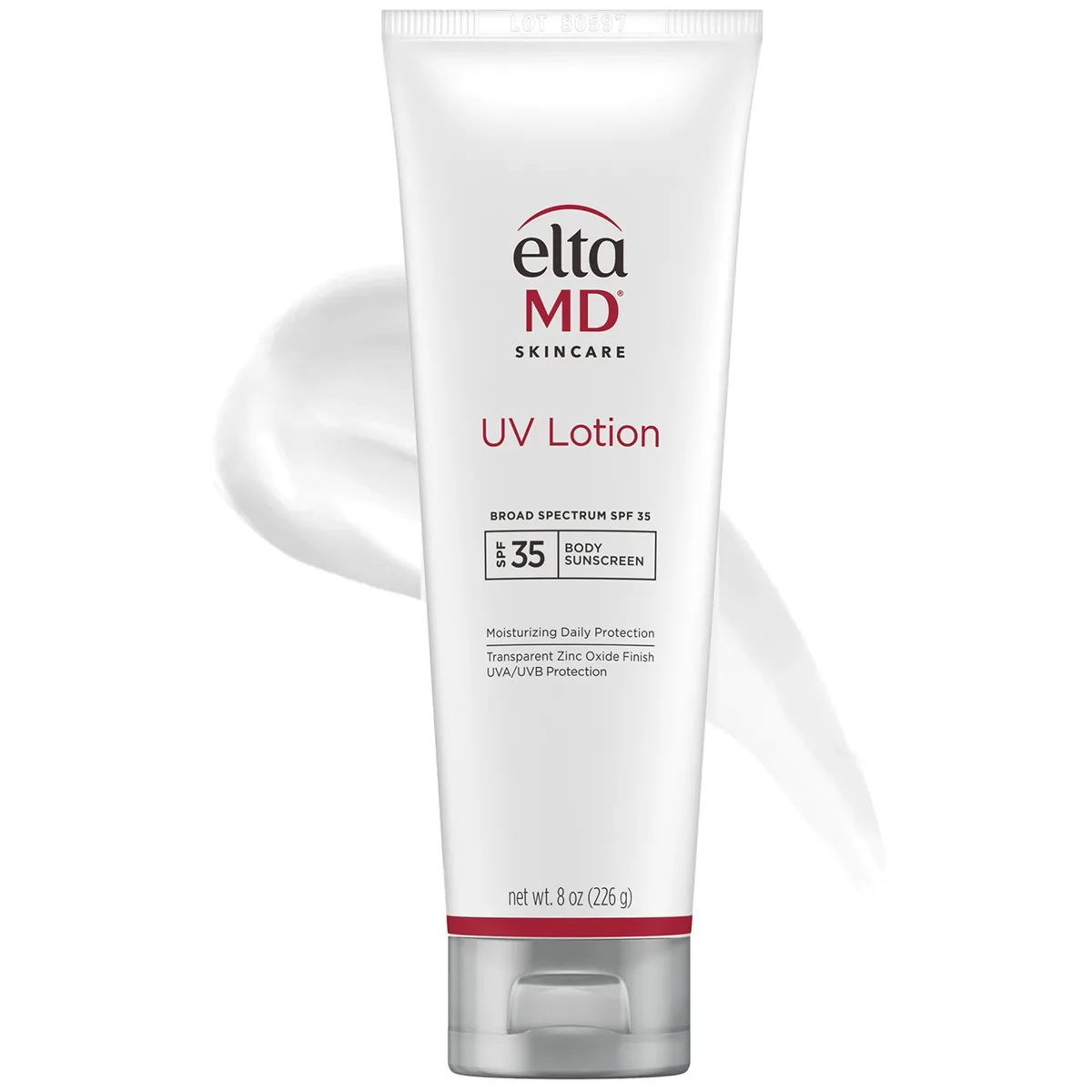
EltaMD is a brand most people know through a single product: UV Clear, the oil-free, niacinamide-spiked facial sunscreen that became a dermatology-office legend and a TikTok darling for acne-prone skin. But UV Clear had a predecessor, a quieter sibling built for the opposite kind of face, and that's the product here. UV Facial is one of EltaMD's original formulas, the moisturizing daily sunscreen for dry and sensitive skin, and understanding it really means understanding how it differs from its more famous relative. The two get confused constantly, and choosing wrong means dry skin ends up with a mattifying formula or, worse, oily skin slathers on something far too rich. So let's be clear about what this one is. UV Facial is the moisturizing option. Where UV Clear is oil-free and designed to keep shine and breakouts in check, UV Facial leans into hydration, with a petrolatum-rich, emollient base and hyaluronic acid built in. It's the formula for skin that gets tight, flaky, and parched, the kind of skin that wants its sunscreen to also act like a moisturizer. If you've ever found UV Clear a touch drying or just wanted more cushion from your daily SPF, this is the EltaMD that was made for you. The filter system is a hybrid, and it's tuned for cosmetic elegance. Seven percent zinc oxide provides the broad-spectrum mineral coverage, while seven and a half percent octinoxate, a chemical UVB filter, does most of the SPF lifting up to the labeled 35. That balance is deliberate: the low zinc load keeps the white cast minimal, so the lotion sinks in nearly invisibly rather than leaving the ashy film a high-mineral facial sunscreen would. For a daily, under-makeup facial product, that near-invisible finish is exactly what you want. The moisturizing claim is real and mechanistically sound. Sodium hyaluronate draws water into the skin, and the petrolatum-and-dimethicone base seals it in, the same humectant-plus-occlusive architecture that makes a good moisturizer work. The upshot is that dry-skinned users can frequently apply this in place of a separate morning moisturizer, collapsing two steps into one. A little vitamin E rides along for modest antioxidant support. On the right skin, the experience is genuinely pleasant: it goes on like a creamy lotion, leaves skin soft and hydrated, and disappears without drama. The limitations are the flip side of those same strengths, and they're important to spell out because this is the product people most often buy by mistake. First and most fundamentally, the rich, petrolatum-based formula is too heavy for oily and acne-prone skin. What feels like welcome cushion on dry skin feels greasy and pore-clogging on oily skin, and the formula isn't fungal-acne safe. If your skin runs oily or breaks out, this is the wrong EltaMD; UV Clear is the one you want. Buying UV Facial for oily skin is the single most common mismatch in the brand's lineup. Second is the octinoxate. It's an FDA-permitted, long-used UVB filter, and it's what enables the invisible finish, but it's a chemical filter, which rules this out for anyone committed to mineral-only protection, and it's restricted in some regions over reef concerns. That's a preference issue rather than a safety verdict, but it's worth knowing. Third, under makeup the richness can cause a bit of sliding if you don't let it set, so a few minutes of patience, or a setting powder, helps. In use, for its intended dry-skin audience, it does its job with the unglamorous reliability of a product that's been around for the better part of two decades. The protection is solid and broad-spectrum, the finish is low-cast and comfortable, the hydration is real, and the fragrance-free formula keeps it friendly to sensitive skin. It's not flashy and it's not trying to be the brand's star; it's the dependable dry-skin daily that quietly does what it promises. On value, it's reasonable. At thirty-five dollars for a 3-ounce tube, it's mid-priced within EltaMD's range and lasts a couple of months of daily facial use, with a subscription option shaving off a few dollars. You're paying for a gentle, moisturizing, derm-trusted formula with an exceptionally long track record, and for dry skin that wants a two-in-one daily SPF, that's fair value rather than a premium splurge. There's no larger size, but the 3-ounce tube is sensibly sized for the face. The final read is that UV Facial is the right answer to a specific question: what should dry, sensitive skin wear daily that protects and moisturizes at once? For that person, it's a classic for good reason, gentle, hydrating, near-invisible, and time-tested. Buy it if your skin is dry or normal-to-dry, you want moisture from your sunscreen, and a chemical filter doesn't bother you. Skip it, emphatically, if your skin is oily or acne-prone, in which case UV Clear is the EltaMD you actually want, or if you require mineral-only protection. Match it to the right face, and it's one of the most quietly dependable daily sunscreens around.
The hero actives that drive this product's performance.
| Ingredient | Function | Evidence |
|---|---|---|
| Zinc Oxide 7.0% (7.0%) | The mineral filter supplying broad-spectrum UVA-UVB coverage; at 7% it keeps the facial lotion low-cast and lets the octinoxate carry the SPF, a hybrid balance aimed at a smooth, moisturizing finish for dry facial skin. | Regulator-approved for Sun Damage · limited certainty |
| Octinoxate 7.5% (7.5%) | The chemical UVB filter doing most of the SPF lifting, which allows the low zinc load and the near-invisible, lotion-like finish that distinguishes this from heavier all-mineral facial sunscreens. | Regulator-approved for Sun Damage · emerging certainty |
| Hyaluronic Acid (Sodium Hyaluronate) | The humectant that makes this a moisturizing facial sunscreen rather than a bare one, pulling water into the skin beneath the petrolatum-and-dimethicone occlusive layer so dry, flaky facial skin stays supple. | Established mechanism for Dehydration · established mechanism |
| Petrolatum | The occlusive emollient high on the inactive list that gives this its rich, moisturizing character, sealing in the hyaluronic acid's hydration and softening dry skin, the same trait that makes it too heavy for oily faces. | Regulator-approved for Dryness · established mechanism |
Ingredient standings describe the active at treatment-level doses and vehicles; this product's own condition grades weigh its actual formula.
Active Ingredients: Octinoxate 7.5%, Zinc Oxide 7.0%. Inactive Ingredients: Purified Water, Petrolatum, Isopropyl Palmitate, Octyl Stearate, Cetearyl Glucoside, Glyceryl Stearate, Dimethicone, PEG-100 Stearate, Hydroxyethyl Acrylate/Sodium Acryloyldimethyl Taurate Copolymer, Polyisobutene, PEG-7 Trimethylolpropane Coconut Ether, Sodium Hyaluronate, Tocopheryl Acetate, Polyether-1, Citric Acid, Oleth-3 Phosphate, Phenoxyethanol, Butylene Glycol, Iodopropynyl Butylcarbamate, Triethoxycaprylylsilane
sunscreen
AM
Smooth it on last in the morning over any serums; its moisturizing base means dry skin can often skip a separate moisturizer. Let it set a few minutes before makeup, and reapply during prolonged sun exposure.
Protection is immediate with an adequate layer, and the moisturizing effect is felt on application. Suited to daily facial protection rather than producing any active skin change over time.
Protection comes from a hybrid filter pair: zinc oxide at seven percent, an FDA GRASE mineral filter offering broad UVA-UVB coverage, and octinoxate at seven and a half percent, a long-established chemical UVB filter that carries most of the SPF 35 rating. The rationale for the pairing is cosmetic as much as protective, the low zinc load minimizes white cast while the octinoxate supplies the bulk of the UVB protection, yielding the near-invisible finish a daily facial sunscreen needs. Octinoxate is permitted by the FDA, is among the filters for which more safety data has been requested, and is restricted in some jurisdictions over reef concerns; at labeled use it has a long history without established harm. The moisturizing function rests on solid evidence: sodium hyaluronate is a well-studied humectant, layered beneath petrolatum and dimethicone, occlusives with strong support for reducing transepidermal water loss, so the formula both attracts and seals in water, the classic mechanism of an effective moisturizer. Tocopheryl acetate provides a modest antioxidant contribution. What distinguishes this formulation is its priority: rather than maximizing SPF or pursuing a mineral-only profile, it optimizes for a comfortable, hydrating, low-cast daily facial sunscreen for dry skin, achieved through a deliberately balanced hybrid filter system and a humectant-occlusive moisturizing base, which also explains why it suits dry skin and not oily skin.
Moisturizing facial sunscreens are commonly recommended in clinical practice for patients with dry, sensitive, or mature skin, since a hydrating base improves comfort and adherence, and a two-in-one product that moisturizes and protects can simplify a routine. Hybrid mineral-and-chemical formulas are widely used and regarded as effective, with the choice versus mineral-only often coming down to patient preference about chemical filters. Clinicians frequently caution that richer, petrolatum-based facial sunscreens are not ideal for oily or acne-prone skin, for which oil-free options are typically preferred. As with any sunscreen, standard guidance stresses applying an adequate amount, roughly a quarter-teaspoon for the face, and reapplying during prolonged sun exposure, since under-application is the most common reason a sunscreen fails to deliver its labeled SPF.
Apply as the final step of your morning routine, after any serums, using about a quarter-teaspoon for the face and neck to reach the labeled SPF 35. Because it's moisturizing, dry skin can often apply it in place of a separate morning cream. Let it set for a few minutes before makeup to limit sliding, and consider a light setting powder if you find it dewy. Reapply every two hours during prolonged sun exposure and after sweating or swimming. Cleanse it off at the end of the day, as the petrolatum-rich base benefits from thorough removal.
At thirty-five dollars for a 3-ounce tube, UV Facial sits in the mid-range of EltaMD's lineup and lasts a couple of months of daily facial use, with a subscription option trimming the price further. The value proposition is a gentle, moisturizing, near-invisible daily sunscreen with an exceptionally long, dermatologist-trusted track record that can double as a morning moisturizer for dry skin. For that target user, the price is fair and the two-in-one function adds practical value. It's a poor value for oily or acne-prone skin, who'd be paying for richness they don't want, and there's no larger size to chase a per-ounce discount.
This is the right EltaMD for dry, normal-to-dry, or sensitive facial skin that wants sun protection and hydration in one step. It suits anyone who finds oil-free sunscreens drying, prefers a moisturizing daily SPF, and isn't bothered by a chemical filter, especially those who like a near-invisible, low-cast finish.
If your skin runs oily or breaks out, reach for EltaMD's oil-free UV Clear instead, since UV Facial's petrolatum-rich base is too heavy and isn't fungal-acne safe. Anyone committed to mineral-only protection should also pass, as it relies on octinoxate to achieve its invisible finish.
Ready to try EltaMD UV Facial Broad-Spectrum SPF 35?
Buy at Amazon ♥A rich, creamy facial lotion that spreads smoothly and absorbs to a soft, moisturized finish with a slight emollient feel on dry skin.
Fragrance-free, with a faint base smell from the emollients and zinc.
Squeeze tube with a flip cap, in a single 3 oz facial size.
It applies like a moisturizing lotion, smoothing on with little white cast and leaving skin soft and hydrated. No sting or break-in, though oily skin will notice the richness quickly, and you'll want to let it settle before makeup to limit any sliding.
Roughly 2-3 months of daily facial application from the 3 oz tube at a proper sunscreen dose.
All Year
Before UV Clear became EltaMD's breakout hit for oily and acne-prone skin, UV Facial was the brand's moisturizing facial sunscreen, aimed at dry and sensitive complexions. Built around a hybrid filter pair plus hyaluronic acid and petrolatum, it helped establish EltaMD in dermatology offices as a maker of gentle, wearable daily sunscreens, and it remains the dry-skin counterpart to the brand's more famous formula.
EltaMD has produced physician-dispensed sun care since 1988, and UV Facial is one of its longest-running formulas, a moisturizing facial sunscreen that predates the cult-favorite UV Clear and helped establish the brand in dermatology offices.
UV Facial and UV Clear are basically the same.
They're built for opposite skin types. UV Facial is a moisturizing, petrolatum-rich formula for dry skin; UV Clear is oil-free with niacinamide for oily, acne-prone skin. Choosing by skin type, not name, matters here.
A moisturizing sunscreen means you can apply less.
Hydration is a bonus, not a substitute for adequate coverage. You still need a full quarter-teaspoon for the face to reach the labeled SPF 35, regardless of how moisturizing the base feels.
They're built for opposite skin types. UV Facial is a moisturizing, petrolatum-rich formula for dry and sensitive skin, while UV Clear is oil-free with niacinamide for oily, acne-prone skin. Pick by your skin type, not by the name.
No. Its rich, petrolatum-based formula is too heavy for oily skin and isn't fungal-acne safe. Oily and acne-prone skin should use EltaMD UV Clear, which is oil-free and designed for breakout-prone complexions.
It's a hybrid, using zinc oxide at 7% (mineral) plus octinoxate at 7.5% (chemical). The chemical filter carries most of the SPF, which keeps the finish near-invisible, so it isn't a mineral-only option.
For dry skin, often yes. The hyaluronic acid and petrolatum base hydrate and seal in moisture, so many dry-skinned users apply it instead of a separate morning cream while also getting SPF 35.
Minimal. The low 7% zinc load combined with the chemical filter gives it a near-invisible finish, which is part of why it works well as a daily under-makeup facial sunscreen.
It contains no retinoids or other commonly flagged actives and is generally considered fine for pregnancy. Those who prefer to avoid chemical filters like octinoxate during pregnancy may opt for an all-mineral EltaMD sunscreen instead.
Recurring themes our editors read across retailer reviews of this product — summaries in our words, not quotations, and not a substitute for your own patch test.
Moisturizing, great for dry skin
Minimal white cast
Gentle and fragrance-free
Long-trusted derm-office formula
Too rich and heavy for oily skin
Contains octinoxate
Can feel greasy under makeup
Not fungal-acne safe
Verified answers from our questions library — the nuance a product page cannot carry.