

Hyaluronic Acid Can Actually Dehydrate Your Skin (Here's When)
The internet's favorite hydrator has a counterintuitive dark side — in dry air, a humectant with nothing to seal it can pull water out of your skin instead of into it.
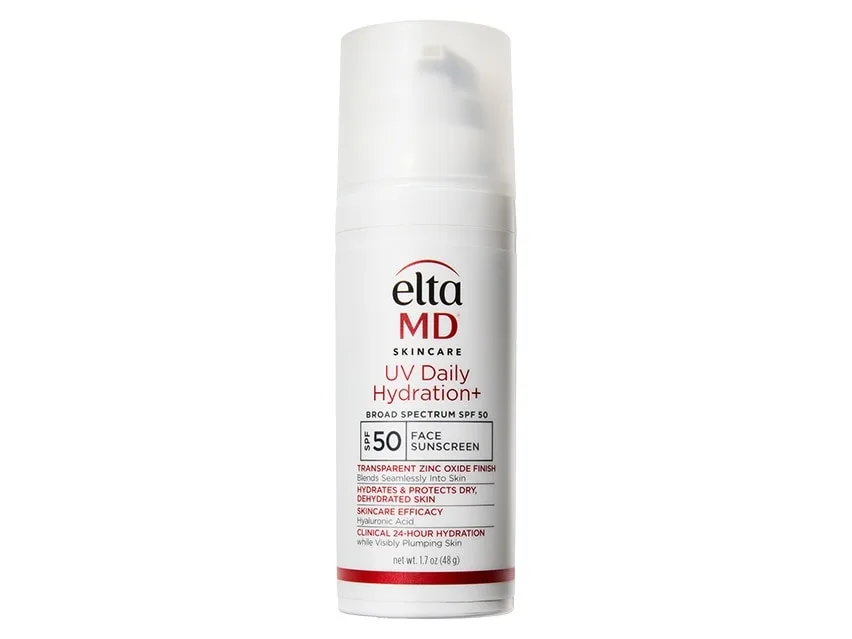
It rethinks a daily facial sunscreen as a hydration step: zinc oxide and octisalate carry the SPF 50 while a boosted hyaluronic acid load and the ZincAOXPro antioxidant blend (vitamin E, carnosine, bisabolol, ginger) target UV, blue light, and pollution. That combination of a high-SPF mineral-hybrid base with clinically claimed 24-hour hydration is uncommon in the daily-sunscreen aisle.
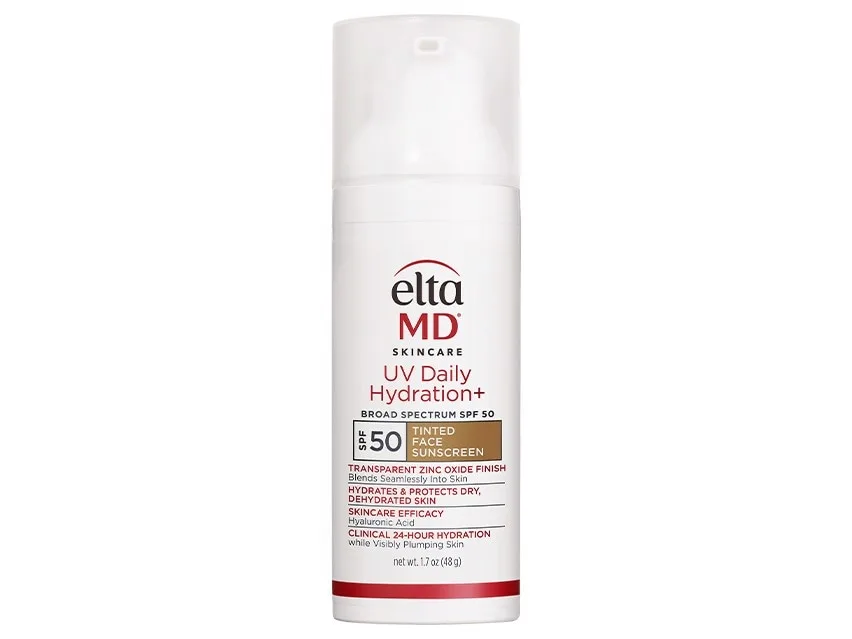
EltaMD took its derm-office-favorite UV Daily and made it work harder: SPF 50, a bigger hyaluronic acid dose, and an antioxidant blend aimed at blue light and pollution. The result is a dewy, no-cast hybrid sunscreen that doubles as a hydrating moisturizer for dry and sensitive skin. The catch is a small tube at a premium price, and a sheen that oily skin won't love.
Because this Hydration+ formula is a relatively recent upgrade to the original UV Daily, its review base is still building, currently a few hundred ratings across specialty retailers. The score draws on those early reviews, the well-documented performance of its zinc-octisalate filter system, and EltaMD's clinical track record rather than years of accumulated feedback on this exact version.
The case for it
What would change this: A declared concentration would move this to a firmer reading of the dose.
Same rule for everyone. “Good choice” is the verdict on 9,564 of 45,024 concern verdicts across the catalog; rule R5 decided 9,072 of them. Unchanged since September 5, 2026, engine 5.1.1.
Brand or formulator? Disclose a concentration or correct a fact →
The studies behind the evidence row
The case for it
Same rule for everyone. “Full protection” is the verdict on 2,288 of 45,024 concern verdicts across the catalog; rule P1 decided 2,232 of them. Unchanged since September 5, 2026, engine 5.1.1.
Brand or formulator? Disclose a concentration or correct a fact →
The studies behind the evidence row
The case for it
What would change this: A declared concentration would move this to a firmer reading of the dose.
Same rule for everyone. “Full protection” is the verdict on 2,288 of 45,024 concern verdicts across the catalog; rule P1 decided 2,232 of them. Unchanged since September 5, 2026, engine 5.1.1.
Brand or formulator? Disclose a concentration or correct a fact →
The studies behind the evidence row
The case for it
What would change this: A researched evidence row for the lead active would replace this with a verdict.
Same rule for everyone. “Good choice” is the verdict on 1,938 of 45,024 concern verdicts across the catalog; rule F2 decided 1,938 of them. Unchanged since September 5, 2026, engine 5.1.1.
Brand or formulator? Disclose a concentration or correct a fact →
Also listed for Dryness — the actives here (Zinc Oxide, Octisalate, Hyaluronic Acid, Vitamin E) are in our research queue for that concern; there is no verdict until their evidence rows are written. That is a gap in our table, not a mark against the product.
Does the jobDoes what a sunscreen is for: UVA coverage, kind to the skin wearing it. Not measured from the label: pleasant enough to actually use.
A verdict is DermApproved’s assessment of how well a product’s ingredients fit a concern — never a claim about what the product treats. Evidence dots and collected reviews sit beside it and are never blended in. Rules 0.5.1 · evidence table ev-2026.09-r228 · how we decide
Most sunscreens are content to do one job and get out of the way. This one has bigger plans. EltaMD looked at its quietly beloved UV Daily, a sunscreen that earned its keep in dermatology offices by being light, hydrating, and free of the dreaded white cast, and decided the sequel should also be a serious moisturizer and an antioxidant defense layer. The Hydration+ name is the tell: this is a sunscreen with a hydration agenda, and the question worth asking is whether stacking three jobs into one tube dilutes any of them. Start with the part that actually has to work, the sun protection. The filter system is a zinc-oxide-led hybrid, eleven percent zinc oxide doing the broad-spectrum heavy lifting alongside five percent octisalate to lift the rating to SPF 50. That pairing is the smart compromise at the heart of the formula. A fully mineral SPF 50 would need a punishing amount of zinc and would almost certainly leave a cast; bolting on a single, well-tolerated chemical UVB filter lets EltaMD keep the zinc load reasonable and the texture cosmetically elegant. The payoff is real: on most skin tones this blends in clear, with the soft sheen of a hydrating lotion rather than the chalky gray drag people brace for from mineral sunscreens. The hydration story is where the product makes its case for the plus sign. EltaMD claims a twenty-five percent higher hyaluronic acid level than the original UV Daily, and crucially it sits that humectant under a base built on petrolatum and dimethicone. That detail matters more than the percentage. Hyaluronic acid on its own is a sponge that can just as easily pull water out of the skin in dry air as into it; what makes a hydration claim credible is something occlusive sealing that water in, and petrolatum is about as effective an occlusive as skincare offers. The result is a sunscreen that genuinely leaves dry skin feeling cushioned and comfortable hours later, which is why the brand can put a clinically-proven twenty-four-hour hydration claim on the box without it feeling like a stretch. Then there's the antioxidant layer, marketed as ZincAOXPro. Strip away the branding and it's a sensible little complex: vitamin E and carnosine as the antioxidant workhorses, bisabolol for calming, and ginger root extract rounding it out, all positioned to neutralize free radicals generated not just by UV but by blue light and pollution. This is the most marketing-adjacent part of the formula, and it's worth being honest that the real-world impact of a topical antioxidant blend at the bottom of an ingredient list is modest and hard to measure. It's a reasonable bonus, not the reason to buy. The good news is that EltaMD didn't compromise the sunscreen to make room for it. In use, the texture is the quiet star. It's a creamy lotion with enough slip to spread easily over a full face without tugging, and it melts in to a finish that reads as dewy and healthy on normal-to-dry skin. There's no fragrance, no sting, and the bisabolol and lack of irritants make it a genuinely calm experience for reactive skin, which is exactly the audience EltaMD has always courted. The same petrolatum that makes the hydration claim work, though, is the source of the product's main limitation: it carries a soft sheen and a richness that oily and acne-prone skin will find too dewy, tipping into shiny by midday in humid weather. This is not a mattifying sunscreen, and no amount of wishful thinking makes it one. The honest knock against it is the math. You get 1.7 ounces in the tube, which is a modest amount when you consider that proper sunscreen application means using a real quarter-teaspoon on the face every single day, plus reapplication if you're outdoors. At a premium price for that small a tube, the cost-per-use climbs faster than you'd like, and anyone who uses sunscreen the way dermatologists actually recommend will burn through it in a couple of months. You're paying for the clinical pedigree, the no-cast hybrid formulation, and the hydration engineering, and whether that's worth it depends on how much you value those things over sheer volume. For the right skin, though, the value equation works because the product is replacing more than one thing. If you have dry or sensitive skin and you were going to apply a moisturizer and a sunscreen anyway, collapsing those into one comfortable step that also throws in an antioxidant layer is a legitimate efficiency. It earns its place as the last step of a morning routine, layering happily over a vitamin C serum for stacked antioxidant defense or over a hydrating essence for an extra moisture cushion. The final read is that this is a very good daily facial sunscreen wearing a moisturizer's coat, and the disguise is convincing. It protects properly, it hydrates better than almost any sunscreen has a right to, and it does both without a cast or a complaint from touchy skin. Buy it if you're dry, sensitive, or just tired of the moisturizer-then-sunscreen two-step. Look elsewhere if your skin runs oily, if you need a large tube for body use, or if a dewy finish under makeup is a dealbreaker. On its own terms, the triple-duty ambition mostly pays off.
The hero actives that drive this product's performance.
| Ingredient | Function | Evidence |
|---|---|---|
| Zinc Oxide 11% (11%) | The lead UV filter and the only one offering true broad-spectrum mineral coverage in this formula; at 11% it anchors the SPF 50 rating and gives the antioxidant ZincAOXPro story its name, scattering and absorbing UVA and UVB rather than relying on chemical filters alone. | Regulator-approved for Sun Damage · limited certainty |
| Octisalate 5% (5%) | A short-wave UVB chemical filter paired with the zinc oxide to lift the SPF to 50 and improve cosmetic elegance; it lets the formula stay lightweight and blendable instead of carrying the high zinc load a fully mineral SPF 50 would require. | Regulator-approved for Sun Damage · limited certainty |
| Hyaluronic Acid (Sodium Hyaluronate) | The reason for the Hydration+ name, dosed at a claimed 25% higher level than the original UV Daily to draw water into the skin under the petrolatum-and-dimethicone occlusive layer, turning a daily sunscreen into a genuine hydration step. | Established mechanism for Dehydration · established mechanism |
| Antioxidant Complex (Tocopherol, Carnosine, Bisabolol, Ginger Root Extract) | The ZincAOXPro blend that pairs vitamin E and carnosine with calming bisabolol and ginger extract to mop up free radicals from UV, blue light, and pollution, extending protection past what the SPF number alone measures. | Limited for Sun Damage |
Ingredient standings describe the active at treatment-level doses and vehicles; this product's own condition grades weigh its actual formula.
Active Ingredients: Zinc Oxide 11%, Octisalate 5%. Inactive Ingredients: Water, Petrolatum, Isopropyl Palmitate, Butyloctyl Salicylate, Ethylhexyl Methoxycrylene, Cetearyl Alcohol, Dimethicone, Phenoxyethanol, Oleth-3 Phosphate, Hydroxyethyl Acrylate/Sodium Acryloyldimethyl Taurate Copolymer, PEG-20 Methyl Glucose Sesquistearate, Polyisobutene, Cetearyl Glucoside, Pongamia Pinnata Seed Extract, Polyether-1, Tocopheryl Acetate, Carnosine, Ethylhexylglycerin, Bisabolol, Tocopherol, PEG-7 Trimethylolpropane Coconut Ether, Sodium Hyaluronate, Triethoxycaprylylsilane, Zingiber Officinale (Ginger) Root Extract
sunscreen
AM
Apply as the last step of your morning routine over moisturizer and serums, using about a quarter-teaspoon for the face. Because petrolatum gives it some slip and shine, let it set a few minutes before makeup; reapply midday if you are outdoors.
UV protection is immediate on application with adequate coverage. The hydration boost is felt the same day, and EltaMD cites clinically proven 24-hour hydration; antioxidant and anti-aging benefits accrue over months of daily, consistent use.
The protective backbone here is a zinc-oxide-and-octisalate hybrid, and the evidence for both is well-established. Zinc oxide is a broad-spectrum mineral filter regulated as a GRASE active by the FDA, scattering and absorbing across the UVA and UVB range, while octisalate is a long-used UVB filter that boosts SPF and improves the cosmetic feel of mineral formulas. The more interesting science question is the hydration engineering. Sodium hyaluronate is a thoroughly studied humectant, but its real-world effect depends on context: in low-humidity air, applied alone, it can draw water from deeper skin rather than from the environment. This formula addresses that by layering the hyaluronic acid beneath petrolatum and dimethicone, both occlusives shown to reduce transepidermal water loss, which is the mechanism that makes a sustained-hydration claim plausible rather than promotional. The antioxidant complex, branded ZincAOXPro, combines tocopherol (vitamin E) and carnosine, both of which have published support as free-radical scavengers, with bisabolol, a chamomile-derived anti-inflammatory, and ginger root extract. Topical antioxidants have a reasonable evidence base for blunting UV-induced oxidative stress, though quantifying the benefit of a multi-ingredient blend at modest concentration is genuinely difficult, which is why this rates as promising rather than proven. The synergy that makes this formulation distinct is not any single hero ingredient but the architecture: a proven filter system, a humectant given a real occlusive seal, and a supporting antioxidant layer, assembled so each component reinforces the others.
EltaMD's UV line occupies a familiar place on dermatology shelves, and zinc-oxide-based hybrid sunscreens are commonly suggested for patients with sensitive, rosacea-prone, or post-procedure skin because mineral filters tend to be well tolerated. The addition of hyaluronic acid and an occlusive base is often welcomed for patients whose skin is chronically dry or has been compromised by retinoids or in-office treatments, since a single hydrating, protective step improves the odds they actually wear sunscreen daily. Standard clinical guidance stresses that SPF 50 only performs at the labeled level when applied at roughly two milligrams per square centimeter, which most people under-apply, so generous use and reapplication are routinely emphasized. The antioxidant and pollution-defense claims are generally treated as a reasonable adjunct rather than a primary benefit, with photoprotection and consistent daily use remaining the core recommendation.
Use it as the final step of your morning skincare, after any serums and moisturizer. Dispense roughly a quarter-teaspoon for the face and neck and spread evenly, taking it to the hairline, ears, and jaw where people commonly skip. Let it set for a couple of minutes before applying makeup, since the dewy base needs a moment to settle. Reapply every two hours during prolonged sun exposure or after sweating and swimming; for indoor days, a single morning application is the practical norm. The slight sheen means a light dusting of powder can help if you find it too glowy under makeup.
At forty-five dollars for 1.7 ounces, this sits firmly in the premium tier, and used at the dose sunscreen actually requires it lasts roughly six to eight weeks for face-only use. That cost-per-use is high if you view it purely as sunscreen. The math improves considerably if it's replacing both a moisturizer and a sunscreen, which for dry or sensitive skin it credibly can, and the derm-office pedigree and no-cast hybrid formulation are real, not just branding. No larger size is offered, so there's no per-unit discount to chase. It's a fair, if not generous, value for the target skin type, and an expensive choice for anyone who would use it only as a thin sunscreen layer.
This is an excellent pick for dry, normal, or sensitive skin that wants sun protection and meaningful hydration in one step. It suits anyone bothered by white cast from mineral sunscreens, people layering it over a vitamin C serum for antioxidant defense, and those who appreciate a fragrance-free, derm-trusted formula.
Oily and acne-prone skin should look elsewhere, since the petrolatum-rich base reads dewy to shiny and isn't fungal-acne safe. Anyone needing a large tube for body use, a true matte finish under makeup, or the lowest possible cost per ounce will find the small premium-priced tube hard to justify.
Ready to try EltaMD UV Daily Hydration+ SPF 50?
Buy at Amazon ♥A creamy, lightweight lotion with noticeable slip that melts in and absorbs without a chalky drag, leaving skin feeling cushioned rather than tight.
Fragrance-free, with only a faint inherent smell from the base emollients and zinc.
Airless pump bottle that dispenses a measured dose and protects the antioxidants from air and light.
Goes on smoothly with a hydrating, slightly dewy feel and no white cast once blended. There's no purging or adjustment period; the only thing to get used to is the soft sheen, which reads as glowy on normal-to-dry skin and a touch shiny on oily skin.
About 6-8 weeks of daily face-only use from the 1.7 oz tube at a proper quarter-teaspoon dose.
All Year
EltaMD's original UV Daily became a derm-office staple as a no-cast hydrating sunscreen. Hydration+ is the upgrade: the brand pushed the SPF to 50, increased the hyaluronic acid by a claimed 25%, and folded in its ZincAOXPro antioxidant technology to address environmental stressors beyond UV, repositioning the product for the daily-defense and pollution-protection conversation.
EltaMD has made physician-dispensed sun and skin care since 1988 and is one of the most frequently recommended sunscreen brands in U.S. dermatology offices. Its UV line is broadly distributed through medical channels and backed by zinc-oxide-led formulations rather than marketing claims alone.
Mineral sunscreens always leave a white cast.
This one uses micronized zinc oxide blended with octisalate and emollients, so it sinks in clear on most skin tones. The hybrid approach keeps the zinc load reasonable, which is exactly why there's no chalky finish.
Adding hyaluronic acid to a sunscreen is just marketing.
Here the hyaluronic acid sits under a petrolatum-and-dimethicone occlusive layer, so the humectant actually has something sealing the water in. That pairing is what lets EltaMD make a credible 24-hour hydration claim rather than a fleeting surface effect.
Hydration+ raises the SPF to 50, adds a claimed 25% more hyaluronic acid, and folds in EltaMD's ZincAOXPro antioxidant blend for blue-light and pollution defense. The original UV Daily is SPF 40 with less hydration and no dedicated antioxidant complex.
No. It uses micronized zinc oxide blended with octisalate and emollients, so it sinks in clear on most skin tones with a dewy, healthy finish rather than a chalky mineral cast.
Not especially. The petrolatum-rich base gives a dewy, slightly shiny finish and isn't fungal-acne safe, so oily skin tends to find it too rich. EltaMD's UV Clear is a better match for oily, blemish-prone skin.
Yes, for many people. The boosted hyaluronic acid sits under a petrolatum-and-dimethicone occlusive layer, so on dry or normal skin it can replace a separate morning moisturizer while also delivering SPF 50.
Yes. It contains no retinoids, salicylic acid actives, or other ingredients commonly flagged in pregnancy. It is a zinc-led hybrid sunscreen with hydrators and antioxidants, which is generally considered pregnancy-friendly.
Use about a quarter-teaspoon for the face and neck to reach the labeled SPF 50, and reapply every two hours during sun exposure. Under-applying is the most common reason a high-SPF sunscreen underperforms.
Recurring themes our editors read across retailer reviews of this product — summaries in our words, not quotations, and not a substitute for your own patch test.
Comfortable, hydrating finish on dry skin
No white cast despite mineral zinc
Calms and doesn't sting sensitive skin
Doubles as a moisturizing sunscreen
Small 1.7 oz size for the price
Slight sheen too dewy for oily skin
Can feel rich in humid weather
Premium price point
Verified answers from our questions library — the nuance a product page cannot carry.