

Hyaluronic Acid Can Actually Dehydrate Your Skin (Here's When)
The internet's favorite hydrator has a counterintuitive dark side — in dry air, a humectant with nothing to seal it can pull water out of your skin instead of into it.
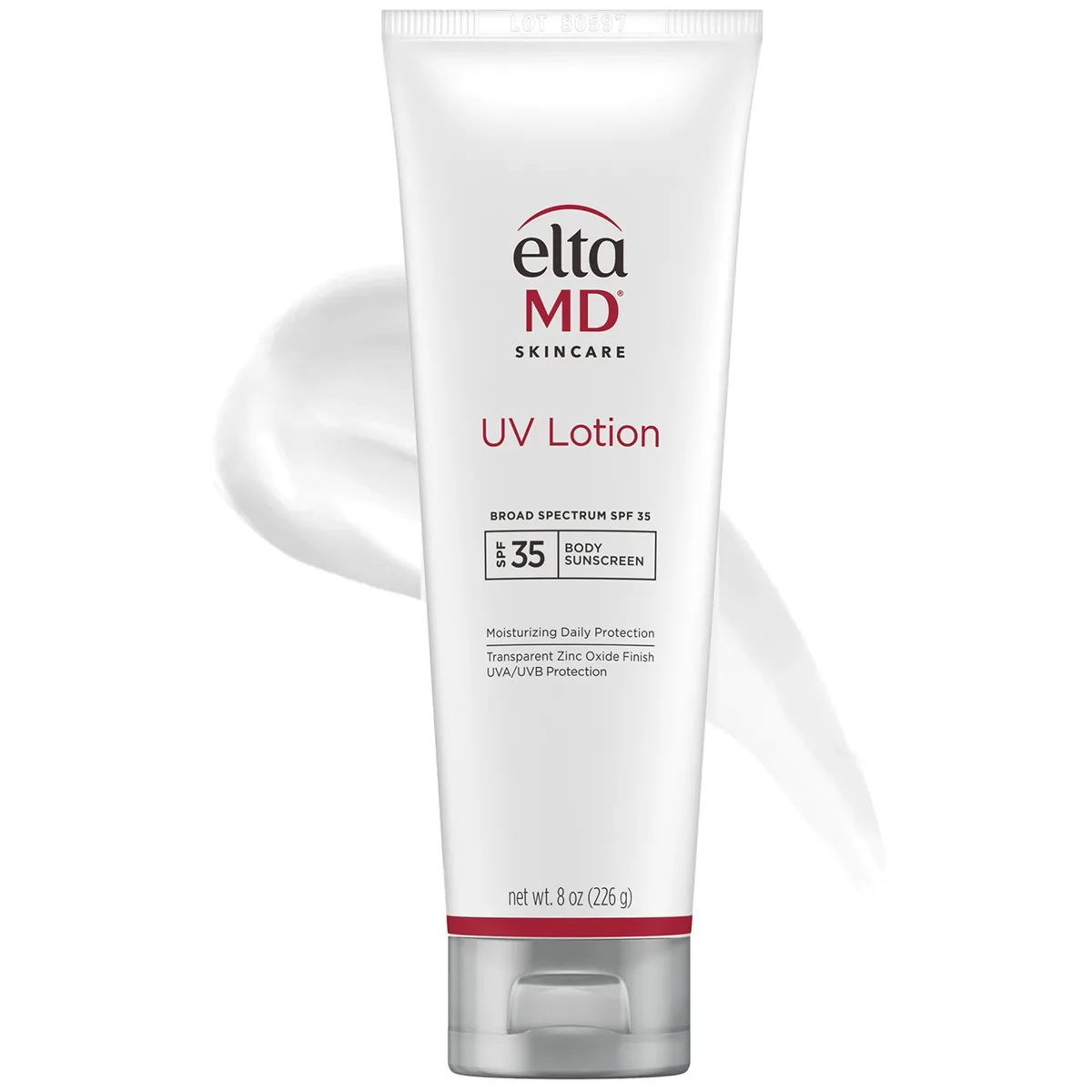
It's a body sunscreen built to also moisturize, pairing a low zinc load and a single chemical filter for a near-invisible finish with hyaluronic acid and a petrolatum base for genuine hydration. That two-in-one body coverage in a large, derm-trusted bottle sets it apart from drier, cast-heavy full-body mineral options.
EltaMD's moisturizing full-body sunscreen, and the keyword is moisturizing. A low zinc load plus a single chemical filter gives it a near-invisible finish, while hyaluronic acid and a petrolatum base keep body skin hydrated. The big bottle and gentle, fragrance-free formula make whole-body protection actually pleasant. The catches: octinoxate won't suit filter-averse users, and the rich base skews toward dry skin.
The case for it
Same rule for everyone. “Full protection” is the verdict on 2,288 of 45,024 concern verdicts across the catalog; rule P1 decided 2,232 of them. Unchanged since September 5, 2026, engine 5.1.1.
Brand or formulator? Disclose a concentration or correct a fact →
The studies behind the evidence row
The case for it
Same rule for everyone. “Strong choice” is the verdict on 1,459 of 45,024 concern verdicts across the catalog; rule R2 decided 892 of them. Unchanged since September 5, 2026, engine 5.1.1.
Brand or formulator? Disclose a concentration or correct a fact →
The studies behind the evidence row
The case for it
What would change this: A declared concentration would move this to a firmer reading of the dose.
Same rule for everyone. “Good choice” is the verdict on 9,564 of 45,024 concern verdicts across the catalog; rule R5 decided 9,072 of them. Unchanged since September 5, 2026, engine 5.1.1.
Brand or formulator? Disclose a concentration or correct a fact →
The studies behind the evidence row
The case for it
What would change this: A researched evidence row for the lead active would replace this with a verdict.
Same rule for everyone. “Full protection” is the verdict on 2,288 of 45,024 concern verdicts across the catalog; rule P1 decided 2,232 of them. Unchanged since September 5, 2026, engine 5.1.1.
Brand or formulator? Disclose a concentration or correct a fact →
Does the jobDoes what a sunscreen is for: UVA coverage, kind to the skin wearing it. Not measured from the label: pleasant enough to actually use.
A verdict is DermApproved’s assessment of how well a product’s ingredients fit a concern — never a claim about what the product treats. Evidence dots and collected reviews sit beside it and are never blended in. Rules 0.5.1 · evidence table ev-2026.09-r228 · how we decide
Be honest about your own habits: when you reach for sunscreen, where does it actually go? For most people, the answer is the face, and maybe the backs of the hands, and then the bottle gets capped. The arms, shoulders, chest, and legs, the large expanses that catch just as much UV and account for plenty of sun damage and skin cancer, get neglected, not out of ignorance but out of friction. Body sunscreen is a hassle. Most formulas feel greasy, or chalky, or both, and slathering them over that much surface area is a chore nobody enjoys. EltaMD's UV Lotion is built to dissolve that friction by making body sunscreen feel like body lotion, and that reframing is the whole reason it works. The filter strategy is engineered around the body-coverage problem. Rather than a high mineral load that would leave your arms and legs chalky white, it uses a modest seven percent zinc oxide paired with seven and a half percent octinoxate, a chemical UVB filter that does most of the SPF lifting. That hybrid approach is what gives the lotion its near-invisible finish: enough zinc for genuine broad-spectrum coverage, but not so much that you look ashy, with the octinoxate quietly carrying the rating. Spread it over your shoulders and it sinks in like a moisturizer rather than sitting on top like paint. And it genuinely is a moisturizer, which is the other half of the pitch. Sodium hyaluronate draws water into the skin, and a petrolatum-and-dimethicone base seals it in, so the lotion leaves body skin soft and hydrated rather than tight and stripped the way some sunscreens do. For anyone with dry body skin, especially on the arms and legs, this means you can often skip a separate body lotion entirely; the sunscreen is doing both jobs. That two-in-one quality is exactly what makes a person willing to apply it generously and often, which is the entire point of a body sunscreen. The format reinforces the use case. The flagship size is a generous eight-ounce bottle, with a smaller three-ounce tube also available, and that big bottle matters: a body sunscreen you have to ration is a body sunscreen you'll under-apply. Having plenty on hand encourages the liberal, full-coverage application that the SPF rating assumes. It's fragrance-free, too, which keeps it friendly to sensitive skin across the large areas where a fragranced product would have more opportunity to irritate. A note on the SPF labeling, since it can cause confusion: this product has long been sold as SPF 30+, and newer packaging labels it SPF 35. The difference is negligible in practice, both block well over ninety-five percent of UVB when applied properly, and the protection you actually get depends far more on applying enough and reapplying than on that single-digit difference in the number. Now the honest limitations. The first is octinoxate. It's an FDA-permitted, long-used UVB filter, and it's what enables the invisible finish, but it's also the filter some people specifically avoid, whether for reef-safety reasons (some regions restrict it) or because the FDA has requested more safety data on several chemical filters. None of that makes it a proven hazard at labeled use, but if you've decided you want mineral-only protection, this isn't your sunscreen, and EltaMD's UV Pure or UV Active would serve you better. The second limitation is the base. The petrolatum and emollients that make this so moisturizing also make it too rich for oily and acne-prone skin, and the formula isn't fungal-acne safe. On the body that's less of an issue for most people than it would be on the face, but anyone with body breakouts or malassezia concerns should take note. The third is price: at fifty-five dollars for the eight-ounce bottle, it's expensive for a body sunscreen, and you're paying the EltaMD premium for a product whose job, protecting large areas, inherently consumes a lot of product. In use, judged as what it is, it delivers nicely. The protection is solid and broad-spectrum, the finish is genuinely low-cast and lotion-like, the hydration is real, and the gentle, fragrance-free formula suits sensitive skin over large areas. It's the rare body sunscreen that doesn't make you dread the application, and that pleasantness is precisely what translates into people actually covering their bodies instead of just their faces. The final read is that this is an excellent moisturizing body sunscreen for the right person, and a clear miss for the wrong one. Buy it if you have dry or normal body skin, want a near-invisible full-body finish, and don't object to a chemical filter, especially if a moisturizing two-in-one appeals to you. Skip it if you want mineral-only protection, if your body skin is oily or breakout-prone, or if a fifty-five-dollar body sunscreen is more than you want to spend when cheaper full-body options exist. For making the most-skipped step in sun protection feel effortless, though, it's hard to fault.
The hero actives that drive this product's performance.
| Ingredient | Function | Evidence |
|---|---|---|
| Zinc Oxide 7.0% (7.0%) | The mineral half of a hybrid filter system, providing broad-spectrum UVA-UVB coverage; at a modest 7% it keeps the lotion lightweight and low-cast, leaning on the octinoxate to reach the SPF rating rather than carrying it alone. | Regulator-approved for Sun Damage · limited certainty |
| Octinoxate 7.5% (7.5%) | The chemical UVB filter that does most of the SPF heavy lifting here, allowing a low zinc load and a smooth, near-invisible finish suited to large body areas where a heavy mineral cast would be impractical. | Regulator-approved for Sun Damage · emerging certainty |
| Hyaluronic Acid (Sodium Hyaluronate) | The humectant that turns this from a bare body sunscreen into a moisturizing one, drawing water into the skin beneath the petrolatum-and-dimethicone occlusive layer so dry body skin stays comfortable and hydrated. | Established mechanism for Dehydration · established mechanism |
| Petrolatum | The occlusive emollient high in the inactive list that gives this body lotion its moisturizing character, sealing in the hyaluronic acid's hydration and softening dry skin while the filters protect it. | Regulator-approved for Dryness · established mechanism |
Ingredient standings describe the active at treatment-level doses and vehicles; this product's own condition grades weigh its actual formula.
Active Ingredients: Zinc Oxide 7.0%, Octinoxate 7.5%. Inactive Ingredients: Water, Petrolatum, Isopropyl Palmitate, Ethylhexyl Stearate, Dimethicone, Phenoxyethanol, Glyceryl Stearate, PEG-100 Stearate, Oleth-3 Phosphate, Cetearyl Alcohol, Cetearyl Glucoside, Hydroxyethyl Acrylate/Sodium Acryloyldimethyl Taurate Copolymer, Polyisobutene, Polyether-1, Ethylhexylglycerin, PEG-7 Trimethylolpropane Coconut Ether, Citric Acid, Tocopheryl Acetate, Sodium Hyaluronate, Triethoxycaprylylsilane
sunscreen
AM
Use as a primary body sunscreen, applied generously 15 minutes before sun exposure. Its moisturizing base means you can often skip a separate body lotion; reapply every two hours outdoors and after swimming or toweling.
Sun protection is immediate with an adequate layer; the moisturizing benefit is felt on application. The large bottle is built for frequent, generous full-body use over a season.
Protection comes from a hybrid filter pair: zinc oxide at seven percent, an FDA GRASE broad-spectrum mineral filter, and octinoxate at seven and a half percent, a long-established chemical UVB filter. The pairing is a deliberate formulation strategy, the octinoxate carries most of the SPF while the lower zinc load supplies UVA breadth without the heavy white cast a high mineral concentration would leave over large body areas, which is the core challenge of a full-body sunscreen. Octinoxate is permitted by the FDA, though it is among the filters for which additional safety data has been requested and is restricted in some jurisdictions over reef concerns; at labeled use it has a long history without established harm. The moisturizing claim has a sound mechanistic basis: sodium hyaluronate is a well-studied humectant, and it sits beneath petrolatum and dimethicone, both occlusives with strong evidence for reducing transepidermal water loss, so the formula traps the hydration it draws in rather than letting it evaporate, the same architecture that makes a humectant-plus-occlusive moisturizer effective. Tocopheryl acetate adds a modest antioxidant contribution. What makes this formulation noteworthy is its targeting: rather than chasing the highest SPF or a purist mineral profile, it optimizes for the real-world body-coverage problem, an invisible, moisturizing, generously applicable lotion, by balancing a low mineral load, a chemical filter, and a humectant-occlusive moisturizing base.
Full-body sun protection is frequently emphasized in clinical practice, since UV damage and skin cancers occur well beyond the face, on the arms, shoulders, chest, and legs, yet body application is the step patients most often neglect. A moisturizing, low-cast body sunscreen is commonly suggested precisely because cosmetic elegance and a pleasant feel improve adherence over large areas. Hybrid formulas combining a mineral and a chemical filter are widely used and considered effective, with the choice between hybrid and mineral-only often coming down to patient preference regarding chemical filters. Standard guidance stresses applying a generous amount, roughly an ounce for full-body coverage, and reapplying every two hours and after swimming or toweling. For oily or breakout-prone body skin, lighter or oil-free options are typically preferred over a petrolatum-rich base.
Spread a generous, even layer over all exposed body areas about fifteen minutes before sun exposure, roughly an ounce (a shot-glassful) for full-body coverage. Because it's moisturizing, you can usually skip a separate body lotion. Reapply at least every two hours during sun exposure and immediately after swimming, sweating, or toweling off. For the face, pair it with a dedicated facial sunscreen, since the petrolatum-rich base is richer than most facial formulas. The large 8 oz tube is meant to be used liberally, so don't ration it, as under-application is the main way any sunscreen underdelivers.
At fifty-five dollars for the 8-ounce bottle, this is a premium price for a body sunscreen, and full-body coverage inherently uses a lot of product, so the bottle, generous as it is, won't last forever under proper application. A smaller 3-ounce tube is also offered for travel, though the larger bottle is the better per-ounce value and the one that encourages the liberal use a body sunscreen needs. What you're paying for is a moisturizing, near-invisible, fragrance-free formula with a long derm-office track record that can double as body lotion. For dry-skinned users who'll actually use it generously, that's a fair if premium value; budget shoppers will find cheaper full-body options that protect adequately.
This is ideal for anyone wanting a moisturizing, near-invisible full-body sunscreen, especially those with dry or normal body skin who'd appreciate skipping a separate lotion. The fragrance-free, gentle formula suits sensitive skin over large areas, and the big bottle rewards people who apply generously and often.
Those who want mineral-only protection should pass, since it contains octinoxate. It's also a poor match for oily or breakout-prone body skin given the petrolatum-rich base, and it isn't fungal-acne safe. Budget-minded shoppers may balk at a premium price when cheaper full-body sunscreens protect adequately.
Ready to try EltaMD UV Lotion Broad-Spectrum SPF 30+?
Buy at Amazon ♥A smooth, moisturizing body lotion that spreads easily over large areas and absorbs to a soft, lightly emollient finish without heavy greasiness.
Fragrance-free, with a faint base smell from the emollients and zinc.
Large 8 oz squeeze tube, with a smaller 3 oz tube also available for travel.
It goes on like a moisturizing body lotion, spreading easily with little to no white cast, and absorbs to a soft, comfortable finish. No sting or break-in period; the only note is that the petrolatum richness suits dry skin more than oily skin.
The 8 oz bottle lasts roughly a full summer of regular body application; the 3 oz tube is a few weeks of frequent use.
All Year
Body sunscreen is the step people abandon first because most formulas feel greasy or chalky over large areas. EltaMD's UV Lotion was designed as a moisturizing full-body option, low zinc plus a chemical filter for an invisible finish, hyaluronic acid and petrolatum for hydration, so that protecting your whole body feels like applying lotion rather than a chore.
EltaMD has supplied physician-dispensed sun care since 1988 and is a dermatology staple. UV Lotion is its full-body moisturizing sunscreen, now labeled SPF 35 on newer packaging while long sold as SPF 30+, pairing zinc with a single chemical filter for everyday body coverage.
Octinoxate makes a sunscreen unsafe.
Octinoxate is an FDA-permitted UVB filter with a long history of use. Some regions restrict it for reef concerns, and the FDA has asked for more safety data, but it remains legal and widely used; it's a personal preference issue, not a proven hazard at labeled use.
Body skin doesn't need sunscreen as much as the face.
Sun damage and skin cancer occur all over the body, not just the face. Arms, shoulders, chest, and legs accumulate significant UV exposure, which is exactly why a comfortable, moisturizing full-body sunscreen like this one matters.
It's a hybrid. It uses zinc oxide at 7% (mineral) plus octinoxate at 7.5% (chemical). The chemical filter does most of the SPF work, which keeps the finish near-invisible, so it isn't a mineral-only option.
It has long been sold as SPF 30+, and newer packaging labels it SPF 35. The practical difference is negligible, both block over 95% of UVB, and adequate application matters far more than that small number difference.
You can, but it's formulated as a body sunscreen with a richer, petrolatum-based moisturizing texture. Many people prefer a dedicated facial sunscreen for the face, especially if their facial skin is oily or breakout-prone, since this formula isn't fungal-acne safe.
Minimal to none. The low 7% zinc load and the chemical filter give it a near-invisible finish, which is exactly what makes it practical for large body areas where a heavy mineral cast would be impractical.
Yes, very. The hyaluronic acid and petrolatum base hydrate and seal in moisture, so it doubles as a body moisturizer. Dry-skinned users can often skip a separate body lotion when using it.
It contains no retinoids or other commonly flagged actives and is generally considered fine for pregnancy. Those who prefer to avoid chemical filters like octinoxate during pregnancy may opt for an all-mineral EltaMD option instead.
Recurring themes our editors read across retailer reviews of this product — summaries in our words, not quotations, and not a substitute for your own patch test.
Moisturizing, doesn't dry out body skin
Minimal to no white cast
Large 8 oz bottle lasts
Fragrance-free and gentle
Contains octinoxate, not for filter-averse users
Petrolatum base too rich for oily skin
Pricey for a body sunscreen
Not fungal-acne safe
Verified answers from our questions library — the nuance a product page cannot carry.