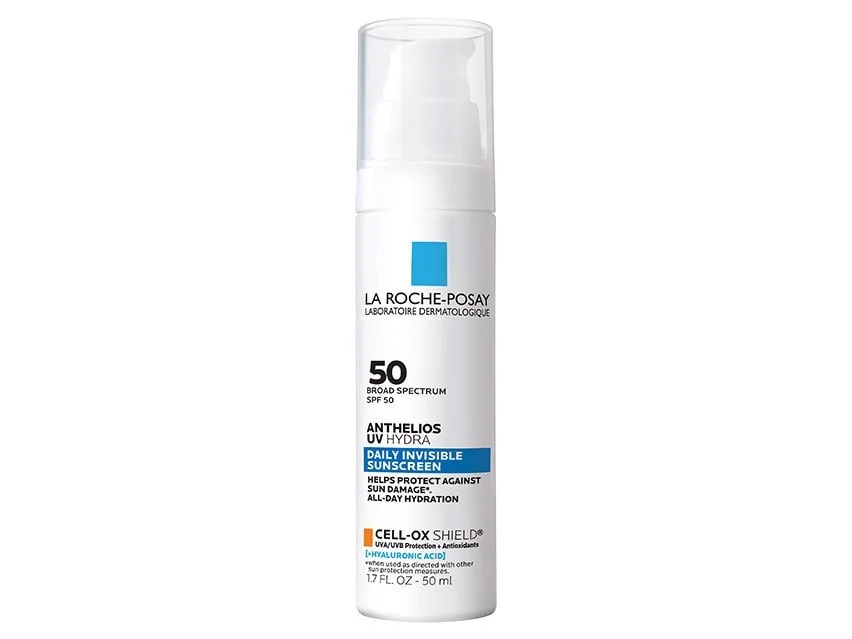
While many sunscreens claim to be hydrating, the UV Hydra backs it up with a three-tier moisture system — sodium hyaluronate draws water in, glycerin holds it, and panthenol prevents it from escaping. The silicone-free formula with jojoba esters and sunflower seed wax creates a moisturizer-like experience that most chemical sunscreens cannot match.
Finally, a sunscreen that dry skin actually looks forward to applying. The UV Hydra delivers genuine three-tier hydration with hyaluronic acid, panthenol, and glycerin while maintaining photostable SPF 50 protection. The dewy finish and rich texture are a gift for parched skin and a dealbreaker for oily types.
Good choicefor DrynessIn your profileYou chose · Glycerin is a reference standard by mechanism for dryness; this lotion carries it high in the ingredient list.Moderate evidenceGentleNo reviews collected yet
The case for it
Glycerin has trial-supported standing for this concern.
It is present at an effective concentration, declared or high in the ingredient list.
The formula carries none of the triggers this concern is sensitive to.
Same rule for everyone. “Good choice” is the verdict on 9,564 of 45,024 concern verdicts across the catalog; rule R5 decided 9,072 of them.
Unchanged since September 5, 2026, engine 5.1.1.
Good choicefor DehydrationIn your profileYou chose · Glycerin is a reference standard by mechanism for dehydration; this lotion carries it high in the ingredient list.Moderate evidenceGentleNo reviews collected yet
The case for it
Glycerin has trial-supported standing for this concern.
It is present at an effective concentration, declared or high in the ingredient list.
The formula carries none of the triggers this concern is sensitive to.
Same rule for everyone. “Good choice” is the verdict on 9,564 of 45,024 concern verdicts across the catalog; rule R5 decided 9,072 of them.
Unchanged since September 5, 2026, engine 5.1.1.
R5 — Trial-supported or guideline-supported active, adequately or plausibly dosed. · the full register
Carrying active
Glycerin
Standing
supported — its mechanism is established
Form
adequate — studied range 20%, from the trials on the row; needs leave-on contact; judge it after ~1 weeks
Tolerability
gentle
Row checked
against its sources on July 17, 2026 (evidence table ev-2026.09-r228)
The studies behind the evidence row
USP glycerin monograph / Fluhr et al., glycerol and the skin (review) — glycerin is the reference humectant, drawing and holding water in the stratum corneum — reference work
Full protectionfor Sun DamageIn your profileYou chose · Broad-spectrum SPF 50 with avobenzone: the protection sun damage calls for.Moderate evidenceGentleNo reviews collected yet
The case for it
Avobenzone is a first-line active — approved, monograph-listed or named in current guidelines — for this concern.
It is present at an effective concentration, declared or high in the ingredient list.
The formula carries none of the triggers this concern is sensitive to.
Same rule for everyone. “Full protection” is the verdict on 2,288 of 45,024 concern verdicts across the catalog; rule P1 decided 2,232 of them.
Unchanged since September 5, 2026, engine 5.1.1.
P1 — Photoprotection standing is regulatory (M020 / Annex VI filters; 21 CFR 201.327 attaches the early-skin-aging claim to tested broad-spectrum SPF 15+). SPF 30 is the AAD daily-use bar. · the full register
Carrying active
Avobenzone
Standing
first line — a regulator recognises it for this use; trials support it · per 21 CFR § 352.10 Sunscreen active ingredients (US FDA — 21 CFR Part 352 (Sunscreen Drug Products for Over-the-Counter Human Use), via Cornell Legal Information Institute; part heading marked [STAYED INDEFINITELY], effective date stayed at 66 FR 67485), opened September 1, 2026
Form
adequate (declared 3%) — studied range up to 3%, from the OTC monograph or label; needs leave-on contact
Tolerability
gentle
Row checked
against its sources on September 1, 2026 (evidence table ev-2026.09-r228)
21 CFR § 352.10 Sunscreen active ingredients — US FDA — 21 CFR Part 352 (Sunscreen Drug Products for Over-the-Counter Human Use), via Cornell Legal Information Institute; part heading marked [STAYED INDEFINITELY], effective date stayed at 66 FR 67485, opened September 1, 2026
Full protectionfor AgingIn your profileYou chose · Broad-spectrum SPF 50 with avobenzone: the protection aging calls for.Not yet assessedGentleNo reviews collected yet
The case for it
Avobenzone has no evidence row yet for this concern — it is in the research queue.
The formula carries none of the triggers this concern is sensitive to.
What would change this: A researched evidence row for the lead active would replace this with a verdict.
Same rule for everyone. “Full protection” is the verdict on 2,288 of 45,024 concern verdicts across the catalog; rule P1 decided 2,232 of them.
Unchanged since September 5, 2026, engine 5.1.1.
P1 — Photoprotection standing is regulatory (M020 / Annex VI filters; 21 CFR 201.327 attaches the early-skin-aging claim to tested broad-spectrum SPF 15+). SPF 30 is the AAD daily-use bar. · the full register
Does the jobDoes what a sunscreen is for: UVA coverage, kind to the skin wearing it. Not measured from the label: pleasant enough to actually use.
A verdict is DermApproved’s assessment of how well a product’s ingredients fit a concern — never a claim about what the product treats. Evidence dots and collected reviews sit beside it and are never blended in.
Rules 0.5.1 · evidence table ev-2026.09-r228 · how we decide
Assessment
Pros & Cons
Pros
✓ Three-tier hydration system with hyaluronic acid, panthenol, and glycerin genuinely moisturizes
✓ Silicone-free formula feels like skincare rather than a chemical film
✓ Alcohol-free and fragrance-free — minimal irritation risk for dry, sensitized skin
✓ Can replace separate moisturizer for normal to dry skin types
✓ Photostable avobenzone-octocrylene pairing maintains UVA protection throughout wear
✓ Exceptionally high user rating of 4.7 stars across nearly 1,000 reviews
Cons
✗ Dewy finish is too rich and shiny for oily skin types
✗ Premium price at $39.99 for 1.7 ounces with no larger size option
✗ Not water-resistant — unsuitable for swimming or intense outdoor activity
✗ Can pill when layered over silicone-heavy skincare products
✗ Chemical UV filters may not suit those who prefer mineral-only sunscreens
Review
Full Review
The dirty secret of sun protection is that the best sunscreen in the world is useless if you dread putting it on. And for people with dry skin, dread is exactly what most sunscreens inspire. That tight, papery feeling. The way chemical filters seem to suck the last drop of moisture from skin that's already desperate for it. The film that sits on top of your face reminding you every second that you're wearing sunscreen instead of the rich cream your skin is begging for. La Roche-Posay built the UV Hydra for precisely these people, and the 4.7-star rating across nearly a thousand reviews suggests they got the formula right.
The hydration architecture here is unusually thoughtful for a sunscreen. Most products that claim to be hydrating toss in a token amount of glycerin and call it a day. The UV Hydra commits to the concept with three distinct hydration mechanisms working in concert. Sodium hyaluronate — the smaller, more penetrative form of hyaluronic acid — draws water into the upper layers of the skin. Glycerin, positioned high on the ingredient list, acts as a humectant reservoir that holds that moisture in place. And panthenol, provitamin B5, strengthens the skin barrier to prevent transepidermal water loss, essentially locking the door behind the moisture that hyaluronic acid and glycerin brought in. It's a hydration relay race, and each ingredient has a clearly defined leg to run.
The vehicle is equally deliberate. This is a silicone-free formula — unusual for a chemical sunscreen — that relies instead on jojoba esters and sunflower seed wax for its emollient base. The result feels genuinely different from the typical sunscreen experience. Where most chemical SPFs have that characteristic slippery, slightly synthetic feel that dimethicone creates, the UV Hydra has a milky, cushioned texture that reads as skincare rather than sun protection. On the skin, it absorbs within about a minute to a dewy, naturally hydrated finish. No film, no stickiness, no reminder that you're wearing anything.
The UV filter system uses four chemical filters: avobenzone at 3% for UVA1 coverage, octocrylene at 7% for UVB protection and avobenzone stabilization, homosalate at 7% for additional UVB absorption, and octisalate at 5% as a supplementary UVB filter. The concentrations are moderate compared to some Anthelios products — the UV Correct, for instance, runs homosalate at 13% and octocrylene at 10%. This gentler filter load likely contributes to the UV Hydra's better tolerability and lower incidence of irritation, though it also means the SPF ceiling is 50 rather than 70.
La Roche-Posay's Cell-Ox Shield technology adds Cassia Alata leaf extract and tocopherol as antioxidant support. In a hydrating formula, the antioxidant layer serves an additional purpose beyond the standard free radical scavenging — it helps protect the skin's lipid barrier from oxidative damage that can worsen dehydration. When your skin is already dry and you're exposing it to UV radiation, oxidative stress compounds the moisture loss. The antioxidant defense helps interrupt that cycle.
The fragrance-free and alcohol-free formulation is critical for the target audience. Dry skin is often sensitized skin, and both fragrance and denatured alcohol are among the most common irritation triggers. Their absence here means the formula is unlikely to cause the stinging, redness, or reactive dryness that some Anthelios products with alcohol denat. can provoke.
The finish is where this sunscreen most clearly announces its intended audience. It's dewy. Glowy. On dry to normal skin, this reads as healthy, hydrated radiance. On oily or combination skin, particularly in humid conditions, it can read as an oil slick by noon. La Roche-Posay makes no effort to disguise this — the product is called UV Hydra, not UV Matte, and the formulation is transparently optimized for skin that needs moisture above all else.
At $39.99 for 1.7 ounces, the pricing follows the standard Anthelios facial sunscreen structure — premium but not outrageous for a product you use sparingly (about a nickel-sized amount daily) and that potentially replaces a separate moisturizer. The hyaluronic acid and panthenol provide genuine functional value beyond basic sun protection, though you're also paying for the elegant vehicle technology and La Roche-Posay's clinical heritage.
The product is not water-resistant, reinforcing its positioning as a daily-wear facial sunscreen rather than an active outdoor product. For beach days and sports, you'll still need a dedicated water-resistant formula. But for the 90% of sunscreen applications that happen before a day at the office, a trip to the grocery store, or a walk around the neighborhood, the UV Hydra makes protection feel like self-care.
If there's a genuine weakness beyond the expected limitations, it's that the richer texture can occasionally pill when layered over certain skincare products, particularly those with heavy silicone bases. This is a common challenge with silicone-free formulas — the different base chemistries can conflict during layering. Starting with clean skin or using water-based serums underneath avoids the issue entirely.
For dry-skinned sun protection seekers who have resigned themselves to choosing between comfort and compliance, the UV Hydra offers something rare: both. It's a sunscreen that makes you forget you're wearing sunscreen, which might be the most important feature a sun protection product can have.
Formula
Key Ingredients
The hero actives that drive this product's performance.
The hydration headline of this sunscreen — a low-molecular-weight form of hyaluronic acid that penetrates more effectively than standard HA to draw moisture into the skin. In a sunscreen context, it counteracts the drying effect that UV filter systems can have over hours of wear, keeping skin plump and comfortable throughout the day.
Established mechanismfor Dehydration · established mechanism
Provides critical UVA1 protection that the other three UV filters in this formula cannot. Stabilized by octocrylene at 7% to prevent the photodegradation that would otherwise reduce UVA coverage within hours of application. This combination ensures the hydrating sunscreen maintains its broad-spectrum protection throughout wear.
Regulator-approvedfor Sun Damage · emerging certainty
Provitamin B5 reinforces the hydration strategy alongside hyaluronic acid and glycerin, but through a different mechanism — it improves the skin's barrier function and reduces transepidermal water loss rather than simply attracting moisture. This multi-pathway hydration approach is what distinguishes this from simply adding HA to a standard sunscreen.
Established mechanismfor Dehydration · established mechanism
Listed high in the inactive ingredients, glycerin is the workhorse humectant providing the foundation of this formula's hydrating claims. Working alongside sodium hyaluronate and panthenol, it creates a three-tier hydration system — glycerin pulls moisture from the environment, HA holds it in the upper skin layers, and panthenol prevents it from escaping.
Established mechanismfor Dryness · established mechanism
A plant-derived emollient that mimics the skin's natural sebum composition, providing a moisturizing cushion that helps the formula feel rich without being greasy. Combined with sunflower seed wax, it gives this sunscreen its luxurious, milky texture that sets it apart from lighter fluid sunscreens in the Anthelios range.
Established mechanismfor Dryness · established mechanism
Ingredient standings describe the active at treatment-level doses and
vehicles; this product's own condition grades weigh its actual formula.
Can serve as both moisturizer and sunscreen for dry to normal skin types. Apply as the final step in your AM routine. For very dry skin, layer over a hydrating serum with hyaluronic acid for maximum moisture. May be too rich for oily skin types — consider the UV Correct or Mineral Tinted alternatives.
Results Timeline
Immediate hydration and UV protection upon application. Skin feels noticeably more comfortable and plump within minutes. Over 2-4 weeks of daily use, the hyaluronic acid and panthenol contribute to improved skin hydration levels and a healthier moisture barrier.
Pairs Well With
Hyaluronic acid serumsCeramide moisturizersVitamin C serumsRetinol (PM use)
La Roche-Posay Anthelios UV Hydra Sunscreen SPF 50
Sample PM Routine
Cleanser
Treatment serum
Rich night cream
Evidence
Science & Expert Perspective
The Science
The hydration strategy in this sunscreen is built on three ingredients with distinct, complementary mechanisms. Sodium hyaluronate — a salt form of hyaluronic acid with a lower molecular weight than standard HA — has been extensively studied for its hygroscopic properties. One trial published in the Journal of Clinical and Aesthetic Dermatology has demonstrated that topical hyaluronic acid significantly improves skin hydration, elasticity, and roughness across multiple clinical endpoints. Its inclusion in a sunscreen ensures moisture replenishment during the hours of UV exposure when skin is actively losing water through transepidermal water loss (TEWL).
Panthenol (provitamin B5) is converted to pantothenic acid in the skin, where it plays a role in coenzyme A synthesis and lipid metabolism. Studies in the Journal of Dermatological Treatment have shown that topical panthenol improves stratum corneum hydration, reduces TEWL, and accelerates epithelial regeneration. In this formula, panthenol's barrier-strengthening mechanism complements hyaluronic acid's moisture-attracting function — one brings water in, the other prevents it from leaving.
The UV filter system pairs avobenzone at 3% with octocrylene at 7% for photostability. Avobenzone provides UVA1 absorption (340-400 nm), the wavelength range most responsible for photoaging and immunosuppression. Without stabilization, avobenzone loses approximately one-third of its filtering capacity within an hour of UV exposure. Octocrylene's energy transfer mechanism prevents this degradation, maintaining the broad-spectrum protection throughout wear.
The silicone-free vehicle represents an interesting formulation choice. Jojoba esters and sunflower seed wax replace the dimethicone and polymethylsilsesquioxane found in most chemical sunscreens. While silicones provide excellent spreadability and a dry-touch finish, they can also contribute to a feeling of occlusion that dry skin types often find uncomfortable. The plant-based emollients in this formula provide a different sensory experience — more cushioned and nourishing — while still maintaining adequate film-forming properties for UV filter distribution.
References
Efficacy of topical hyaluronic acid on skin hydration and elasticity — Journal of Clinical and Aesthetic Dermatology (2014)
Dexpanthenol in dermatological treatment — Journal of Dermatological Treatment (2017)
Dermatologist Perspective
Dermatologists recognize sunscreen compliance as one of the biggest challenges in photoprotection counseling, and the UV Hydra addresses the specific compliance barrier that dry skin patients face. Clinical dermatologists frequently mention that when a sunscreen causes tightness or exacerbates dryness, patients simply stop using it — making a hydrating formula with genuine moisturizing actives clinically valuable beyond its SPF rating. Dermatologists frequently recommend this product for patients on drying treatments like retinoids or isotretinoin, where maintaining hydration is essential and sun protection is non-negotiable. The fragrance-free, alcohol-free formulation aligns with dermatological guidance for sensitive and barrier-compromised skin.
Guidance
Usage & Recommendations
How to Use
Apply generously to the face and neck as the final step in your morning skincare routine. Use approximately a nickel-sized amount. For dry skin, can be worn alone as a combined moisturizer and sunscreen. For very dry skin, layer over a hydrating serum for maximum moisture. Allow about a minute for absorption before applying makeup. Reapply every two hours during prolonged sun exposure. Not water-resistant — reapply after sweating or getting wet.
Value Assessment
At $39.99 for 1.7 ounces, the UV Hydra sits at the same price point as other premium Anthelios facial sunscreens. The value proposition rests on its dual function — for dry to normal skin, this can legitimately replace a separate morning moisturizer, effectively absorbing the cost of another product. The hyaluronic acid, panthenol, and jojoba esters provide tangible skincare benefits that basic sunscreens do not. La Roche-Posay's legacy of clinical development supports the pricing, though the lack of a larger economy size limits options for those who find the per-ounce cost steep. With daily facial use, expect 2-3 months per tube.
Who Should Buy
Dry and dehydrated skin types who find most sunscreens uncomfortable or drying. Ideal for winter sunscreen use when skin needs extra moisture. Excellent for retinol or isotretinoin users whose treatment is causing dryness. Anyone who wants their SPF step to feel like applying a luxurious moisturizer.
Who Should Skip
Oily skin types who will find the dewy finish too rich and shiny. Anyone needing water-resistant protection for outdoor sports or swimming. Those who prefer mineral-only sunscreens or are sensitive to chemical UV filters. Users who layer multiple silicone-based products and experience pilling.
Ready to try La Roche-Posay Anthelios UV Hydra Sunscreen SPF 50?
A milky, luxurious lotion that feels more like a high-end moisturizer than a sunscreen. The hyaluronic acid and jojoba esters create a creamy, cushioned feel that absorbs into a dewy, hydrated finish. Noticeably richer than the UV Correct or Light Fluid formulas in the Anthelios range.
Scent
Fragrance-free. The formula has a very faint, clean base scent from the emollient ingredients that is barely noticeable and dissipates within seconds.
Packaging
White squeeze tube with a screw-top cap in La Roche-Posay's standard clinical packaging. The 1.7 oz size is standard for a facial sunscreen, compact enough for travel.
Finish
dewyglowylightweight
What to Expect on First Use
Feels immediately hydrating upon application — almost indistinguishable from applying a moisturizer. Absorbs within 60 seconds to a dewy, natural-looking finish. No stinging, tingling, or tightness. Dry skin types will notice an immediate improvement in comfort compared to standard sunscreens.
How Long It Lasts
About 2-3 months per unit with daily application to face and neck
The UV Hydra was developed to fill a gap in the Anthelios lineup — a sunscreen specifically for people whose skin feels tight and parched after applying SPF. La Roche-Posay recognized that sunscreen compliance drops when the product is uncomfortable, and for dry skin types, most high-SPF formulas feel like applying a film of chemicals. The UV Hydra was engineered to make sun protection feel like a treat rather than a chore.
About La Roche-Posay Legacy Brand (20+ years)
La Roche-Posay was founded in 1975 near the thermal springs in central France and has been a dermatologist-recommended brand for nearly five decades. Its formulations are developed with dermatologists and backed by extensive clinical testing, and the brand holds multiple Skin Cancer Foundation seals of recommendation.
Brand founded: 1975 · Product launched: 2023
Myth vs. Reality
Common Myths
Myth
Hydrating sunscreens can't provide real UV protection — the moisturizing ingredients dilute the filters.
Reality
The UV filters and hydrating ingredients operate independently in this formula. Avobenzone, homosalate, octisalate, and octocrylene provide their UV-absorbing function regardless of the hyaluronic acid and panthenol present. SPF testing is performed on the final formula, so the SPF 50 rating reflects the actual protection delivered.
Myth
Sunscreens with hyaluronic acid are just marketing — you need a separate HA serum.
Reality
Sodium hyaluronate in this formula does provide genuine hydration benefits throughout wear. While a dedicated HA serum may deliver higher concentrations, having it in your sunscreen ensures consistent moisture replenishment during the hours of sun exposure when skin is most prone to dehydration.
FAQ
Frequently Asked Questions
Can this sunscreen replace my moisturizer?
For normal to dry skin, yes — the glycerin, sodium hyaluronate, panthenol, and jojoba esters provide substantial hydration that can eliminate the need for a separate moisturizer in your AM routine. For very dry skin or in harsh winter conditions, you may still want a hydrating serum underneath for maximum comfort.
Is this sunscreen good for oily skin?
The UV Hydra is formulated for dry to normal skin and has a dewy finish that may feel too rich for oily skin types. If you have oily skin, consider the Anthelios UV Correct (matte-satin finish) or the Effaclar Mat moisturizer with SPF instead.
Does this sunscreen leave a white cast?
No. This is a chemical (organic filter) sunscreen that absorbs UV rather than reflecting it, so it dries completely invisible on all skin tones. The 'invisible' claim in the product name is genuine — the formula disappears into the skin within about 60 seconds.
Is this sunscreen good for winter use?
Excellent for winter. The hydrating formula with hyaluronic acid and panthenol counters the moisture-stripping effects of cold, dry air and indoor heating. The richer texture that might feel too heavy in summer becomes a comfort advantage in colder months.
Can I use this sunscreen with retinol?
Yes — this is an ideal pairing. Retinol (used at night) can cause dryness and increased photosensitivity. The UV Hydra addresses both concerns: SPF 50 protects retinol-sensitized skin from UV damage, while the hyaluronic acid and panthenol help counteract retinol-induced dryness during the day.
Reviews
What Reviewers Tend to Say
Recurring themes our editors read across retailer reviews of this product — summaries in our words, not quotations, and not a substitute for your own patch test.
Common Praise
Exceptionally hydrating without feeling greasy
No white cast on any skin tone
Absorbs quickly with a dewy, natural finish
Completely invisible on the skin
Alcohol-free formula that doesn't sting or dry skin
Common Complaints
Too dewy or rich for oily skin types
Expensive at $39.99 for 1.7 ounces
Chemical UV filters concern some consumers
Can leave a slightly shiny finish in humid conditions
Not water-resistant for outdoor activities
Notable Endorsements
Skin Cancer Foundation RecommendedDermatologist-recommended for dry skin sun protection
Post-menopausal skin runs on different chemistry — less oil, fewer ceramides, slower repair — and a regimen built to control younger, oilier skin now quietly undermines it. The whole priority list has to flip.
The internet's favorite hydrator has a counterintuitive dark side — in dry air, a humectant with nothing to seal it can pull water out of your skin instead of into it.
The dewy-layering marketing reads as a warning if you are congested — and it is hiding the strongest mass-market lineup anywhere for exactly that skin.
Aug 28, 2026· 8 min
Questions people ask about sunscreen
Verified answers from our questions library — the nuance a product page cannot carry.
Products, answers, therapy guides, tools and articles in one search. Brand names,
slang and abbreviations all work — accutane finds isotretinoin, bacne finds truncal acne.