The Routine That Served You at 35 Is Working Against You at 55
Post-menopausal skin runs on different chemistry — less oil, fewer ceramides, slower repair — and a regimen built to control younger, oilier skin now quietly undermines it. The whole priority list has to flip.
Read the preview
From the DermApproved blog, in Anti-Aging: skincare in your fifties and beyond. Here's the plot twist nobody warns you about — the routine that kept your skin gorgeous at thirty-five can quietly start working against you at fifty-five. Same products. Same habits. Different skin entirely. And most people misread the moment completely, assuming they need to fight harder, so they double down on the exact things now causing the trouble. Because when estrogen leaves, it takes collagen, oil, and the very mortar holding your skin together — and suddenly the trusty acid toner and foaming cleanser aren't grooming your face, they're roughing it up. So the whole priority list has to flip: what you double down on, what you quietly retire, and the one unglamorous step that outperforms every anti-aging serum in the cabinet. There's also a hard limit to what any cream can do here — and knowing where that line falls changes what you buy. We map the smarter, calmer routine, at dermapproved.com/blog.
When your reliable products turn on you
Somewhere in your fifties, a strange thing happens. The foaming cleanser you trusted for twenty years starts leaving your face tight and papery. The glycolic toner that used to give you a glow now leaves a patch of stinging redness that lasts till lunch. Nothing about your routine changed. The skin underneath it did.
This is the moment most people misdiagnose. They assume they've done something wrong, or that they need to fight harder, so they double down on the very actives that are now the problem. The truth is less about effort and more about chemistry: post-menopausal skin operates on a different set of rules than the skin those products were designed for. A regimen built to control oil, unclog pores, and buff away a resilient younger surface is exactly the wrong regimen for a canvas that has quietly become thinner, drier, and slower to recover. Getting older skin right is less about adding a miracle and more about noticing that the old priorities have inverted.
What estrogen took with it
The engine behind almost all of this is estrogen, and its withdrawal at menopause is not a gentle fade. Skin collagen, the scaffolding that keeps the dermis firm, is thought to drop by as much as 30 percent in the first five years after menopause, and the decline tracks hormonal age more tightly than chronological age. That's why two women of the same birth year can have visibly different skin depending on where they are in the menopausal transition. Collagen goes, and with it the firmness and bounce that made younger skin forgiving.
Estrogen loss also rewrites the skin's lipid chemistry. Research profiling the outermost layer found that after menopause the stratum corneum's ceramides become both fewer and shorter, and shorter ceramides make a leakier barrier. Ceramides are a core part of the mortar holding skin cells together, so depleting them is a direct route to the chronic dryness, roughness, and sensitivity that define mature skin. On top of that, oil production falls as estrogen's influence wanes, removing the natural emollience that once kept a younger face comfortable. Repair slows, too. The net effect is a barrier that is thinner, drier, more easily provoked, and slower to bounce back from insult, which is precisely the insult a strippy, acid-forward routine keeps delivering.
Rebuild the routine around the barrier
If younger skincare was about control, mature skincare is about restoration, and the barrier is the foundation everything else rests on. The single highest-value move is a genuinely emollient, ceramide-rich moisturizer used generously and without guilt. A well-built barrier cream replaces the lipids estrogen is no longer helping you make. An affordable, ceramide-and-cholesterol staple like CeraVe Moisturizing Cream covers the essentials, and a richer, lipid-dense option such as Aestura Atobarrier 365 Cream suits the drier, more reactive end of the spectrum where a light lotion simply isn't enough anymore.
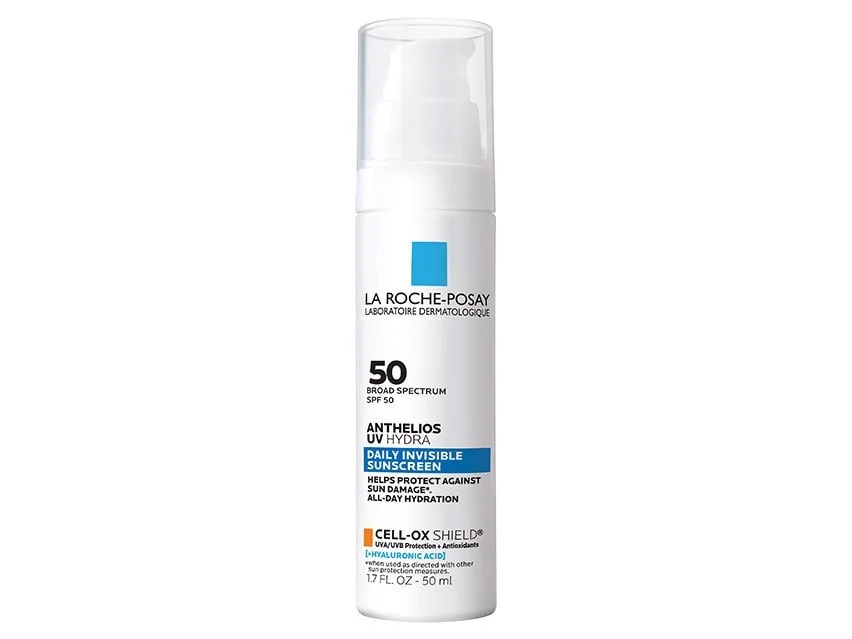
Hydration layered under that occlusion matters more now because the skin holds water so much less well; humectants like glycerin and hyaluronic acid give the barrier cream something to seal in. And the least glamorous priority is the most important: daily broad-spectrum sunscreen. UV degrades what collagen you have left and worsens the uneven pigmentation that mature skin is prone to, so a comfortable, hydrating formula you'll actually reapply, like La Roche-Posay Anthelios UV Hydra SPF 50, does more preventive work than any anti-aging serum in the cabinet. Protection is not the boring part of the routine. At this stage it is the routine.
Retinoids still belong — with a lighter hand
None of this means abandoning actives. It means matching them to the skin you now have. Retinoids remain the best-evidenced topical for supporting collagen; a systematic review of randomized trials confirms topical tretinoin meaningfully improves the clinical signs of photoaging by prompting fresh dermal collagen. On a thinner, drier face that benefit is still available, but the margin for irritation is much smaller, so how you use it matters as much as whether you use it.
The adjustments are practical. Start lower and go slower than the internet's aggressive protocols suggest. Use a gentle over-the-counter option such as CeraVe Skin Renewing Retinol Serum a couple of nights a week, and lean on the 'sandwich' technique, applying moisturizer before and after, to buffer a barrier that no longer shrugs off a sting. Space retinoid nights apart and let hydration nights fall in between. If you've stopped and restarted a retinoid three times because it kept flaking your skin, the fix is almost always frequency and buffering, not strength. Our retinoid-ramp tool lays out a tolerance schedule tuned to how easily your skin gets provoked, which for post-menopausal skin is the whole ballgame.
Fewer steps, better chosen
There is a strong temptation, when skin starts misbehaving, to add more, and it's usually the wrong instinct. Many mature-skin routines are over-active: a scrub, an acid toner, a strong retinoid, a vitamin C, and a clay mask all fighting for the same fragile barrier. Each was defensible in isolation; together, on estrogen-depleted skin, they add up to constant low-grade irritation that reads as sensitivity, dullness, and stubborn redness.
Simplifying is not giving up; it's precision. Swap the foaming cleanser for a gentle, non-stripping one that leaves skin comfortable rather than squeaky. Retire the daily physical scrub, whose job the barrier can no longer afford. Keep the actives that earn their place, retinoid, sunscreen, a well-chosen antioxidant, and cut the redundant ones. A tighter routine of things your skin tolerates beats an ambitious one it's quietly fighting. If you're unsure which steps are pulling weight and which are just irritating you, our routine-finder rebuilds a regimen around your current skin type and tolerance instead of the one you had two decades ago.
Honest goals, and where the bigger guns fit
It helps to be clear-eyed about what topicals can and can't do here, because managed expectations are what keep you consistent instead of chasing disappointments. Great skincare at this stage delivers real, worthwhile things: a comfortable, intact barrier, better hydration and texture, more even tone, and slowed further damage. What it does not do is rebuild lost volume or re-suspend structural sagging, which are anatomical changes no cream reaches.
That's where procedures enter, honestly rather than as a hard sell. Energy-based treatments, resurfacing, and injectables address the structural and pigmentary changes that sit beyond a serum's reach, and they work best layered on top of a well-tended barrier, not as a substitute for one. For some people, systemic or topical hormone therapy has measurable skin benefits, but that is a medical decision made with a clinician weighing your whole health picture, not a skincare purchase. The throughline for skincare in your fifties and beyond is a single reframe: stop managing the skin you used to have and start nourishing the skin you do. Protect the barrier, respect its lowered tolerance, keep the few actives that pull real weight, and let the procedures handle what chemistry can't. It is a calmer routine than the one you started with, and a smarter one.
Products mentioned
Independently reviewed and scored — the real products behind this piece.


References
- Effect of estrogens on skin aging and the potential role of SERMs — Clinical Interventions in Aging, 2007
- Menopause induces changes to the stratum corneum ceramide profile, which are prevented by hormone replacement therapy — Scientific Reports, 2022
- Topical tretinoin for treating photoaging: A systematic review of randomized controlled trials — International Journal of Women's Dermatology, 2022
Every cited link is verified to resolve to the paper named. Where a source could not be independently confirmed, it is listed without a link rather than pointing you somewhere wrong.
Frequently asked
Why does my skin feel so much drier after menopause even though nothing else changed?
Estrogen loss cuts both oil production and the skin's ceramides, and research shows post-menopausal ceramides become fewer and shorter, which weakens the barrier's ability to hold water. So skin dries out and gets more easily irritated even if your products and habits are identical. The fix is leaning into barrier repair and richer moisturization rather than fighting it.
Should I stop using retinol and acids on mature skin?
Not necessarily, but the intensity has to change. Retinoids still support collagen and remain worthwhile, just at lower strength, less often, and buffered with moisturizer. Daily strong acids, aggressive scrubs, and stripping cleansers are usually what's tipping estrogen-depleted skin into chronic irritation, so those are the ones to scale back or retire.
Is a heavier moisturizer really better for skin in your fifties?
For most post-menopausal skin, yes. With less natural oil and depleted ceramides, the barrier needs external lipids it can no longer make itself, so a genuinely emollient, ceramide-rich cream is doing real work, not just sitting on top. Pair it with a humectant layer underneath and use it generously; over-moisturizing this barrier is rarely the problem.
Can skincare fix menopausal sagging and volume loss?
No, and it's important to know that going in. Skincare can improve barrier health, hydration, texture, and tone, and slow further sun damage, all genuinely valuable. But lost collagen volume and structural sagging are anatomical changes that sit beyond any topical, which is where procedures, and for some people medically supervised hormone therapy, come in.