Skin That Once Repaired Overnight Now Needs Most of a Week
After fifty, irritation stops being a free sample of progress and starts being a debt — which is why the right routine is a budget with a small number of well-chosen line items.
Read the preview
From the DermApproved blog, in Anti-Aging: what irritation actually costs after fifty. Researchers broke the barrier on purpose in two age groups and timed the repair. The young recovered half in a day. The older group managed fifteen percent — and were still behind six days later. Which quietly rewrites what a routine can afford. For the full breakdown, visit dermapproved.com/blog.
The measurement that should reorganise the whole routine
In 1995 a research group in San Francisco did something unusually direct: they took people aged 20 to 30 and people over 80, and broke their skin barriers on purpose. Acetone on one set of sites, repeated tape stripping on another, then measurement of how much damage it took and how fast it healed.
It took 31 strippings, plus or minus five, to breach the barrier in the young subjects. It took 18, plus or minus two, in the older ones. Then came the part that matters more. Twenty-four hours after the insult, young skin had recovered about half its barrier function, and by 72 hours roughly 80%. Aged skin at 24 hours had recovered 15%, and the shortfall persisted over the following six days.
Sit with that ratio for a moment, because it is the whole argument. The same disruption — one over-enthusiastic exfoliation, one retinoid night too soon, one hot shower with a foaming wash — costs a person in their twenties a day and costs a person in their eighties the better part of a week. And here is the trap the same study identified: baseline transepidermal water loss in the aged subjects was normal, in fact subnormal. Left alone, older skin measures fine. The authors' conclusion was blunt — assessing aged barrier function under basal conditions is misleading, because both integrity and repair are markedly abnormal. The weakness is invisible until something tests it, and a routine full of actives tests it every single day.
Which means actives stop being free
Younger skincare treats irritation as a receipt. Tingling means it's working; a bit of flaking is the retinoid uptick; a stinging night is the price of the acid. That accounting is defensible at 28 because the barrier balances the books by morning.
At 58 it does not. If a moderate insult now takes five or six days to fully resolve, then two irritant events a week do not sit in separate columns — they overlap, permanently, and the skin never returns to baseline between them. What that feels like from the inside is not dramatic. It feels like a routine that used to be fine gradually turning against you: a cleanser that leaves tightness it never used to, a serum that stings on Tuesday but not Monday, a general sense that everything has become 'sensitive' for no traceable reason. There is a traceable reason. The account is permanently overdrawn.
The useful reframe is to stop thinking in terms of what you would like your routine to include and start thinking in terms of a fixed weekly irritation budget you get to spend. Most people after fifty can afford one genuine active, used at a cadence that leaves recovery time, plus supporting steps that cost nothing. Trying to run three is not ambitious — it is spending money you don't have, and the interest is charged in barrier function. Whether skin needs a break from actives is a question that gets a different answer at this stage than it does at twenty-five.
Spending the budget on the best return
If you only get one line item, the choice should be made on evidence per unit of irritation rather than efficacy alone — and there is now a reasonable ranking to work from. A Bayesian network meta-analysis pooled 23 randomised trials covering 3,905 participants and compared topical anti-photoaging agents head to head across outcomes.
For fine wrinkles, isotretinoin, retinol and tretinoin all produced significant improvement, with isotretinoin ranked highest. Tazarotene came out strongest for coarse wrinkles. Glycolic acid was the leader for roughness. Tretinoin and retinol were superior for hyperpigmentation. So far, so familiar. The safety analysis is where it becomes decision-relevant: tretinoin carried the most favourable safety profile, while tazarotene and glycolic acid carried higher adverse-event risk, and the authors concluded that tretinoin and isotretinoin were the most balanced options across efficacy and safety combined.
Read that through the recovery arithmetic and the conclusion writes itself. The retinoid class earns the single slot, because it is the only category that improves several outcomes at once and does so with a comparatively low irritation bill. Glycolic acid, which pays for its results in barrier disruption, is the first thing to lose its place — not because it doesn't work, but because at this age you are paying a higher exchange rate for the same result. If you are starting or restarting a retinoid, the cadence matters more than the strength: a low-concentration option such as SkinMedica Age Defense Retinol Complex 0.25 or a gentle retinal like Geek & Gorgeous Stress Less 0.3% Retinal Serum, applied two nights a week and held there for a full month before increasing, is far more likely to survive the year. The Retinoid Ladder lays out the rungs, and the myth that more actives fade faster is worth dismantling before you build.
The floor everything else stands on
The reason the barrier repairs so slowly is not mysterious, and knowing the mechanism changes what you buy. In the aged model, total stratum corneum lipid was down by roughly 30%, and the lamellar bilayers — the stacked lipid sheets that do the actual sealing — were focally decreased in number, with reduced secretion of the lamellar body contents that build them. The composition was largely normal; the quantity was not. Alongside that, skin surface pH rises with age, and because several of the enzymes that process lipids into their final barrier-forming shape are pH-sensitive, an alkaline surface degrades the repair machinery itself. A review of aging-associated epidermal function ties this cluster — compromised permeability homeostasis, reduced hydration, elevated pH — to eczematous dermatitis, pruritus and xerosis, and even to the low-grade systemic inflammation now labelled inflammaging.
The practical translation is that the barrier is not the last step of the routine, it is the infrastructure the actives run on. Cleanse with something that doesn't push surface pH further up: La Roche-Posay Toleriane Caring Wash is the boring, correct kind of choice. Then replace lipids rather than merely trapping water — COSRX The Ceramide Skin Barrier Moisturizer and Aestura Atobarrier 365 Cream are both built around the ceramide-cholesterol-fatty-acid combination that the measurements say is depleted, and cholesterol is the member of that trio most routines quietly omit. For nights when skin is visibly compromised, First Aid Beauty Ultra Repair Rescue Barrier Balm over the moisturiser buys recovery time that no serum can. And sunscreen stays, at full protection — Anthelios UV Tone is a reasonable daily one — because photodamage is the one input still adding to the deficit rather than merely failing to fix it.
What 'and beyond' actually looks like
Most writing about mature skin stops at the fifties, which leaves out the part where this genuinely becomes medicine. A prevalence study across ten long-term care facilities assessed 223 residents with a mean age of 83.6. Xerosis was present in 99.1% of them. Skin tears affected 6.3%, and incontinence-associated dermatitis 35.4%.
Ninety-nine per cent is not a coincidence and it is not vanity. It is the endpoint of the same lipid deficit, running unmanaged for thirty years, in skin that has also become mechanically fragile. Dry skin at that stage is a precursor: it itches, it gets scratched, it fissures, and asteatotic eczema follows. Which reframes the emollient entirely. It is not the moisturising step of a beauty routine; it is the treatment that prevents a cascade, and it should be bought and used at a scale that reflects that — large containers, applied to limbs and hands rather than just the face, ideally within a few minutes of getting out of the bath. La Roche-Posay Lipikar Eczema Cream and Eucerin Skin Calming Cream are sensible body-scale options; for the rough, scaly shins and forearms that resist plain occlusion, a lactic acid lotion like AmLactin Daily Moisturizing Lotion does something structurally different by both hydrating and loosening retained scale, and urea preparations work on a related principle.
While you're auditing: hot water and long showers strip lipids from skin that cannot afford to lose them, and a number of common medications — diuretics, statins, some retinoid-adjacent drugs — contribute to dryness in ways people rarely connect to their skincare. That is a conversation for a prescriber, not a shopping list.
What topicals cannot do, said plainly
It would be dishonest to close on a routine without naming the ceiling. The dermal changes that alter the shape of a face after menopause — the loss of collagen density, the fat pad redistribution, the bone remodelling — are not addressed by anything in a jar. A topical retinoid improves fine wrinkles, mottled pigmentation and texture, measurably and repeatably. It does not restore dermal thickness in the way the marketing photography implies, and no amount of stacking additional serums makes it do so.
That is not a counsel of despair, because the things topicals genuinely do are the things that make skin look and feel well day to day: a barrier that isn't stinging, an even tone, a smoother surface, and the prevention of further photodamage. Those are real returns and they compound with consistency. What they don't do is respond to intensity — running the retinoid four nights a week instead of two does not double the improvement, but it will reliably double the irritation, and given the recovery arithmetic, that trade is a losing one.
So the shape of the answer is genuinely fewer things, chosen better and used longer. A non-stripping cleanser, a lipid-replacing moisturiser, daily sun protection, and one active on a cadence your skin can actually absorb. If you want that assembled rather than described, the fifties routine sets it out step by step, the menopause routine covers the transition years that precede it, and the Routine Finder will adapt either to what your skin is doing rather than what a decade label says it should be doing. Save the profile in My Skin so the record — not a new product launch — is what tells you when something needs to change.
Products mentioned
Independently reviewed and scored — the real products behind this piece.

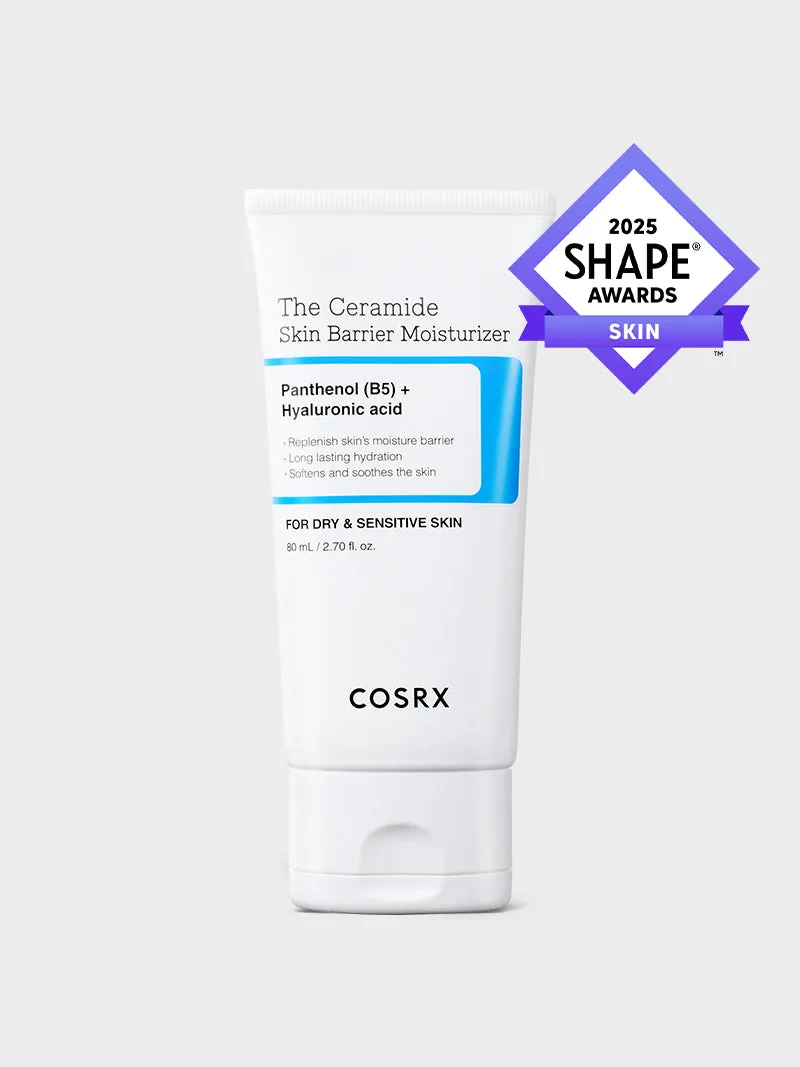


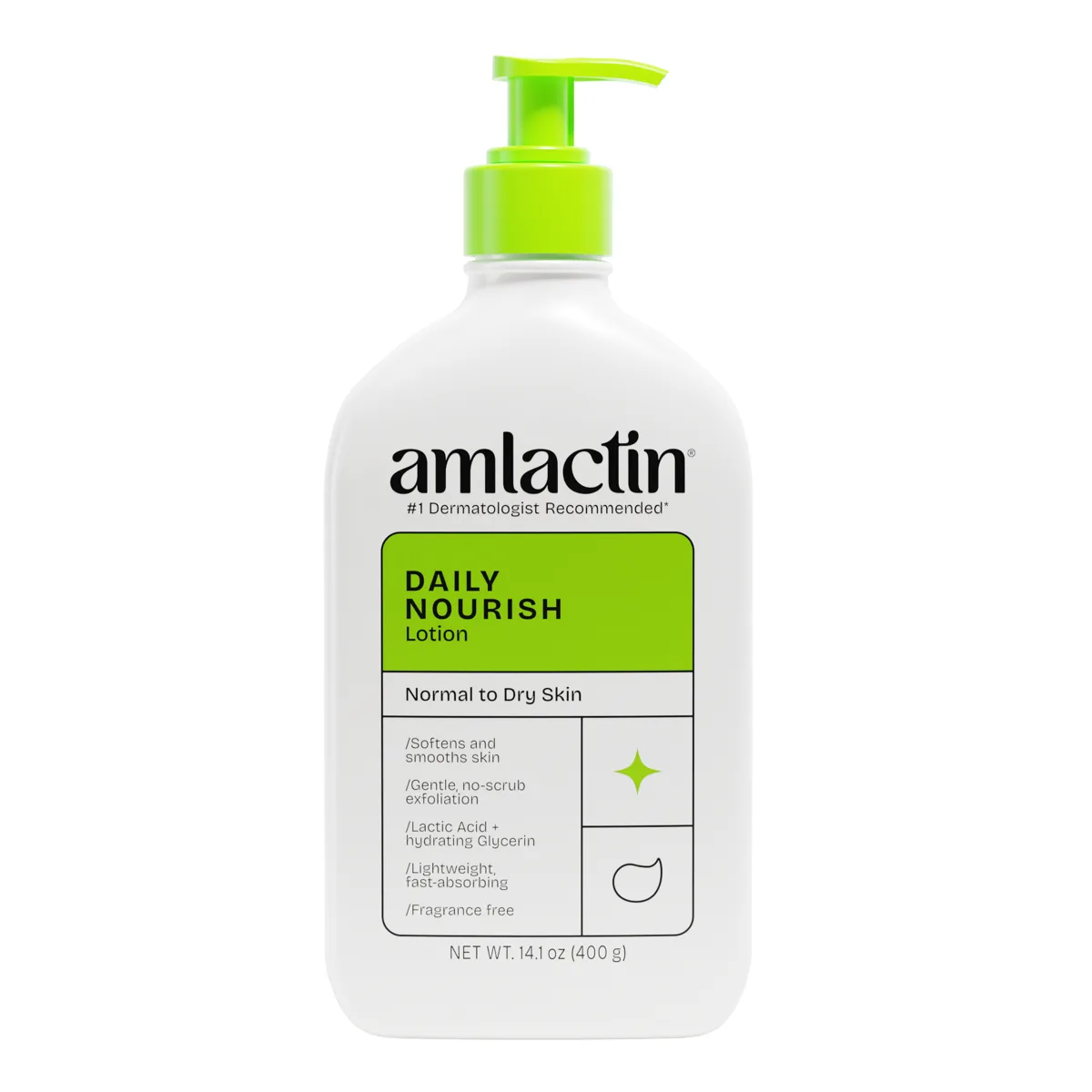
- Routine The Smarter Skincare Routine in Your 50s and Beyond The assembled version of the four-item routine argued for here
- Routine Menopause Skincare Routine for Dry, Changing Skin The transition years that set up this stage
- Ingredient Cholesterol The barrier lipid most routines omit from the trio
- Ingredient Urea (Carbamide) Humectant-keratolytic for retained scale on limbs
- Question Does my skin need a break or a detox from actives? The break question, which answers differently after fifty
- Question If one brightener works, won't four work faster? Why stacking actives doesn't accelerate results
References
- The aged epidermal permeability barrier. Structural, functional, and lipid biochemical abnormalities in humans and a senescent murine model — Journal of Clinical Investigation, 1995
- Comparative efficacy of topical interventions for facial photoaging: a network meta-analysis — Scientific Reports, 2025
- Aging-associated alterations in epidermal function and their clinical significance — Aging, 2020
- Associations between skin barrier characteristics, skin conditions and health of aged nursing home residents: a multi-center prevalence and correlational study — BMC Geriatrics, 2017
Every cited link is verified to resolve to the paper named. Where a source could not be independently confirmed, it is listed without a link rather than pointing you somewhere wrong.
Frequently asked
Why does my skin measure as normal but feel permanently irritated?
Because resting measurements miss the problem. Baseline water loss in aged skin is normal or even below normal; the deficit only appears once the barrier is challenged, when it breaks with fewer insults and repairs at a fraction of the speed. Researchers who ran that comparison concluded that assessing aged barrier function at rest is actively misleading.
Is it really necessary to give up glycolic acid after fifty?
Not necessary, but it is usually the weakest use of a limited irritation budget. In a network meta-analysis of 23 trials, glycolic acid led on roughness but carried higher adverse-event risk, while tretinoin covered several outcomes with the most favourable safety profile. If you can only afford one active, the retinoid buys more per unit of disruption.
How often should a retinoid go on at this stage?
Start at two nights a week and hold that for a full month before adding a third. Given that a moderate insult can take the better part of a week to resolve in older skin, the recovery interval between applications is doing as much work as the drug itself. Increasing frequency reliably increases irritation without proportionally increasing benefit.
Why does the same moisturiser stop being enough in my sixties and seventies?
Because the deficit is lipid quantity, not water. Total stratum corneum lipid falls by roughly a third with age and the lamellar sheets that do the sealing are reduced in number, so a humectant-led product has less structure to work with. Creams built on ceramides with cholesterol and fatty acids address the shortfall rather than masking it.
Is dry skin in older age actually a medical issue or just a cosmetic one?
Medical, past a point. In a study of 223 long-term care residents with a mean age of 83.6, xerosis was present in 99.1%, with skin tears in 6.3%. Untreated dryness itches, gets scratched, fissures and progresses to eczematous dermatitis — which is why emollients at that stage are treatment rather than grooming.
Will a retinoid make my skin thicker again?
It will improve fine wrinkles, mottled pigmentation and surface texture, which is genuinely worth having and is well supported by trials. It will not restore dermal thickness or reverse the volume and bone changes that alter facial shape after menopause. Stacking more serums does not close that gap, and expecting it to is how people end up over-treated and irritated.