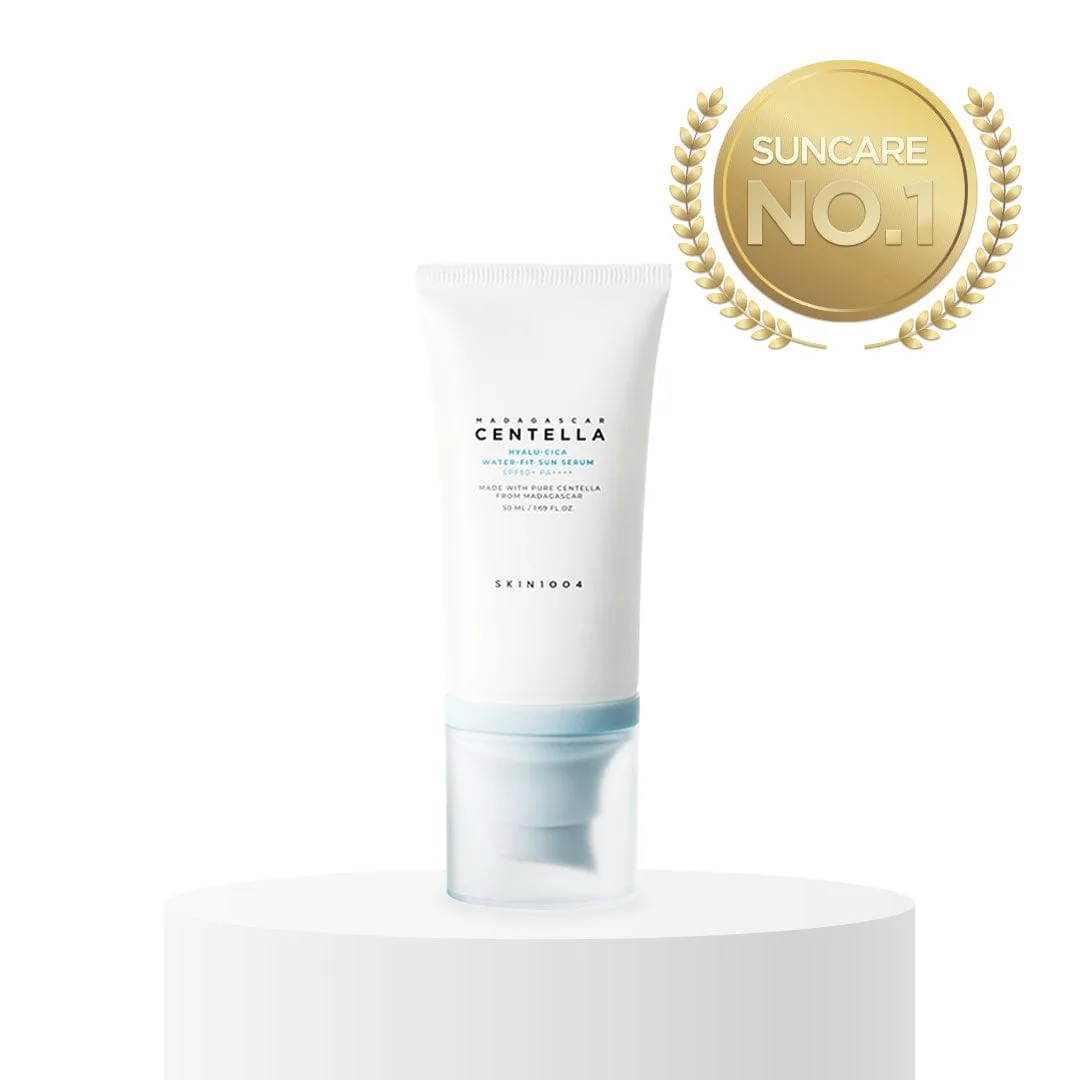
Most high-SPF organic-filter sunscreens feel like heavy cream on the face. This one delivers the same four-filter protection system in a genuinely serum-textured base, with centella and panthenol doing real calming work alongside the UV filters rather than being a marketing afterthought. It's one of the lightest-feeling SPF 50+ organic sunscreens in its price bracket.
One of the lightest-feeling SPF 50+ organic-filter sunscreens in its price bracket, delivering a classic four-filter U.S.-compliant system in a genuinely watery serum base. No white cast, minimal greasiness, and enough centella and panthenol to support sensitive-leaning skin without compromising the protection story.
Note: This sunscreen has been on the market for about two years with moderate but growing review volume. Our assessment reflects the available feedback and ingredient analysis; scoring may be revised as more long-term data from Western markets becomes available.
Verdicts
How well it fits each concern
Verdict by concern tap a concern for the case
Falls shortfor Sun DamageIn your profileYou chose · Falls short for sun damage: no adequate UVA filter in the ingredient list.Limited evidenceGentle238 reviews collected
The case for it
Tocopherol has early or mechanistic evidence for this concern, not trial-backed standing.
It is plausibly present at a working level, though the concentration is not declared.
The formula carries none of the triggers this concern is sensitive to.
What would change this: A declared concentration would move this to a firmer reading of the dose.
Same rule for everyone. “Falls short” is the verdict on 94 of 45,024 concern verdicts across the catalog; rule P5 decided 94 of them.
Unchanged since September 5, 2026, engine 5.1.1.
Falls shortfor AgingIn your profileYou chose · Falls short for aging: no adequate UVA filter in the ingredient list.Limited evidenceGentle238 reviews collected
The case for it
Tocopherol has early or mechanistic evidence for this concern, not trial-backed standing.
It is present below the studied range.
The formula carries none of the triggers this concern is sensitive to.
What would change this: A concentration inside the studied range would raise this a step.
Same rule for everyone. “Falls short” is the verdict on 94 of 45,024 concern verdicts across the catalog; rule P5 decided 94 of them.
Unchanged since September 5, 2026, engine 5.1.1.
Falls shortfor HyperpigmentationIn your profileYou chose · Falls short for hyperpigmentation: no adequate UVA filter in the ingredient list.Not yet assessedGentle238 reviews collected
The case for it
Panthenol has no evidence row yet for this concern — it is in the research queue.
The formula carries none of the triggers this concern is sensitive to.
What would change this: A researched evidence row for the lead active would replace this with a verdict.
Same rule for everyone. “Falls short” is the verdict on 94 of 45,024 concern verdicts across the catalog; rule P5 decided 94 of them.
Unchanged since September 5, 2026, engine 5.1.1.
Good choicefor DehydrationIn your profileYou chose · Panthenol (Vitamin B5) is a reference standard by mechanism for dehydration; this serum carries it high in the ingredient list.Moderate evidenceGentle238 reviews collected
The case for it
Panthenol has trial-supported standing for this concern.
It is present at an effective concentration, declared or high in the ingredient list.
The formula carries none of the triggers this concern is sensitive to.
Same rule for everyone. “Good choice” is the verdict on 9,564 of 45,024 concern verdicts across the catalog; rule R5 decided 9,072 of them.
Unchanged since September 5, 2026, engine 5.1.1.
R5 — Trial-supported or guideline-supported active, adequately or plausibly dosed. · the full register
Carrying active
Panthenol
Standing
supported — its mechanism is established
Form
adequate — studied range 2.5%, from the trials on the row; needs leave-on contact
Tolerability
gentle
Row checked
against its sources on July 17, 2026 (evidence table ev-2026.09-r228)
The studies behind the evidence row
Cosmetic Ingredient Review assessment of panthenol / dexpanthenol — humectant and moisturizer that raises stratum-corneum water content — reference work
Falls shortJudged as a sunscreen, it comes up short on: UVA coverage. Not measured from the label: pleasant enough to actually use.
A verdict is DermApproved’s assessment of how well a product’s ingredients fit a concern — never a claim about what the product treats. Evidence dots and collected reviews sit beside it and are never blended in.
Rules 0.5.1 · evidence table ev-2026.09-r228 · how we decide
Assessment
Pros & Cons
Pros
✓ Genuinely lightweight serum texture for a high-SPF organic sunscreen
✓ No white cast on any skin tone
✓ Four FDA-approved filters delivering SPF 50+ broad-spectrum coverage
✓ Centella and panthenol add real calming support
✓ Fragrance-free and alcohol-free base
✓ Layers cleanly under makeup and silicone primers
✓ Strong value per month versus Western equivalents
Cons
✗ Can sting sensitive eyes during heavy sweating
✗ Homosalate concentration may concern users following European regulatory discussions
✗ SPF tested to Korean standards rather than U.S. FDA OTC methodology
✗ Contains silicones, not suitable for silicone-averse users
✗ Not the best pick for ultra-sensitive or reactive skin
Review
Full Review
The sunscreen that works best is the one you actually put on your face in the amount the label recommends. This is an underrated truth in the skincare world, which otherwise focuses on filter debates and nanoparticle discussions. The honest problem most people face is simpler: they hate the texture of their sunscreen, so they skimp on the dose, so they get maybe a third of the labeled SPF coverage, so they end up with sun damage anyway. The SKIN1004 Hyalu-Cica Water-Fit Sun Serum addresses this compliance problem more effectively than most products in its category, and it's the primary reason to consider it.
The filter system is the same one you'd find in a typical American department-store sunscreen: avobenzone at 2.7% for UVA, homosalate at 13.6% and octisalate at 4.5% for UVB, and octocrylene at 9% to stabilize the avobenzone (which degrades in sunlight without it) and boost UVB coverage. Nothing exotic — just a well-characterized, FDA-approved quartet that reliably delivers SPF 50+ when applied correctly. What's different is the vehicle. Rather than the typical emulsion that makes organic-filter sunscreens feel like thick cream, SKIN1004 has formulated this into a thin, watery serum that absorbs in under ninety seconds and leaves behind a satin finish you could genuinely mistake for a hydrating essence. That's not magic — it's careful work with silicones, elastomers, film-forming polymers, and a butyloctyl salicylate solvent that distribute the filters evenly without the heavy oil-in-water structure traditional SPFs rely on. And this is the place to retire a persistent worry: a serum texture doesn't mean weaker protection. Texture is about the vehicle, not the actives; the SPF comes from the film the filters form on the skin, which here rates a full 50+.
The supporting cast does real work. Panthenol appears at a relatively generous mid-list position and contributes to the sunscreen's comfort on reactive or post-procedure skin. Centella asiatica extract is dosed below the 50% levels of SKIN1004's dedicated centella moisturizers but meaningfully above the trace decoration you find in most sunscreens — enough to earn its place in the product name. A triple hyaluronic acid complex adds surface hydration that explains the 'water-fit' marketing, while purslane, green tea, and rice, oat, and soybean extracts round out the calming-antioxidant back half. Tocopherol contributes antioxidant support for free radicals generated by UV that slip past the filter layer. And the whole formula is fragrance-free and alcohol-free, which is a meaningful gesture in a sunscreen category where fragrance is often used to mask the inherent smell of the filters.
On skin, this feels genuinely different from most organic-filter sunscreens. It goes on thin, spreads like a hydrating essence, and doesn't leave the tight, slightly stiff feeling that cheap chemical SPFs tend to impart. There's no white cast — an automatic win for anyone with deeper skin tones who's been burned (literally and figuratively) by mineral sunscreens. It layers cleanly under most foundations without pilling, and it doesn't interfere with silicone-based primers. The satin finish is neither matte nor dewy — a useful middle ground that works under makeup or bare. It's earned a real following on the strength of that feel: roughly 2,400 reviews averaging 4.5 stars, and a recurring presence in r/AsianBeauty comparison threads, with the weightless texture and no-cast finish the near-universal praise.
The honest trade-offs are the ones you'd expect from the filter system. Organic sunscreens can sting sensitive eyes during heavy sweating, and this one is no exception — if you're doing serious outdoor sports in humid weather, a dedicated sport stick or a mineral sunscreen around the eye area is a smart adjunct. Extremely reactive skin — particularly people who've shown sensitivity to homosalate or octocrylene in the past — should patch test or consider a mineral alternative. On homosalate specifically, it's worth being level-headed: it's an FDA-approved filter used for decades, and while European regulators have debated its maximum concentration, the 13.6% here sits within currently approved global use levels. The silicones also mean it isn't a fungal-acne-safe pick or a fit for the silicone-averse. And while the filter list consists of all FDA-approved ingredients, the SPF 50+ rating is established under Korean MFDS testing standards, which the brand imports under cosmetic regulations rather than U.S. OTC drug rules. Functionally, this is mostly an academic distinction; practically, it means if you need a sunscreen tested specifically to FDA SPF methodology, this isn't technically one, even though its filters are all U.S.-legal.
On value, a 50ml tube runs around $15-19 and lasts most users about two to three months if they're applying the recommended quarter-teaspoon dose daily to face and neck. That per-month cost is well below most Western drugstore equivalents with comparable cosmetic elegance, and meaningfully below luxury brand sunscreens that charge $40+ for less filter in similar textures. For most skin types and most daily use cases, this is one of the smarter SPF picks in the K-beauty category and a reliable choice for anyone who's struggled with heavier traditional sunscreens.
Formula
Key Ingredients
The hero actives that drive this product's performance.
The SPF 50+ rating in this serum comes from a quartet of organic filters: 2.7% avobenzone for UVA, 13.6% homosalate and 4.5% octisalate for UVB, and 9% octocrylene to stabilize the avobenzone and boost UVB coverage. It's a classic U.S.-compliant filter blend delivered in a watery serum base rather than the heavier cream format these filters usually ship in.
Regulator-approvedfor Sun Damage · emerging certainty
Dosed mid-list as the brand signature ingredient, centella contributes calming and antioxidant support that pairs thematically with daytime sun exposure. It's not dosed at the 50% levels of SKIN1004's dedicated centella moisturizers, but enough to differentiate this from a generic organic-filter sunscreen.
Three HA forms — hydrolyzed sodium hyaluronate, sodium hyaluronate, and hyaluronic acid — sit near the middle of the list and are responsible for the 'water-fit' texture promise. They keep the sunscreen feeling hydrating on skin rather than that classic dehydrated, stiff feeling cheap chemical SPFs can leave behind.
Established mechanismfor Dehydration · established mechanism
Dosed relatively high up the list at what looks like 2-3%, panthenol acts as both a humectant and a barrier-soothing agent, making this sunscreen more tolerable for post-procedure or reactive skin than a plain filter-heavy formula would be.
Established mechanismfor Dehydration · established mechanism
A low-dose lipid-soluble antioxidant included to support the sunscreen story — vitamin E neutralizes free radicals generated by UV that slip past the filter layer. A small but thoughtful inclusion that complements rather than replaces the SPF itself.
Limitedfor Sun Damage
Ingredient standings describe the active at treatment-level doses and
vehicles; this product's own condition grades weigh its actual formula.
Apply generously (at least 1/4 teaspoon for the face) as the final step of your morning routine, before makeup. Reapply every two hours during extended sun exposure. Layer makeup over the top once absorbed.
Results Timeline
Immediate broad-spectrum sun protection upon application. Cumulative photo-aging and hyperpigmentation prevention benefits accumulate over months to years of consistent daily use.
The filter system in this sunscreen is among the best-characterized in the organic SPF world. Avobenzone (butyl methoxydibenzoylmethane) is the primary UVA-I filter in U.S. sunscreens, with extensive peer-reviewed data on its photoprotection performance — its well-known photoinstability is addressed here by octocrylene, which has been shown in numerous studies to stabilize avobenzone and prevent UV-induced degradation. Homosalate and octisalate are salicylate UVB filters with decades of use history and strong absorption in the UVB range. The combined four-filter system delivers broad-spectrum coverage extending into UVA-I when formulated at these concentrations, and SPF 50+ claims from this filter combination are well-supported by in vitro and in vivo testing methodologies when applied at the standard 2 mg/cm² dose. Research has consistently shown that real-world SPF compliance is significantly below labeled value because users underapply — studies in the Journal of the American Academy of Dermatology have documented typical application at 25-50% of the tested dose — which means the cosmetic elegance of a sunscreen matters as much for actual protection as the filter system. The serum vehicle in this product is explicitly designed to encourage adequate application. The centella asiatica content adds calming and antioxidant benefits that have been described in dermatology and ethnopharmacology literature, and tocopherol contributes lipid-soluble antioxidant defense against UV-generated reactive oxygen species, a role well-documented in photoprotection research. The formula does not claim water resistance, which is accurate — the polymer system supports a uniform film but is not rated for significant water exposure.
Dermatologist Perspective
Dermatologists generally consider the avobenzone + octocrylene + homosalate + octisalate combination a gold-standard organic filter system for daily-wear sunscreens, with broad-spectrum UVA/UVB coverage when properly formulated. Dermatology professionals commenting on K-beauty sunscreens have noted that texture and cosmetic elegance are as important as filter selection for real-world SPF compliance, and products like this one address the underapplication problem by making the sunscreen feel like a lightweight essence. For daily use in patients not prone to homosalate sensitivity, this is commonly considered a reasonable recommendation. Dermatologists typically caution that any organic-filter sunscreen should be patch tested by users with very reactive or rosacea-prone skin, and they often suggest mineral alternatives for those populations or for children. For standard daytime use on healthy adult skin, this product fits well into most dermatologist-recommended photoprotection routines.
Guidance
Usage & Recommendations
How to Use
Apply as the final step of your morning routine after moisturizer and before makeup. Use the two-finger rule or approximately 1/4 teaspoon for the face alone — underapplication is the main reason labeled SPF values are rarely achieved in real use. Spread evenly across face, ears, and neck, paying attention to the hairline and around the nose. Wait 60-90 seconds for full absorption before applying primer or foundation. Reapply every two hours during extended sun exposure, or after swimming or heavy sweating. This is not a water-resistant formula.
Value Assessment
At roughly $15-19 for 50ml, this sunscreen offers two to three months of daily face-and-neck application at the proper dose, which puts it well below Western drugstore equivalents with similar cosmetic elegance and meaningfully below luxury brand sunscreens in the same texture category. The tube packaging is efficient and doesn't waste product. What you're paying for is genuinely the formulation work — the difficulty of turning a heavy four-filter system into a watery serum is real, and this product earns its price premium over simpler cream sunscreens. For users who've struggled with compliance because they hate the feel of their sunscreen, the value calculation is straightforward: this is the sunscreen you'll actually apply correctly, which makes it more protective in practice than a stronger-looking product you underuse.
Who Should Buy
Anyone with combination, normal, oily, or moderately dry skin who wants a lightweight daily sunscreen that doesn't feel like a mask on the face. It's especially well-suited to people who've underapplied heavier sunscreens in the past due to texture complaints, and to anyone with deeper skin tones who's been frustrated by white-casting mineral alternatives.
Who Should Skip
Those with highly reactive or rosacea-prone skin who've had past reactions to organic filters should start with a mineral sunscreen instead. People doing intense sports or swimming need a water-resistant formula. And anyone who specifically wants a sunscreen tested under U.S. FDA SPF methodology should look at American-market products, since this one is rated under Korean MFDS standards.
Ready to try SKIN1004 Hyalu-Cica Water-Fit Sun Serum SPF 50+?
Watery serum that spreads like a hydrating essence and absorbs within 60-90 seconds to a satin finish
Scent
Essentially fragrance-free with a faint clean note
Packaging
Plastic tube with narrow nozzle for controlled dispensing; 50ml
Finish
satinlightweightfast-absorbinginvisiblenon-greasy
What to Expect on First Use
Applies cool and surprisingly watery for a high-SPF product. Absorbs faster than most organic-filter sunscreens. May slightly sting eyes during heavy sweating, which is common for chemical SPFs. No visible white cast on any skin tone.
How Long It Lasts
About 2-3 months of daily face-and-neck use if applying the recommended 1/4 teaspoon dose
The Hyalu-Cica Water-Fit Sun Serum is SKIN1004's second-generation sun protection product, building on the texture lessons from their original Madagascar Centella sunscreen line and refining the filter system for a more water-like application experience. It reflects the K-beauty trend toward sunscreens that feel like hydrating essences rather than traditional creams.
About SKIN1004 Established Brand (5–20 years)
SKIN1004 launched in 2016 with a single-ingredient focus on Madagascar-sourced centella asiatica. The brand has grown through the global K-beauty channel and is increasingly recognized in Western markets, though its SPF filings follow Korean MFDS (not U.S. FDA) testing standards.
Brand founded: 2016 · Product launched: 2023
Myth vs. Reality
Common Myths
Myth
Serum-textured sunscreens don't provide real SPF protection.
Reality
The texture has nothing to do with the filter performance. This serum contains four well-characterized UV filters at concentrations that deliver SPF 50+ in the film formed on the skin — texture is about vehicle formulation, not active efficacy.
Myth
Homosalate is dangerous and should be avoided.
Reality
Homosalate is an FDA-approved UV filter used in sunscreens for decades. Regulatory reviews have raised questions about maximum allowable concentrations in Europe, but at the 13.6% used here, it's within currently approved global use levels.
FAQ
Frequently Asked Questions
How is this different from SKIN1004's Madagascar Centella sunscreen?
The Madagascar Centella Air-Fit Sun Cream has a cream texture and leans more heavily on centella as the calming hero. This Hyalu-Cica version has a much lighter, more serum-like texture and adds hyaluronic acid alongside the centella, making it a better pick for oily and combination skin types who find cream sunscreens heavy.
Is this sunscreen FDA approved for U.S. sale?
The SPF 50+ rating on this product is tested to Korean MFDS standards, not U.S. FDA standards. The filter system itself — avobenzone, homosalate, octisalate, and octocrylene — consists of all FDA-approved ingredients, but the sunscreen as a finished product is marketed in the U.S. as a cosmetic imported under different regulations. It works as labeled; it simply isn't a U.S.-OTC-approved drug.
Will this leave a white cast?
No. Unlike mineral sunscreens, this organic-filter formula leaves no white cast on any skin tone. It absorbs to a virtually invisible satin finish, which is one of the main reasons it's become popular in K-beauty SPF roundups.
Does Hyalu-Cica Water-Fit Sun Serum SPF 50+ work for easily-irritated skin?
It's well-tolerated for most moderately sensitive skin thanks to the centella and panthenol content and the fragrance-free base. However, organic filters (especially homosalate) can occasionally cause stinging or reactions in extremely reactive skin, in which case a mineral sunscreen is a safer starting point.
Can I wear this under makeup?
Yes — the serum texture layers cleanly under most foundations and doesn't pill with silicone-based makeup. Allow 60-90 seconds for full absorption before applying primer or foundation.
Does it sting the eyes?
It can sting during heavy sweating, which is a common issue with most chemical sunscreens. For sports or humid-weather use where you'll sweat heavily, a dedicated stick or water-resistant formula may work better around the eye area.
How much should I apply?
Use the two-finger rule — two full lines of product along your index and middle fingers — or about 1/4 teaspoon for the face alone. Anything less and you're not getting the labeled SPF 50+ protection.
Reviews
What Reviewers Tend to Say
Recurring themes our editors read across retailer reviews of this product — summaries in our words, not quotations, and not a substitute for your own patch test.
Common Praise
Genuinely lightweight serum texture
No white cast on any skin tone
Layers cleanly under makeup
Calming centella and panthenol feel
Common Complaints
Can sting sensitive eyes during heavy sweat
Homosalate content not ideal for ultra-sensitive skin
SPF tested to Korean standards, not U.S. FDA
Notable Endorsements
Featured in K-beauty sunscreen roundupsPopular in r/AsianBeauty comparison threads
We have spent years praising Japanese filter chemistry while ignoring that the filter is the last line of a system built out of fabric, shade and timing — the part that needs no importing and does not depend on you remembering to reapply.
Every cica, calming, and barrier product leans on the same three ingredients, and the real mechanisms are far more specific — and more limited — than 'soothing' lets on.
Social media says every full upper lip is migrated product. The industry would rather not discuss it at all. Both positions bury the thing that actually matters: one filler class has an eraser and the others do not.
Aug 29, 2026· 9 min
Questions people ask about Hyperpigmentation
Verified answers from our questions library — the nuance a product page cannot carry.
Products, answers, therapy guides, tools and articles in one search. Brand names,
slang and abbreviations all work — accutane finds isotretinoin, bacne finds truncal acne.