


Homemade Sunscreen Fails for a Reason You Cannot Fix in a Kitchen
Every other DIY mistake announces itself. This one stays silent for eight hours, and the equipment that would prevent it does not fit on a countertop.
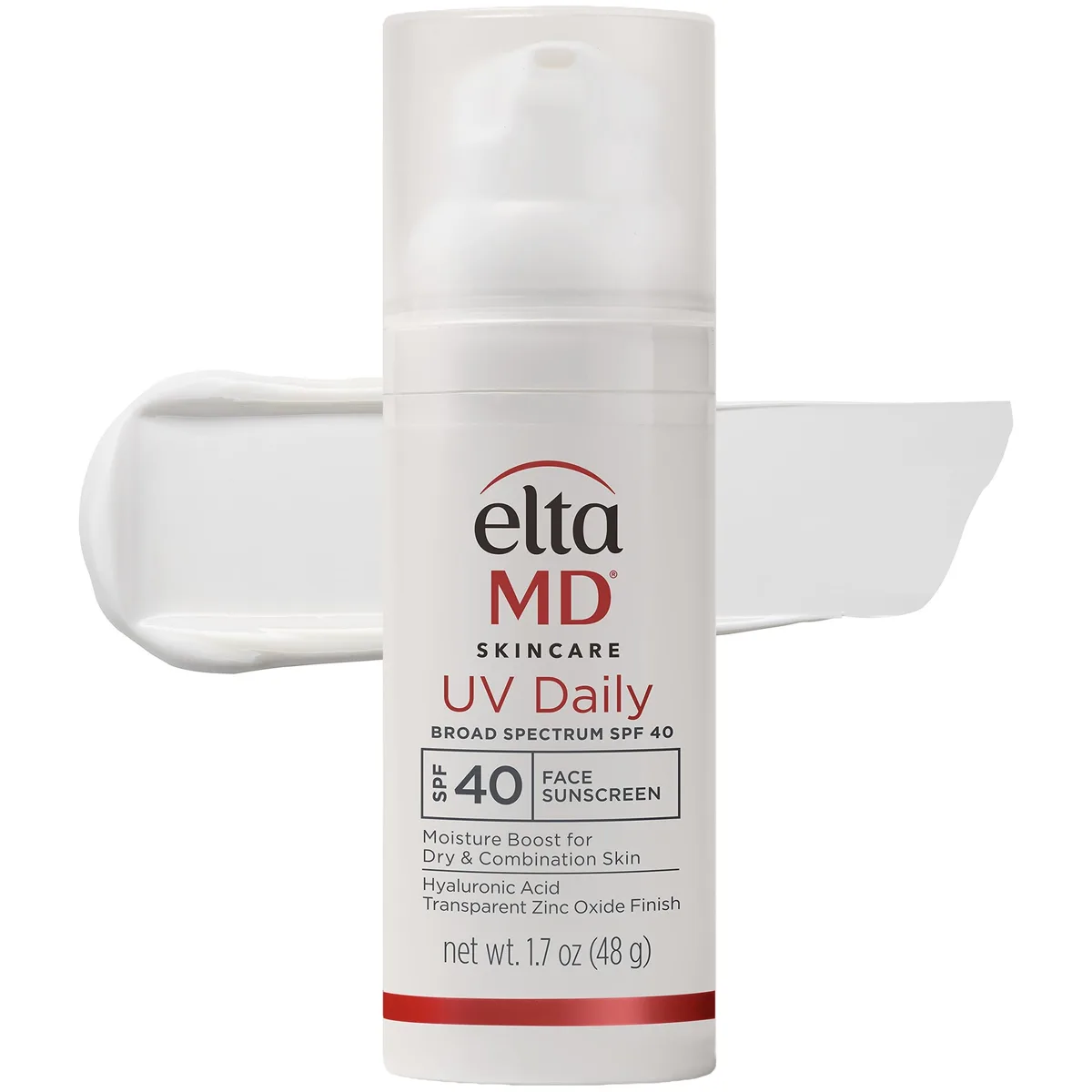
Within the EltaMD UV lineup — already arguably the most-prescribed sunscreen family in U.S. dermatology — UV Daily is the one specifically engineered for dry and dehydrated skin. The petrolatum-and-hyaluronic-acid base distinguishes it from the brand's lighter UV Clear (built for acne-prone skin) and the heavier UV Physical (built for sensitive skin and post-procedure recovery). It's a hybrid mineral-chemical formula at SPF 40 designed to wear like a moisturizer.
The moisturizing entry in EltaMD's near-canonical UV sunscreen family, built specifically for dry and dehydrated skin with a petrolatum-and-hyaluronic-acid base under a hybrid zinc oxide plus octinoxate SPF system. It's lighter than UV Physical, more hydrating than UV Clear, and one of the few daily sunscreens you can credibly use as your only daytime moisturizer. The reef-restricted chemical filter is the main caveat.
The case for it
Same rule for everyone. “Full protection” is the verdict on 2,288 of 45,024 concern verdicts across the catalog; rule P1 decided 2,232 of them. Unchanged since September 5, 2026, engine 5.1.1.
Brand or formulator? Disclose a concentration or correct a fact →
The studies behind the evidence row
The case for it
What would change this: A researched evidence row for the lead active would replace this with a verdict.
Same rule for everyone. “Full protection” is the verdict on 2,288 of 45,024 concern verdicts across the catalog; rule P1 decided 2,232 of them. Unchanged since September 5, 2026, engine 5.1.1.
Brand or formulator? Disclose a concentration or correct a fact →
The case for it
Same rule for everyone. “Strong choice” is the verdict on 1,459 of 45,024 concern verdicts across the catalog; rule R2 decided 892 of them. Unchanged since September 5, 2026, engine 5.1.1.
Brand or formulator? Disclose a concentration or correct a fact →
The studies behind the evidence row
The case for it
What would change this: A declared concentration would move this to a firmer reading of the dose.
Same rule for everyone. “Good choice” is the verdict on 9,564 of 45,024 concern verdicts across the catalog; rule R5 decided 9,072 of them. Unchanged since September 5, 2026, engine 5.1.1.
Brand or formulator? Disclose a concentration or correct a fact →
The studies behind the evidence row
Does the jobDoes what a sunscreen is for: UVA coverage, kind to the skin wearing it. Not measured from the label: pleasant enough to actually use.
A verdict is DermApproved’s assessment of how well a product’s ingredients fit a concern — never a claim about what the product treats. Evidence dots and collected reviews sit beside it and are never blended in. Rules 0.5.1 · evidence table ev-2026.09-r228 · how we decide
Walk into a dermatologist's office in any major U.S. city and there's an excellent chance EltaMD is the brand they recommend by name when patients ask which sunscreen to use. Not in the way derms recommend 'a CeraVe' or 'a La Roche-Posay' as a category. Specifically EltaMD, by SKU. UV Clear for the acne patient, UV Physical for the post-procedure or rosacea patient, UV Daily for the patient with dry skin who'd otherwise skip sunscreen because it feels too drying or too matte. That kind of brand-specific clinical recommendation reflects something useful: the brand has spent nearly four decades formulating sunscreens that solve specific skin-type problems rather than chasing a one-size-fits-all daily SPF formula. UV Daily is the moisturizing problem-solver in that lineup. The active ingredient system is a hybrid: 9% transparent zinc oxide carrying the broad-spectrum mineral protection, with 7.5% octinoxate stacked on for additional UVB coverage. This combination is what lets the formula hit SPF 40 with a relatively lightweight texture — a pure-mineral SPF 40 typically needs significantly more zinc, which means white cast, heavy texture, or both. The hybrid approach trades a small ingredient-purity premium (octinoxate is not reef-safe and is restricted in some marine-protected areas) for meaningful cosmetic improvement. What makes the formula distinctly hydrating, though, isn't the SPF system. It's the inactive ingredient base. Petrolatum sits high in the list as an occlusive emollient. Dimethicone provides slip and a smoothing finish. Sodium hyaluronate is folded in as a humectant. Cetearyl alcohol and isopropyl palmitate build the emollient phase. The result is a formula that reads more like a daily moisturizer with SPF than a sunscreen with a moisturizing claim. For dry, dehydrated, or mature skin, this matters significantly — most daily sunscreens push that skin type toward visible flaking, tightness, or a need for additional layers underneath. UV Daily is designed to obviate that. The texture in actual use is the calibration check. The lotion dispenses smooth and slightly emollient. It spreads with a small amount of drag — more than a thin gel sunscreen but less than a heavy mineral formula. It settles into a satin, slightly luminous finish within 60-90 seconds. There's a faint white cast that fades on most skin tones but may remain visible on deeper complexions, especially if applied generously enough to actually deliver SPF 40 protection. The skin feels hydrated rather than dry — the entire selling point. Where the formula needs honest framing is the reef-safety question. Octinoxate has been restricted or banned in Hawaii, parts of Mexico, and several other marine-protected destinations because of its documented role in coral bleaching. If you're traveling to those locations, this sunscreen isn't legal at point of use. Even outside of regulatory contexts, some consumers prefer to avoid octinoxate for personal or environmental reasons. EltaMD's pure-mineral SKUs (UV Physical, UV Elements, UV Sport) exist for exactly this reason and are the recommended substitution for travel. The pregnancy framing is similar. Chemical UV filters generally have limited research on systemic absorption during pregnancy, and many obstetric dermatologists default to mineral-only formulas for patients who want to be cautious. UV Daily is not contraindicated during pregnancy, but it's not the first choice within the EltaMD lineup if pregnancy-cautious formulation is the priority. Value is where the product needs context. At $41 for 1.7 oz, you're paying more than drugstore daily SPF (Neutrogena Hydro Boost SPF 50 is around $14, La Roche-Posay Anthelios Mineral SPF 50 is around $36 for a similar volume) but less than luxury brands. The argument for the EltaMD price is the formulation specifics: the hyaluronic acid integration, the petrolatum occlusive base, the hybrid filter system that achieves SPF 40 with lighter texture than a pure mineral could. For people who've tried drugstore SPF and found it too drying or too matte for their skin, the upgrade is worth it. For people who happily use drugstore formulas, the marginal gain doesn't justify the cost. Reapplication is the universal sunscreen problem and it's not solved here. Like any non-spray sunscreen, UV Daily is awkward to reapply over makeup. The product is best understood as your morning SPF layer with a separate touch-up product (a powder, a stick, or a tinted spray) for midday reapplication if you're outdoors. Where UV Daily earns its place in a derm's recommendation list is the specific problem-solving. It's the answer to 'I have dry skin and sunscreen makes it worse.' It's also the answer to 'I'm in my 40s or 50s and need hydration plus SPF in one step.' And it's a genuinely effective product within those use cases, with two decades of clinical track record to support the recommendation. The Skin Cancer Foundation Seal of Recommendation is honest about what it actually means — a basic safety and broad-spectrum efficacy check — but EltaMD has carried it across the UV line for so long that the seal has become part of the brand's identity in dermatology. For the right user, this is one of the more reliably effective daily sunscreens on the market. For the wrong user — oily, acne-prone, traveling to reef-restricted areas, or shopping primarily on price — there are better choices in the EltaMD lineup or elsewhere.
The hero actives that drive this product's performance.
| Ingredient | Function | Evidence |
|---|---|---|
| Transparent Zinc Oxide 9.0% (9.0%) | Provides the bulk of broad-spectrum UVA/UVB protection in this hybrid sunscreen by sitting on the skin's surface and reflecting/absorbing UV — paired here with a lower-than-typical octinoxate dose to keep mineral protection as the primary mechanism while reducing the white cast and heaviness typical of pure-mineral formulas. | Regulator-approved for Sun Damage · limited certainty |
| Octinoxate 7.5% (7.5%) | Functions as a chemical UVB filter alongside the zinc oxide, allowing this formula to hit SPF 40 with a lighter cosmetic feel than a pure-mineral version could achieve at the same protection level. Note this filter is not reef-safe and is banned in some marine-protected areas. | Regulator-approved for Sun Damage · emerging certainty |
| Sodium Hyaluronate | Folded into the lotion phase as a humectant to address the dehydration risk typical of sunscreen formulations — the reason this SKU is positioned for dry and dehydrated skin and why it doubles reasonably well as a daily moisturizer-plus-SPF for that skin type. | Established mechanism for Dehydration · established mechanism |
| Petrolatum | Occlusive emollient at a high position in the ingredient list, sealing in the hyaluronic acid and reducing transepidermal water loss across the wear of the sunscreen — the structural reason this formula reads as 'moisturizing sunscreen' rather than a typical dry, matte SPF. | Regulator-approved for Dryness · established mechanism |
Ingredient standings describe the active at treatment-level doses and vehicles; this product's own condition grades weigh its actual formula.
Active Ingredients: Octinoxate 7.5%, Transparent Zinc Oxide 9.0%. Inactive Ingredients: Water, Petrolatum, Isopropyl Palmitate, Dimethicone, Cetearyl Alcohol, Oleth-3 Phosphate, Phenoxyethanol, Hydroxyethyl Acrylate/Sodium Acryloyldimethyl Taurate Copolymer, Polyisobutene, Cetearyl Glucoside, Polyether-1, Butylene Glycol, PEG-7 Trimethylolpropane Coconut Ether, Sodium Hyaluronate, Iodopropynyl Butylcarbamate, Tocopheryl Acetate, Triethoxycaprylylsilane.
sunscreen
AM
Final step in your morning routine before makeup. Apply a generous quarter-teaspoon to the face and neck, let it absorb for 60-90 seconds, then layer foundation or tinted product over it. Reapply every 2 hours if outdoors. Pairs well with hydrating serums underneath; can be layered over actives.
Immediate UV protection (15 minutes after application) and visible hydration. Reduced sun damage and prevention of photoaging compounds over months and years of daily use — the long-game benefit no other product category can match.
The hybrid sunscreen filter architecture in this formula relies on two well-studied UV blockers. Transparent zinc oxide at 9% provides broad-spectrum UVA and UVB protection through a combination of reflection, scattering, and absorption. The micronized 'transparent' grade used here improves cosmetic feel over traditional zinc by minimizing the visible white cast — the technology has been refined significantly since the early 2000s when zinc-oxide sunscreens were nearly impossible to wear cosmetically. Octinoxate (ethylhexyl methoxycinnamate) at 7.5% is a chemical UVB filter that has been in use since the 1950s and is one of the most thoroughly studied UV filters in dermatological literature. It absorbs UVB radiation efficiently and is photostable when properly formulated. Its main limitations are environmental: documented coral bleaching effects have driven regulatory restrictions in Hawaii (2021) and several other marine-protected areas. Hyaluronic acid's role in this formula is supportive rather than primary. Research on humectant integration in sunscreen formulations has shown that sodium hyaluronate at functional concentrations measurably reduces transepidermal water loss compared to non-humectant SPF controls — the mechanism is straightforward (it binds water at the surface) and the effect is reasonably consistent across formulations. The petrolatum occlusive layer reinforces this by preventing the bound water from evaporating. The overall hydration architecture is similar to what makes Vanicream and CeraVe daily SPFs work for dry skin, but the EltaMD execution is specifically formulated rather than incidental. The protection claim itself (SPF 40, broad-spectrum) is FDA-validated through standard testing protocols including the critical wavelength test for UVA coverage. The Skin Cancer Foundation Seal of Recommendation is an independent verification of broad-spectrum efficacy and basic safety, applied across the EltaMD UV line consistently.
Practicing dermatologists routinely recommend EltaMD UV Daily as a first-line sunscreen for patients with dry, dehydrated, or mature skin who report that other daily SPFs feel drying or accentuate fine lines. The petrolatum-and-hyaluronic-acid base is well-tolerated by post-procedure patients recovering from microneedling or laser work, though many dermatologists prefer to switch those patients to the pure-mineral UV Physical for the first week post-procedure when chemical filters are best avoided. UV Daily is also a common recommendation for patients in their 40s and 50s who want hydration and SPF in one step. The brand-level dermatology preference for EltaMD reflects nearly four decades of physician-office distribution and consistent formulation quality across the UV line. Dermatologists generally avoid recommending this specific SKU to acne-prone patients (UV Clear is the standard choice there) or to patients traveling to reef-restricted areas (UV Physical or UV Elements substitute).
Apply a generous quarter-teaspoon (nickel-sized amount) to face and neck as the final step in your morning routine, after serums and any non-SPF moisturizer. For dry skin types, this product can replace a separate daytime moisturizer entirely. Allow 60-90 seconds to settle before applying makeup. Reapply every 2 hours if outdoors, more often if sweating or swimming. For midday touch-ups over makeup, use a powder or stick SPF rather than the lotion. Avoid the eye area; if it gets in your eyes, rinse thoroughly. Store at room temperature away from heat and direct sunlight.
At $41 for 1.7 oz, this SKU prices below luxury daily SPF brands but above drugstore alternatives. The price reflects EltaMD's physician-distribution model and the specifically engineered hydrating base — petrolatum, dimethicone, and hyaluronic acid at functional levels are meaningfully more expensive than the dimethicone-only bases used in many drugstore daily SPFs. For dry-skinned shoppers who've found drugstore options drying, the upgrade is justified; with daily face-and-neck application a tube lasts 2-3 months, putting the per-day cost in the $0.50-$0.70 range. For shoppers happy with drugstore SPF performance, the marginal gain isn't worth the price gap.
This sunscreen suits anyone with dry, dehydrated, normal, or mature skin who wants daily SPF that also functions as a moisturizing layer. It's especially well-matched to people in their 40s and 50s, anyone whose skin feels tight or flaky on drugstore daily SPFs, and patients of dermatology offices that have already recommended EltaMD as a brand. It's a strong choice for daily indoor-to-light-outdoor use.
Give it a miss if you have oily or acne-prone skin (UV Clear is the better EltaMD choice), if you're traveling to reef-restricted areas where octinoxate isn't allowed, if you're pregnancy-cautious about chemical UV filters, if you need water-resistance for athletic or outdoor activity, or if you're shopping primarily on price and find drugstore daily SPFs work well for your skin.
Ready to try EltaMD UV Daily Broad-Spectrum SPF 40?
Buy at Amazon ♥Smooth, slightly emollient lotion that spreads easily with minimal drag — heavier than EltaMD's UV Clear but lighter than UV Physical
Effectively unscented — no added fragrance, with a faint underlying mineral-sunscreen note from the zinc oxide and petrolatum base
Squeeze tube with a flip cap; protects the formula from light degradation better than jar packaging would.
Spreads smoothly with a slight emollient pull, settles into a satin, slightly luminous finish within 60-90 seconds. Faint white cast that fades on most skin tones but may remain visible on deeper complexions. No stinging, no tingling. Most users notice that skin feels hydrated rather than dry — the formula's main selling point.
Daily use makes one last about 2-3 months to face and neck
All Year
EltaMD's UV line traces back to the brand's founding in 1988, but UV Daily as a distinct SKU was introduced around 2008 to fill a gap in the lineup for moisturizing daily sunscreen. The Skin Cancer Foundation Seal of Recommendation has been consistently maintained, and the product has been a dermatology-office distribution staple for nearly two decades — most users discover it through their derm rather than retail browsing.
EltaMD was founded in 1988 and has spent decades as a near-default sunscreen prescription in U.S. dermatology offices. The brand's UV line is among the most-recommended physician-distributed sunscreens, with Skin Cancer Foundation Seal of Recommendation on multiple SKUs and consistent presence in derm-led press coverage.
EltaMD sunscreens are all pure mineral.
Several EltaMD UV SKUs including UV Daily and UV Clear are hybrid mineral-chemical formulas — they combine zinc oxide with a chemical filter (octinoxate in UV Daily) to achieve higher SPF with a lighter cosmetic feel. The Physical and Elements SKUs are the truly mineral-only options.
Higher SPF is always better.
SPF 30+ blocks ~97% of UVB rays; SPF 50+ blocks ~98%. The marginal improvement from SPF 40 to SPF 50 is small. What matters more is generous application (most people apply 25-50% of the tested amount) and reapplication every 2 hours when outdoors.
UV Daily SPF 40 is formulated for dry and dehydrated skin with petrolatum and hyaluronic acid in a more emollient base. UV Clear SPF 46 is formulated for acne-prone and oily skin with niacinamide instead of petrolatum, in a thinner texture. Both are hybrid mineral-chemical formulas, but they're designed for opposite skin concerns.
No — the formula contains 7.5% octinoxate, which is restricted or banned in several marine-protected areas including Hawaii and parts of Mexico. For reef-safe travel, use EltaMD's UV Physical, UV Elements, or UV Sport mineral formulas instead.
Yes — for many dry and combination skin types, the petrolatum, dimethicone, and hyaluronic acid base provides enough hydration to skip a separate daytime moisturizer. Apply a generous amount to face and neck after your serums.
The octinoxate component is a chemical UV filter that some pregnancy-cautious dermatologists recommend avoiding due to limited research on systemic absorption during pregnancy. EltaMD's UV Physical or UV Elements pure-mineral formulas are typically suggested as safer alternatives during pregnancy. Always confirm with your OB.
Yes — both versions exist. The tinted formula adds iron oxides for a sheer skin-toning finish that helps minimize white cast and provides additional visible-light protection (relevant for hyperpigmentation-prone skin). The untinted version is what's reviewed here.
Apply a generous quarter-teaspoon (about a nickel-sized amount) to face and neck. Most people apply far less than this, which significantly reduces the actual SPF protection received. For full SPF 40 protection, you need to use enough product.
No — UV Daily is not labeled water-resistant. For swimming, sweating, or extended outdoor activity, EltaMD UV Sport SPF 50 is the water-resistant choice in the brand's lineup.
Recurring themes our editors read across retailer reviews of this product — summaries in our words, not quotations, and not a substitute for your own patch test.
Hydrating without feeling heavy
Layers well under makeup
Doesn't pill or sting
Mild enough for sensitive skin
Great for dry skin types
Octinoxate not reef-safe
Some white cast despite transparent zinc
Pricey relative to drugstore SPF
Not water-resistant
Verified answers from our questions library — the nuance a product page cannot carry.