Male Skin Is Oilier, Thicker and Slower to Wrinkle. One Receptor Explains All Three.
The mechanism is not a mystery, and knowing it tells you which men's-skincare claims are load-bearing and which are decoration.
Read the preview
From the DermApproved blog, in Men's Skincare: male skin is oilier, thicker, and slower to wrinkle, and one hormone explains all three. We know because people who cannot respond to androgens at all produce essentially no sebum. None. But the blocker everyone sells for oily skin targets the wrong step in that pathway — For the full breakdown, visit dermapproved.com/blog.
The experiment that settles it
There is a natural experiment in the endocrinology literature that ends the argument about what drives oily skin, and almost nobody in the men's grooming aisle has heard of it.
In 1993, researchers measured facial sebum production in three unusual groups: people with complete androgen insensitivity syndrome, whose cells cannot respond to androgens at all; men with inherited 5-alpha-reductase type 2 deficiency, who make testosterone but convert very little of it to dihydrotestosterone; and men taking finasteride for prostate enlargement, which pharmacologically blocks the same conversion. They compared all of them against normal adults and against pre-adrenarchal children aged two to six.
The androgen-insensitive subjects had no detectable sebum production. None. Their scores were identical to those of small children whose adrenal androgen output has not yet switched on. That is about as unambiguous as human physiology gets: the sebaceous gland is an androgen target organ, and without a working androgen receptor it simply does not run.
This is why the oil arrives on schedule at puberty rather than being something you develop from eating badly, and why it is a hormonal quantity rather than a hygiene one. The gland is dense with androgen receptors; circulating androgens bind them; sebocytes respond by ramping up lipid synthesis and differentiating faster. Men run higher circulating androgens, so men run more oil. That is the whole story at the top level.
Why the DHT half of the story is wrong
Now the part that the supplement aisle gets backwards, and it comes from the same study.
The standard telling goes: testosterone is converted by 5-alpha-reductase into dihydrotestosterone, DHT is the potent androgen, therefore blocking that conversion should turn down the oil. It is a tidy mechanism, it is why saw palmetto and various DHT-blocking capsules get marketed for oily skin and acne, and it does not survive contact with the data.
Men with inherited 5-alpha-reductase type 2 deficiency — who have profoundly impaired DHT production, enough to alter genital and prostate development — had sebum production scores identical to normal age-matched men. And the men taking finasteride did not drop their sebum score from baseline at all. Type 1 is the predominant 5-alpha-reductase isoform in the sebaceous gland rather than type 2, which explains part of that result, but the follow-up evidence is not much kinder: selective type 1 inhibitors have not produced meaningful reductions in sebum or acne either, apparently because the isoform redundancy is enough to keep local DHT available and because the gland responds to very small amounts of it.
The practical translation: androgen signalling absolutely controls sebum, but the conversion step is not the throttle. That is why the treatments with real sebum-suppressive effect work at the receptor or at the gland itself rather than at 5-alpha-reductase — and why an oral DHT blocker sold for shine is a mechanism story without an outcome behind it. If persistent oiliness is arriving with inflammatory lesions rather than just gloss, the acne pathway is a more honest map of what actually escalates.
Thickness, collagen, and what was actually measured
The thickness claim is real, and it has a specific measured basis rather than a folk one.
A 1975 British Journal of Dermatology study measured forearm skin collagen, dermal thickness and collagen density across a large normal sample. Collagen decreased with age in both sexes and was lower in women at every age. Dermal thickness tracked collagen content directly — thicker skin was, in the ordinary case, more collagen rather than more of something else. Androgens are the reason: dermal collagen synthesis is androgen-responsive, which is also why the thickness gap opens at puberty rather than being present in childhood.
A 2018 review pulling together fifty-seven biometrological studies found the same pattern across a much wider set of parameters. Hydration, transepidermal water loss, sebum, microcirculation, pigmentation and thickness all run higher in men on average; skin pH runs higher in women. Note that transepidermal water loss being higher in men is a detail almost no men's marketing mentions, because it complicates the tough-skin framing — more oil on the surface does not mean a tighter barrier underneath.
What does not follow from thickness is tolerance. A thicker dermis does not make the stratum corneum more permissive to a retinoid, an acid or a fragrance; irritation is an epidermal and immune event, not a matter of how much collagen sits several hundred microns below it. "Men's skin is tougher, so use the strong version" is the single most common inference from this data and it is not supported by it.
Later, then faster
The aging difference is the one most people get half-right, and the shape of the curve matters more than the direction.
Male dermal thickness declines approximately linearly with age, beginning in the twenties. Female dermal thickness stays broadly constant until around fifty and then begins to fall. Men start with more collagen and lose it on a slow steady slope; women hold their baseline for decades and then meet a cliff that coincides with the oestrogen drop.
The consequence is that a man's structural aging is slow and continuous, so the visible changes he notices first are usually not structural at all. They are photodamage and expression lines: deep glabellar and forehead furrows carved by decades of unopposed muscle movement in thicker, more sebum-rich skin, plus uneven pigment and roughened texture from cumulative sun. Men also tend to arrive at that realisation later, when the accumulated photodamage is already substantial, which is the practical argument for sunscreen being the highest-yield intervention in a male routine by a wide margin — not because the biology is different, but because the timeline of noticing is.
One more asymmetry worth naming: the collagen buffer is real, but it is spent, not renewed. Starting the slope higher does not change the slope.
What genuinely follows for what you buy
Strip out the inferences that do not hold and a short list of real ones remains.
First, more sebum is a formulation problem, not a reason to skip moisturiser. Oily skin still loses water; the two are independent measurements. What changes is format — a gel-cream or fluid rather than an occlusive balm. Neutrogena Hydro Boost Gel-Cream is the archetype of that texture, and Every Man Jack Daily Moisturizer pairs the same lightweight approach with niacinamide for men who will only tolerate one step. Our oily-skin moisturiser ranking is a faster way through that category than a shelf is.
Second, niacinamide has genuine but modest sebum data, and it deserves to be described accurately rather than oversold. In the trial most often cited, 2% niacinamide significantly lowered the sebum excretion rate in a Japanese cohort over four weeks; in a separate split-face study in a Caucasian cohort, casual sebum levels fell but the excretion rate itself did not reach significance. That is a real effect with real population variability, not a switch. The Ordinary Niacinamide 10% + Zinc 1% is the cheapest way to test whether you are a responder.
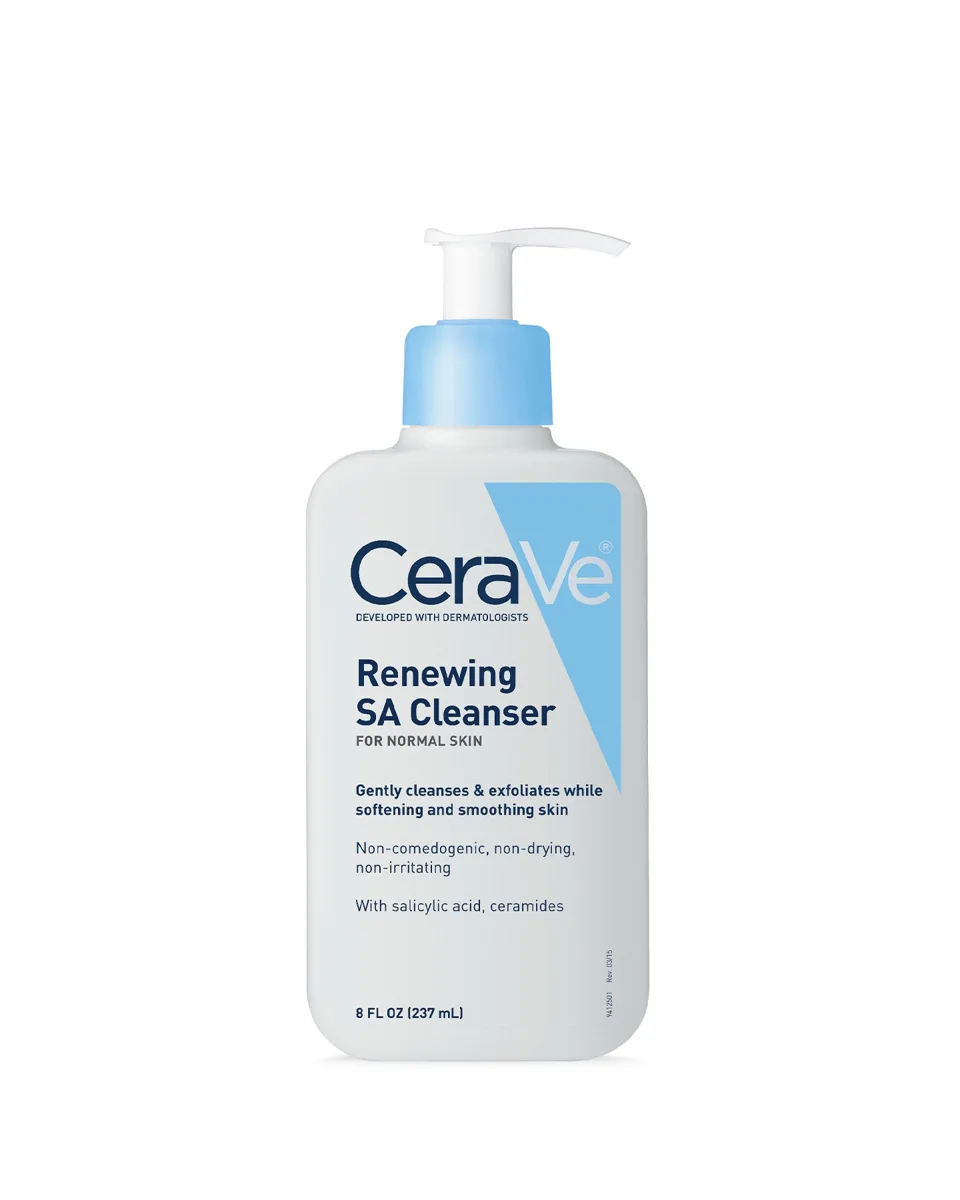
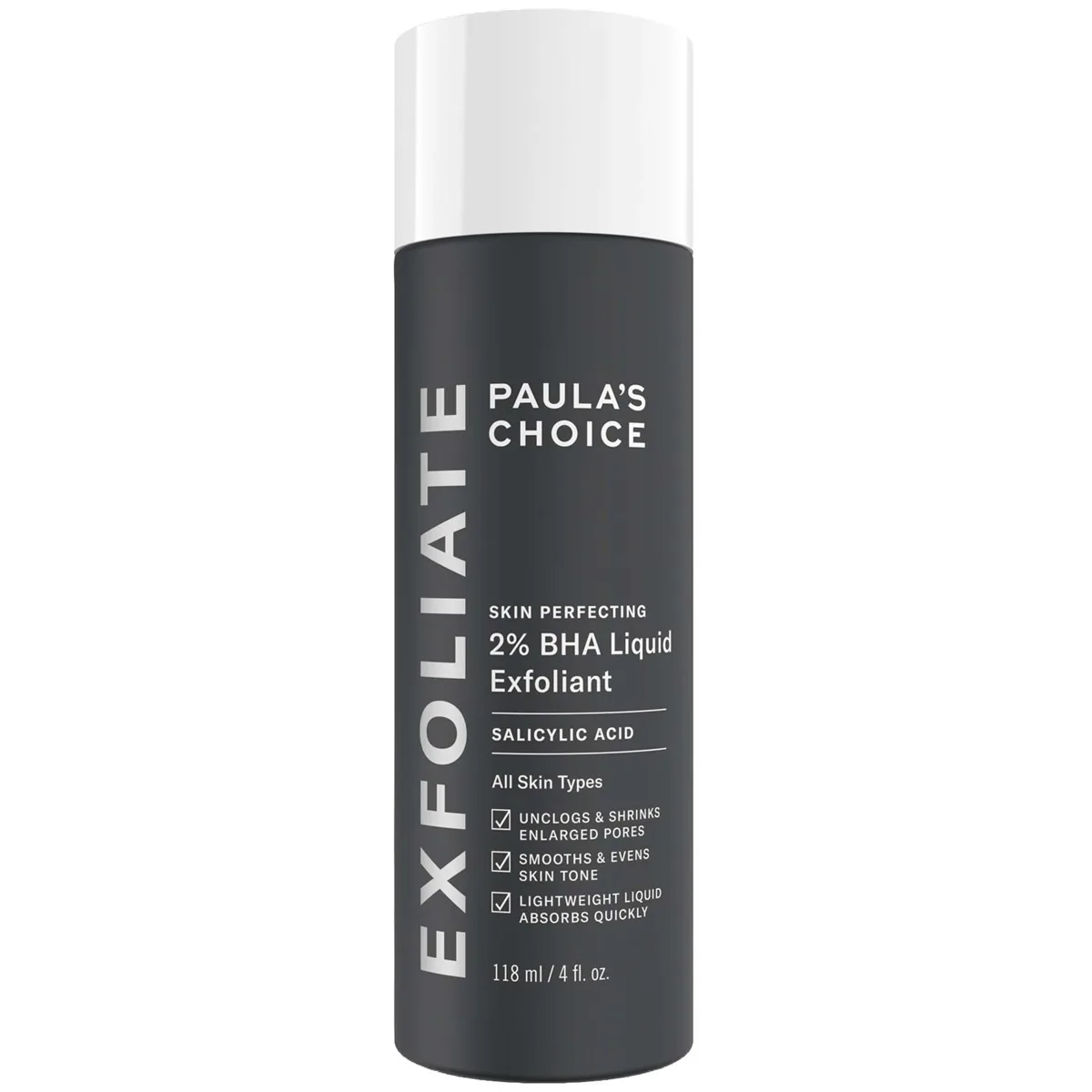
Third, salicylic acid earns its place here on chemistry rather than on hype: it is lipophilic, so it partitions into a sebum-filled follicle in a way water-soluble acids do not. That is precisely the geometry of the congested male nose and forehead. CeraVe Renewing SA Cleanser delivers it in a rinse-off with short contact time, while Paula's Choice 2% BHA Liquid Exfoliant leaves it on and does considerably more work — the choice between them is about how much irritation budget you have, not about strength for its own sake. The oily-skin cleanser ranking covers the rinse-off end properly.
Fourth, the genuinely male-specific variable is not hormones at all. It is shaving. A blade is a mechanical exfoliation performed on the same territory several times a week, and it interacts with everything else you apply there. That, not thickness, is the reason a men's routine often needs to be gentler than the equivalent female one rather than harsher. The men's routine template is built around that constraint.
The caveat that undoes most of the marketing
Everything above is a statement about population averages, and the distributions overlap enormously.
The spread in sebum output, hydration and water loss within either sex is far wider than the average gap between them. There are men with dry, reactive, low-sebum skin in very large numbers, and they are the ones most poorly served by a category that assumes the opposite and formulates every product to strip and mattify. Age moves the same parameters more than sex does past a certain point, and so does climate, smoking, cumulative sun and whether you have been using a retinoid for a decade.
So the honest version of the mechanism is: androgens explain why the male average sits where it does, and they explain nothing whatsoever about where you personally sit. The reason to understand the pathway is not so you can buy the product with a dark grey bottle. It is so that when your skin changes — you start testosterone therapy, you come off it, you hit your fifties, you move somewhere humid — you can reason about why instead of guessing.
Which means the useful step is measurement rather than demographics. The Skin Type Quiz sorts you on observed behaviour rather than on which aisle you were pointed at, and the My Skin profile keeps that answer attached to every recommendation the site makes for you afterwards. If those two disagree with the label on the bottle, the bottle is the thing that is wrong.
Products mentioned
Independently reviewed and scored — the real products behind this piece.


- Therapy guide Acne Where persistent oiliness with inflammatory lesions actually escalates.
- Routine The Men's Skincare Routine That Actually Sticks Built around shaving as the real male-specific variable.
- Ranked list Best Moisturizers for Oily Skin Format-first shortcut through the oily-skin moisturiser category.
- Ranked list Best Cleansers for Oily Skin The rinse-off end of a sebum-heavy routine.
- Ingredient Niacinamide (Vitamin B3) The one topical with direct, if modest, sebum-excretion data.
- Ingredient Salicylic Acid (BHA) Lipophilic, so it partitions into a sebum-filled follicle.
References
- The androgen control of sebum production. Studies of subjects with dihydrotestosterone deficiency and complete androgen insensitivity — The Journal of Clinical Endocrinology and Metabolism, 1993
- The influence of age and sex on skin thickness, skin collagen and density — British Journal of Dermatology, 1975
- Male versus female skin: What dermatologists and cosmeticians should know — International Journal of Women's Dermatology, 2018
- The effect of 2% niacinamide on facial sebum production — Journal of Cosmetic and Laser Therapy, 2006
- The Role of Androgen and Androgen Receptor in the Skin-Related Disorders — Archives of Dermatological Research, 2012
Every cited link is verified to resolve to the paper named. Where a source could not be independently confirmed, it is listed without a link rather than pointing you somewhere wrong.
Frequently asked
If androgens drive sebum, will a DHT-blocking supplement make my skin less oily?
The evidence says no. Men with inherited 5-alpha-reductase deficiency produce normal amounts of sebum, and finasteride did not reduce sebum scores from baseline in the study that tested it. The sebaceous gland uses mostly the type 1 isoform, and selective type 1 inhibitors have not delivered meaningful sebum reduction either. Androgen signalling is the throttle; the conversion step is not.
Does thicker male skin mean I can use stronger actives without irritation?
No, and this is the most common wrong inference. The thickness difference is dermal collagen, which sits well below the barrier layer that decides how much of a retinoid or acid gets in and how your immune system reacts to it. Tolerance is set by barrier condition and individual reactivity. Shaving frequency is far more relevant to your irritation budget than sex is.
Why do men seem to wrinkle later but then look older quickly?
Male dermal thickness declines on a roughly linear slope starting in the twenties, so the change is gradual and easy not to notice. Female thickness holds until about fifty and then falls sharply. The result is that men often accumulate a large amount of photodamage before anything registers as aging, and then encounter all of it at once.
My skin is dry, not oily, and I am male. Does any of this apply to me?
The population averages do not describe you, and that is a completely ordinary situation rather than an anomaly. Within-sex variation in sebum, hydration and water loss is much larger than the average difference between sexes. Choose products against your measured skin behaviour, not the demographic printed on the packaging.
Does testosterone therapy change any of this?
Yes, and predictably so, because raising circulating androgen raises sebaceous output through the same receptor pathway described here. Increased oiliness and breakouts, often on the back and chest, are among the most reliable dermatological effects of starting therapy. It is one of the situations where understanding the mechanism lets you anticipate the change rather than be surprised by it.