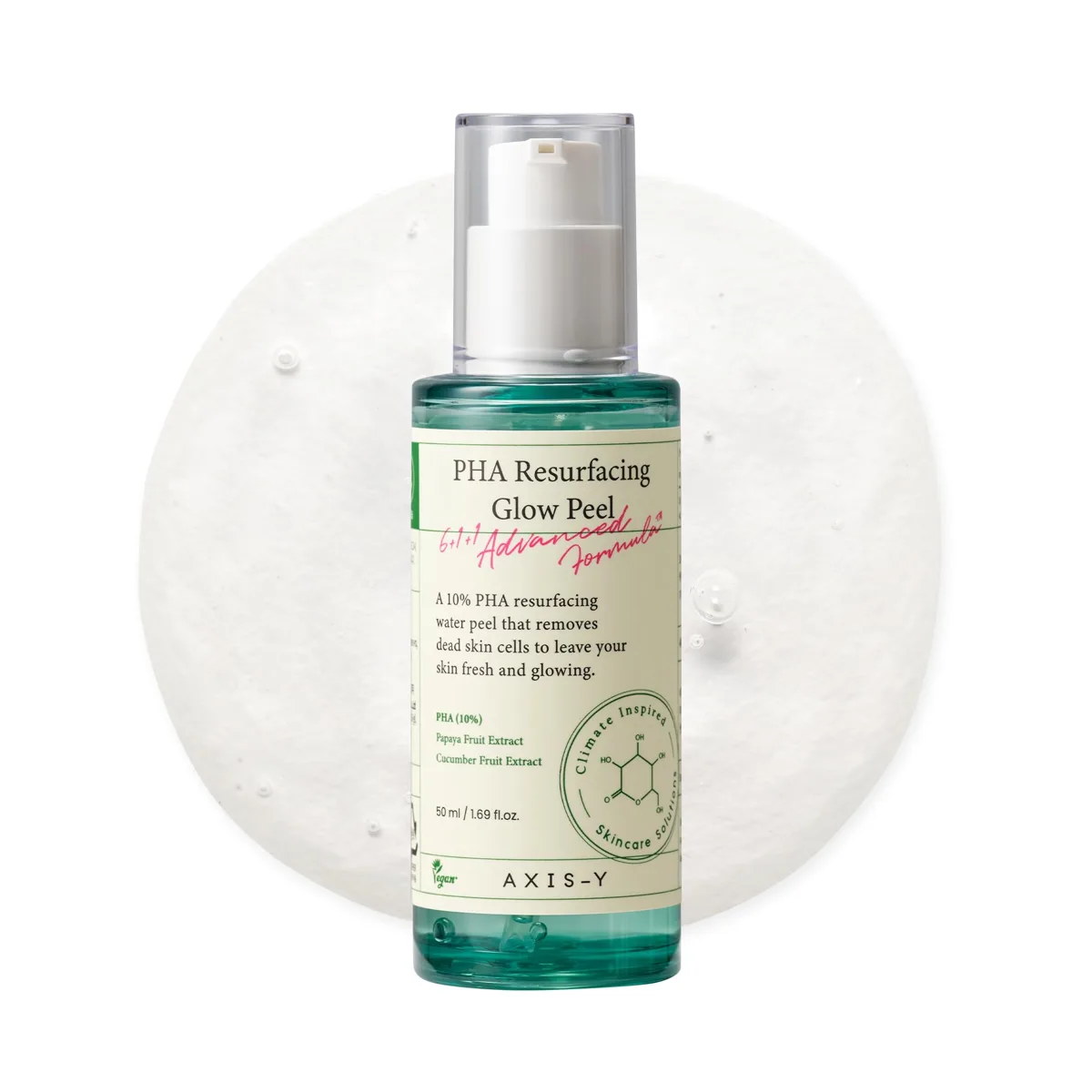
Most acid peels in the under-thirty-dollar range use AHAs because they're cheaper and more dramatic. This one uses gluconolactone and lactobionic acid — two polyhydroxy acids — as the lead actives, backed by a centella-panthenol calming cast. The combination produces a meaningful exfoliation with an unusually gentle tolerability profile for sensitive skin.
A fragrance-free dual-PHA peel with a real calming cast — gluconolactone and lactobionic acid do the exfoliation while centella, madecassoside, panthenol, and allantoin keep reactive skin from flaring. One of the more tolerable acid treatments in the mid-tier K-beauty category.
Note: This liquid launched in 2023 and our assessment is based on ingredient analysis and moderate real-world feedback. We'll revisit as more data accumulates.
Verdicts
How well it fits each concern
Verdict by concern tap a concern for the case
Good choicefor Compromised Skin BarrierIn your profileYou chose · Niacinamide is a reference standard by mechanism for compromised skin barrier; this liquid carries it high in the ingredient list.Moderate evidenceGentleNo reviews collected yet
The case for it
Niacinamide has trial-supported standing for this concern.
It is present at an effective concentration, declared or high in the ingredient list.
The formula carries none of the triggers this concern is sensitive to.
Same rule for everyone. “Good choice” is the verdict on 9,564 of 45,024 concern verdicts across the catalog; rule R5 decided 9,072 of them.
Unchanged since September 5, 2026, engine 5.1.1.
Good choicefor DehydrationIn your profileYou chose · Panthenol (Vitamin B5) is a reference standard by mechanism for dehydration; this liquid carries it.Moderate evidenceGentleNo reviews collected yet
The case for it
Panthenol + Allantoin has trial-supported standing for this concern.
It is plausibly present at a working level, though the concentration is not declared.
The formula carries none of the triggers this concern is sensitive to.
What would change this: A declared concentration would move this to a firmer reading of the dose.
Same rule for everyone. “Good choice” is the verdict on 9,564 of 45,024 concern verdicts across the catalog; rule R5 decided 9,072 of them.
Unchanged since September 5, 2026, engine 5.1.1.
R5 — Trial-supported or guideline-supported active, adequately or plausibly dosed. · the full register
Carrying active
Panthenol + Allantoin
Standing
supported — its mechanism is established
Form
plausible — studied range 2.5%, from the trials on the row; needs leave-on contact
Tolerability
gentle
Row checked
against its sources on July 17, 2026 (evidence table ev-2026.09-r228)
The studies behind the evidence row
Cosmetic Ingredient Review assessment of panthenol / dexpanthenol — humectant and moisturizer that raises stratum-corneum water content — reference work
Good choicefor SensitivityIn your profileYou chose · No fragrance, drying alcohol, declarable allergens or sensitising preservatives in this liquid — the profile sensitive skin looks for.Not yet assessedGentleNo reviews collected yet
The case for it
Centella + Madecassoside has been researched for this concern and the evidence does not support it.
It is plausibly present at a working level, though the concentration is not declared.
The formula carries none of the triggers this concern is sensitive to.
What would change this: A declared concentration would move this to a firmer reading of the dose.
Same rule for everyone. “Good choice” is the verdict on 1,938 of 45,024 concern verdicts across the catalog; rule F2 decided 1,938 of them.
Unchanged since September 5, 2026, engine 5.1.1.
Also listed for Dullness, Rough Texture and Keratosis Pilaris — the actives here (Gluconolactone, Lactobionic Acid, Niacinamide, Panthenol (Vitamin B5) are in our research queue for those concerns; there is no verdict until their evidence rows are written. That is a gap in our table, not a mark against the product.
A verdict is DermApproved’s assessment of how well a product’s ingredients fit a concern — never a claim about what the product treats. Evidence dots and collected reviews sit beside it and are never blended in.
Rules 0.5.1 · evidence table ev-2026.09-r228 · how we decide
Assessment
Pros & Cons
Pros
✓ Dual PHA approach reduces irritation vs AHA peels
✓ Dense calming cast of centella, madecassoside, panthenol, and allantoin
✓ Fragrance-free and alcohol-free
✓ Tolerable on mildly sensitive skin
✓ Immediate glow and cumulative texture improvement
✓ Lactobionic acid adds humectant contribution
Cons
✗ 30ml size is small for the price
✗ Subtle effect compared to strong AHAs
✗ Not a match for users who want aggressive exfoliation
✗ Rosacea flares still require caution with any acid
Review
Full Review
The first thing to understand about this peel is that it's deliberately less dramatic than the category-typical AHA treatment, and that's the point. Glycolic and lactic acids are the loud actives of the exfoliation world — they penetrate quickly, tingle aggressively, and produce visible results in a hurry, which is exactly what sells a product but also what pushes reactive skin into irritation territory within a few uses. Axis-Y made a different choice here. Gluconolactone and lactobionic acid, the two polyhydroxy acids that sit high in this formula, are structurally bigger molecules with slower penetration and a more gradual exfoliating action. At equivalent concentrations they produce less immediate sting and less dramatic morning-after glow, but they also don't bully reactive skin out of the gate, which means the user base for a PHA peel is substantially broader than the user base for a strong AHA peel.
There's a backstory worth knowing. Axis-Y — a Korean-Singaporean indie label founded in 2018 with a transparency-first ethos — launched this peel in 2023 as its first dedicated acid treatment, and the brief was explicit: build something for people who had already tried traditional AHA and BHA products and been burned, sometimes literally. The choice of PHAs over AHAs wasn't cost-driven; it was the whole design premise. No long build-up period, no elaborate buffering routine, just an acid product a reactive-skinned person could actually start using.
The formulation logic is careful. Gluconolactone is the slightly smaller PHA, sitting in the third INCI slot at a concentration that's almost certainly a meaningful level of exfoliating activity. Lactobionic acid follows in the fourth slot — a larger molecule, an even slower penetrator, and one that also brings a genuine humectant contribution to the formula. Stacking the two PHAs at different molecular sizes widens the exfoliation action across the upper stratum corneum rather than concentrating it in one narrow penetration window. Niacinamide appears mid-INCI to add its own melanocyte-targeting contribution, which compounds with the PHA surface brightening over weeks of regular use. Centella asiatica extract, isolated madecassoside, panthenol, and allantoin form a dense calming layer — four separate soothing actives working alongside the exfoliation, which is how this product stays tolerable on mildly sensitive skin where a similar-concentration AHA would flare. The quieter rows of the ingredient list carry their weight too: betaine and sodium hyaluronate add water-binding support so the acid work doesn't leave skin parched, hydrogenated lecithin smooths the liquid's spread, tocopherol lends a small antioxidant assist, and tromethamine holds the formula at its pH of 4.0 — acidic enough for the PHAs to actually exfoliate, but a step gentler than where most glycolic treatments sit.
Texture and experience are what you'd hope for from a gentle peel. The liquid is thin and watery with a slight slip, applied with a dropper to clean, dry skin after an evening toner — the dropper gives you real control over how much lands where, one of those small format decisions that matters more in an acid product than anywhere else. On first use there's a mild tingle from the PHAs that fades within a minute, and the immediate effect is a soft glow and mild surface softening. Over the first two to three weeks of consistent use, most users report a cumulative improvement in baseline dullness and fine texture. Deeper results — real tonal evening, longer-term texture refinement — accumulate over four to eight weeks and depend heavily on whether the user is running daily sunscreen, because acid treatments of any kind lose their gains to unchecked UV exposure. A note on cadence, since PHA marketing sometimes implies nightly use is fine: it isn't, at least not for most people. Even an acid this gentle should generally run every other night at most, and one to three times weekly on sensitive skin. Over-exfoliation doesn't care which acid category caused it.
The tolerability picture is where this peel earns its position. Sensitive skin that's historically struggled with glycolic or lactic acid peels generally handles this one without the flushing, the sting, or the post-peel tightness that would drive those users back to acid-free routines. Rosacea-prone skin should still approach with caution — any acid is a risk on active rosacea flares — but the centella cast makes this a more plausible option than most alternatives. Normal and combination skin find it comfortable. Dry skin gets some humectant benefit from the lactobionic contribution. Really oily skin with aggressive exfoliation tolerance may find it underwhelming compared to a strong BHA routine, but that's a mismatch of intent rather than a failure of formulation. It's also fragrance-free and considered pregnancy-safe, which quietly extends its audience to two groups that most exfoliant aisles ignore. The feedback base is still moderate — around a thousand reviews averaging 4.3 — and the pattern in it is coherent: many reviewers single out how much gentler it runs than the AHA peels they'd abandoned, several mention the immediate glow, and the repeated gripes are the small bottle and the need for a calming cream afterward rather than anything about the formula misbehaving.
Value is acceptable but not exceptional. Twenty-eight dollars for a 30ml bottle is in the higher range for an entry-level acid product, and the size will disappoint readers who want something to last a full season. With twice-weekly use the bottle lasts about two to three months, which works out to around twelve dollars a month — fair for a gentle peel with this kind of supporting cast, but not a bargain. There's no larger size offered, so you can't upgrade for better per-unit economics. For sensitive skin users who've struggled with other acid products and want a tolerable entry point into exfoliation, this peel is a genuinely useful tool. For readers who already run a strong AHA or BHA routine, it's redundant. As always, daily sunscreen is the condition on which any of this works.
Formula
Key Ingredients
The hero actives that drive this product's performance.
A polyhydroxy acid with a larger molecular size than AHAs, which means it penetrates more slowly and produces less irritation at equivalent exfoliating strength. It's the lead active in this peel and the reason the product can be used more frequently than a traditional AHA peel.
A second PHA with an even larger molecular size than gluconolactone, reinforcing the surface exfoliation and adding a mild humectant contribution. Stacking two PHAs at different molecular sizes broadens the exfoliation action across the upper stratum corneum without the sting of a strong AHA.
Placed mid-INCI to support the surface brightening action with its own melanocyte-targeting contribution. In a short-contact peel the niacinamide effect is supplementary, but it compounds with regular weekly use.
Established mechanismfor Compromised Skin Barrier · established mechanism
The calming counterweight to the two PHAs. Their inclusion is what lets this peel be used on more sensitive skin than most acid treatments without immediate irritation or post-peel redness.
Additional soothing redundancy alongside the centella complex. For a peel format where exfoliating action is the main event, having two separate calming layers keeps the product tolerable across skin types.
Established mechanismfor Dehydration · established mechanism
Ingredient standings describe the active at treatment-level doses and
vehicles; this product's own condition grades weigh its actual formula.
Use in place of a regular night serum one to three times a week. Do not stack with AHA, BHA, or retinol on the same night. Always follow with a calming moisturizer.
Results Timeline
Immediate brightness and texture smoothing after first use. Cumulative improvement in dullness, fine texture, and tone at 3-6 weeks of regular use.
Polyhydroxy acids are a well-characterized subset of hydroxy acids with larger molecular sizes than traditional AHAs like glycolic and lactic acid. Work published by Green and colleagues in Cutis reviewed the use of gluconolactone and lactobionic acid in sensitive skin and concluded that PHAs produced comparable exfoliation to AHAs at equivalent concentrations with measurably less irritation, making them useful for patients who cannot tolerate glycolic or lactic acid products. The mechanism of reduced irritation is primarily the slower penetration rate — a larger molecule takes longer to cross the stratum corneum and produces less concentration spike in the upper layers than a small AHA molecule. Lactobionic acid additionally has a humectant contribution from its polyhydroxy structure, adding a water-binding function that pure AHAs don't provide. Niacinamide's melanocyte-transfer inhibition is supported by foundational work from Hakozaki and colleagues in the British Journal of Dermatology. The centella asiatica calming contribution is backed by reviews in Postepy Dermatologii i Alergologii and related literature. The combined approach of two PHAs plus a dense calming cast is consistent with the broader PHA literature supporting these actives for sensitive and reactive skin, though the specific formulation has not been independently clinically tested at the finished-product level.
References
A clinical evaluation of a novel polyhydroxy acid skin care regimen — Cutis (2009)
Dermatologist Perspective
Dermatologists frequently recommend polyhydroxy acid products as a gentler alternative to AHAs for patients with sensitive, rosacea-prone, or reactive skin who still benefit from mild chemical exfoliation. Many dermatologists emphasize that gluconolactone and lactobionic acid are well-tolerated at concentrations consistent with clinical evidence, and that combining them with fragrance-free vehicles and calming botanicals like centella produces a product profile suitable for patients who have struggled with other acid treatments. Clinicians typically emphasize that all chemical exfoliants require daily broad-spectrum sunscreen to maintain their benefits, and that acid products should not be stacked with retinoids or additional exfoliants on the same night without careful consideration of the tolerance profile.
Guidance
Usage & Recommendations
How to Use
Use on clean, dry skin in the evening, one to three times a week for sensitive skin or every other night for more resilient skin. Apply two or three drops with the dropper and press gently into the face, avoiding the eye area. Wait a minute for the tingle to settle, then follow with a calming or barrier cream. Always apply broad-spectrum sunscreen in the morning — PHAs still increase UV sensitivity. Do not use on the same night as AHA, BHA, or retinol products.
Value Assessment
At twenty-eight dollars for 30ml, this peel is priced fairly relative to mid-tier K-beauty acid products but is not a budget option. Comparable gentle PHA treatments from established brands often cost thirty to sixty dollars for equivalent sizes, so the pricing is competitive without being aggressive. With twice-weekly use the bottle lasts two to three months, giving a cost per month around twelve dollars. The 30ml bottle size is the one drag on value — readers who want a multi-month supply at a single purchase will find it small. There's no larger size offered, so retail sales are the only way to reduce per-unit cost.
Who Should Buy
Sensitive, normal, and combination skin users looking for a gentle entry-level chemical exfoliation. Particularly useful for readers who have found glycolic or lactic acid products too irritating and want a tolerable alternative that still produces real exfoliation over time.
Who Should Skip
Readers who already run a strong AHA or BHA routine — this peel will be redundant and underwhelming. Anyone with active rosacea flares should approach any acid product cautiously and consult a dermatologist.
A thin watery liquid with a slight slip, applied with a dropper to clean skin.
Scent
Fragrance-free; essentially scentless with a very faint acidic base note.
Packaging
30ml glass dropper bottle. The dropper is useful for controlled application, though some users wish the bottle were larger.
Finish
lightweightfast-absorbingnatural
What to Expect on First Use
Mild tingling on first application is normal from the PHA duo and fades within a minute. Immediate softening and glow are the most visible early effects; deeper texture improvement accumulates over weeks.
How Long It Lasts
About 2-3 months with twice-weekly to every-other-night application.
Axis-Y launched this peel in 2023 as the brand's first dedicated acid treatment, explicitly positioned for users who had found traditional AHA and BHA products too irritating. The choice of PHAs over AHAs was deliberate — the formulators wanted a product that could be used by reactive and mildly sensitive skin without requiring a long build-up period or elaborate buffering routine.
About Axis-Y Established Brand (5–20 years)
Axis-Y is a Korean-Singaporean indie brand founded in 2018 with a transparency-first approach. It has gathered credibility among K-beauty enthusiasts, though deep clinical validation of its specific products continues to develop.
Brand founded: 2018 · Product launched: 2023
Myth vs. Reality
Common Myths
Myth
PHA is just a weaker AHA.
Reality
PHAs are a distinct category of acids with larger molecular sizes that slow penetration and reduce irritation. At matched usage, they produce less immediate exfoliation but better tolerability, and for sensitive skin the practical result is equivalent or better over time.
Myth
You can use acid peels every night.
Reality
Even PHA peels should generally be used no more than every other night on most skin, and one to three times weekly on sensitive skin. Daily acid use pushes toward over-exfoliation regardless of the acid type.
FAQ
Frequently Asked Questions
What's the difference between PHA and AHA?
PHAs are a subset of hydroxy acids with larger molecular sizes than AHAs like glycolic acid, which slows penetration and reduces irritation. At equivalent concentrations they produce less immediate exfoliation but better tolerability on sensitive skin.
How often should I use this peel?
One to three times a week for sensitive skin, up to every other night for more resilient skin. Daily use is not recommended even though the formula is relatively gentle.
Does PHA Resurfacing Glow Peel layer safely with retinol?
Not on the same night. Use them on alternate nights, or use this peel two nights a week and retinol on separate nights. Stacking a PHA peel with retinol pushes toward over-exfoliation.
Does it work on keratosis pilaris?
PHAs are often used on keratosis pilaris on the upper arms and thighs. This peel is a reasonable option for body KP, though dedicated urea-based body lotions may be more effective for stubborn cases.
Is PHA Resurfacing Glow Peel gentle enough for reactive skin?
More so than most acid peels. The PHA-based actives and centella-panthenol calming cast make it one of the more tolerable options in the category, though any acid product can cause irritation if overused or in the wrong user.
Do I need to wear sunscreen?
Yes, always — any acid exfoliant increases UV sensitivity. Daily broad-spectrum SPF 30 or higher is non-negotiable when using this peel.
Reviews
What Reviewers Tend to Say
Recurring themes our editors read across retailer reviews of this product — summaries in our words, not quotations, and not a substitute for your own patch test.
Polyhydroxy acids get filed under 'beginner exfoliant,' as if gentle meant weak. The truth is stranger: their bulk is exactly why they work for the skin everything else sets on fire.
Every cica, calming, and barrier product leans on the same three ingredients, and the real mechanisms are far more specific — and more limited — than 'soothing' lets on.
The K-beauty buzzword slaps a green leaf on half the shelf — but centella is one of the rare botanicals with genuine wound-healing data. The trick is knowing which molecule is doing the job.
It's in half your products and headlines none of them. Provitamin B5 has the kind of boring, decades-deep barrier and wound-healing evidence that flashier actives can only envy.
Sep 23, 2025· 5 min
Questions people ask about sensitive skin
Verified answers from our questions library — the nuance a product page cannot carry.
Products, answers, therapy guides, tools and articles in one search. Brand names,
slang and abbreviations all work — accutane finds isotretinoin, bacne finds truncal acne.