PHA and Gluconolactone: The Acid for Skin That Can't Tolerate Acids
Polyhydroxy acids get filed under 'beginner exfoliant,' as if gentle meant weak. The truth is stranger: their bulk is exactly why they work for the skin everything else sets on fire.
Read the preview
From the DermApproved blog, in Exfoliating Acids: polyhydroxy acids — the exfoliant for people whose skin can't tolerate exfoliants. Everyone files these under beginner. Gentle. Weak. And that framing gets the whole story exactly backwards. Here's the twist: the reason a PHA is so kind to reactive, rosacea-prone, barrier-wrecked skin is a single physical fact about the molecule itself — one that has nothing to do with the formula being watered down. And it turns out these acids are quietly doing two jobs that glycolic can't do at all. Is gentle actually strong enough to matter? There's a controlled study with an answer that surprises people. We'll show you who this is really for, and the one mistake that catches everyone precisely because it never stings. The full case, at dermapproved.com/blog.
Why a bigger molecule is the whole trick
Most of what makes an acid harsh is speed. Glycolic acid is the smallest of the common exfoliating acids, and its small size lets it rush through the stratum corneum in a rush — fast results, but also the sting, the flush, and the sandpaper feeling if you overdo it. Polyhydroxy acids solve the problem by being, frankly, fat. Gluconolactone carries a molecular weight around 178 and lactobionic acid around 358, against glycolic's featherweight 76. That bulk means a PHA can't cram into the skin all at once. It filters in slowly, exfoliating at a pace the skin can keep up with.
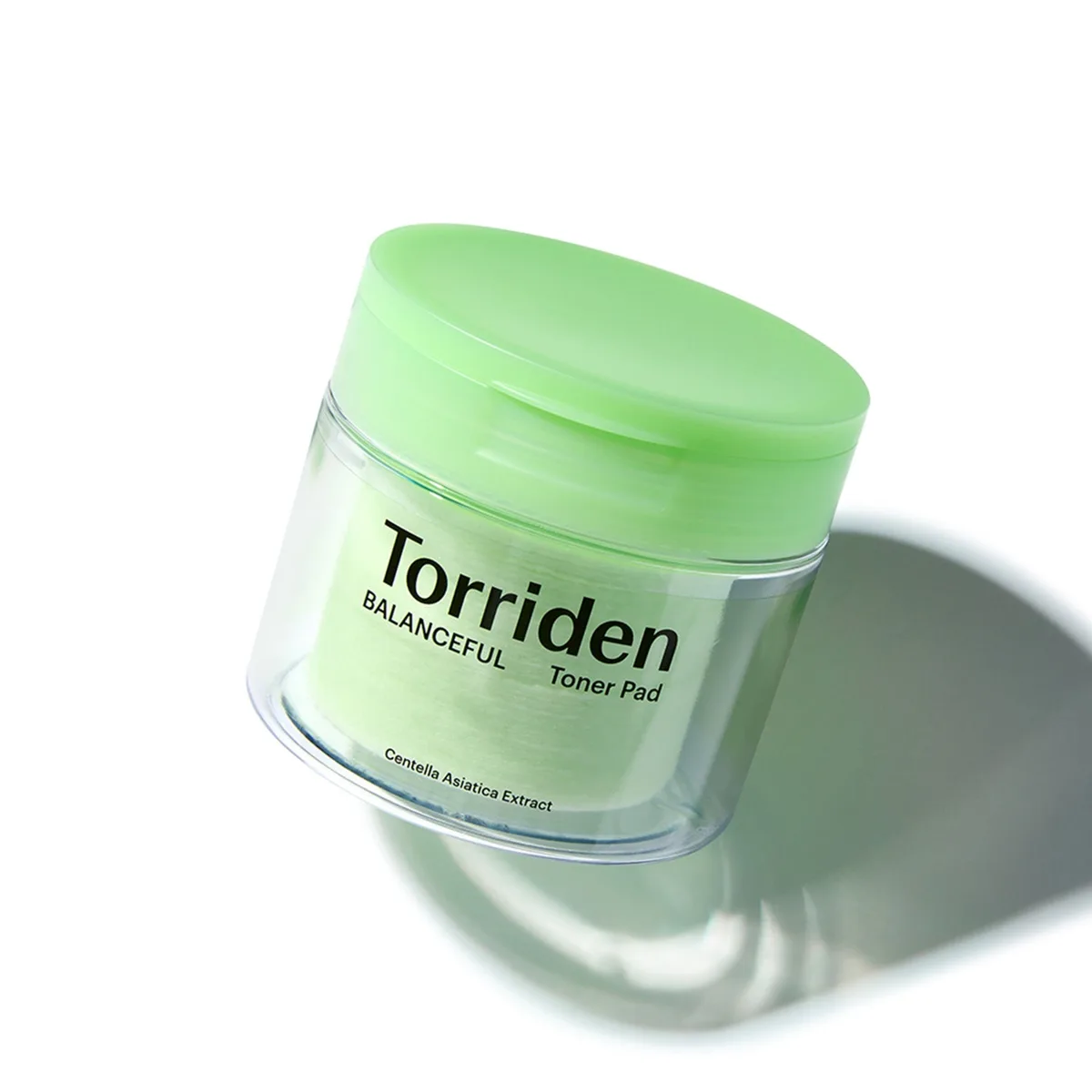
This is the counterintuitive part people miss: the gentleness is a direct, physical consequence of the molecule's size, not a diluted or watered-down formula. You are not getting a weaker acid. You are getting the same job — loosening the bonds between dead surface cells so they shed and the skin looks smoother — delivered at a speed that doesn't trip the alarm. A pad like the Torriden BALANCEFUL Toner Pad builds its whole gentle-exfoliation pitch on gluconolactone for exactly this reason.
The size difference also changes where the acid does its work. A small, fast AHA penetrates deeper and quicker, which is part of why it can reach nerve endings and spark that familiar sting. A bulky PHA concentrates its action nearer the surface, on the outer stratum corneum where the dead-cell buildup that dulls skin actually lives. You lose a little depth and gain a lot of tolerability — a trade that, for the right skin, is entirely worth making. It's not that PHAs can't exfoliate; it's that they refuse to do it in a hurry.
The two jobs an AHA doesn't do
Here's where PHAs stop being 'AHA lite' and become their own thing. That cluster of hydroxyl groups hanging off the molecule — the 'poly' in polyhydroxy — doesn't only slow penetration. Each of those groups can hydrogen-bond water, which makes the acid a genuine humectant. So a PHA exfoliates and hydrates in the same pass, which is precisely backwards from the drying reputation acids usually carry.
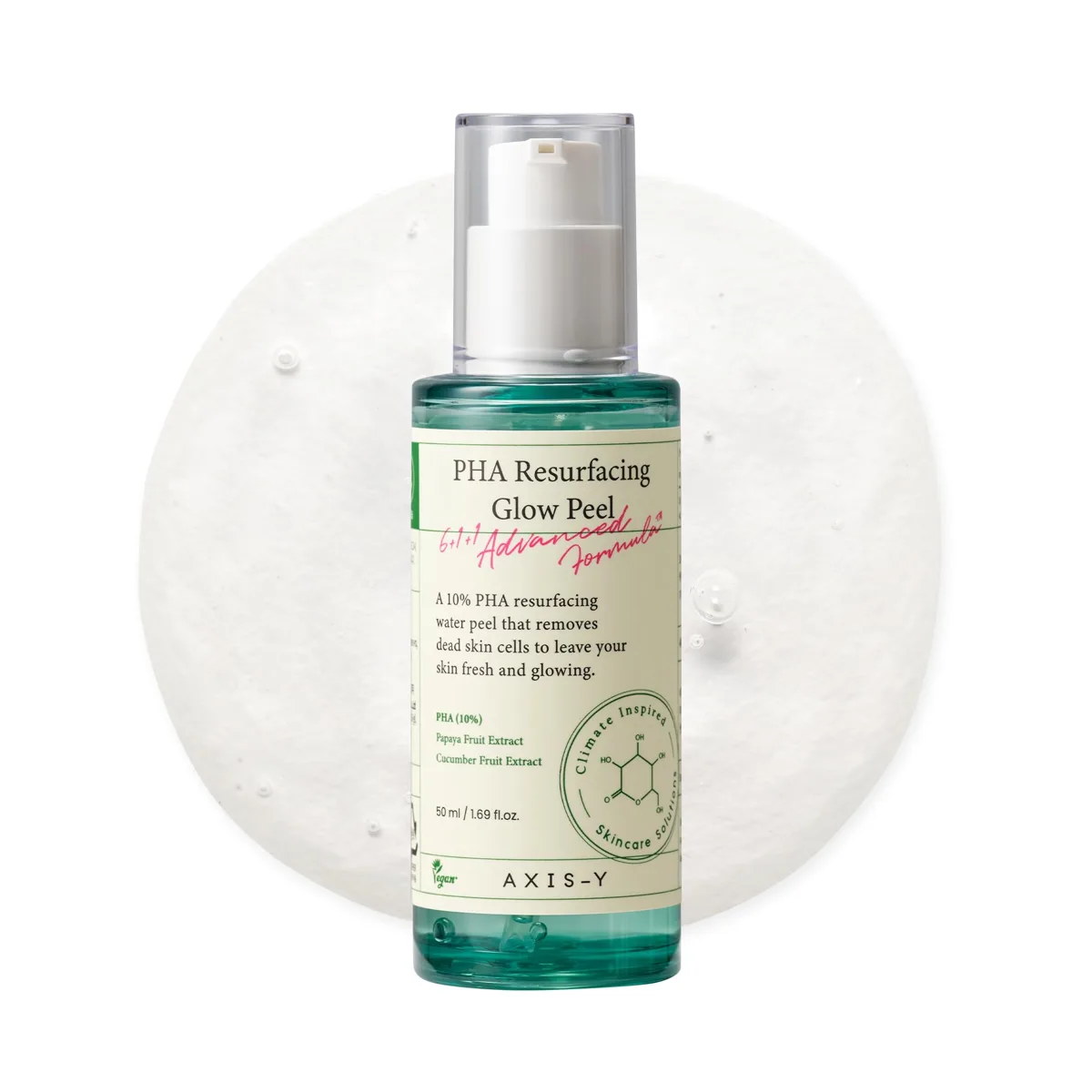
The second bonus is antioxidant activity. PHAs and their bionic-acid cousins act as metal chelators and free-radical scavengers; work by Bernstein and colleagues found gluconolactone's free-radical scavenging comparable to established antioxidants in a photoaging model. Lactobionic acid goes a step further, inhibiting matrix metalloproteinases — the enzymes that chew up collagen as skin ages. That's why you'll see it framed as preventive anti-aging rather than just surface polish. The Axis-Y PHA Resurfacing Glow Peel leans on both gluconolactone and lactobionic acid, which is a formulator quietly stacking the humectant and the MMP-inhibiting angles on top of the exfoliation.
Built for the skin that flushes
Match this profile to a person and it's obvious who PHAs are for. Rosacea-prone skin lives one trigger away from a flush, and a fast AHA is a reliable trigger. Barrier-compromised, eczema-prone, and dehydrated skin can't afford the transient irritation either. Freshly post-procedure skin — after a laser, a microneedling session, a stronger peel — needs maintenance without provocation. In all of these, a slow, hydrating, antioxidant acid is close to the ideal tool.
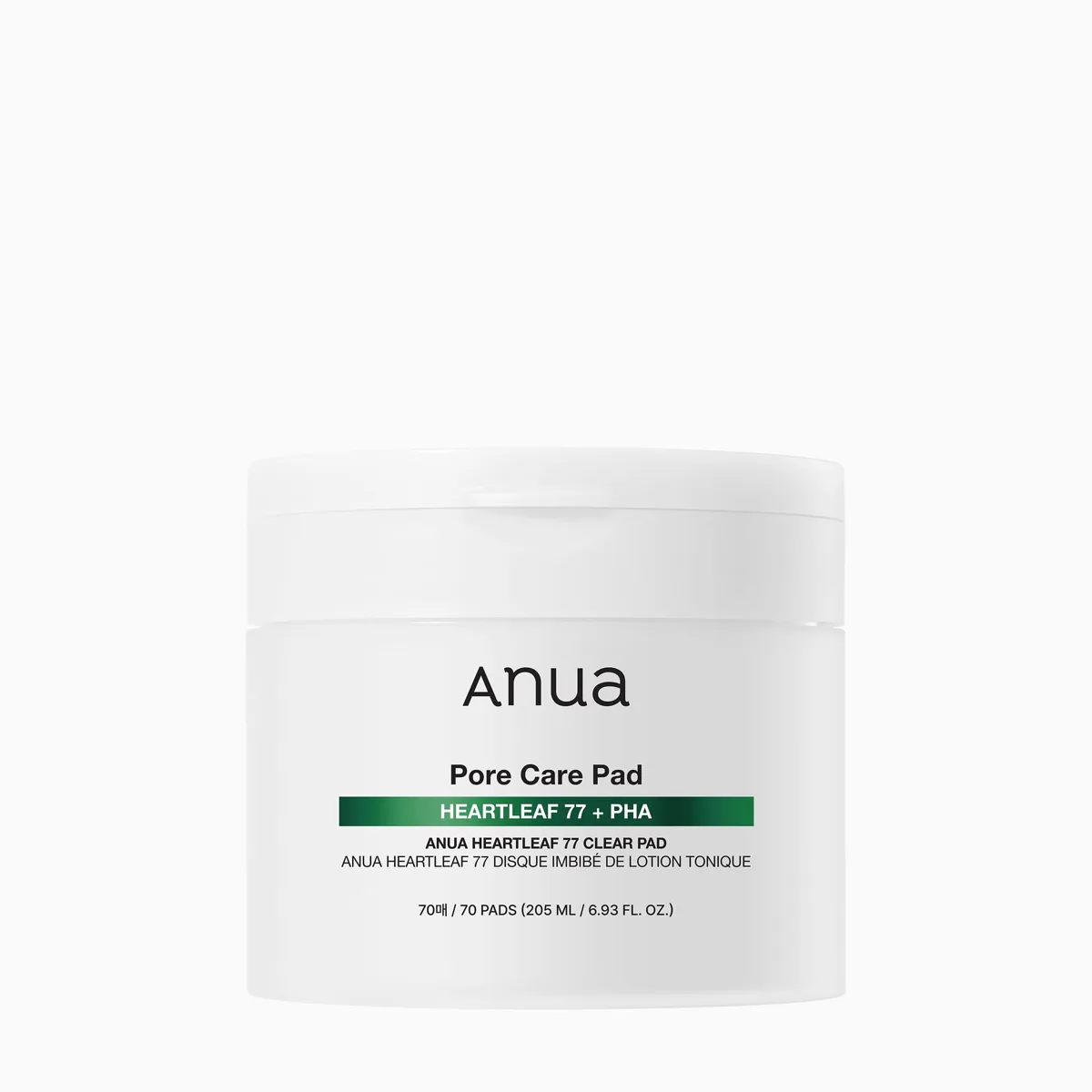
And there's actual barrier data behind the vibe: gluconolactone has been shown to strengthen stratum-corneum barrier function, reducing transepidermal water loss and erythema after a chemical challenge — the opposite of what a harsh acid does. Soothing-forward formulas play to this. The Anua Heartleaf 77% Toner Pad pairs gluconolactone with houttuynia and centella so the exfoliation arrives wrapped in calming botanicals. Even so, 'gentle' is relative to your skin, not universal — a quick [patch-test] on the jaw before you commit is cheap insurance, and if you're layering a PHA with a retinoid or vitamin C, run the combo through our [conflict-checker] first.
Gentle doesn't mean it doesn't work
The fair objection to all of this is: if it's so mild, is it actually doing anything? The honest answer is yes, just on a longer clock. In a controlled comparison published in Cutis, a polyhydroxy-acid regimen delivered anti-aging effects comparable to an alpha-hydroxy-acid regimen, measured by clinical grading and skin-resiliency testing — not a hand-wave, an outcome. Newer work on multi-PHA peels has extended the safety story to all skin types, sensitive included, without sacrificing efficacy.
What you trade is immediacy. A glycolic peel can hand you a visible glow overnight and a flush to match. A PHA asks for a few weeks of consistent use to show the same smoothing and brightening, and pays you back with skin that isn't perpetually irritated in between. For anyone chasing the fastest possible turnover, an AHA or BHA is still the right pick. For the far larger group whose skin rebels against those acids, a PHA is not a consolation prize — it's the correct answer that the 'stronger is better' reflex keeps talking them out of.
There's also a quieter argument for PHAs that has nothing to do with sensitivity: they're arguably the most sun-friendly acids. AHAs are well known to increase sun sensitivity, which is why diligent daytime SPF is non-negotiable with them. PHAs, because they don't thin the stratum corneum the same way and carry their own antioxidant activity, are generally considered not to increase photosensitivity — a meaningful edge for anyone who exfoliates and then spends time outdoors. None of this cancels the daily-sunscreen rule, which stands regardless of what's in your routine. But it does make a PHA a lower-stakes acid to weave into a real life.
Where a PHA fits in a real routine
Slotting one in is refreshingly low-drama, which is the point. A PHA toner or liquid goes on after cleansing and before your heavier hydrators and moisturizer, and because it doubles as a humectant it plays well with almost everything. Most people can use one several nights a week from the start rather than easing in over a month — a combination BHA-plus-PHA formula like the Geek & Gorgeous Calm Down 3.2% PHA + 0.8% BHA pairs a whisper of pore-clearing salicylic with the gentler acid for skin that wants a little congestion control without the drama of a full BHA.
One genuine caveat worth naming: because PHAs are so easy to tolerate, they're easy to over-apply. 'Doesn't sting' is not a license to use three acid products at once. The exfoliation is still real, and a barrier can be quietly over-exfoliated even without the warning sting a harsher acid would give you. Pick one PHA step, give it a few weeks, and judge it on how your skin looks in a month — not on how little you felt it going on.
Products mentioned
Independently reviewed and scored — the real products behind this piece.

References
- A polyhydroxy acid skin care regimen provides antiaging effects comparable to an alpha-hydroxyacid regimen — Cutis, 2004
- Efficacy and safety of a new peeling formulated with a pool of PHAs for the treatment of all skin types, even sensitive — Journal of Cosmetic Dermatology, 2023
Every cited link is verified to resolve to the paper named. Where a source could not be independently confirmed, it is listed without a link rather than pointing you somewhere wrong.
Frequently asked
What actually makes a PHA gentler than glycolic acid?
Size. A PHA molecule like gluconolactone is much larger and heavier than glycolic acid, so it can't flood into the skin all at once and instead penetrates slowly. That slower pace means less of the stinging, flushing, and irritation that fast, small-molecule AHAs cause, without changing the underlying exfoliating job.
Can PHAs help rosacea or is any acid a bad idea?
PHAs are one of the few exfoliants generally considered suitable for rosacea-prone skin because they resurface slowly and don't provoke the same flush. Gluconolactone has even been shown to reduce redness and water loss after a skin challenge. That said, rosacea is individual, so patch-test first and introduce it slowly.
Do polyhydroxy acids do anything besides exfoliate?
Yes — that's their main selling point over AHAs. Their multiple hydroxyl groups bind water, so they hydrate like a humectant, and they act as antioxidants that scavenge free radicals and chelate metals. Bionic acids like lactobionic acid also inhibit collagen-degrading MMP enzymes, giving them a preventive anti-aging angle.
If a PHA doesn't sting, is it strong enough to be worth using?
The lack of sting is about speed of penetration, not weakness. A controlled study found a PHA regimen produced anti-aging results comparable to an AHA regimen — it just took consistent use over weeks rather than delivering an overnight, irritating jolt. Gentle here means slower, not ineffective.
How often can I use a PHA compared to a stronger acid?
Because they're so well tolerated, most people can use a PHA several nights a week from the start instead of ramping up over a month. The catch is that easy tolerance makes over-application tempting — the exfoliation is still real, so stick to one PHA step and don't stack it with other acids just because you don't feel it.