Panthenol Is the Ingredient Dermatologists Reach For and Shoppers Ignore
It's in half your products and headlines none of them. Provitamin B5 has the kind of boring, decades-deep barrier and wound-healing evidence that flashier actives can only envy.
Read the preview
From the DermApproved blog, in Hydration and Barrier: panthenol, provitamin B5. It's in half the products on your shelf, and you've probably never once chosen it on purpose. Here's the quiet scandal: the flashy actives get the headlines and the marketing budgets, while this unglamorous little molecule does a huge amount of the actual work. It's not even a vitamin when you apply it, it's a precursor that transforms into something your skin uses to rebuild itself from the inside. There's a reason it lives in post-procedure balms and why it might be the best friend your retinol ever had. We get into the mechanism, the decades of unsexy evidence that flashier ingredients can only dream of, and exactly what to expect. Meet the workhorse in plain sight, at dermapproved.com/blog.
The ingredient hiding in plain sight
Pull five products off your shelf and check the ingredient lists. Odds are panthenol is in at least three of them, quietly parked in the middle of the list while whatever's printed on the front, the retinol, the vitamin C, the peptide, takes the credit. Provitamin B5 is possibly the most-used active in skincare that almost no one chooses on purpose. Nobody walks into a store hunting for a panthenol serum the way they hunt for niacinamide. They just keep buying it by accident, because the people formulating good products keep putting it in.
That's worth pausing on. When an ingredient shows up everywhere without a marketing engine pushing it, that's usually a signal. Panthenol doesn't sell itself with fear or novelty. It earns its place the unglamorous way: it works, it's cheap, it plays nicely with everything, and it almost never causes a problem. Formulators love it precisely because it solves problems without creating new ones, a rare combination in a field where the most exciting ingredients tend to come with the most caveats. Sometimes the ingredient doing the actual labor is the one nobody's talking about, and B5 is the clearest case of it in your bathroom.
From provitamin to power source
The 'pro' in provitamin B5 matters. Panthenol itself isn't the active form; it's a stable, skin-friendly precursor. Once it penetrates the skin, it's converted to pantothenic acid, the actual vitamin B5. And pantothenic acid isn't a passive moisturizer, it's a component of coenzyme A, a molecule sitting at the center of cellular metabolism. Coenzyme A catalyzes early steps in building fatty acids and sphingolipids, the very lipids that make up the mortar between your skin cells and the bilayers of the stratum corneum.
This is the mechanistic reason panthenol punches above a simple humectant. It doesn't just sit on the surface holding water; it feeds the supply chain the skin uses to manufacture its own barrier. On top of that, panthenol is hygroscopic, drawing and holding moisture, and it's been shown to increase the molecular mobility of lipids and proteins in the stratum corneum, giving skin the physical properties of being well-hydrated. A review in the American Journal of Clinical Dermatology laid out this dual identity years ago: humectant on one hand, metabolic building block for repair on the other. That combination is why a barrier cream like Axis-Y Panthenol 10 Skin Smoothing Shield Cream can build a formula around it as the star rather than the understudy.
The unglamorous evidence that actually holds up
Plenty of trendy ingredients coast on lab-dish data and a single small study. Panthenol has the opposite problem: solid, repeatable human evidence and no hype to match it. In a randomized, double-blind, placebo-controlled human study, seven days of topical dexpanthenol measurably improved stratum corneum hydration and reduced transepidermal water loss compared to the vehicle alone, meaning the barrier held water better and leaked less. Two later randomized controlled studies on a panthenol-containing emollient reached the same conclusion on moisturization and barrier restoration, and tracked improvements in the organization of the skin's lipid layers.
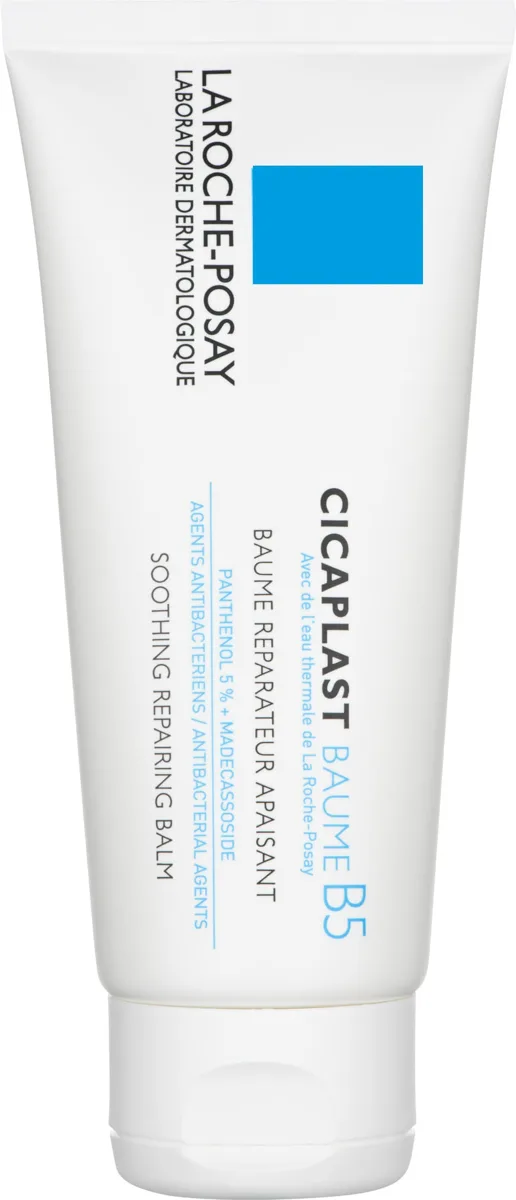
The wound-healing file is even sturdier. Dexpanthenol has been used medically for decades, and the research shows it accelerates re-epithelialization, the process of skin closing over and rebuilding after injury, by upregulating genes involved in healing and supporting fibroblast activity. This is why it turns up in the products people reach for after a peel, laser, or minor wound. A tube of La Roche-Posay Cicaplast Baume B5+ lives in a lot of medicine cabinets for exactly this reason. If you want to confirm how prominently a product features B5 versus using it as window dressing, the ingredient-decoder will show you where it lands on the list.
Retinol's best friend
Panthenol's temperament is its superpower. It's non-sensitizing, non-comedogenic in practice for most people, and anti-inflammatory enough that it soothes rather than provokes. That makes it the ideal chaperone for the actives that get results by being a little aggressive. Retinoids, AHAs, BHAs, and high-strength vitamin C all deliver by nudging the skin hard enough to cause some irritation, dryness, or flaking, and panthenol counters exactly that: it reinforces the barrier those actives can compromise and calms the inflammation they trigger, without interfering with how they work.
The practical payoff is a routine you can actually stick with. A retinoid buffered by a panthenol-rich moisturizer is a retinoid you're more likely to tolerate long enough to see benefits, which is the whole game with retinoids. Layering a barrier cream such as Abib Ectoin Panthenol 11% Moisturizer Barrier Tube over or after an active is a classic move for this reason. It won't neutralize your treatment; it'll just make your skin better able to take it. If you're stacking several actives and want to be sure nothing's fighting, a quick pass through a conflict-checker sorts the sequence out.
What to actually expect from it
Set expectations correctly and panthenol never disappoints, because it's not trying to be a hero. It's a supporting act: a hydrator, a soother, a barrier-supporter that makes the rest of your routine work better and your skin feel calmer. You'll typically see it formulated anywhere from around one percent up into the low double digits, and more isn't automatically better; past a point you're paying for a number on the label rather than a meaningful jump in benefit. It won't fade dark spots, dissolve blackheads, or rebuild collagen. Those aren't its jobs.
What it will do is quietly, reliably keep your barrier in good shape, take the edge off irritation, and speed recovery when your skin's been through something. For sensitive, reactive, compromised, or post-procedure skin, that's not a consolation prize, it's often the single most useful thing you can give your skin.
There's a strategic lesson buried in all of this, too. The skincare industry trains you to shop for the ingredient on the front of the box, the one with the percentage and the promise. But the ingredients that quietly make a routine work, that keep your skin resilient enough to actually tolerate the exciting actives, tend to be the ones nobody advertises. Panthenol is the clearest example: it doesn't need you to notice it to be earning its keep. The flashy actives get the headlines; provitamin B5 gets the results, one unremarkable, well-hydrated day at a time.
Products mentioned
Independently reviewed and scored — the real products behind this piece.



References
- Effect of topically applied dexpanthenol on epidermal barrier function and stratum corneum hydration. Results of a human in vivo study — Arzneimittelforschung, 2000
- Topical use of dexpanthenol in skin disorders — American Journal of Clinical Dermatology, 2002
- A new topical panthenol-containing emollient: Results from two randomized controlled studies assessing its skin moisturization and barrier restoration potential, and the effect on skin microflora — Journal of Dermatological Treatment, 2017
- Dexpanthenol in Wound Healing after Medical and Cosmetic Interventions (Postprocedure Wound Healing) — Pharmaceuticals (Basel), 2020
Every cited link is verified to resolve to the paper named. Where a source could not be independently confirmed, it is listed without a link rather than pointing you somewhere wrong.
Frequently asked
What's the difference between panthenol, provitamin B5, and pantothenic acid?
Panthenol is provitamin B5, a stable precursor used in skincare. Once it penetrates the skin, it converts to pantothenic acid, the actual vitamin B5, which is a component of coenzyme A. That coenzyme drives the synthesis of the fatty acids and sphingolipids your skin barrier is built from, which is why the precursor form is so useful topically.
Does panthenol actually repair the skin barrier or just moisturize it?
Both. It's hygroscopic, so it draws and holds water like a humectant, and human trials show it lowers transepidermal water loss within about a week. But it also feeds the metabolic machinery that builds barrier lipids, so it supports genuine repair rather than only surface hydration.
Can I use panthenol with retinol or exfoliating acids?
Yes, and it's one of the best pairings there is. Panthenol is non-sensitizing and anti-inflammatory, so it reinforces the barrier and calms the irritation that retinoids and acids can cause, without interfering with how those actives work. It makes an aggressive routine more tolerable.
Is panthenol good for skin after a peel, laser, or minor wound?
It's one of the go-to choices. Dexpanthenol has decades of medical use and research showing it speeds re-epithelialization, the skin's rebuilding process after injury. That's why panthenol-rich balms are staples in post-procedure aftercare and many medicine cabinets.
What percentage of panthenol should I look for?
Products typically run from around one percent up into the low double digits, and higher isn't automatically better. Past a certain point you're paying for a bigger number on the label rather than a meaningful boost in benefit, so a well-formulated moderate concentration in a good base beats a huge percentage in a poor one.