

Hyaluronic Acid Can Actually Dehydrate Your Skin (Here's When)
The internet's favorite hydrator has a counterintuitive dark side — in dry air, a humectant with nothing to seal it can pull water out of your skin instead of into it.
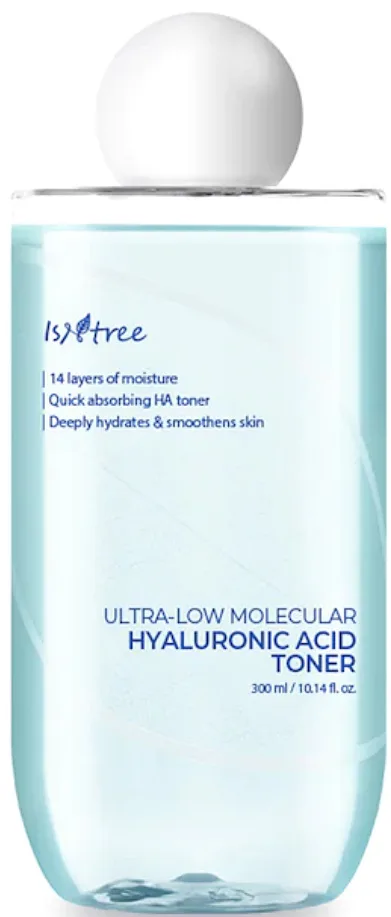
Most hyaluronic toners use three to five HA forms; this one fields fourteen, deliberately sorted across the molecular-weight spectrum so hydration registers at more than one depth. It also swaps part of the standard distilled-water base for mineral-rich deep seawater collected near Ulleungdo — attention paid to the one ingredient every other toner treats as filler.
A watery, fourteen-weight hyaluronic toner that turns the humble water phase into the star — mineral-rich Ulleungdo seawater, zero irritants, and per-milliliter math that makes aggressive layering guilt-free. It does exactly one job, hydration, and does it about as well as the format allows. Pair it with a sealing cream and it anchors any dehydrated routine.
The case for it
What would change this: A declared concentration would move this to a firmer reading of the dose.
Same rule for everyone. “Good choice” is the verdict on 9,564 of 45,024 concern verdicts across the catalog; rule R5 decided 9,072 of them. Unchanged since September 5, 2026, engine 5.1.1.
Brand or formulator? Disclose a concentration or correct a fact →
The studies behind the evidence row
The case for it
What would change this: A declared concentration would move this to a firmer reading of the dose.
Same rule for everyone. “Promising” is the verdict on 7,858 of 45,024 concern verdicts across the catalog; rule R9p decided 7,858 of them. Unchanged since September 5, 2026, engine 5.1.1.
Brand or formulator? Disclose a concentration or correct a fact →
The studies behind the evidence row
The case for it
Cautions: known irritants.
What would change this: A researched evidence row for the lead active would replace this with a verdict.
Same rule for everyone. “Supporting role” is the verdict on 8,197 of 45,024 concern verdicts across the catalog; rule F3 decided 183 of them. Unchanged since September 5, 2026, engine 5.1.1.
Brand or formulator? Disclose a concentration or correct a fact →
Also listed for Dryness — the actives here (Betaine, Allantoin, Panthenol (Vitamin B5) are in our research queue for that concern; there is no verdict until their evidence rows are written. That is a gap in our table, not a mark against the product.
Does the jobDoes what a toner is for: not alcohol-driven, adds something real. Not measured from the label: restores skin pH, plays well with what follows.
A verdict is DermApproved’s assessment of how well a product’s ingredients fit a concern — never a claim about what the product treats. Evidence dots and collected reviews sit beside it and are never blended in. Rules 0.5.1 · evidence table ev-2026.09-r228 · how we decide
One hundred and twenty kilometers off Korea's east coast sits Ulleungdo, a volcanic island surrounded by some of the deepest, coldest water in the Sea of Japan. That water — dense with magnesium, calcium, and potassium — is what Isntree ships in to replace a portion of the plain distilled water in this toner. It's worth pausing on, because water is the first ingredient in virtually every toner ever made and the one ingredient virtually no brand thinks about. Isntree built this formula from the solvent up, and that tells you something about the level of intent operating here.
The headline act is the fourteen-form hyaluronic acid complex, and before your eyes glaze over at the number, the engineering logic deserves a fair hearing. Hyaluronic acid behaves completely differently depending on its molecular weight. The big, intact polymers — sodium hyaluronate, the crosspolymer — are far too large to get past the skin's surface, so they sit on top and form a breathable film that slows water loss. The ultra-low molecular fragments this toner is named for — hydrolyzed hyaluronic acid, sodium acetylated hyaluronate, and their cousins — are small enough to settle into the upper layers of the stratum corneum and bind water slightly deeper down. Most hydrating toners pick one or two weights and call it a day. This one fields the whole orchestra: fragments below, mid-weights in the middle, film-formers above. The practical translation is hydration that registers at more than one depth simultaneously, with a finish that never turns syrupy because the heavy, tacky polymers are only one voice among fourteen rather than the whole show.
The texture makes the case better than the ingredient list does. This is barely thicker than water — it splashes like water, spreads like water, and disappears into skin in seconds, leaving a faint coolness and none of the gluey afterfeel that thick HA formulas produce. If you've ever abandoned a hyaluronic product because it pilled under sunscreen or left your face feeling laminated, this is the opposite experience. Oily and combination skin can use it generously without consequence, and that watery character is exactly what makes it the natural candidate for the seven-skin method: thin layers patted on back to back, each absorbing in twenty seconds, building hydration the way coats of paint build color. The 300 ml bottle is a quiet endorsement of that habit. Isntree knew people would use this by the palmful and priced the volume accordingly.
The supporting cast is small but well-chosen. Betaine, a sugar-beet osmolyte, sits high in the formula and takes the raw edge off concentrated humectancy — heavily humectant formulas can paradoxically feel tight on some skin, and betaine is the standard counterweight. Allantoin and panthenol cover the soothing-and-repair flank, which is what lets this work as a rehydration step the morning after an acid peel or a retinoid night without any sting. The Aquaxyl complex of sugar derivatives rounds out the water-binding, and glyceryl glucoside makes an appearance with its aquaporin-stimulating claim — the idea that it activates the skin's own water channels. That mechanism has some legitimate science behind it in principle, but whether it operates at the concentration used here is something Isntree doesn't disclose and independent data doesn't settle. File it under plausible bonus, not purchase justification. The same honest framing applies to the Ulleungdo seawater itself: mineral-rich water is a more interesting canvas than distilled water, but nobody has published convincing clinical work showing deep seawater transforms skin. It's a thoughtful base, not a treatment.
What this toner will not do is also worth saying plainly. There are no ceramides, no lipids, no occlusives, no brightening agents, no exfoliation — nothing here but water management. Skin that is genuinely dry, as opposed to dehydrated, lacks oil as well as water, and this formula addresses only half of that equation. In arid climates the gap becomes a trap: humectants without a sealing layer can pull moisture from skin and surrender it to thirsty air. The fix is simply a decent cream on top, but it means this is a routine component, never a routine. The results are also cumulative rather than cinematic — skin feels comfortable immediately, but the visible payoff of better water retention takes weeks of consistency, and anyone expecting an overnight glass-skin transformation will call it underwhelming. And while fourteen HA types is genuine formulation effort, a skeptical reading of the INCI list notes that several of those fourteen cluster near the end, at concentrations best described as ceremonial.
Three years on the market have been kind to this formula. It launched in 2023 as the renewal generation of the hyaluronic line that built Isntree's name, and it has accumulated the kind of review volume — thousands across YesStyle, Amazon, and Olive Young, running overwhelmingly positive — that separates proven workhorses from launch-cycle hype. At twenty-two dollars for 300 ml, it costs about seven cents per milliliter, which is the kind of math that makes the seven-skin method a reasonable lifestyle rather than an extravagance. For dehydrated skin of any type, for sensitive skin tired of being stung by its own toner, for anyone who wants a deep well of gentle hydration to layer under more ambitious actives — this is an easy, durable recommendation. Just respect what it is: the best water your routine has ever had, and only water.
The hero actives that drive this product's performance.
| Ingredient | Function | Evidence |
|---|---|---|
| 14-Type Hyaluronic Acid Complex | Fourteen separate hyaluronic acid forms span the molecular-weight spectrum here: ultra-low fragments like hydrolyzed and acetylated hyaluronate settle into the upper stratum corneum, mid-weights bind water between them, and the crosspolymer forms a light surface film that slows evaporation of everything underneath. | Established mechanism for Dehydration · established mechanism |
| Ulleungdo Deep Seawater | Mineral-rich deep seawater drawn near Ulleung Island replaces part of the plain water phase, contributing magnesium, calcium, and potassium to the solvent that carries the fourteen HA forms rather than acting as inert filler. | Not yet assessed |
| Betaine | A sugar-beet-derived osmolyte placed high in this formula, it buffers the osmotic stress that concentrated humectants can create and adds a slip that keeps the watery texture from feeling like bare water. | Established mechanism for Dehydration · established mechanism |
| Allantoin | Calms the minor reactivity that dehydrated, barrier-stressed skin tends to show, which is what lets this toner double as a post-exfoliation rehydration step without stinging. | Not yet assessed |
| Panthenol | Provitamin B5 works alongside the low-weight HA fractions to support barrier recovery while they handle water-binding, covering the repair side of a formula otherwise devoted purely to hydration. | Established mechanism for Dehydration · established mechanism |
Ingredient standings describe the active at treatment-level doses and vehicles; this product's own condition grades weigh its actual formula.
Water, Methylpropanediol, 1,2-Hexanediol, Sea Water, Glycerin, Hyaluronic Acid, Hydrolyzed Hyaluronic Acid, Sodium Hyaluronate, Hydrolyzed Sodium Hyaluronate, Potassium Hyaluronate, Sodium Acetylated Hyaluronate, Hydroxypropyltrimonium Hyaluronate, Sodium Hyaluronate Crosspolymer, Dimethylsilanol Hyaluronate, Hydrolyzed Calcium Hyaluronate, Sodium Sulfated Hyaluronate, Sodium Stearoyl Hyaluronate, Sodium Oleoyl Hyaluronate, Betaine, Allantoin, Butylene Glycol, Caprylyl Glycol, Ethylhexylglycerin, Panthenol, Xanthan Gum, Malachite Extract, Disodium EDTA, Pentylene Glycol, Xylitylglucoside, Anhydroxylitol, Xylitol, Glucose, Hamamelis Virginiana (Witch Hazel) Extract, Chamaecyparis Obtusa Leaf Extract
toner
AM & PM
Pat one layer in immediately after cleansing while skin is still damp; for the seven-skin method, add thin layers back to back, letting each absorb for twenty seconds. Seal with a cream — humectants this concentrated need occlusion in dry air.
Plumper, less tight-feeling skin within minutes of the first application; visibly better water retention through the day after one to two weeks of consistent use; the cumulative payoff — fine dehydration lines softening and makeup sitting better — shows around the four-to-six-week mark.
The molecular-weight story at the center of this formula is one of the better-supported ideas in cosmetic science. Hyaluronic acid's behavior on skin is weight-dependent: high-molecular-weight HA (around one million Daltons and up) cannot penetrate the stratum corneum and instead forms a hygroscopic surface film that reduces transepidermal water loss, while low and ultra-low fragments — produced by hydrolysis or enzymatic cleavage, typically under 50 kDa — can lodge in the outermost skin layers and bind water there. Comparative studies in the dermatological literature have repeatedly measured better hydration and fine-line outcomes from lower-weight fractions than from high-weight films alone, which is the empirical basis for stacking multiple weights in a single formula rather than a marketing flourish. Worth knowing: some immunology research has flagged that very-low-weight HA fragments can act as inflammatory signals in wounded tissue, but this concerns fragment sizes and contexts far removed from intact skin and cosmetic use, where the safety record is long and clean. The modified salts here — acetylated hyaluronate for surface affinity, hydroxypropyltrimonium hyaluronate for substantivity — each carry supplier-level data showing improved adhesion or moisturization versus standard sodium hyaluronate, though independent replication is thinner. The formula's secondary claims deserve proportionate skepticism: glyceryl glucoside has genuine published work suggesting it upregulates aquaporin-3 water channels in keratinocytes, but dose-response at cosmetic concentrations is unsettled, and deep seawater's mineral content, while real, has only small, preliminary studies behind its topical benefits. The conservative summary: the HA architecture is evidence-based, the garnishes are plausible extras.
Dehydration and dryness get conflated constantly in clinical settings, and this product is a useful case study in the difference. Dermatologists typically frame dehydration as a water deficit that humectants address and dryness as a lipid deficit that they cannot — a distinction that predicts exactly who this toner will satisfy. Clinical guidance for barrier-compromised patients generally favors formulas like this one: no fragrance, no denatured alcohol, a short irritant profile, and humectants paired with soothers such as panthenol and allantoin. The standard caveat offered in practice is to apply humectant products to damp skin and seal them promptly with a moisturizer, since unsealed humectants in low-humidity environments can increase transepidermal water loss rather than reduce it. For patients on retinoids or undergoing exfoliating treatments, a layered watery toner of this kind is frequently suggested as a buffer step that improves tolerance without interfering with the active.
After cleansing, while skin is still slightly damp, pour a small amount into palms and press gently into face and neck — patting rather than wiping helps absorption and skips the cotton-pad waste. For deeper hydration, repeat in two or three thin layers, giving each about twenty seconds to absorb before the next. Follow within a minute or two with serum and a sealing moisturizer; in the morning, finish with sunscreen. It plays well at any step where skin feels tight — as a post-shave rinse-off chaser, a mid-flight refresh decanted into a travel bottle, or a buffer layer before retinoids on sensitive nights. Use morning and evening; there's no actives schedule to manage.
Twenty-two dollars for 300 ml works out to roughly seven cents per milliliter, which sits near the bottom of the price-per-volume range for serious hydrating toners — and 'serious' is doing real work in that sentence, because this isn't a watered-down value play but the brand's flagship hydration formula. The economics matter more than usual here since the product invites multi-layer application; a toner you seven-skin through in two months needs to be priced like this one is. Isntree's decade-long track record and the formula's three years of accumulated reviews mean you're paying for proven execution, not launch hype. Frequent sales push it under twenty dollars, at which point it's close to unbeatable for the category.
Anyone whose skin drinks water faster than it holds it — dehydrated oily skin, tight-feeling combination skin, sensitive types who react to fragranced toners. Seven-skin method devotees get the best per-layer economics in the category, and retinoid users get a gentle buffer layer that won't interfere with their actives.
Genuinely dry skin missing oil as well as water will find this half a solution and should prioritize a lipid-rich cream first. Those wanting visible treatment outcomes — brightening, smoothing, pore work — are buying the wrong category entirely, and minimalists who already own a hydrating serum may find it redundant.
Ready to try Isntree Ultra-Low Molecular Hyaluronic Acid Toner?
Buy at Amazon ♥Barely thicker than water, with a faint humectant slip that vanishes as it absorbs — closer to a mineral water with body than to an essence.
Nothing added; at most a fleeting raw-material neutrality that disappears on contact.
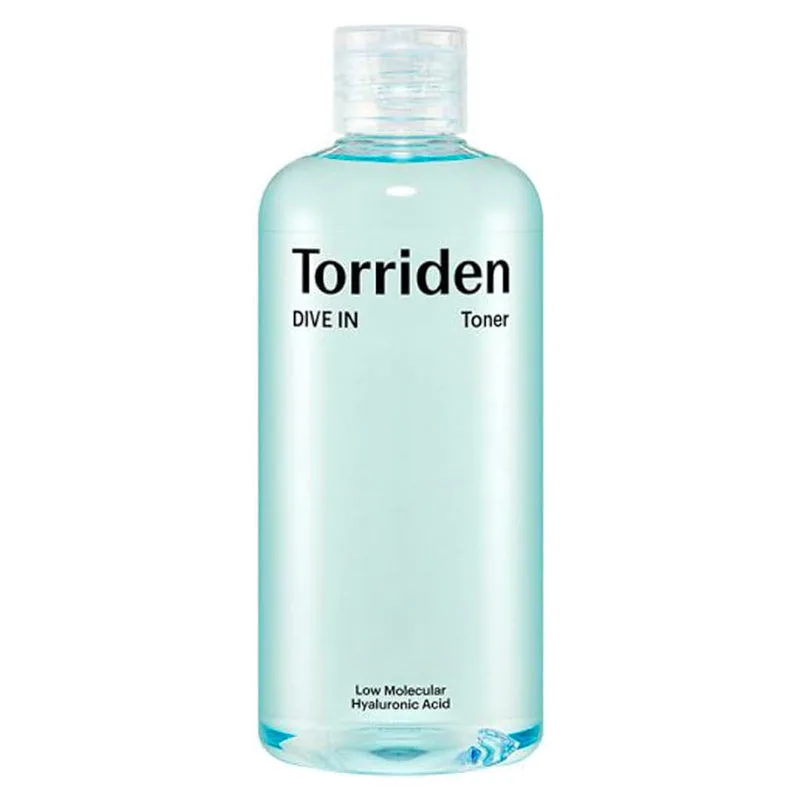
A no-frills 300 ml plastic bottle with a screw-top pour opening — utilitarian, travel-tolerant, and clearly designed for generous daily use rather than vanity-shelf display.
Expect an immediate, unceremonious sort of comfort: skin drinks it in within seconds and simply feels less tight. There is no tingle, no adjustment period, and no purging — the only learning curve is discovering how many layers your skin wants on a given day.
Roughly four to five months at one layer twice daily; committed seven-skin practitioners will empty the 300 ml bottle in closer to two.
All Year
Isntree's original Hyaluronic Acid Toner was the brand's breakout product, and rather than retire it, the company spun this 2023 'Ultra-Low Molecular' generation alongside it — a response to years of customer requests for faster absorption and deeper-feeling hydration than the classic viscous formula delivered.
Founded in 2014, Isntree built its reputation on single-hero-ingredient formulas vetted through ingredient-transparency pages and EWG-green ratings. The brand's hyaluronic acid line is its longest-running franchise, and this renewal generation drew on a decade of customer feedback rather than starting from scratch.
Fourteen types of hyaluronic acid means fourteen times the hydration.
The count describes variety, not quantity — the value is that different molecular weights behave differently (fragments settle into the surface layers, heavy polymers film on top), not that each type adds another unit of moisture. Several of the fourteen appear at trace levels.
A hyaluronic acid toner can replace your moisturizer.
This formula contains no oils, ceramides, or occlusives whatsoever — it binds water but cannot seal it. In dry air, unsealed humectants can even give moisture back to the atmosphere, so a cream on top isn't optional.
For mildly dehydrated skin, plausibly yes — fourteen HA forms layered two or three times deliver serum-level humectancy. Skin dealing with serious dryness or barrier damage will still want a dedicated serum with ceramides or panthenol at higher concentrations, since this formula is water-binding only.
Yes — the formula avoids fatty acids, esters, and polysorbates that feed Malassezia. The two fatty-acid-modified HA salts (stearoyl and oleoyl hyaluronate) sit at trace levels at the end of the INCI list and are generally not considered a practical concern.
Size. Standard hyaluronic acid is too large to pass the skin's surface and hydrates by filming on top; ultra-low molecular fragments are small enough to settle into the upper layers of the stratum corneum, hydrating slightly deeper. This toner uses both ends of the spectrum on purpose.
It contributes magnesium, calcium, and potassium to the water phase, and mineral-rich water is a more interesting solvent than distilled water. That said, robust clinical evidence for deep seawater as a topical active is thin — treat it as a thoughtful base, not a treatment.
It shouldn't — there's no fragrance, no denatured alcohol, and allantoin plus panthenol are included specifically to calm reactivity. The witch hazel here is a trace extract without the alcohol found in witch hazel distillates, so the usual sting concern doesn't apply.
Start with three thin layers patted in twenty seconds apart and judge from there — most skin saturates well before seven. The watery texture and 300 ml volume make this one of the more economical toners to layer aggressively.
Recurring themes our editors read across retailer reviews of this product — summaries in our words, not quotations, and not a substitute for your own patch test.
absorbs in seconds with no sticky film
layers beautifully for the seven-skin method
huge 300ml bottle lasts months
gentle enough for reactive and acne-prone skin
hydration alone isn't enough for very dry skin
results are subtle rather than dramatic
plain packaging feels utilitarian
Verified answers from our questions library — the nuance a product page cannot carry.