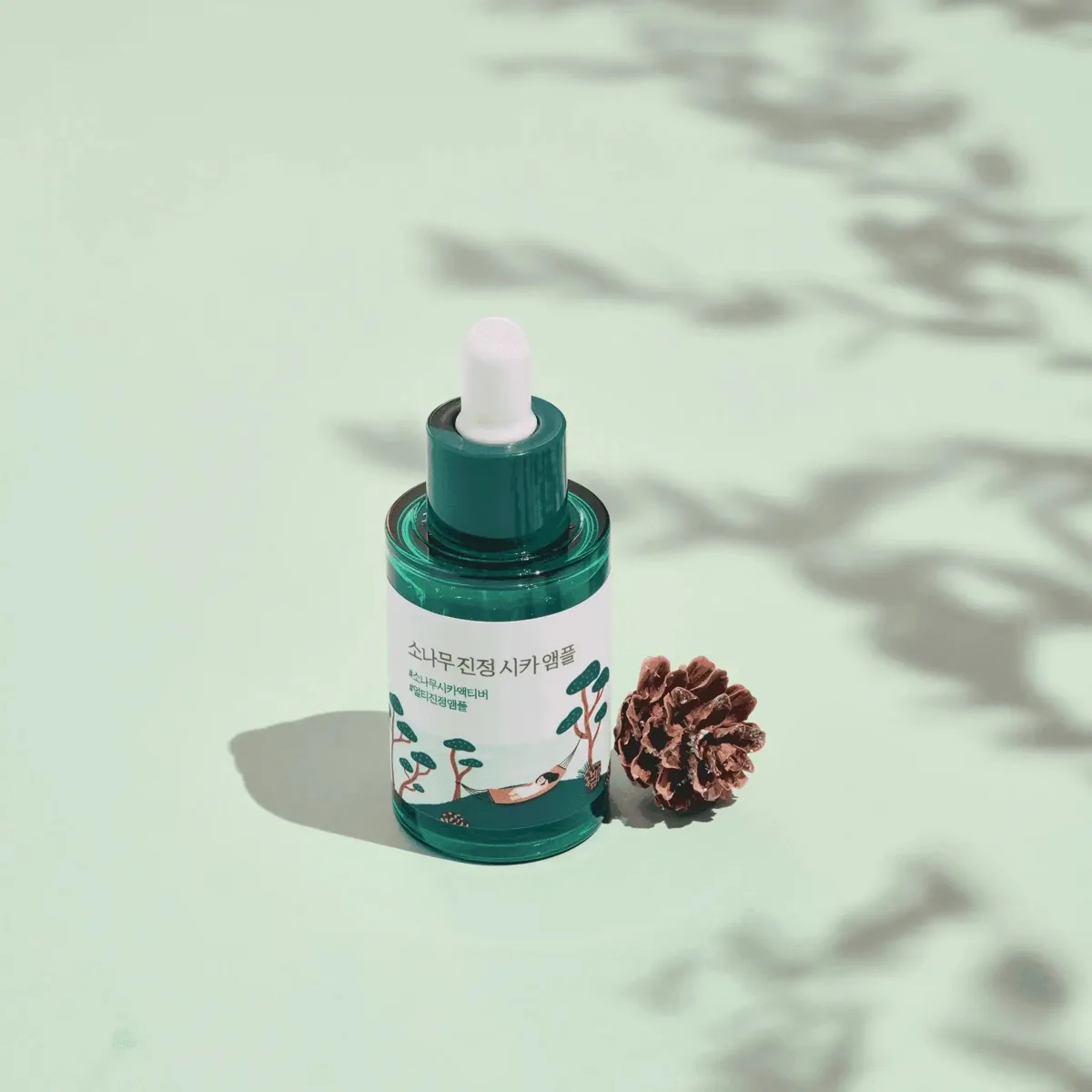
This is the rare propolis ampoule designed around calming rather than treatment intensity. Where the brand's 15% Polyphenols ampoule chases a high active load and accepts the resinous stickiness that comes with it, the Calming Ampoule sacrifices a few percentage points of propolis for a notably lighter finger-feel and an even gentler profile, making it a better entry point for anyone whose skin is in an acutely reactive state.
The lighter, less sticky sibling to By Wishtrend's flagship 15% propolis ampoule — same French Auvergne propolis sourcing, same polyphenol-stack logic, but tuned for daily calming on reactive skin rather than treatment-intensity work. For users who found the 15% too tacky or too much, this is the version that finally fits.
Supporting rolefor SensitivityIn your profileYou chose · Mostly gentle: known irritants — usable for sensitive skin with a patch test.Not yet assessedStandard tolerabilityNo reviews collected yet
The case for it
Houttuynia Cordata Extract has no evidence row yet for this concern — it is in the research queue.
The formula carries no trigger this concern is sensitive to, with the cautions noted.
Cautions: known irritants.
What would change this: A researched evidence row for the lead active would replace this with a verdict.
Same rule for everyone. “Supporting role” is the verdict on 8,197 of 45,024 concern verdicts across the catalog; rule F3 decided 183 of them.
Unchanged since September 5, 2026, engine 5.1.1.
Supporting rolefor Compromised Skin BarrierIn your profileYou chose · Nothing here targets compromised skin barrier directly; barrier support is the recognised companion to treating it, and this ampoule does that without known triggers.Not yet assessedStandard tolerabilityNo reviews collected yet
The case for it
Houttuynia Cordata Extract has no evidence row yet for this concern — it is in the research queue.
The formula carries no trigger this concern is sensitive to, with the cautions noted.
Cautions: known irritants.
What would change this: A researched evidence row for the lead active would replace this with a verdict.
Same rule for everyone. “Supporting role” is the verdict on 8,197 of 45,024 concern verdicts across the catalog; rule R8 decided 4,250 of them.
Unchanged since September 5, 2026, engine 5.1.1.
R8 — The category's job (barrier care, humectant hydration, gentle cleansing, photoprotection) is the documented supportive role for this concern. This is the honest verdict for a moisturizer on an acne page. · the full register
Not for thisfor RosaceaIn your profileYou chose · The actives here have been researched for rosacea and the evidence does not support the claim.Not yet assessedStandard tolerabilityNo reviews collected yet
The case for it
Panthenol & Lactobacillus Ferment has been researched for this concern and the evidence does not support it.
It is plausibly present at a working level, though the concentration is not declared.
The formula carries no trigger this concern is sensitive to, with the cautions noted.
Cautions: known irritants.
What would change this: A declared concentration would move this to a firmer reading of the dose.
Same rule for everyone. “Not for this” is the verdict on 488 of 45,024 concern verdicts across the catalog; rule R10 decided 488 of them.
Unchanged since September 5, 2026, engine 5.1.1.
Promisingfor AcneIn your profileYou chose · Zinc has trial-level evidence for acne but no guideline or regulatory standing yet — promising, short of a recommendation; the other actives here are not yet assessed for it.Moderate evidenceStandard tolerabilityNo reviews collected yet
The case for it
Zinc PCA has trial-level evidence for this concern but no guideline or regulatory standing yet.
It is plausibly present at a working level, though the concentration is not declared.
The formula carries no trigger this concern is sensitive to, with the cautions noted.
Cautions: known irritants.
What would change this: A declared concentration would move this to a firmer reading of the dose.
Same rule for everyone. “Promising” is the verdict on 7,858 of 45,024 concern verdicts across the catalog; rule R9p decided 7,858 of them.
Unchanged since September 5, 2026, engine 5.1.1.
R9p — 0.5.0: 'Unproven' beside three filled dots read as one question answered twice with opposite words (7,018 rows). The chip measures standing, the dots measure trial volume; where the row carries at least one RCT or a tier-2 source (moderate dots) and the active is present at a working level, the honest word is Promising. Unproven is reserved for plausible-standing rows with limited or weak evidence, or an under-dosed form. Same rank as Unproven — a bet either way; the dots order them. · the full register
Carrying active
Zinc PCA
Standing
plausible — trials support it
Form
plausible — studied range 0.1–2%, from the OTC monograph or label; needs leave-on contact
Tolerability
standard — irritant load
Row checked
against its sources on July 17, 2026 (evidence table ev-2026.09-r228)
Good choicefor DehydrationIn your profileYou chose · Panthenol (Vitamin B5) is a reference standard by mechanism for dehydration; this ampoule carries it.Moderate evidenceGentleNo reviews collected yet
The case for it
Panthenol & Lactobacillus Ferment has trial-supported standing for this concern.
It is plausibly present at a working level, though the concentration is not declared.
The formula carries none of the triggers this concern is sensitive to.
What would change this: A declared concentration would move this to a firmer reading of the dose.
Same rule for everyone. “Good choice” is the verdict on 9,564 of 45,024 concern verdicts across the catalog; rule R5 decided 9,072 of them.
Unchanged since September 5, 2026, engine 5.1.1.
R5 — Trial-supported or guideline-supported active, adequately or plausibly dosed. · the full register
Carrying active
Panthenol & Lactobacillus Ferment
Standing
supported — its mechanism is established
Form
plausible — studied range 2.5%, from the trials on the row; needs leave-on contact
Tolerability
gentle
Row checked
against its sources on July 17, 2026 (evidence table ev-2026.09-r228)
The studies behind the evidence row
Cosmetic Ingredient Review assessment of panthenol / dexpanthenol — humectant and moisturizer that raises stratum-corneum water content — reference work
A verdict is DermApproved’s assessment of how well a product’s ingredients fit a concern — never a claim about what the product treats. Evidence dots and collected reviews sit beside it and are never blended in.
Rules 0.5.1 · evidence table ev-2026.09-r228 · how we decide
Assessment
Pros & Cons
Pros
✓ Same French Auvergne propolis sourcing as the flagship 15% ampoule
✓ Notably lighter, less sticky finger-feel than the sister product
✓ Houttuynia cordata extract base provides genuine soothing baseline
✓ Polyphenol-rich botanical stack compounds the calming effect
✓ Fungal-acne safe — no fatty alcohols, esters or plant oils
✓ Layers cleanly under sunscreen without rolling or pilling
✓ Pregnancy-safe option for sensitive, reactive skin
✓ Better entry point to propolis for first-time users
Cons
✗ Less treatment-strength than the brand's 15% sister product
✗ Contact allergen risk for users sensitive to bee products
Review
Full Review
Every successful skincare product eventually develops a feedback loop with its users, and the loop tells the brand things the marketing department couldn't have predicted. By Wishtrend's 15% Polyphenols in Propolis Ampoule was a hit out of the gate — but the most consistent complaint, repeated across thousands of reviews on Reddit and YesStyle and Amazon, was that the resinous tackiness made it hard to use twice a day on skin that was already in a sensitive state. The ingredient logic was perfect for the audience. The texture was a barrier. So in 2022 the brand released this Calming Ampoule, which is essentially the same formulation philosophy with the propolis dialed back and the finger-feel rebalanced for daily use. Same French Auvergne propolis. Same houttuynia cordata base. Same polyphenol stack of tulsi and pomegranate and perilla and turmeric. Just lighter, drier, and easier to wear under everything else.
The practical difference shows up in the first thirty seconds of application. Where the 15% has a distinct 'wait, let me press this in for another minute' resin feel, the Calming Ampoule absorbs in under fifteen seconds and leaves a much more conventional satin finish. The faint honey-and-resin smell is still there — it's the propolis itself, which no amount of formulation work will fully erase — but the tactile experience is closer to a regular essence than a treatment ampoule. For a user whose skin is in a quiet calm-down phase, that lighter texture is exactly what makes twice-daily compliance possible.
The ingredient base is doing the same job as the sister product, just with a slightly different priority. Houttuynia cordata extract is the actual first ingredient on the INCI — water gets demoted to position seven, after several glycols and humectants — and houttuynia is the active doing most of the calming work. It has its own anti-inflammatory and mild antibacterial profile in the dermatology literature, separate from the propolis. The propolis sits in the second slot, dosed lower than the 15% but still high enough to deliver the caffeic acid and quercetin polyphenols that drive its evidence-based effects. Zinc PCA contributes mild sebum modulation. Lactobacillus ferment supports the microbiome. Panthenol provides barrier humectancy. The supporting cast — pomegranate, tulsi, witch hazel, neem flower and leaf, perilla and turmeric — compounds the polyphenol load just like the 15% sister product, but the overall intensity is calibrated for sensitive skin rather than acute treatment.
The practical use case sorts cleanly. If your skin is breakout-prone and actively flaring, the 15% is still the right pick — that extra propolis load is doing real work. If your skin is reactive, easily inflamed, in a barrier-recovery phase, or just leans sensitive day-to-day, the Calming Ampoule is the better fit. It is also a better entry point to propolis for anyone who has never tried the ingredient before — the lower load and gentler finish reduce the risk that you'll bounce off the experience because of texture. And for users who want to use propolis daily but cannot tolerate the heavier ampoule under sunscreen, this is the version that layers cleanly under SPF without rolling or pilling.
Results are quiet and cumulative rather than dramatic. Most users notice that their skin reacts less to the rest of their routine within the first week — products that previously stung a little stop stinging, and the baseline level of low-grade redness softens. By week three to four the cumulative calming effect is more obvious, and breakout-related post-inflammatory redness fades faster than it normally would. This isn't a brightener and not an acne treatment, and anyone expecting either of those things should look elsewhere. It is exactly what the name says: a calming ampoule. Within that lane, it does its job consistently and well.
The limitations are honest. The 30ml bottle is on the smaller side for a twice-daily ampoule, and you'll finish it in roughly six to eight weeks. The honey-resin natural smell, while mild, isn't to everyone's taste — there's no added fragrance to mask it. The lower propolis load means this is genuinely not as treatment-strong as the 15%, so users with active inflammatory acne should not see this as a replacement for the heavier sister product. And anyone with a confirmed bee-product allergy needs to patch test before facial use, because propolis remains a documented contact allergen for a small subset of users regardless of concentration.
For sensitive, reactive, easily-inflamed skin chasing daily calm — and for users who tried the brand's 15% ampoule and put it down because of the stickiness — this is the version of the propolis story that will actually stay in your routine. It is the lighter, more accessible chapter of one of the better K-beauty soothing serums in production, and for the right person it is exactly the right tool.
Formula
Key Ingredients
The hero actives that drive this product's performance.
Sourced from the same French Auvergne propolis as the brand's 15% ampoule but positioned at a lower load to keep this version calming-led rather than treatment-led. Delivers the caffeic acid and quercetin polyphenols that drive propolis's anti-inflammatory and mild antibacterial effects.
Replaces the water position on the INCI as the actual base of the formula — a Korean medicinal herb with documented anti-inflammatory and mild antibacterial effects. In this calming ampoule it does the bulk of the soothing work, with the propolis layered on as a complementary polyphenol source.
Provides sebum-modulating and mild antibacterial action that complements the propolis without adding any of the irritation associated with stronger acne actives. The PCA salt form makes it more soluble and skin-friendly than zinc oxide.
Tulsi, pomegranate, witch hazel, neem flower and leaf, perilla and turmeric form a polyphenol-rich support cast that compounds the antioxidant load of the propolis. The stack is the same general logic as the brand's 15% ampoule but tuned for a lighter, more redness-focused outcome.
Panthenol provides barrier-repair humectancy while the postbiotic ferment supports microbiome balance. Together they make this ampoule appropriate for compromised, sensitized skin that needs hydration and calming without any leave-on actives that could push it further.
Established mechanismfor Dehydration · established mechanism
Ingredient standings describe the active at treatment-level doses and
vehicles; this product's own condition grades weigh its actual formula.
Apply 3-4 drops on damp skin after cleansing and toner. Pairs naturally with the brand's Pro-Biome Balance Cream as a layering system.
Results Timeline
Calmed redness and reduced reactivity within the first week. Meaningful improvement in barrier-related sensitivity typically takes 3-4 weeks of twice-daily use.
Propolis is a resinous bee product whose biological activity is driven by polyphenol fractions — caffeic acid, caffeic acid phenethyl ester (CAPE), quercetin, pinocembrin and chrysin — present in concentrations that vary significantly by botanical source and geographic origin. A 2017 review in Evidence-Based Complementary and Alternative Medicine summarized the in vitro and clinical literature on propolis in dermatology, including its antibacterial activity against Cutibacterium acnes, modulation of pro-inflammatory cytokine cascades, and acceleration of superficial wound healing. The Auvergne-region sourcing used in this ampoule has been characterized in chemical analysis studies as carrying a relatively high caffeic acid ester and flavonoid load compared to other European propolis sources. The lower propolis percentage in this Calming Ampoule compared to the brand's 15% sister product reflects a deliberate trade-off: in acutely sensitized skin, a lower active load with more consistent twice-daily use often produces better real-world outcomes than a higher load that the user struggles to tolerate. Houttuynia cordata, sitting in the first ingredient slot, has its own dermatological evidence base for anti-inflammatory and mild antibacterial activity, and small clinical studies on Korean herbal extracts have shown reduction in erythema and trans-epidermal water loss in atopic-prone skin. The supporting botanical stack — Ocimum sanctum (tulsi), Punica granatum (pomegranate), Hamamelis virginiana (witch hazel), Curcuma longa (turmeric), Perilla frutescens and Melia azadirachta (neem) — contributes additional polyphenol fractions, several of which have documented anti-inflammatory and antioxidant activity in topical applications. Zinc PCA provides mild sebum modulation and antibacterial action through a different mechanism than the propolis, broadening the formulation's coverage of the inflammation and dysbiosis pathways relevant to sensitive and reactive skin. The combination matters: the houttuynia base does the bulk of the calming, the propolis adds the polyphenol payload, the botanical stack compounds the antioxidant load, and the postbiotic ferment supports microbiome balance — four mechanisms operating in parallel rather than a single point of attack.
References
Propolis: A complex natural product with a plethora of biological activities — Evidence-Based Complementary and Alternative Medicine (2017)
Dermatologist Perspective
Dermatologists generally view propolis as a useful supportive ingredient for sensitive, reactive and mildly inflamed skin, and the calming-led positioning of this ampoule fits that clinical use case. Practitioners find that calming-focused products work best as adjuncts to a broader routine — used alongside an evidence-based active like a retinoid or azelaic acid, where the propolis takes the inflammatory edge off without replacing the primary treatment. The fragrance-free, low-irritant formula is consistent with what dermatologists typically recommend for patients with sensitive skin or rosacea-adjacent presentations. Patients with confirmed bee-product allergies should patch test before facial use. The product is generally considered appropriate for use during pregnancy.
Guidance
Usage & Recommendations
How to Use
Apply 3-4 drops on damp skin after cleansing and toner, before moisturizer. Press into the face and neck rather than rubbing. Wait one minute before layering the next product. Use morning and evening for best results. Pairs naturally with the brand's Pro-Biome Balance Cream as a layering system. Can be applied before retinoids, acids or vitamin C as a buffering layer. Always follow with daily sunscreen the next morning.
Value Assessment
At around twenty-eight dollars for 30ml, this sits slightly below the brand's 15% Polyphenols ampoule and squarely in the K-beauty mid-range for soothing serums. The single 30ml size is the only option, and a bottle reasonably lasts six to eight weeks with twice-daily face and neck use. The price is justified by the ingredient work — Auvergne propolis sourcing, a real polyphenol stack, and a fragrance-free, well-preserved formula — and by the meaningful texture difference from the 15% sister product, which makes daily compliance easier. Users committed to propolis as a long-term ingredient may end up buying both this and the 15% for different phases of their skin, which is the brand's evident intention.
Who Should Buy
Sensitive, reactive, easily-inflamed skin chasing daily calm. Users who tried the brand's 15% ampoule and found it too sticky. First-time propolis users looking for a gentler entry point. Anyone whose skin needs consistent calming support rather than treatment-strength intervention.
Who Should Skip
Users with active inflammatory acne who need the treatment-strength 15% sister product instead. People with confirmed bee-product allergies. Vegan users avoiding bee-derived ingredients.
Ready to try By Wishtrend Propolis Energy Calming Ampoule?
Light, slightly tacky liquid that absorbs faster and drier than the brand's 15% ampoule.
Scent
Faint honey-and-resin natural smell from the propolis; no added fragrance.
Packaging
Frosted dropper bottle with screw cap.
Finish
lightweightnon-greasynatural
What to Expect on First Use
First few uses are quietly uneventful — no sting, no purging, no obvious sensation beyond a faint coolness. Most users notice less reactivity in the skin within a week and overall calmer baseline by week three.
How Long It Lasts
30ml lasts about 6-8 weeks applied morning and evening face and neck use.
By Wishtrend developed the Calming Ampoule in 2022 as the lighter, more accessible counterpart to its flagship 15% Polyphenols ampoule, partly in response to consistent feedback that the original was too sticky for daily use on already-irritated skin. Same Auvergne propolis sourcing, lighter execution.
About By Wishtrend Established Brand (5–20 years)
By Wishtrend launched in 2013 as Korean retailer Wishtrend's in-house brand. The Propolis Energy Calming Ampoule is the lighter, calming-led sibling to the brand's flagship 15% propolis ampoule, sourced from the same French Auvergne propolis.
Brand founded: 2013 · Product launched: 2022
Myth vs. Reality
Common Myths
Myth
If it has less propolis it must be weaker.
Reality
For acutely sensitized skin, lower-percentage propolis with strong botanical and postbiotic support often works better than a high-percentage formula because the gentler load allows for more consistent use without any low-grade irritation. Calming work is about consistency, not concentration.
Myth
All propolis ampoules are the same once you get past the percentage.
Reality
Sourcing matters more than most consumers realize. French Auvergne propolis carries a different polyphenol profile than Brazilian or Korean propolis, and the supporting cast around the propolis — houttuynia, tulsi, perilla — meaningfully changes the outcome.
FAQ
Frequently Asked Questions
How is this different from the 15% Polyphenols ampoule?
The Calming Ampoule has a lower propolis load and a notably lighter, less sticky finger-feel. The 15% is positioned as a treatment-intensity active for breakout-prone, very inflamed skin, while this is positioned as a daily calming serum for sensitive and reactive types who need consistency over intensity.
Can Propolis Energy Calming Ampoule be used by those prone to fungal acne?
Yes — the formula contains no fatty alcohols, esters or plant oils that feed Malassezia. It is one of the safer propolis options for users with confirmed fungal acne.
Can I use it morning and night?
Yes. Twice-daily use is the intended cadence and is when most of the calming benefit shows up. The 30ml bottle lasts about 6-8 weeks at that rate.
Will it help breakouts?
It will help calm the inflammation and post-acne redness associated with breakouts, but it is not a primary acne treatment. For active breakouts, pair it with a salicylic acid or benzoyl peroxide treatment — this ampoule will buffer their irritation.
Is it safe in pregnancy?
Yes. The formula contains no retinoids, salicylic acid or other commonly restricted pregnancy ingredients.
Can I layer it with the 15% Polyphenols ampoule?
It is not necessary — the two products overlap in function and using both is essentially overdosing the same logic. Pick the one that matches your skin's current state: this one for calming, the 15% for breakout-prone treatment work.
Reviews
What Reviewers Tend to Say
Recurring themes our editors read across retailer reviews of this product — summaries in our words, not quotations, and not a substitute for your own patch test.
Picking one skin state and selling through hospital dermatology departments is a genuinely smart strategy. Whether the house botanical earns its billing is a separate question, and the answer is not the one either side wants.
It's in half your products and headlines none of them. Provitamin B5 has the kind of boring, decades-deep barrier and wound-healing evidence that flashier actives can only envy.
Cutting a beard hair takes about a twentieth of a newton. You press with two and stretch your skin by a fifth — which is why almost every shaving problem is a technique problem wearing a hardware costume.
Products, answers, therapy guides, tools and articles in one search. Brand names,
slang and abbreviations all work — accutane finds isotretinoin, bacne finds truncal acne.