"It's Just Purging" Is the Most Expensive Sentence in Skincare
Purging is a real phenomenon with a real mechanism — which is exactly why it gets used to justify eight weeks of damage it could never have caused.
Read the preview
From the DermApproved blog, in Acne and Barrier: purging is real — which is why it's so easy to abuse. The mechanism only works one way, surfacing spots already forming, so it only happens in certain places, from certain ingredients, on a clock that runs out. Four questions tell you which you're in. Most fail the first. For the full breakdown, visit dermapproved.com/blog.
The concept is real, which is what makes it dangerous
Purging earned its place in the vocabulary honestly. Start a retinoid on skin that has been quietly manufacturing microcomedones for months, and the drug speeds those follicles through the sequence they were already headed for. Lesions that would have surfaced over the next eight weeks surface over the next three instead. The count goes up, then it goes down past where it started. That is a purge, and it is not a myth.
The problem is what the word has become: a universal defence. Skin worse on a new vitamin C? Purging. Rash from an essence? Purging. Small itchy bumps across the forehead in week seven of an oil cleanser? Purging. The concept survives every counter-example because nobody has bothered to define its edges, and a claim that cannot be falsified is a claim that cannot protect you.
So define the edges. A purge requires a mechanism, and that mechanism restricts it to particular ingredients, a particular place on the face, a particular kind of lesion, and a particular stretch of calendar. Four questions. If a flare fails any one of them, it is not a purge, and continuing is not patience — it is just damage with a nicer name. Our purging-or-breakout tool walks the same four checks interactively if you would rather answer than read.
Question one: can this ingredient even do it?
Purging is comedolysis on fast-forward. That means the ingredient has to act on the follicle — accelerating keratinocyte turnover, loosening the corneocyte plug, or clearing the microcomedone that is the precursor of every visible acne lesion. Topical retinoids do this by definition. So, less dramatically, do salicylic acid inside the pore, benzoyl peroxide, and azelaic acid. Products in that family — Differin Adapalene Gel 0.1%, Paula's Choice 2% BHA Liquid, The Ordinary Azelaic Acid Suspension 10% — have a plausible claim to a purge.
Everything else does not. Niacinamide does not accelerate follicular turnover. Nor does hyaluronic acid, nor a peptide blend, nor a ceramide cream, nor an oil, nor a snail mucin essence, nor a moisturiser that happens to be new. If skin gets worse on one of those, the mechanism for a purge is simply absent, and the honest reading is that the product is irritating you or clogging you.
The clogging half deserves its own correction, because the popular version is wrong in both directions. Comedogenic cosmetics do cause comedones — a patch study of cocoa butter on the upper back, read by reflectance confocal microscopy, found significantly more microcomedones per follicle than untreated skin within two weeks, with the microcomedones measurably larger at both two and four weeks. Note what that describes: new lesions being manufactured, not old ones being evicted. It gets worse and stays worse, because the cause is still on your face every night.
But you cannot predict this from an ingredient list. Work using a human comedogenicity assay on finished cosmetics reached a conclusion the internet has never absorbed: finished products containing so-called comedogenic ingredients are not necessarily comedogenic. Concentration, vehicle and formulation change the answer. The lists of forbidden oils circulating since the 1970s were built on rabbit ears, and they have been over-read ever since. Judge the product, not its worst-sounding line item — which is what patch testing a new formula on a small area for two weeks is actually for.
Question two: is it happening where you already break out?
This is the strongest single tell, and the most underused. A purge can only surface lesions that were already in progress. Microcomedones are not distributed at random — they cluster where your acne already lives, along the chin and jaw for hormonal patterns, across the forehead and nose for a sebaceous T-zone, on the cheeks for others.
So the map should match. Break-outs appearing in the same postcodes as your usual ones, just more of them at once, fit the mechanism. Break-outs opening a new front — the sides of the neck, the upper cheeks near the ears, the eyelids, an even scatter across territory that has been clear for years — do not. Nothing about accelerated turnover creates a lesion where no microcomedone existed.
There is a second geography clue worth knowing. Uniform, itchy, small papules and pustules on the forehead, hairline, chest, shoulders and upper back — all the same size, all the same shape, notably itchier than acne ever is — point at Malassezia folliculitis rather than acne at all. It mimics acne closely enough that it is frequently treated with antibiotics that cannot touch it, and it responds instead to antifungal therapy. If your "purge" is monomorphic and itches, the question is not whether to push through. It is whether you are treating the right organism.
Question three: what kind of lesion is it, actually?
Look at what is on your face, not at how bad it feels. A purge produces acne: closed comedones coming to a head, papules, the occasional pustule, arriving and clearing faster than your usual lesions do because they were already most of the way through their life cycle.
A reaction produces something else entirely. Diffuse redness across a whole zone rather than discrete spots. Stinging on application. A burning that builds over minutes. Fine scaling at the nasolabial folds. Tightness. Itch. Tiny uniform bumps with no comedonal core. That is irritant contact dermatitis, and no amount of continued use trains skin out of it — the barrier damage compounds, which is why people who push through often end up with both the dermatitis and worse acne, since a broken barrier is an inflamed one.
The distinction matters more than it sounds, because the two get treated in opposite directions. A purge is managed by holding steady and supporting the skin around it. A reaction is managed by stopping. Choosing wrong in either direction costs weeks: stop a real purge at week three and you will restart from zero, having taken the irritation without collecting the result. If you are unsure which set of symptoms you are looking at, the questions we keep on the acne answer library cover the specific presentations, and the which moisturiser for a reacting face answer handles the immediate practicalities.
Question four: where are you on the clock?
A purge is bounded by biology. The lesions being surfaced were already forming, and that queue is finite. Once the backlog clears, it does not refill on the same schedule — the drug is now preventing new microcomedones rather than evicting old ones.
In practice that means a purge builds over the first two to four weeks, peaks somewhere in there, and is visibly resolving by six to eight. Retinoid trials in acne are typically read at ten to twelve weeks precisely because that is when the curve has turned and net improvement is measurable. Skin that is still deteriorating at week ten is not purging. It has been reacting, or the product is comedogenic for you, or the diagnosis is wrong.
The irritation curve runs alongside it and is worth separating. Dryness, flaking and stinging in the first fortnight are the retinisation everyone warns you about; they are dose-dependent and formulation-dependent, not a rite of passage. In a ten-week randomised, investigator-masked trial in 409 patients, adapalene gel 0.1% matched tretinoin cream 0.05% for lesion reduction and global improvement while producing significantly less erythema, dryness, desquamation and stinging or burning. Same result, less suffering, purely from the molecule and vehicle. Anyone telling you the discomfort is proof of efficacy has that trial to explain.
The stop rules, and how to restart without repeating it
Stop immediately, without waiting for a fourth week, if any of these are true: the skin burns or stings on application rather than merely feeling dry; there is diffuse redness or swelling rather than discrete spots; lesions are appearing in areas that have never broken out; there is itch; or the flare is still worsening past eight weeks. Those are five different failures of the four questions, and each one means the flare was never a purge.
Stopping is not failure, and it does not mean the active is off the table forever. It means the introduction was wrong. Wash with something that does not add to the injury — La Roche-Posay Toleriane Hydrating Gentle Cleanser over anything foaming — and rebuild with a plain, non-fragranced moisturiser like CeraVe Daily Moisturizing Lotion for two weeks before you touch an active again.
Then restart properly. Twice weekly, applied to dry skin, over moisturiser rather than under it, at the lowest available strength — and only one new active at a time so the next flare has a single suspect. Short contact is legitimate too: apply, leave for twenty minutes, wash off, and build tolerance without the overnight dose. A gel base like PanOxyl Adapalene Gel 0.1% suits oily skin, while a formulation with film-formers and a more cushioned vehicle, such as La Roche-Posay Effaclar Adapalene Gel 0.1%, is easier on skin that reacted the first time. Our retinoid-ramp tool schedules the escalation for you, and the patch-test tool keeps the reintroduction honest by testing one product on one area rather than relaunching the whole routine at once.
And if the flare has been going for three months, the answer is not another product. It is the acne therapy pathway — the point at which prescription options, a different diagnosis, or a hormonal driver deserve consideration, rather than a fourth attempt at pushing through something that was never going to end on its own.
Products mentioned
Independently reviewed and scored — the real products behind this piece.

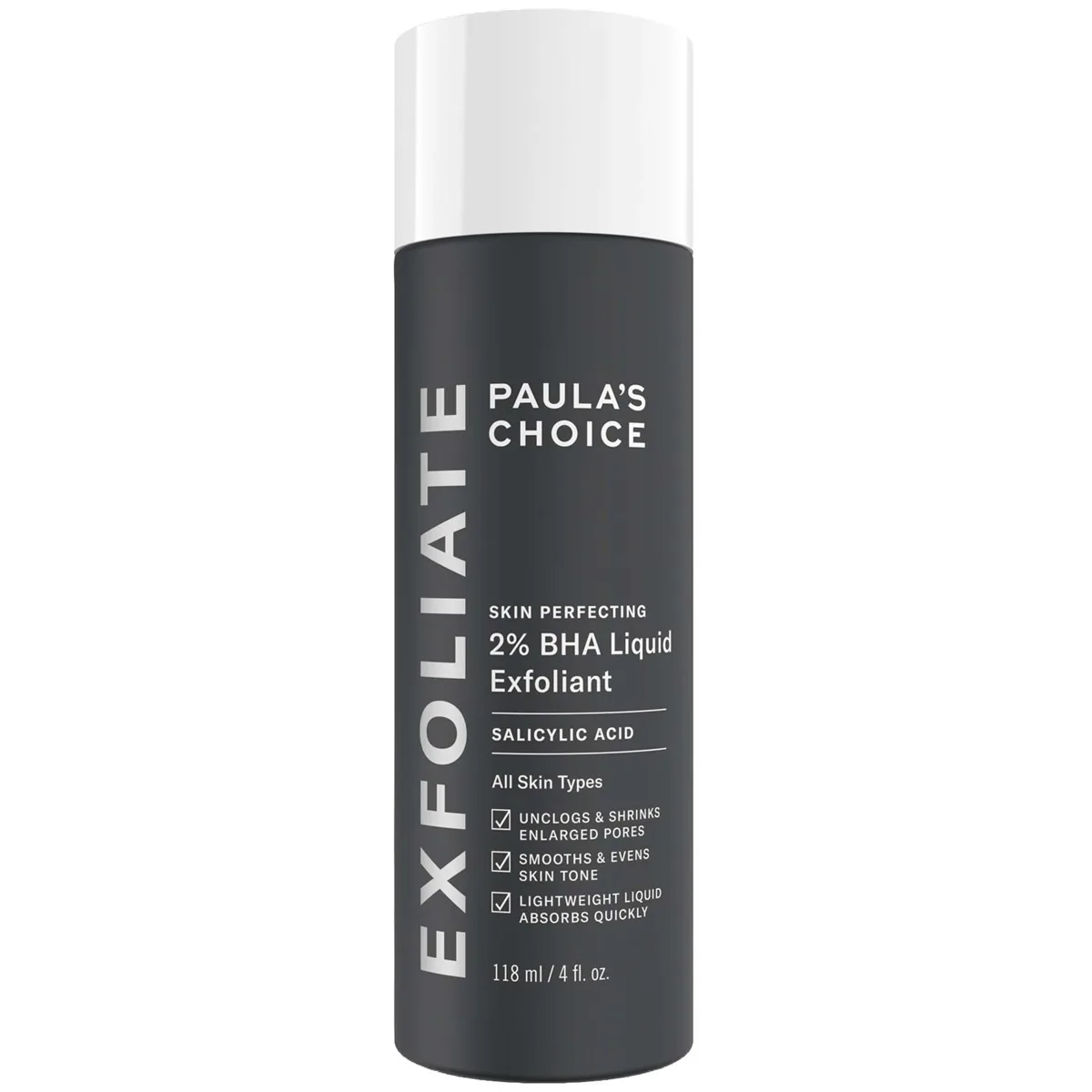


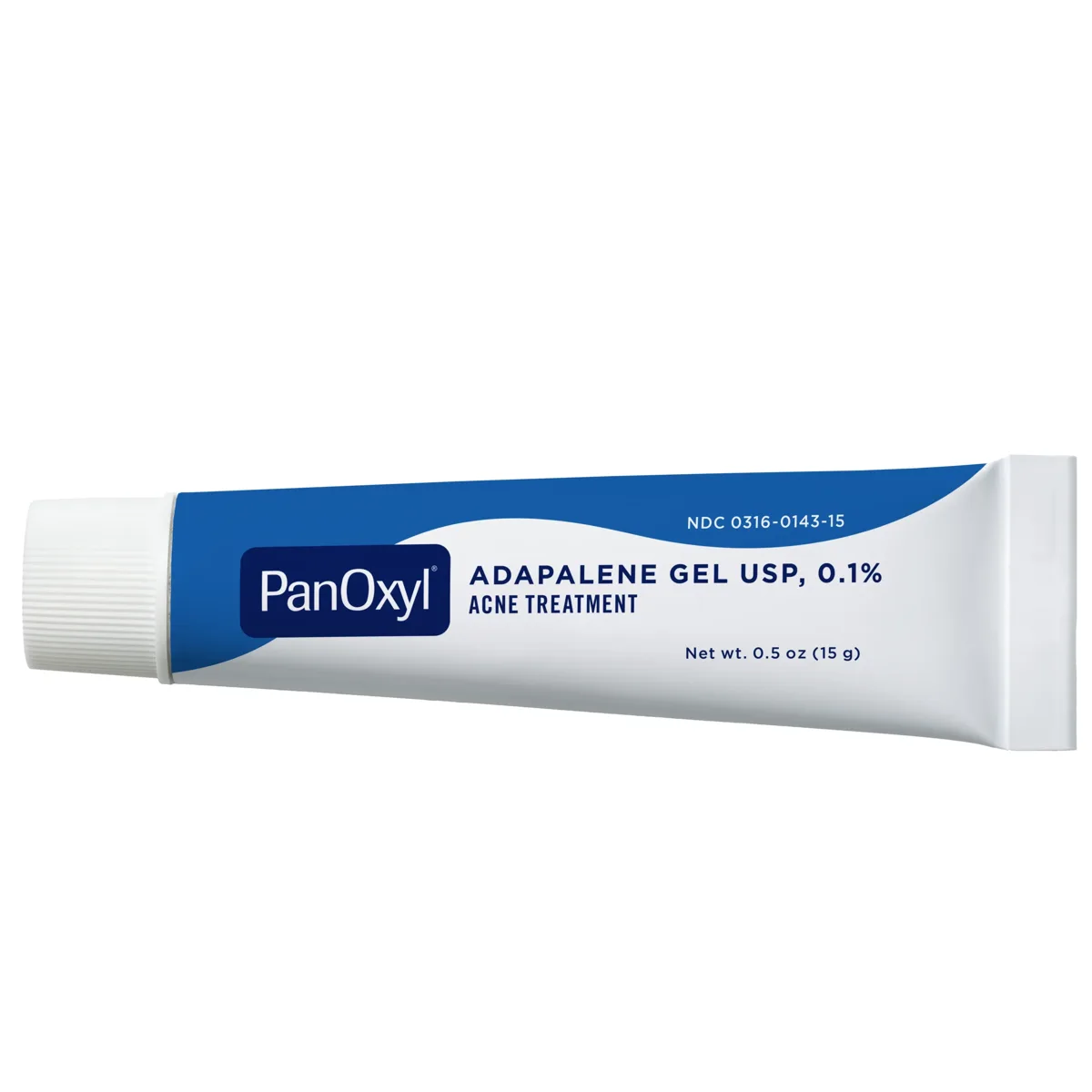

- Therapy guide Acne Where a flare that never resolves should actually go
- Ingredient Azelaic Acid Member of the turnover-active family that can genuinely purge
- Question Questions about acne Presentation-specific answers for readers unsure what they are looking at
- Question Which moisturiser should I use on a reacting face? Immediate practicalities once a reaction is identified
References
- Early detection of microcomedones induced by cocoa butter using reflectance confocal microscopy — Journal of Cosmetic Dermatology, 2022
- A re-evaluation of the comedogenicity concept — Journal of the American Academy of Dermatology, 2006
- Randomised, controlled trial of the efficacy and safety of adapalene gel 0.1% and tretinoin cream 0.05% in patients with acne vulgaris — European Journal of Dermatology, 2002
- Malassezia Folliculitis: An Underdiagnosed Mimicker of Acneiform Eruptions — Journal of Fungi, 2025
- Guidelines of care for the management of acne vulgaris — Journal of the American Academy of Dermatology, 2024
Every cited link is verified to resolve to the paper named. Where a source could not be independently confirmed, it is listed without a link rather than pointing you somewhere wrong.
Frequently asked
How long is a retinoid purge supposed to last?
It should build over the first two to four weeks and be visibly resolving by six to eight. Acne retinoid trials are typically read at ten to twelve weeks because that is when net improvement is measurable. Skin still getting worse at week ten is not clearing a backlog — something else is happening.
Can a moisturiser or a hydrating serum cause purging?
No. Purging is accelerated comedolysis, so it requires an ingredient that acts on follicular turnover. Humectants, ceramides, peptides and oils do not have that mechanism. If a moisturiser makes you break out, it is either irritating your skin or clogging follicles, and both get worse with continued use.
My skin is breaking out somewhere I never break out. Is that a purge?
Almost certainly not. A purge only surfaces lesions already in progress, and microcomedones cluster in your existing acne zones. Break-outs in genuinely new territory point to a reaction, a comedogenic product, or a different diagnosis such as Malassezia folliculitis, which produces uniform itchy papules on the hairline, chest and back.
If it stings, does that mean it is working?
No, and there is trial evidence against it. Over ten weeks in 409 patients, adapalene gel matched tretinoin cream for lesion reduction while causing significantly less erythema, dryness, scaling and stinging. Identical efficacy, less irritation — so discomfort is a property of the formulation, not a measure of the result.
Should I trust comedogenic ingredient ratings when choosing products?
Treat them as a weak signal at best. Research using a human comedogenicity assay on finished cosmetics found that products containing comedogenic ingredients are not necessarily comedogenic, because concentration and vehicle change the outcome. Testing the actual formula on a small area for two weeks tells you more than any ingredient list.