


"It's Just Purging" Is the Most Expensive Sentence in Skincare
Purging is a real phenomenon with a real mechanism — which is exactly why it gets used to justify eight weeks of damage it could never have caused.
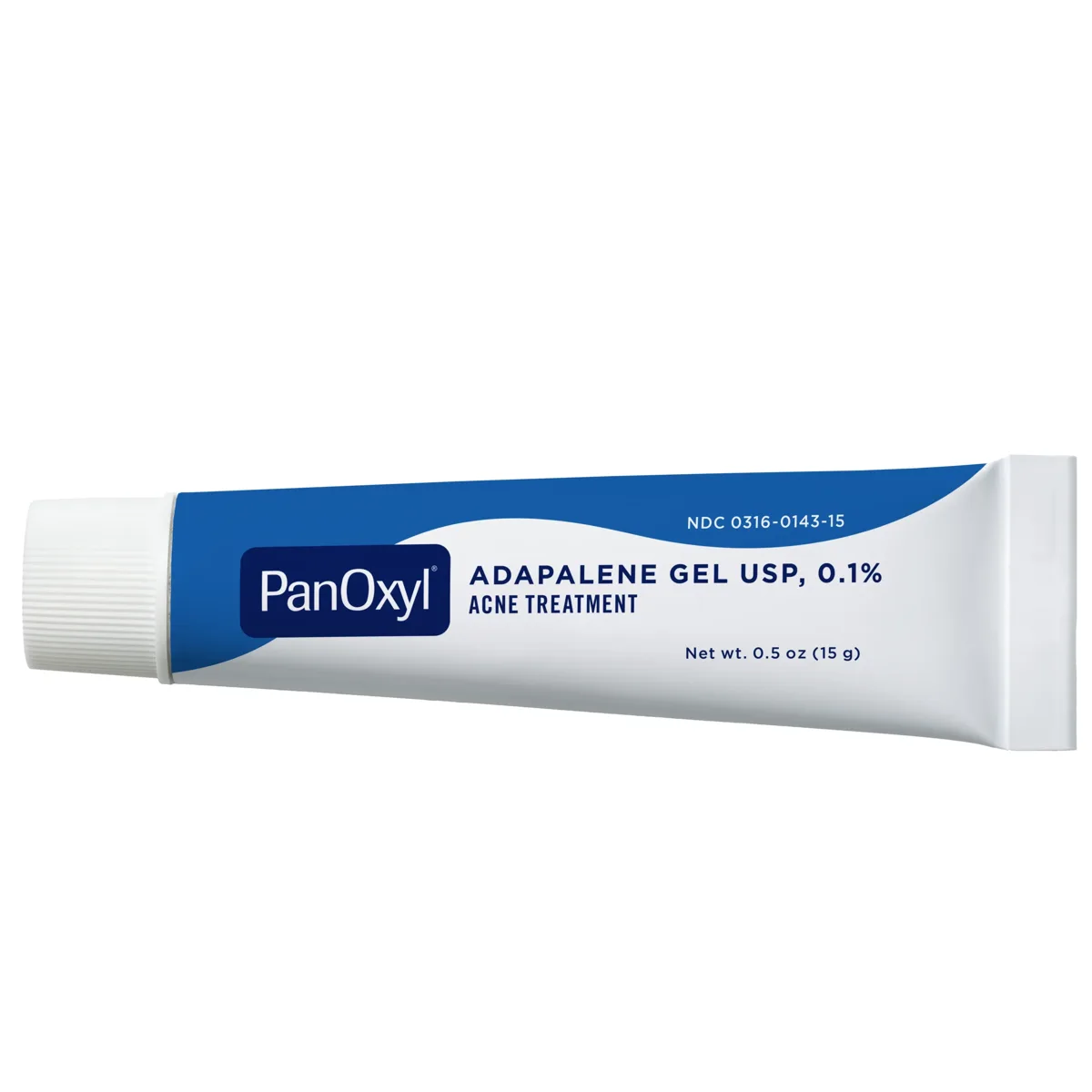
It puts a genuine prescription-grade retinoid, adapalene 0.1%, the first of its kind cleared for over-the-counter acne use, into PanOxyl's budget acne lineup, so loyal users of the brand's benzoyl peroxide washes can add the single most evidence-backed acne active without a prescription or a premium. The formula is the established USP standard, not a watered-down cosmetic retinol.
This is a genuine prescription-grade retinoid, adapalene 0.1%, the most evidence-backed acne active you can buy without a prescription, in a no-frills gel at a budget price. It demands patience through an adjustment period and is not for reactive skin, but for acne-prone skin willing to commit, it is one of the highest-value products in all of skincare.
The case for it
Same rule for everyone. “Strong choice” is the verdict on 1,459 of 45,024 concern verdicts across the catalog; rule R2 decided 892 of them. Unchanged since September 5, 2026, engine 5.1.1.
Brand or formulator? Disclose a concentration or correct a fact →
The studies behind the evidence row
The case for it
Same rule for everyone. “Good choice” is the verdict on 9,564 of 45,024 concern verdicts across the catalog; rule R5 decided 9,072 of them. Unchanged since September 5, 2026, engine 5.1.1.
Brand or formulator? Disclose a concentration or correct a fact →
The studies behind the evidence row
Also listed for Rough Texture, Acne Scarring and Large Pores — the actives here (Adapalene, carbomer, poloxamer 182) are in our research queue for those concerns; there is no verdict until their evidence rows are written. That is a gap in our table, not a mark against the product.
A verdict is DermApproved’s assessment of how well a product’s ingredients fit a concern — never a claim about what the product treats. Evidence dots and collected reviews sit beside it and are never blended in. Rules 0.5.1 · evidence table ev-2026.09-r228 · how we decide
In 2016 something quietly revolutionary happened in the acne aisle: adapalene, a retinoid that had spent two decades as a prescription-only acne treatment, became the first retinoid the FDA cleared for over-the-counter sale in the United States. For the first time, anyone could walk into a pharmacy and buy a true, prescription-strength topical retinoid without seeing a doctor. That single regulatory decision did more for accessible acne treatment than a hundred new serums, and PanOxyl's Adapalene Gel 0.1% is one of the products that carries it. The most important thing to understand about this product, before anything else, is that the brand on the tube is almost beside the point. Adapalene 0.1% is a defined USP standard, the active molecule and concentration are identical whether the box says PanOxyl or any other name, and what you are really buying is the molecule.
So let me talk about the molecule, because it deserves the spotlight. Adapalene is a third-generation retinoid, and unlike the cosmetic retinols that dominate the anti-aging shelves, it does not need to be converted by the skin into its active form, it binds retinoic acid receptors directly, the same way prescription acne retinoids do. What it does there is the heart of acne treatment: it normalizes the disordered way that pore-lining skin cells shed, which is the very first step in acne formation. When those cells clump and plug the follicle, you get the microcomedone that eventually becomes a blackhead, whitehead, or inflamed pimple. Adapalene prevents that plug from forming in the first place, which is why it treats acne you have and, crucially, prevents the acne you have not gotten yet. It also has genuine anti-inflammatory activity, calming the redness of existing breakouts. This is preventive, foundational acne treatment, not spot-treatment whack-a-mole, and you apply it to the whole face for that reason.
The formula itself is gloriously boring, and that is a compliment. It is a clear, lightweight, oil-free carbomer gel with a solubilizer to keep the adapalene evenly dispersed, and not much else. There is no fragrance, no botanical fluff, no marketing actives. It spreads thin, absorbs fast, and leaves a bare matte finish. This minimalism is part of why adapalene earned a reputation as one of the better-tolerated retinoids: the delivery system is clean and consistent, and the molecule is inherently more photostable and somewhat gentler than older retinoids like tretinoin while remaining highly effective. It is also fungal-acne-safe and contains no oils, which makes it appropriate even for oily, congested skin. The one note for the ingredient-conscious: it does contain methylparaben as a preservative, so it is not paraben-free, and PanOxyl as a brand is not certified cruelty-free, though this particular formula is vegan.
Now the honest part, the part that trips people up and makes them quit too early: the adjustment period. Retinoids are not gentle on first contact. The first two to six weeks commonly bring dryness, flaking, tightness, and sometimes a purge, where skin appears to get worse as the accelerated cell turnover pushes deeper congestion to the surface faster than it otherwise would have emerged. This is normal. It is not the retinoid failing, it is the retinoid working, and it almost always settles. The mistake people make is either slathering it on nightly from day one, which guarantees a rough adjustment, or panicking at the purge and stopping. The right approach is patience and restraint: a pea-sized amount for the entire face, starting two to three nights a week, buffered with a plain moisturizer, building up to nightly only as your skin acclimates. Pair it with diligent morning sunscreen, because retinoids increase sun sensitivity and because protecting the skin is what lets the results stick.
And the results are real, but they are earned on retinoid time, not skincare-ad time. You will not see clearing in a week. Visible improvement in breakouts typically begins around eight to twelve weeks, with the fullest payoff, fewer breakouts, smoother texture, refined pores, and fading of post-acne marks, arriving at twelve weeks and beyond. This is a months-long commitment, and the people who succeed with it are the ones who understand that going in. The flip side is that adapalene also gently improves skin texture and tone over time, which is why a lot of users keep using it long after their acne settles, as a low-cost, long-term skin-quality tool.
Who should be cautious? Genuinely sensitive, rosacea-prone, eczema-prone, or barrier-compromised skin may find even adapalene too much, and those folks should approach slowly or consult a dermatologist. And it must be said clearly: retinoids, including adapalene, are not recommended during pregnancy, so this is a hard skip if you are pregnant or trying to conceive. For everyone else with acne-prone skin, though, the calculus is overwhelmingly favorable.
The value is, frankly, a little absurd in the consumer's favor. At around eleven dollars for the labeled 30-day supply, you are getting a prescription-grade retinoid, the kind of active that genuinely changes skin, for the price of a fast-food meal, and it is FSA and HSA eligible on top of that. The only real concession is the small 15-gram tube, which is sized as a one-month supply and can feel slim if you are heavy-handed, but a pea-sized amount truly is enough for the whole face, and learning to use the right amount also reduces irritation. There is no premium being charged for branding, packaging, or hype, you are paying for one of the best-studied molecules in dermatology, full stop.
The bottom line is that this belongs in the conversation for highest-value product in skincare. It is not a fun, sensorial, exciting product, it is a serious, evidence-based acne treatment that asks for patience and rewards it. If you have acne-prone skin, you are not pregnant, and you are willing to ride out the adjustment and commit for the long haul, this is about as close to a sure thing as the acne aisle offers, and the bargain price only makes it easier to say yes.
The hero actives that drive this product's performance.
| Ingredient | Function | Evidence |
|---|---|---|
| Adapalene (0.1%) | A third-generation prescription-strength retinoid, now available over the counter, that is the entire treatment here; it normalizes the way pore-lining cells shed to prevent the micro-plugs that start acne, and it carries genuine anti-inflammatory action, all in a deliberately bare gel base. | Regulator-approved for Acne · well-established certainty |
| Poloxamer 182 | A solubilizer that keeps the adapalene evenly dispersed in this water-based carbomer gel, which is part of why this formula is known for delivering retinoid results with less irritation than older retinoids despite no added soothing extras. | Not yet assessed |
| Carbomer Gel Base | Forms the lightweight, oil-free gel matrix that suspends the adapalene and gives the product its quick-absorbing, non-greasy feel, making the bare formula suitable even for oily and acne-prone skin. | Not yet assessed |
Ingredient standings describe the active at treatment-level doses and vehicles; this product's own condition grades weigh its actual formula.
Adapalene 0.1%. Inactive: Carbomer Homopolymer Type C, Edetate Disodium, Methylparaben, Poloxamer 182, Propylene Glycol, Purified Water, Sodium Hydroxide
treatment
PM
Apply a thin, pea-sized amount to the whole face at night after cleansing and before moisturizer, not as a spot treatment. Avoid using other strong exfoliating acids or a second retinoid the same night while skin adjusts, and never skip morning sunscreen, since retinoids increase sun sensitivity.
Expect an adjustment period of dryness or purging in the first 2-6 weeks. Visible reduction in breakouts usually begins around 8-12 weeks, with the fullest improvement in clarity, texture, and post-acne marks by 12 weeks and beyond.
Adapalene is one of the most rigorously studied topical acne treatments in dermatology. As a third-generation retinoid, it binds selectively to retinoic acid receptors, particularly RAR-beta and RAR-gamma, normalizing follicular keratinocyte differentiation and reducing the microcomedone formation that initiates all acne lesions; it also exerts documented anti-inflammatory effects by interfering with inflammatory mediator pathways. Decades of randomized controlled trials, and the 2016 FDA decision to grant it over-the-counter status, established that 0.1% adapalene significantly reduces both comedonal and inflammatory acne lesions, and that it does so with a more favorable tolerability and photostability profile than tretinoin at comparable efficacy for many patients. Major dermatology acne guidelines list topical retinoids, adapalene prominently among them, as foundational therapy, both for active treatment and for maintenance to prevent relapse. The formula here is the standard USP 0.1% gel, with poloxamer 182 solubilizing the adapalene in a carbomer base, the same well-characterized delivery system behind the original over-the-counter approval, which means the clinical evidence for adapalene 0.1% transfers directly. The science strongly supports adapalene as a frontline, preventive acne active whose benefits depend on consistent use over a 12-week-plus horizon.
Topical retinoids are considered foundational in clinical acne management, and adapalene is frequently the entry point because it tends to be better tolerated than tretinoin while remaining highly effective, and because the 0.1% strength is now available over the counter. In practice it is applied as a thin, pea-sized layer across the entire face at night rather than as a spot treatment, since its main value is preventing new lesions. Standard guidance is to start two to three times weekly, buffer with a non-comedogenic moisturizer, and increase frequency gradually to limit the expected early dryness and purging. Daily broad-spectrum sunscreen is emphasized because retinoids increase photosensitivity. It is commonly paired with benzoyl peroxide, used at a separate time of day, for added benefit. Retinoids are contraindicated in pregnancy, and patients with rosacea or a compromised barrier are advised to proceed cautiously or seek individualized guidance.
Use at night. After cleansing and patting skin dry, dispense a pea-sized amount and spread a thin layer across the entire face, avoiding the eyes, lips, and corners of the nose, treat it as a preventive whole-face treatment, not a spot treatment. Begin two to three nights a week and increase to nightly as your skin tolerates it. Follow with a plain, non-comedogenic moisturizer to buffer dryness, and apply it before or after moisturizer depending on which your skin tolerates better. Avoid layering other retinoids or strong acids on the same nights during the adjustment phase. Apply broad-spectrum SPF 30 or higher every morning, and give it a full 12 weeks before judging results.
On a per-result basis this is one of the best values in skincare. For roughly eleven dollars you get a labeled 30-day supply of a prescription-grade retinoid that, for many people, genuinely transforms acne-prone skin, and the product is FSA/HSA eligible. The molecule and 0.1% concentration are identical to other adapalene products, so there is no efficacy premium to chase by spending more. The only real limitation is the small 15 g tube sized as a one-month supply, which can feel slim, though a correct pea-sized application stretches it and reduces irritation. You are paying purely for one of the most evidence-backed actives in dermatology with no markup for branding or packaging, which makes the price-to-quality ratio outstanding for anyone committed to consistent use.
This is for acne-prone, oily, combination, or normal skin that wants the most evidence-backed acne active available over the counter and is ready to commit to consistent, long-term use. It suits people building a complete acne regimen, especially existing PanOxyl benzoyl peroxide users, who want prescription-grade results without a prescription or a premium price.
Avoid it if you are pregnant, trying to conceive, or breastfeeding, since retinoids are not recommended in pregnancy. Very sensitive, rosacea-prone, eczema-prone, or barrier-compromised skin should approach with caution or consult a dermatologist first, and anyone unwilling to wait out the adjustment period and the 8-to-12-week timeline will not get the benefit.
A clear, lightweight gel that spreads thin and absorbs quickly with no greasy residue, leaving a matte, bare finish.
Fragrance-free with essentially no scent.
A small squeeze tube sized as a 30-day supply, simple and travel-friendly.
The first few weeks are the hardest: expect dryness, some flaking, and possibly an initial purge as deeper congestion surfaces. This retinoid uptick is normal and temporary; ease in two to three nights a week, buffer with moisturizer, and build to nightly as your skin acclimates.
Roughly a 30-day supply at a pea-sized nightly amount for the full face, as labeled.
All Year
Adapalene began as a prescription acne retinoid and became the first retinoid approved for over-the-counter sale in the United States in 2016, a landmark for accessible acne care. PanOxyl, already a fixture of the drugstore acne aisle, added this standard 0.1% gel so its benzoyl peroxide customers could build a complete, dermatologist-style regimen within one affordable brand.
PanOxyl is a long-trusted drugstore acne brand best known for high-strength benzoyl peroxide washes. This adapalene gel is the standard USP 0.1% formula, the same molecule and concentration that became the first FDA-approved over-the-counter topical retinoid for acne, sold here under PanOxyl's affordable acne line.
Adapalene is just a gentler cosmetic retinol.
Adapalene is a true third-generation retinoid that binds retinoic acid receptors directly, the same class as prescription acne treatments, not a cosmetic retinol that must convert in the skin. It is more effective for acne than retinol and is backed by extensive clinical trials.
If it makes your skin worse at first, the retinoid is not working.
Early dryness, flaking, and even a temporary purge are the normal adjustment to a retinoid as cell turnover speeds up and deeper congestion surfaces. This typically settles within a few weeks; real improvement usually appears around 8 to 12 weeks of consistent use.
Effectively yes. Adapalene 0.1% is a defined USP standard, so the active molecule and concentration are identical across brands. The carbomer gel base here matches the established over-the-counter formula, meaning the clinical evidence for adapalene applies directly.
Expect an adjustment period of dryness and possible purging in the first two to six weeks. Visible improvement in breakouts usually begins around eight to twelve weeks, with the fullest results in clarity and texture by twelve weeks and beyond. Patience is essential.
No. Adapalene works by preventing new breakouts, so it should be applied as a thin, pea-sized layer across the whole face at night, not dabbed only on existing pimples. Whole-face use is how you get its preventive benefit.
Yes, and the combination is well supported, but use them at different times, for example a benzoyl peroxide wash in the morning and adapalene at night. Applying both simultaneously can increase dryness and irritation during the adjustment phase.
No. Retinoids, including adapalene, are not recommended during pregnancy or while trying to conceive. If you are pregnant or breastfeeding, stop use and ask your doctor about pregnancy-safe acne options such as azelaic acid.
Early worsening, dryness, flaking, or a purge, is the normal retinoid adjustment as cell turnover speeds up and deep congestion surfaces. It typically settles within a few weeks. Ease in slowly, moisturize, and do not stop prematurely.
Recurring themes our editors read across retailer reviews of this product — summaries in our words, not quotations, and not a substitute for your own patch test.
Clears and prevents breakouts with consistent use
Improves texture and post-acne marks over time
Same proven retinoid at a low price
Dryness and flaking during the first weeks
Small 15 g tube for the price of a 30-day supply
Requires patience before results show
Verified answers from our questions library — the nuance a product page cannot carry.