Adapalene
Products with Adapalene
 OTC Retinoid Gold Standard
 Evenly Clear Facial Retinoid
A genuine prescription-origin retinoid — adapalene 0.1% — and one of the most evidence-backed acne treatments you can buy without a prescription, at an honest drugstore price. The 'Facial Retinoid' name undersells what this is. It demands patience through an adjustment period, is off-limits in pregnancy, and is essentially branded generic adapalene.
 Prescription-to-OTC Acne Treatment
 Epiduo Acne Gel
For roughly fifteen years this exact adapalene-benzoyl peroxide gel lived behind a prescription pad; in May 2026 the FDA cleared it to cross into the drugstore aisle. It's a genuine dual-active acne treatment — retinoid plus antibacterial in one once-daily gel — carrying a Phase 3 record most OTC products can only envy. The trade-off is real retinoid irritation up front; the payoff is clinic-grade efficacy without the prescription.
 Gold Standard OTC Retinoid
 Adapalene Gel 0.1%
This is adapalene 0.1% — the same FDA-approved retinoid dermatologists have prescribed for over two decades, now available without a prescription in a no-nonsense gel. It's one of the most evidence-backed acne treatments you can buy, and Proactiv's version offers solid value in the larger size with an updated paraben-free formula.
 The Gold Standard OTC Retinoid
 Adapalene Gel 0.1%
The single most important product in the OTC acne aisle — a genuine prescription-strength retinoid backed by 30 years of clinical evidence and 40 million patients, available for under twenty dollars. Nothing else at the drugstore comes close to this level of proven efficacy. The adjustment period is real, but the results are transformative.
 Dermatologist Gold Standard
 Effaclar Adapalene Gel 0.1%
The same prescription-strength adapalene that dermatologists recommended for decades, now available over the counter under a trusted pharmacy brand. It's a genuinely effective acne treatment with long-term anti-aging benefits — but it costs more than identical OTC alternatives, and the adjustment period is real.
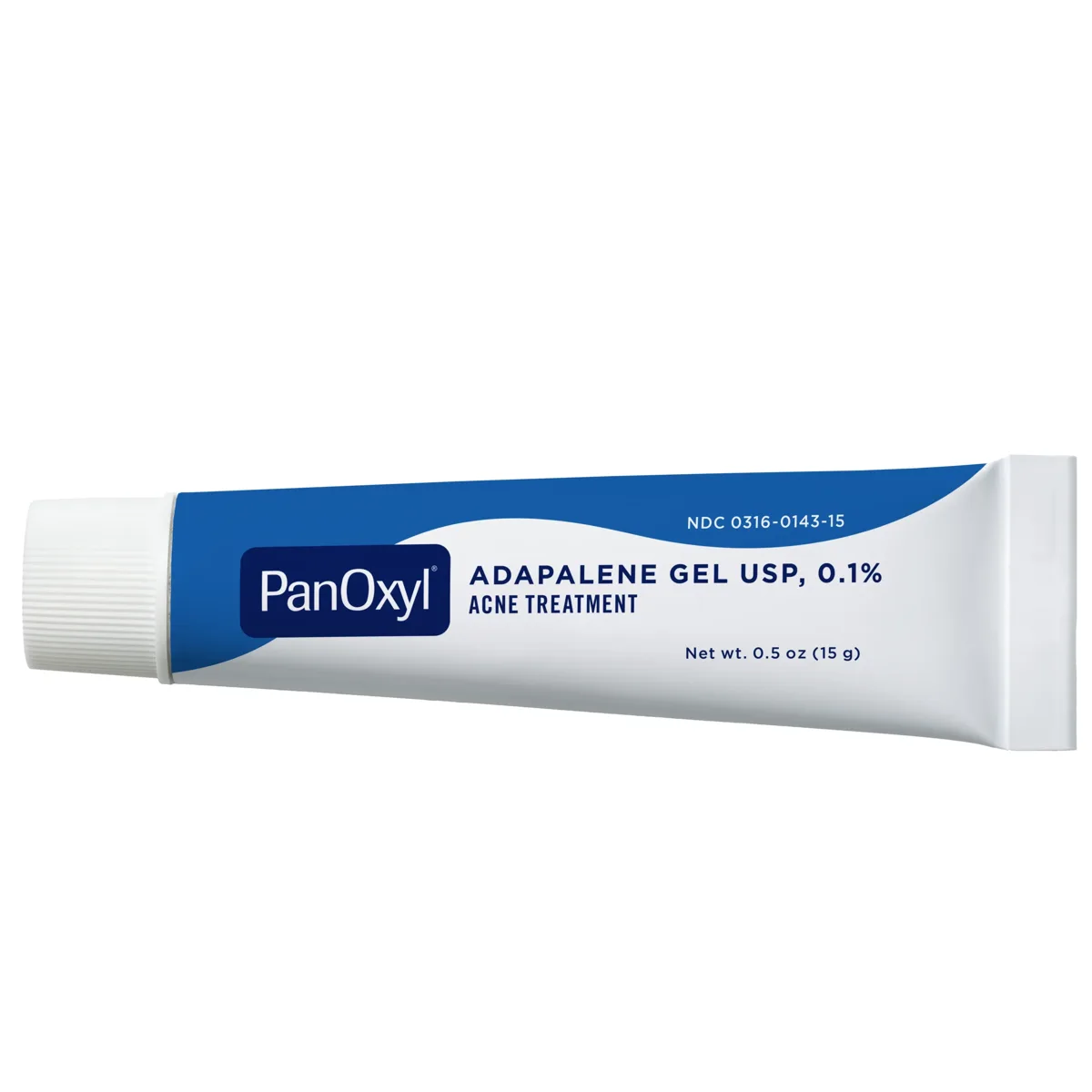 OTC Retinoid Essential
 Adapalene Gel 0.1%
This is a genuine prescription-grade retinoid, adapalene 0.1%, the most evidence-backed acne active you can buy without a prescription, in a no-frills gel at a budget price. It demands patience through an adjustment period and is not for reactive skin, but for acne-prone skin willing to commit, it is one of the highest-value products in all of skincare.
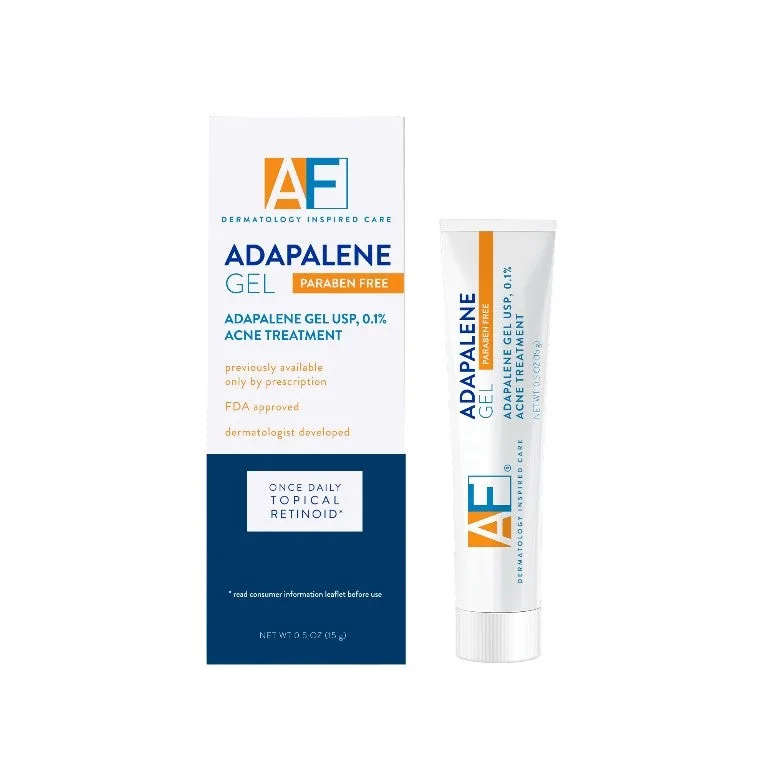 Gold-Standard OTC Retinoid
 Adapalene Gel USP 0.1%
The single most evidence-backed acne active you can buy without a prescription — 0.1% adapalene, the same gold-standard retinoid as Differin — in a clean, fragrance-free, oil-free gel, often at a competitive price. It genuinely prevents and clears acne, smooths texture, and fades marks with consistent nightly use. The only real caveats are universal to retinoids: an adjustment period, mandatory sunscreen, and a firm no during pregnancy.
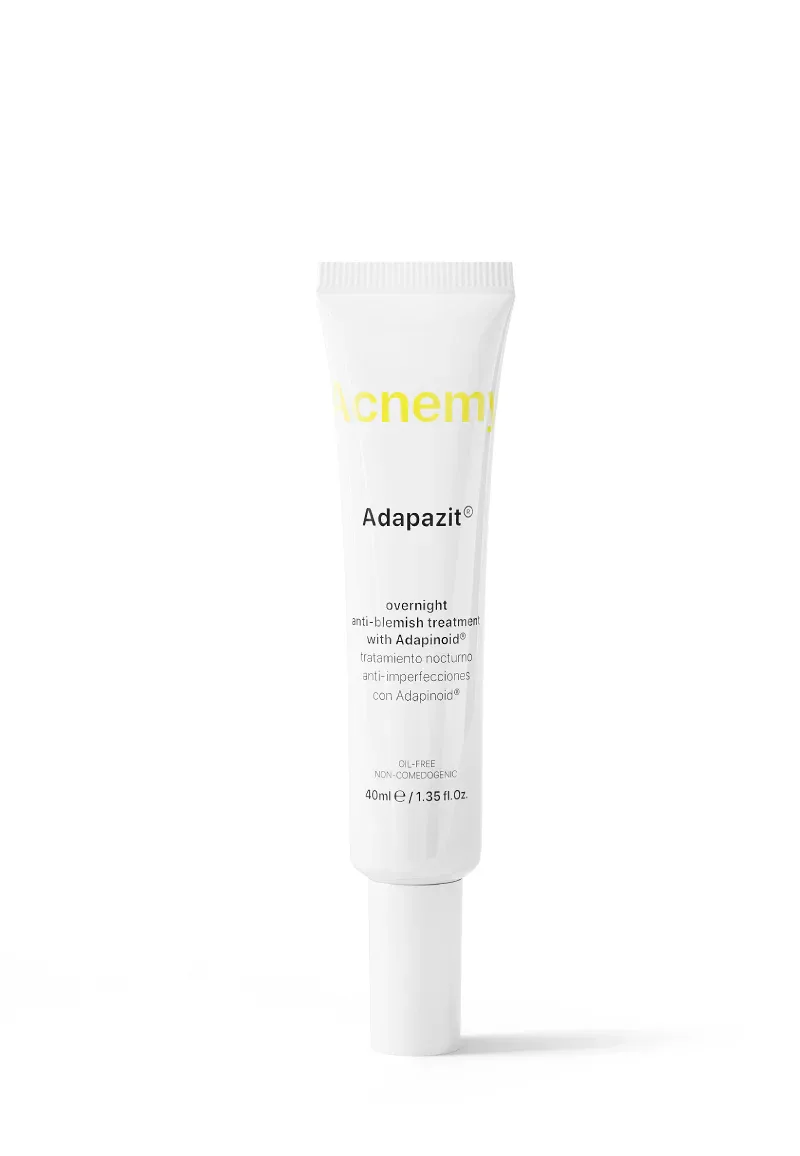 Spanish OTC Adapalene Treatment
 Adapazit Retinoid Night Treatment
Acnemy's Adapazit Retinoid Night Treatment combines 0.1% adapalene (prescription-strength retinoid, OTC since 2016) with meaningful niacinamide plus complete centella triterpene framework plus barrier-support cast. Real OTC retinoid acne treatment at 30-dollar Spanish indie tier pricing.
The full adapalene guide
Adapalene is the only full-prescription-strength retinoid available over the counter in the US — a distinction the FDA granted in 2016 that made it the first new OTC acne active approved in over 30 years.
It belongs to the third generation of topical retinoids, designed from the ground up to hit the same retinoic acid receptors as tretinoin while sparing the pathways responsible for most of the burning, peeling, and photosensitivity that make classic retinoids so difficult to tolerate. That engineering tradeoff — selective receptor binding for improved tolerability, at a small cost to raw potency — is what makes adapalene the sensible entry point for most people starting a retinoid routine.
Where the evidence stands, by concern
Evidence for an ingredient is not one grade — it differs concern by concern. Each row below was researched separately against regulatory approvals, clinical guidelines, and trials our team opened and verified; the band and dots rank how central adapalene is to treating that concern, from first-line therapy down to supportive care, at treatment-level doses and vehicles. A product's own grade weighs its actual formula.
How it's regulated in the US
FDA does not classify ingredients — it classifies products, by what they are sold to do. The same molecule can be a drug active in one product and a cosmetic ingredient in the next, and only the claim on the label decides which. What follows is a statement about that legal standing, not about whether it works — the evidence question is answered separately above.
Approved drug Adapalene is an approved drug that moved down, not up: 0.1 percent gel was switched to OTC sale by FDA approval, while 0.3 percent stays prescription. Buying it without a prescription does not make it a cosmetic — it is still a drug, sold under a Drug Facts panel.
- acne FDA-approved, sold OTC 0.1 percent gel
Approved by FDA and cleared for sale without a prescription
Permitted label wording “For the treatment of acne”
Prescription strengths and combinations remain: adapalene 0.3 percent (NDA021753), adapalene 0.1 percent cream (NDA020748), and adapalene with benzoyl peroxide and clindamycin phosphate (NDA216632). An adapalene 0.1 percent plus benzoyl peroxide 2.5 percent gel is also approved for OTC marketing under NDA220736.
Adapalene's efficacy for acne vulgaris is well-documented: pivotal trials show 0.1% gel performs at least as well as tretinoin 0.025% gel with superior local tolerability, and comparative data confirm the 0.3% formulation reduces lesions more effectively than 0.1%. A JAAD-published maintenance study supports its role in reducing post-inflammatory hyperpigmentation alongside acne control, particularly in skin of color. A retrospective cohort (417 patients) found adapalene use was associated with a protective effect against acne scarring (OR 0.13), though as a single observational study this is suggestive rather than definitive. Anti-aging evidence for adapalene itself is thinner than for tretinoin; a 2024 head-to-head trial showing favorable wrinkle results studied oleyl adapalenate — a novel adapalene pro-drug, not adapalene as sold — so it informs the broader retinoid class more than adapalene's own photoaging case.
How it works
Adapalene is a naphthoic acid derivative that binds selectively to nuclear retinoic acid receptors beta and gamma — skipping the cytosolic retinoic acid binding protein that earlier retinoids engage and which is thought to drive much of their irritation. Once bound, adapalene–receptor complexes partner with retinoid X receptors and attach to DNA response elements, shifting gene expression. The downstream result is normalized follicular epithelial differentiation: the cells lining the pore shed at a more regular rate and stop clumping into the keratin plugs that form microcomedones — the invisible precursor to every pimple, blackhead, and whitehead. It also blunts inflammation directly, dampening arachidonic acid pathways that would otherwise amplify redness and swelling around a forming lesion, which is part of why it tackles comedonal and inflammatory acne at once. Because it speeds up surface cell turnover, there is a retinization period — usually two to six weeks — where underlying congestion surfaces faster than normal. This can look like a breakout but is the treatment engaging its target; the skin adjusts and it resolves. That same turnover effect appears to have a modest benefit on post-inflammatory hyperpigmentation by clearing pigmented cells faster and curbing the inflammatory signals behind excess melanin. At 0.3%, there is some evidence of improvement in fine lines and early photoaging via the fibroblast collagen pathway common to retinoids, though that data is far thinner than the acne literature.
Key benefits
- Effective against both comedonal and inflammatory acne in pivotal clinical trials
- Selective RAR-beta/gamma binding makes it more tolerable than tretinoin for most users
- Supports fading of post-inflammatory hyperpigmentation with sustained long-term use
- Observational cohort data link its use to lower acne-scarring risk
- 0.3% strength offers stronger lesion clearance for moderate-to-severe acne
- OTC availability at 0.1% removes a major barrier to evidence-based acne treatment
Concentration & usage
Over-the-counter products in the US contain 0.1% adapalene (gel, cream, or lotion); prescription strength is 0.3% gel, typically reserved for moderate-to-severe acne or when 0.1% proves insufficient. Comparative trials confirm the 0.3% formulation reduces inflammatory lesions more effectively than 0.1%, though with modestly higher rates of dryness and peeling. Check the active ingredient statement for "adapalene" listed at either 0.1% or 0.3%. Unlike AHAs or vitamin C, adapalene is not pH-dependent, so no specific pH window applies. The gel vehicle is the most-studied formulation, while cream versions exist for those who find gel too drying.
Who it's for & who should be cautious
Who it's for
Adapalene is the logical first retinoid for anyone dealing with persistent acne — comedonal, inflammatory, or both — who has been deterred by tretinoin's irritation profile. It suits adults managing mild-to-moderate acne and teenagers using their first active treatment alike, since the tolerability advantage matters most for skin new to retinoids. People with post-inflammatory hyperpigmentation left over from healed breakouts, or those wanting to start a retinoid for long-term maintenance without a prescription, are both solid candidates. Anyone who tried OTC retinol and found it underwhelming may notice that adapalene, despite also being OTC at 0.1%, works through a more direct receptor pathway and tends to deliver more consistent acne results.
Who should be cautious
Pregnancy is the primary contraindication — adapalene is a retinoid, and while topical absorption is very low, retinoids as a class carry known teratogenic risk and there are insufficient human safety data to recommend use in any trimester. Anyone pregnant, trying to conceive, or breastfeeding should discontinue and discuss alternatives with their OB or dermatologist. People with eczema, rosacea, or a severely compromised barrier should approach cautiously: the retinization period raises transepidermal water loss, and already-inflamed skin can react badly to the adjustment phase. Those undergoing ablative laser, chemical peels, or using prescription exfoliants concurrently should not layer adapalene without dermatologist guidance — the cumulative irritation risk is real.
Pairs with & conflicts
Pairs well with: Benzoyl Peroxide, Niacinamide (Vitamin B3), Azelaic Acid, Ceramides, Panthenol (Pro-Vitamin B5), Hyaluronic Acid, Glycerin
Use with care alongside: Salicylic Acid (BHA), Glycolic Acid (AHA), Lactic Acid, Vitamin C (L-Ascorbic Acid), Witch Hazel, Alcohol Denat. (Denatured Alcohol)
Myths & facts
Myth: Adapalene is just a weaker, less effective version of tretinoin.
Reality: Adapalene and tretinoin act through the same nuclear receptor pathway but with different binding selectivity. Pivotal trials show adapalene 0.1% performs at least as well as tretinoin 0.025% for both comedonal and inflammatory acne — it's less a step down in efficacy than a different tolerability tradeoff. For acne clearance at comparable concentrations, the two perform similarly.
Myth: If your skin gets worse in the first few weeks, adapalene isn't working and you should stop.
Reality: The initial flare — often called purging — is a predictable result of accelerated turnover pushing already-forming microcomedones to the surface faster than usual. It signals the medication is engaging its target. Clinical guidance consistently recommends pushing through the four-to-eight-week adjustment period before judging whether the treatment is working.
Myth: You can't use adapalene with benzoyl peroxide because they cancel each other out.
Reality: Unlike benzoyl peroxide with tretinoin — where oxidation can degrade the retinoid — adapalene's structure is stable and isn't broken down by benzoyl peroxide. The fixed-dose combination of adapalene 0.1% and benzoyl peroxide 2.5% (Epiduo) is an FDA-approved prescription product, and trials show the pairing outperforms either ingredient alone for inflammatory acne.
Frequently asked questions
How long until adapalene actually clears my skin?
Expect the first four to eight weeks to involve an adjustment period that can include temporary worsening, dryness, and flaking as retinization runs its course. Most people see meaningful reduction in new lesions around weeks 8–12, with the fullest picture of benefit emerging after roughly 12 weeks of consistent nightly use — the benchmark most clinical trials use to assess efficacy.
Should I ease into adapalene or use it every night from the start?
Easing in — two to three nights a week for the first two to four weeks before building to nightly — meaningfully lowers the chance of a harsh retinization reaction. Applying a thin layer to dry skin (not damp, which boosts penetration and irritation) and following with a non-comedogenic moisturizer helps most people reach daily use by week four to six.
Is adapalene a good choice for deeper skin tones?
Yes — for darker skin tones dealing with acne, adapalene can be especially well-suited, since its anti-inflammatory action addresses the same cascade that drives post-inflammatory hyperpigmentation. The key is managing retinization-phase irritation, which can itself trigger PIH in melanin-rich skin, by starting at lower frequency and keeping the barrier well-supported with ceramide or panthenol moisturizers.
Does adapalene help with blackheads, or only inflamed pimples?
Blackheads (open comedones) are one of adapalene's cleaner wins — they form when keratinocytes inside the follicle clump and oxidize, exactly the differentiation problem adapalene corrects. Guideline bodies recommend topical retinoids including adapalene as first-line for comedonal acne. Results on blackheads tend to appear more gradually than on inflammatory lesions, usually becoming visible around the eight-to-twelve-week mark.
Can I layer a niacinamide serum with adapalene?
Niacinamide is among the most compatible partners for adapalene — its anti-inflammatory and barrier-supportive properties help offset the dryness and mild irritation of retinization without interfering with how adapalene works. Apply niacinamide first, let it absorb, then apply adapalene and follow with moisturizer. There's no antagonistic interaction between the two.
Do I need to pause adapalene before a chemical peel or laser?
Yes — standard dermatological guidance is to stop topical retinoids including adapalene for at least a week (sometimes two, depending on the procedure) before and after ablative or resurfacing treatments. Active retinoid use heightens skin sensitivity and can slow barrier recovery afterward. Always confirm the exact pause window with the provider performing the treatment.
- Men's GroomingBlade or Electric Is the Wrong First Question. Prep Is.Cutting a beard hair takes about a twentieth of a newton. You press with two and stretch your skin by a fifth — which is why almost every shaving problem is a technique problem wearing a hardware costume.
- Men's SkincareTestosterone Reliably Causes Acne. The Counselling Almost Never Mentions It.The timeline is predictable enough to plan around — which is exactly why starting the treatment after the breakout is the wrong order.
- Natural & BotanicalTea Tree Oil Beat Placebo in a Real Acne Trial. It Also Sensitises People.The strongest counterexample to blanket botanical scepticism is also one of the more common contact allergens — and holding both facts at once is the only honest way to read it.
- Prescription SkincareA 30g Tube for a Whole-Body Rash Has Already Failed, and You Can See It at the CounterFour fields on a prescription label decide whether a treatment can possibly work — strength, vehicle, quantity and refills — and patients are almost never walked through any of them.