The Shelf Is Usually the Expensive Option
People stay on drugstore rotation for years to avoid a consultation — while spending more on hopeful serums than the appointment and its generic prescription would have cost.
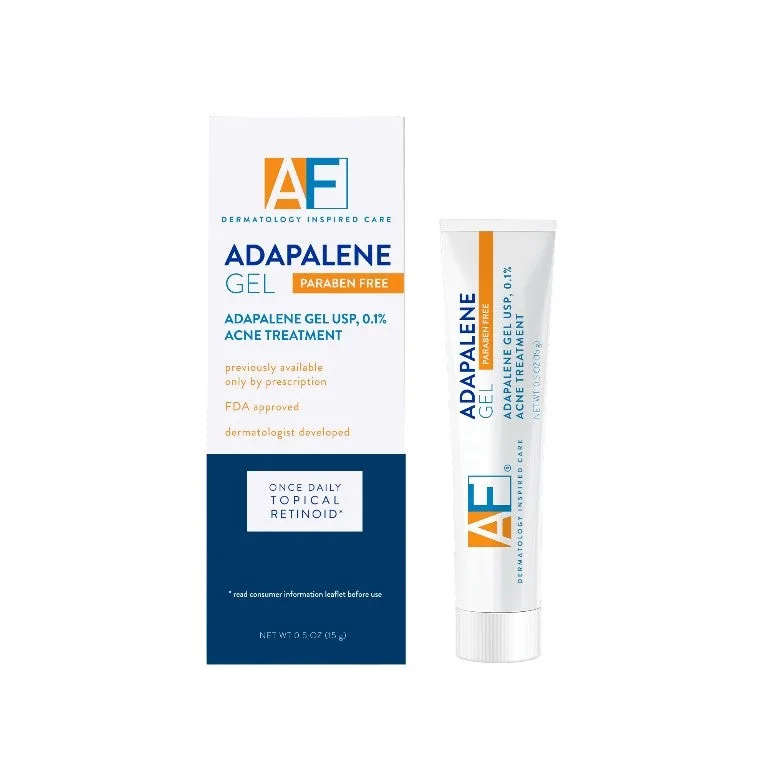
It's the same 0.1% adapalene — a prescription-strength retinoid made over-the-counter — that revolutionized drugstore acne care, in a clean, fragrance-free, oil-free, paraben-free gel, often at a lower price than the name brand. Unlike spot treatments, it prevents acne across the whole face, and it's the single most evidence-backed OTC acne active you can buy.
The single most evidence-backed acne active you can buy without a prescription — 0.1% adapalene, the same gold-standard retinoid as Differin — in a clean, fragrance-free, oil-free gel, often at a competitive price. It genuinely prevents and clears acne, smooths texture, and fades marks with consistent nightly use. The only real caveats are universal to retinoids: an adjustment period, mandatory sunscreen, and a firm no during pregnancy.
The case for it
Same rule for everyone. “Strong choice” is the verdict on 1,459 of 45,024 concern verdicts across the catalog; rule R2 decided 892 of them. Unchanged since September 5, 2026, engine 5.1.1.
Brand or formulator? Disclose a concentration or correct a fact →
The studies behind the evidence row
The case for it
Same rule for everyone. “Good choice” is the verdict on 9,564 of 45,024 concern verdicts across the catalog; rule R5 decided 9,072 of them. Unchanged since September 5, 2026, engine 5.1.1.
Brand or formulator? Disclose a concentration or correct a fact →
The studies behind the evidence row
Also listed for Large Pores, Rough Texture, Acne Scarring and Hyperpigmentation — the actives here (Adapalene, Propylene Glycol) are in our research queue for those concerns; there is no verdict until their evidence rows are written. That is a gap in our table, not a mark against the product.
A verdict is DermApproved’s assessment of how well a product’s ingredients fit a concern — never a claim about what the product treats. Evidence dots and collected reviews sit beside it and are never blended in. Rules 0.5.1 · evidence table ev-2026.09-r228 · how we decide
If you could own exactly one acne product, the evidence says it should probably be this one. Adapalene 0.1% is a topical retinoid that spent decades locked behind a prescription before Differin brought it to drugstore shelves — a genuine landmark in accessible skincare — and it remains the most clinically validated over-the-counter acne active available. AcneFree's version delivers that same gold-standard active in a clean, minimal gel, often at a friendlier price than the name brand. For anyone serious about clearing acne rather than just chasing individual pimples, it's the foundation to build on.
What makes adapalene special is that it treats acne at the source rather than the surface. It's a third-generation retinoid that binds to receptors in skin cells and normalizes their turnover, which stops the follicle from clogging in the first place — addressing the root of both inflammatory pimples and the blackheads and whiteheads that precede them. That preventive mechanism is why it works across the whole face rather than on individual spots, and why its benefits compound: with consistent use, it doesn't just clear current breakouts but reduces new ones, and over months smooths rough texture and fades the post-acne marks that linger after pimples heal. Few actives do this much.
The formula is refreshingly clean and appropriate to the active. It's a lightweight, clear gel with a minimal base — water, propylene glycol, a gel-forming carbomer, and little else — that's fragrance-free, oil-free, paraben-free, and fungal-acne safe. That simplicity is a virtue: adapalene doesn't need a loaded formula, and the absence of fragrance and extraneous ingredients reduces the irritation potential of an already-active treatment. It spreads thin, absorbs cleanly, and does its work overnight.
Here's the honest part that determines success or failure with adapalene: the adjustment period is real, and it's where most people quit. In the first two to six weeks, retinoids speed cell turnover, which brings clogged pores to the surface (the dreaded 'purge') and causes dryness, flaking, and sometimes a temporary worsening before the improvement. This is normal and expected, not a sign the product is wrong for you. The way through is patience and technique: start two or three nights a week rather than nightly, apply only a thin pea-sized amount to the whole face, buffer with moisturizer, and build up frequency as tolerance develops. Skin that eases in gently sails through; skin that goes all-in from night one gets irritated and abandons ship.
The other requirements are non-negotiable but simple. Retinoids increase sun sensitivity, so daily broad-spectrum sunscreen isn't optional — it protects the skin and prevents the marks you're trying to fade from darkening. Don't stack adapalene with benzoyl peroxide, acids, or vitamin C in the same routine at first, as the combined irritation is too much; separate them by time of day. And critically, adapalene, like all retinoids, is contraindicated in pregnancy and breastfeeding — expecting users should switch to azelaic acid or sulfur and consult a doctor.
What it offers, for anyone who respects the process, is the closest thing to a sure bet in acne care: a prescription-caliber active with mountains of evidence, in a clean formula, at a drugstore price. It's not a quick fix — retinoids reward months, not days — but it's the treatment most likely to actually transform acne-prone skin over time.
It's worth pausing on how significant the prescription-to-OTC shift really was, because it reframes what this modest tube represents. For most of adapalene's history, getting it meant a doctor's visit, a prescription, and often an insurance battle — friction that kept an effective, safe treatment out of reach for huge numbers of people with acne, a condition that causes real psychological distress well beyond the physical. When adapalene 0.1% went over-the-counter, it collapsed all of that friction into a twelve-dollar tube anyone can pick up. AcneFree's version is part of that democratization: a second source of the identical active, keeping the category competitive and the price down. Buying it isn't just a skincare decision; it's access to what was until recently a gatekept medical treatment, and that context is part of why it deserves to be the first thing recommended to most people struggling with acne.
Value is excellent. Twelve dollars for a 15 g tube of pharmaceutical-grade adapalene that lasts two to three months is a strong deal, often undercutting the name-brand equivalent for the identical active, and a larger 45 g size improves the economics further. Given that this single product can prevent breakouts, smooth texture, and fade marks, the value per benefit is exceptional.
Who should buy it? Almost anyone with acne-prone skin — oily, combination, normal, and with care even dry or sensitive — who wants to genuinely treat and prevent breakouts rather than just spot-treat, and who will commit to slow introduction, daily sunscreen, and patience. It's the foundation of a serious acne routine. Who should skip: anyone pregnant or breastfeeding (use a pregnancy-safe active), and those with a currently compromised or severely irritated barrier, who should repair first. Judged as the gold-standard OTC retinoid it is, it's arguably the best-value, highest-impact acne product on the drugstore shelf.
The hero actives that drive this product's performance.
| Ingredient | Function | Evidence |
|---|---|---|
| Adapalene 0.1% (0.1%) | The entire product and its whole point — a third-generation topical retinoid that normalizes skin-cell turnover to unclog pores at the source, preventing and clearing acne while smoothing texture and fading post-acne marks over time. It's the same prescription-turned-OTC active as Differin. | Regulator-approved for Acne · well-established certainty |
| Propylene Glycol & Poloxamer | The minimal gel base that delivers the adapalene — a humectant-and-surfactant vehicle chosen for a lightweight, oil-free, fragrance-free formula that keeps the retinoid stable and tolerable without extraneous ingredients. | Not yet assessed |
Ingredient standings describe the active at treatment-level doses and vehicles; this product's own condition grades weigh its actual formula.
Active: Adapalene 0.1%. Inactive: Water, Propylene Glycol, Carbomer (Homopolymer), Poloxamer 182, Edetate Disodium, Sodium Hydroxide, Phenoxyethanol
treatment
PM
Apply a thin, pea-sized amount to the whole face at night after cleansing, not just on spots — adapalene is a preventive treatment for the whole acne-prone area. Start two or three nights a week and build up, buffer with moisturizer if needed, don't layer it with other strong actives at first, and wear daily sunscreen.
Expect a purging-and-adjustment period in the first two to six weeks, when skin may look worse before better and can be dry or flaky. Real improvement in acne, texture, and tone builds over eight to twelve weeks and continues for months — retinoids reward patience.
Adapalene is arguably the best-evidenced over-the-counter acne active, and its inclusion at 0.1% here is the same concentration that established topical retinoids as first-line acne therapy. It's a third-generation, receptor-selective retinoid that binds specific retinoic acid receptors (RAR-β and RAR-γ) to normalize follicular keratinocyte differentiation and turnover — preventing the microcomedone, the earliest precursor lesion from which all acne develops. This makes it both comedolytic and anti-inflammatory, effective against comedonal and inflammatory acne, and over time beneficial for texture and post-inflammatory hyperpigmentation via its cell-turnover effects. Critically, adapalene is more photostable and generally better tolerated than older retinoids like tretinoin, and it retains efficacy even when combined with benzoyl peroxide. The minimal aqueous gel vehicle (propylene glycol, carbomer, poloxamer) is a clean, stable delivery system, and the fragrance-free, oil-free, paraben-free formulation reduces extraneous irritation and avoids fungal-acne triggers. The well-characterized scientific caveats are intrinsic to retinoids: an initial retinization period of dryness, erythema, and possible purging as turnover accelerates and subclinical lesions surface (typically resolving within weeks with gradual introduction); increased photosensitivity mandating daily sunscreen; and a firm contraindication in pregnancy and lactation. Efficacy is consistency-dependent and cumulative over eight to twelve-plus weeks. Overall, the active is a clinical benchmark, and the formulation is an appropriately clean vehicle for it.
Topical retinoids, and adapalene specifically, are a cornerstone of dermatologic acne treatment — recommended in clinical guidelines as first-line for most acne types — so an OTC 0.1% adapalene is about as strong an endorsement as an over-the-counter product gets. Dermatologists value adapalene for its favorable balance of efficacy and tolerability relative to other retinoids and its compatibility with benzoyl peroxide. Standard clinical guidance maps directly onto how to use this: apply a pea-sized amount to the whole face (not as a spot treatment) at night, start infrequently and build up to manage the expected retinization period, moisturize, and use daily broad-spectrum sunscreen without exception. Clinicians routinely reassure patients that early dryness and purging are normal and not a reason to stop. The absolute contraindication is pregnancy and breastfeeding, where retinoids must be avoided. For appropriate acne-prone patients willing to be consistent, adapalene is frequently the single most impactful product a clinician would recommend, and having it available cheaply over the counter is a genuine public-health benefit.
Apply a thin, pea-sized amount to the entire face at night after cleansing — spread it across the whole acne-prone area rather than dabbing on spots, since it works by prevention. Start with two or three nights a week to let your skin adjust, then build up to nightly as tolerated. Always follow with a moisturizer, and buffer by applying it over or under moisturizer if your skin is sensitive. Wear broad-spectrum sunscreen every morning, since retinoids increase sun sensitivity. Don't layer it with benzoyl peroxide, acids, or vitamin C in the same routine at first, expect and push gently through an adjustment period, and do not use it if pregnant or breastfeeding.
At $11.99 for a 15 g tube — with a larger 45 g size available for better per-gram value — this is excellent value for pharmaceutical-grade adapalene, frequently undercutting the name-brand equivalent for the identical 0.1% active. A tube lasts two to three months at a nightly pea-sized dose. The deeper value is in what one product accomplishes: adapalene prevents breakouts, clears existing acne, smooths texture, and fades post-acne marks, so it replaces the need for several single-purpose products and delivers benefits that compound over months. Few skincare purchases at any price offer this ratio of evidence-backed efficacy to cost. For anyone building a serious acne routine, it's the highest-value foundational buy on the drugstore shelf, and the fact that a formerly prescription-only active is available this affordably is a real win.
Almost anyone with acne-prone skin — oily, combination, normal, and with careful introduction dry or sensitive — who wants to genuinely treat and prevent breakouts, smooth texture, and fade marks rather than just spot-treat, and who will commit to slow introduction, daily sunscreen, and months of consistency. It's the foundation of an effective acne routine.
Anyone pregnant or breastfeeding must avoid it, as with all retinoids, and should use a pregnancy-safe active like azelaic acid or sulfur instead. Those with a currently compromised or severely irritated skin barrier should repair it before starting a retinoid.
Ready to try AcneFree Adapalene Gel USP 0.1%?
Buy at Amazon ♥A lightweight, clear gel that spreads thin and absorbs quickly with no greasy residue.
Fragrance-free, effectively odorless.
A 0.5 oz (15 g) tube (a larger 45 g size is also sold) — opaque tube protecting the light-sensitive retinoid.
The gel absorbs cleanly with no immediate sensation, but expect a retinoid adjustment period over the first weeks — dryness, flaking, and possible purging as skin adapts. This is normal; start slow, buffer with moisturizer, and it settles as tolerance builds.
The 15 g tube lasts about two to three months at a nightly pea-sized amount for the full face.
All Year
Adapalene was prescription-only for decades until Differin brought 0.1% to drugstore shelves, a landmark moment for accessible acne care. AcneFree's version offers that same gold-standard active in a clean formula, extending the brand's benzoyl-peroxide range into genuine retinoid territory.
AcneFree is a dermatologist-inspired drugstore acne brand; this is its version of the prescription-strength-turned-OTC retinoid adapalene, the same 0.1% active found in Differin, in a fragrance-free, paraben-free, oil-free gel.
Adapalene is just a spot treatment for existing pimples.
It's a preventive, whole-face retinoid, not a spot treatment. Applied thinly across the acne-prone area nightly, it normalizes cell turnover to stop new breakouts from forming — dabbing it only on existing spots misses most of its benefit. Think prevention across the whole face, not zapping individual pimples.
If my skin purges or peels, the retinoid isn't working or is too harsh.
An adjustment period of dryness, flaking, and even a temporary purge is normal and expected with any retinoid as skin adapts and clogged pores surface. It usually settles within four to six weeks; push through gently by starting slow and moisturizing, rather than quitting.
It's the same active — 0.1% adapalene, the prescription-turned-OTC retinoid — so it works the same way to prevent and clear acne. The inactive base differs slightly (AcneFree's is paraben-free, using phenoxyethanol), and it's often priced competitively, so it's a genuine alternative to the name brand at potentially lower cost.
Apply a thin, pea-sized amount to the whole face at night after cleansing — it's a preventive treatment for the acne-prone area, not a spot treatment. Start two or three nights a week to let skin adjust, build up to nightly, always follow with moisturizer, and wear daily sunscreen, since retinoids increase sun sensitivity.
That's the normal adjustment and purging period — over the first two to six weeks, retinoids speed up cell turnover, which can bring clogged pores to the surface and cause temporary dryness, flaking, and breakouts. It typically settles within four to six weeks; ease in slowly and moisturize rather than stopping.
Yes — beyond clearing acne, adapalene's cell-turnover action smooths rough texture and, over months, helps fade post-acne marks and improve tone. These benefits build slowly with consistent nightly use, so patience is key, but adapalene is genuinely multi-purpose for acne-prone skin.
No — adapalene, like all retinoids, is advised against during pregnancy and breastfeeding. If you're pregnant or nursing and treating acne, use pregnancy-safe options like azelaic acid or topical sulfur instead, and check with your doctor.
Introduce them carefully rather than all at once. Layering adapalene with benzoyl peroxide, AHAs, BHAs, or vitamin C in the same routine can over-irritate, especially early on. Many people use adapalene at night and benzoyl peroxide or a gentle wash in the morning, always with moisturizer and daily sunscreen.
Recurring themes our editors read across retailer reviews of this product — summaries in our words, not quotations, and not a substitute for your own patch test.
Genuinely clears acne and prevents new breakouts
Smooths texture and fades marks over time
Same active as Differin, often cheaper
Fragrance-free and oil-free
Purging and dryness in the first weeks
Requires patience and consistency
Sun sensitivity means SPF is mandatory