The Shelf Is Usually the Expensive Option
People stay on drugstore rotation for years to avoid a consultation — while spending more on hopeful serums than the appointment and its generic prescription would have cost.
Read the preview
From the DermApproved blog, in Treatments and Procedures: people avoid the appointment because it's expensive, then outspend it on serums that were never going to work. The strongest drugs in dermatology are decades old and off patent — the eye-watering prices come from a completely different shelf. And the genuinely expensive outcome isn't the visit. For the full breakdown, visit dermapproved.com/blog.
Add up what the waiting costs
The reasoning is always the same and it always sounds prudent: a dermatology appointment is expensive, so first let's try another cleanser, another serum, another routine from a video. Then another. Then a year passes.
Run the arithmetic honestly and it usually inverts. A year of rotating hopeful products — three or four purchases, some of them prestige-tier, none of them containing an active at a therapeutic dose for the condition in question — routinely exceeds the cost of one self-pay consultation plus a generic prescription. The shelf feels cheaper because it bills in small instalments. It is not a cheaper strategy; it is a subscription.
That is not an argument for booking a specialist for every spot. It is an argument for knowing the actual costs before deciding you cannot afford them, because the assumption is doing a lot of unexamined work.
What a visit costs, and the question nobody asks
Self-pay consultation prices vary enormously by country, region and practice type, and the single most useful thing you can do is telephone and ask three questions: what is your self-pay rate for a new patient, what does a follow-up cost, and is anything billed separately. Many practices maintain a self-pay or prompt-payment rate that is meaningfully below the amount that would be invoiced to an insurer, and almost none of them advertise it. In systems with public provision, the equivalent question is what the referral criteria are and how long the wait is, because a long wait changes which route makes sense rather than removing the option.
The third item matters most for surprises. A biopsy, a cryotherapy treatment, a lesion removal or pathology processing is frequently billed as a separate line, and the difference between a consultation fee and a consultation-plus-procedure fee is where the unpleasant shocks live. Ask in advance and the number stops being a gamble.
Remote consultation is the other lever. A retrospective study of a store-and-forward teledermatology programme covering 700 patients across twelve city primary care clinics found that 27% of in-person dermatology clinic visits and roughly 3% of emergency room visits were avoided, with a modest net cost saving per consultation. Photographs reviewed asynchronously will not resolve everything, and a suspicious pigmented lesion needs eyes and a dermatoscope in person. For a rash, an acne assessment or a treatment-plan question, it is often the correct first spend.
Primary care is a legitimate route, not a consolation prize
There is a widespread assumption that a family doctor cannot do dermatology, which conflates the diagnosis with the prescription pad. For the most common conditions, the first-line treatments are not specialist drugs and never have been.
A general practitioner can prescribe topical retinoids, topical and oral antibiotics, combined oral contraceptives, topical corticosteroids of low and moderate potency, topical antifungals and oral antifungals. That covers the opening moves of most acne, most eczema, most seborrhoeic dermatitis and most superficial fungal infection. The molecules are identical to the ones a specialist would reach for first. What a dermatologist adds is diagnostic precision in ambiguous cases, procedural capability, and access to the drugs further up the ladder — which matters enormously at that point on the ladder and much less at the bottom of it.
So the efficient sequence is usually: do the over-the-counter step properly, then primary care, then specialist referral if the first two fail. The acne pathway and the eczema pathway both set out where that escalation genuinely requires a specialist and where it does not, which is exactly the information that determines whether an appointment is worth booking now or in three months.
The most effective drugs are frequently the cheapest ones
What surprises people here is a direct consequence of how patents work.
The drugs with the deepest evidence base in dermatology are, almost by definition, old. Tretinoin, benzoyl peroxide, doxycycline, spironolactone, hydrocortisone, ketoconazole, terbinafine — decades of trials, guideline positions, and long-expired patents. Generic versions are frequently among the least expensive medicines a pharmacy stocks.
Meanwhile the sticker shock people fear comes from a different shelf. A survey of retail prices at four national chain pharmacies tracked nineteen brand-name dermatologic drugs across six years and found a mean price increase of 401%, with seven of the nineteen more than quadrupling. That is a brand-name pricing phenomenon, not the cost of dermatological care — and the practical response is to say explicitly, at the appointment, that cost is a constraint and to ask for generic-only prescribing where a generic exists. Clinicians can almost always work within that; they simply cannot read your mind about it.
Discount routes stack on top. An analysis comparing cash prices against online coupon and discount pharmacy programmes for commonly prescribed oral and topical dermatologic medications found savings on every medication examined, with coupon-based programmes often producing the lowest price. That is a few minutes of searching before you fill a prescription.
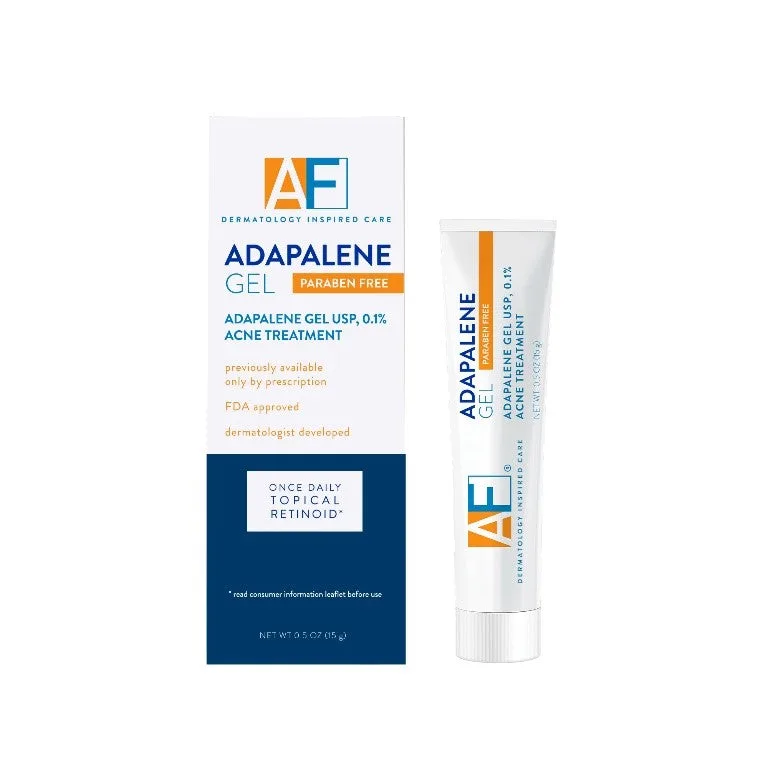
And some of the strongest first-line options need no prescription at all. Adapalene, which was prescription-only for decades, is now sold over the counter as AcneFree Adapalene Gel USP 0.1% and similar products. Benzoyl peroxide washes such as PanOxyl Acne Foaming Wash 10% are among the guideline-strong acne treatments. A plain emollient like Cetaphil Moisturizing Cream or La Roche-Posay Lipikar Eczema Cream does the unglamorous majority of eczema management. None of those requires an appointment, and using them properly for twelve weeks is both a real treatment attempt and the documentation that makes a later appointment more productive. The full answer on treating acne without insurance goes through the sequence in detail.
The routes people forget exist
Beyond private self-pay, several structurally cheaper channels are underused, mostly because nobody tells patients about them.
Academic teaching clinics. Dermatology residency programmes run clinics where trainees see patients under attending supervision, frequently at reduced self-pay rates. The trade is time — appointments run longer and waits are longer — not quality, since every case is reviewed by a consultant or attending.
Free and student-run clinics. These exist in more places than people realise. A retrospective review of one such clinic in North Florida covering 864 dermatology patients over seven years found that a third were seen for chronic dermatological conditions, which is exactly the population that otherwise goes untreated. The same study also found that distance travelled correlated with income, a reminder that transport is often the real barrier rather than the fee.
Manufacturer assistance programmes. For the expensive end — biologics, newer targeted drugs — nearly every manufacturer operates a patient assistance or copay programme, and eligibility is broader than most people assume. The application is tedious and the savings are not marginal.
Clinical trials. Trial participation provides treatment and monitoring at no cost, and dermatology runs a great many of them. It is not right for everyone, but it belongs on the list.
Honesty about the trade-offs matters here: all of these cost time, several involve waiting lists, and none is available everywhere. They are options to check rather than guaranteed answers.
Where the false economy actually bites
Every route above saves money at the margin. Delay is where the real cost sits, and it is not recoverable.
Inflammatory acne that goes untreated long enough leaves atrophic scarring, and scarring converts a treatable medical problem into a procedural cosmetic one — lasers, microneedling, subcision, multiple sessions — that insurers routinely decline to cover on exactly the grounds that it is cosmetic. That coverage gap is the single strongest financial argument for treating early, and it is almost never the argument people are making to themselves while they buy another serum.
The same logic runs through other conditions. Untreated eczema on the hands becomes a work problem. A misdiagnosed fungal infection treated with a steroid for months becomes a longer, more expensive fungal infection. An untreated pigmented lesion becomes a different conversation entirely.
So the plan we would actually give someone counting every pound or dollar: use the over-the-counter first-line properly and consistently for twelve weeks, keeping dated photographs. If it has not worked, book primary care rather than a specialist, state the cost constraint out loud, and ask for generics. Bring the twelve weeks of evidence with you — our derm-visit-prep tool assembles it — because a documented failed course is what moves you up the ladder, while "I tried some things" restarts the clock. And if you are comparing products in the meantime, the dupe-finder tool exists to stop the shelf costing more than the clinic.
Products mentioned
Independently reviewed and scored — the real products behind this piece.


- Therapy guide Acne Shows where escalation genuinely needs a specialist and where it does not
- Therapy guide Eczema Same escalation logic for the other high-volume condition
- Question What are the options if I have no insurance? Step-by-step version of the cheapest effective sequence
- Question Why won't insurance cover acne scar treatment? The coverage gap that makes delay expensive
References
- Changes in Retail Prices of Prescription Dermatologic Drugs From 2009 to 2015 — JAMA Dermatology, 2016
- Analysis of common oral and topical dermatologic medication price variation by source — Dermatology Online Journal, 2020
- Cost analysis of a store-and-forward teledermatology consult system in Philadelphia — Journal of the American Academy of Dermatology, 2019
- Characteristics of Patients with Dermatologic Conditions in a Student-Run Free Clinic: A Retrospective Study — Journal of Student-Run Clinics, 2023
Every cited link is verified to resolve to the paper named. Where a source could not be independently confirmed, it is listed without a link rather than pointing you somewhere wrong.
Frequently asked
Is it cheaper to see a family doctor than a dermatologist for acne or eczema?
Usually, and for first-line treatment it is the same medicine. Topical retinoids, topical and oral antibiotics, moderate-potency steroids and antifungals are all standard primary care prescriptions. A specialist adds diagnostic precision in ambiguous cases, procedures, and the drugs further up the ladder — none of which is what an opening course requires.
Why are dermatology prescriptions so expensive?
Brand-name ones frequently are. A six-year survey of nineteen brand-name dermatologic drugs found a mean retail price rise of 401%, with seven more than quadrupling. Generic equivalents of the same molecules are often among the cheapest medicines a pharmacy stocks, which is why saying 'generic only, cost is a constraint' at the appointment changes the outcome.
Do discount and coupon programmes actually save money on skin medications?
An analysis comparing cash prices with online coupon and discount pharmacy sources for commonly prescribed dermatologic drugs found savings on every medication examined, with coupon programmes often the lowest. It costs a few minutes of checking before filling a prescription, and it applies to both topical and oral drugs.
Is a virtual dermatology consultation worth it?
For rashes, acne assessments and treatment-plan questions, frequently yes. A store-and-forward programme covering 700 patients avoided over a quarter of in-person dermatology visits and a small share of emergency visits. It is the wrong tool for a suspicious pigmented lesion, which needs in-person examination with a dermatoscope.
What is the actual cost of waiting to be treated?
Scarring, mainly. Untreated inflammatory acne can leave atrophic scars, and scar treatment is classified as cosmetic by most insurers, so it is paid out of pocket across multiple sessions. A treatable medical problem becomes an expensive procedural one — which is the strongest financial argument for acting early rather than the reverse.