



"It's Just Purging" Is the Most Expensive Sentence in Skincare
Purging is a real phenomenon with a real mechanism — which is exactly why it gets used to justify eight weeks of damage it could never have caused.

This is prescription-strength adapalene 0.1% in an OTC format — the same active ingredient and concentration that dermatologists prescribed for years before FDA approval for over-the-counter sale. The La Roche-Posay version uses the same molecule in a minimal, eight-ingredient gel vehicle, packaged under a trusted dermatological brand. The formulation is virtually identical to the prescription original.
The same prescription-strength adapalene that dermatologists recommended for decades, now available over the counter under a trusted pharmacy brand. It's a genuinely effective acne treatment with long-term anti-aging benefits — but it costs more than identical OTC alternatives, and the adjustment period is real.
The case for it
Same rule for everyone. “Strong choice” is the verdict on 1,459 of 45,024 concern verdicts across the catalog; rule R2 decided 892 of them. Unchanged since September 5, 2026, engine 5.1.1.
Brand or formulator? Disclose a concentration or correct a fact →
The studies behind the evidence row
The case for it
Same rule for everyone. “Good choice” is the verdict on 9,564 of 45,024 concern verdicts across the catalog; rule R5 decided 9,072 of them. Unchanged since September 5, 2026, engine 5.1.1.
Brand or formulator? Disclose a concentration or correct a fact →
The studies behind the evidence row
Also listed for Large Pores, Rough Texture and Aging — the actives here (Adapalene, Film Formers & Texture Polymers, poloxamer 182) are in our research queue for those concerns; there is no verdict until their evidence rows are written. That is a gap in our table, not a mark against the product.
A verdict is DermApproved’s assessment of how well a product’s ingredients fit a concern — never a claim about what the product treats. Evidence dots and collected reviews sit beside it and are never blended in. Rules 0.5.1 · evidence table ev-2026.09-r228 · how we decide
For decades, adapalene 0.1% required a prescription and a dermatology copay. You'd sit in a waiting room, describe your acne to a doctor, and walk out with a script for a tube of clear gel that would change your skin over twelve patient weeks. In 2016, the FDA made a decision that dermatologists had been advocating for years: it approved adapalene 0.1% for over-the-counter sale, making it the first new OTC acne active ingredient in over three decades. La Roche-Posay's Effaclar version arrived in 2019, putting prescription-grade retinoid therapy on the shelf at Target next to the face wash.
The active ingredient here is straightforward and non-negotiable. Adapalene 0.1% is a third-generation synthetic retinoid that works by binding to specific retinoic acid receptors (RAR-beta and RAR-gamma) in the skin. This binding normalizes the process by which skin cells differentiate and shed, preventing the clumps of dead cells and sebum that form microcomedones — the invisible precursors to blackheads, whiteheads, and inflammatory acne. It's the same mechanism that tretinoin uses, but adapalene was designed to be more targeted and better tolerated.
And better tolerated it is. Adapalene has a significant advantage over tretinoin: it's photostable, meaning it doesn't break down when exposed to UV light or benzoyl peroxide. This photostability makes it more practical for real-world use — you don't need to worry about light degrading the product between application and sleep. Adapalene also has inherent anti-inflammatory properties through inhibition of the lipoxygenase pathway and AP-1 transcription factor, which means it actively reduces the inflammatory component of acne rather than just addressing the clogging.
The formulation here is minimalist by design. Eight ingredients total. The gel base is carbomer with poloxamer 182 as a solubilizer, propylene glycol as a humectant, and the bare minimum of preservation and pH adjustment. There's nothing extra — no soothing additives, no hydrating actives, no antioxidants. This is intentional. The vehicle's job is to deliver adapalene evenly and efficiently, not to be a moisturizer. You're expected to build the supporting cast — gentle cleanser, ceramide moisturizer, daily SPF — around this one targeted treatment.
The texture reflects this philosophy. It's a clear, lightweight gel that applies thinly, absorbs quickly, and disappears without residue. On acne-prone skin that's already producing excess oil, this featherweight vehicle is ideal. It doesn't add occlusion, doesn't leave a film, and doesn't interact with the sebum production that's part of the problem. You apply it, it dries, and you move on to your moisturizer.
But let's be direct about the adjustment period, because it's the reason many people abandon retinoid therapy before it has a chance to work. Adapalene accelerates cell turnover. When you first start using it, the existing microcomedones that were forming beneath the surface get pushed up and out faster than they would have on their own. This manifests as a purge — a temporary increase in breakouts, typically concentrated in areas where you already tend to break out. Simultaneously, the increased turnover causes dryness, flaking, and mild peeling as the outermost skin cells shed faster than the moisturizing layers below can compensate. This is entirely normal and expected. It's also deeply discouraging when you're looking in the mirror at week three wondering why your acne treatment is making your acne worse.
The resolution comes around week six to eight for most people, when the purge subsides and the skin acclimates to the retinoid. By week twelve, which is when clinical trials measure their primary endpoints, the full benefits become apparent: fewer comedones, fewer inflammatory lesions, smoother texture, and often a visible improvement in skin tone and fine lines that extends the product's value beyond acne into anti-aging territory.
Now, the elephant on the pharmacy shelf: price. La Roche-Posay's Effaclar Adapalene Gel costs approximately $36 for 1.6 ounces. The active ingredient is identical to Differin's OTC gel — same molecule, same concentration, same FDA-approved formulation. Differin, the original OTC adapalene brand, frequently retails for less, and store-brand generics offer the same 0.1% adapalene for around $10-15. The La Roche-Posay name carries legitimate trust in the dermatological space, and some users value the brand alignment with their existing Effaclar cleanser and moisturizer. But from a pure efficacy standpoint, you're paying a premium for a brand name on an otherwise equivalent product.
The formula does contain methylparaben, which will be a dealbreaker for the paraben-averse. In this minimal formulation, methylparaben serves as the primary preservative, and its safety profile in cosmetics at standard concentrations is supported by regulatory bodies globally. But consumer preferences don't always track with regulatory assessments, and if you've committed to paraben-free products, this isn't the one.
For anyone willing to commit to twelve weeks and the discipline of gradual introduction, adapalene 0.1% remains one of the most effective acne treatments available without a prescription. It's backed by an evidence base that would make most skincare ingredients envious, it delivers both acne-clearing and anti-aging benefits, and it works. Whether you need to buy the La Roche-Posay version specifically is a question of brand preference rather than clinical necessity.
The hero actives that drive this product's performance.
| Ingredient | Function | Evidence |
|---|---|---|
| Adapalene (0.1%) | A third-generation synthetic retinoid that selectively binds to retinoic acid receptors (RAR-beta and RAR-gamma) in the skin, normalizing abnormal keratinocyte differentiation and reducing microcomedone formation. Unlike tretinoin, adapalene is photostable and has inherent anti-inflammatory properties through inhibition of lipoxygenase and AP-1, making it better tolerated while maintaining clinical efficacy against both comedonal and inflammatory acne. | Regulator-approved for Acne · well-established certainty |
| Carbomer Homopolymer | The gel base that controls the delivery of adapalene to the skin surface. In this minimal formula, the carbomer creates a lightweight, even-spreading vehicle that allows the adapalene to distribute uniformly across the treatment area without occlusion, which is important for acne-prone skin that's sensitive to heavy or pore-clogging bases. | Not yet assessed |
| Poloxamer 182 | A non-ionic surfactant that enhances the solubility and even distribution of adapalene within the gel matrix. In this streamlined formula, it ensures the retinoid is uniformly dispersed so that each application delivers a consistent concentration across the treated skin surface. | Not yet assessed |
Ingredient standings describe the active at treatment-level doses and vehicles; this product's own condition grades weigh its actual formula.
Active Ingredient: Adapalene 0.1%. Inactive Ingredients: Carbomer Homopolymer, Edetate Disodium, Methylparaben, Poloxamer 182, Propylene Glycol, Purified Water, Sodium Hydroxide
treatment
PM
Apply a pea-sized amount to clean, dry skin at night. Wait until skin is completely dry before applying — wet skin increases irritation. Can be applied before or after moisturizer (buffering technique). Avoid the eye area, corners of the mouth, and nostrils. Always use SPF 30+ the following morning.
Initial purging period of 2-6 weeks is common — existing microcomedones surface as the cell turnover accelerates. Visible improvement in blackheads and texture by weeks 4-8. Full acne-clearing benefits typically manifest at 12 weeks. Anti-aging benefits emerge with long-term use beyond 3 months.
Adapalene's mechanism of action is among the best characterized of any topical acne treatment. A seminal study published in the Journal of the American Academy of Dermatology (2003) demonstrated that adapalene 0.1% was as effective as tretinoin 0.025% in reducing acne lesions while causing significantly less irritation — a finding that underpinned its eventual OTC approval. Adapalene selectively modulates retinoic acid receptor subtypes RAR-beta and RAR-gamma, normalizing follicular epithelial differentiation and preventing the formation of microcomedones, the precursor lesions of all acne types.
Unlike first-generation retinoids, adapalene possesses inherent anti-inflammatory activity. A study reported in the British Journal of Dermatology demonstrated that adapalene inhibits the lipoxygenase pathway and suppresses AP-1 transcription factor activity, directly reducing the inflammatory cascade that transforms a simple clogged pore into a red, painful papule or cyst. This dual comedolytic and anti-inflammatory mechanism makes adapalene effective against both comedonal (blackheads and whiteheads) and inflammatory acne.
The photostability of adapalene represents a practical clinical advantage. Studies in Photochemistry and Photobiology have confirmed that adapalene maintains its structural integrity under UV exposure, unlike tretinoin which undergoes rapid photodegradation. This stability means that incidental light exposure between evening application and sleep does not reduce the product's efficacy — a real-world advantage for patients who may not apply it in complete darkness.
Long-term use of adapalene has been shown to stimulate dermal collagen synthesis, conferring anti-aging benefits beyond acne clearance. A 2015 study in the Journal of Drugs in Dermatology documented improvements in fine lines, skin tone, and texture with extended adapalene use, supporting its dual utility for adult patients managing both acne and early signs of photoaging.
Many dermatologists consider adapalene 0.1% a first-line acne treatment, consistent with the American Academy of Dermatology's clinical guidelines. Dermatologists note that adapalene's transition from prescription to OTC status was based on one of the most robust safety datasets ever compiled for an acne active. Dermatologists frequently recommend the gradual introduction protocol — every third night for two weeks, increasing to nightly — to minimize the retinization period that causes most treatment abandonments. For adult patients with both acne and early aging concerns, dermatologists recognize adapalene as a dual-purpose treatment that addresses both conditions through a single nightly application.
Apply a pea-sized amount to clean, completely dry skin at night — wait 20 minutes after washing to ensure skin is fully dry, as wet skin increases irritation. Spread thinly over the entire face, avoiding the eye area, corners of the mouth, and nostrils. Start with every third night for two weeks, then every other night for two weeks, then nightly. The 'buffering' technique — applying moisturizer first, waiting 10 minutes, then applying adapalene — reduces irritation during the adjustment phase. Always use SPF 30+ the following morning.
At approximately $36 for 1.6 ounces, the Effaclar Adapalene Gel carries a meaningful brand premium. Generic adapalene 0.1% is available from store brands for $10-15, and Differin — the original OTC adapalene — frequently retails for less. The active ingredient and concentration are identical across all these products. The La Roche-Posay version offers brand trust and alignment with the Effaclar product ecosystem, but from a pure cost-effectiveness standpoint, cheaper alternatives deliver the same clinical results. A tube lasts 3-4 months with nightly use, moderating the per-month cost to roughly $9-12.
Anyone with persistent blackheads, whiteheads, or mild to moderate acne who wants a proven, FDA-approved retinoid treatment. Particularly valuable for adults who want dual acne-clearing and anti-aging benefits. Best for those who already trust and use La Roche-Posay products and want to stay within the brand ecosystem.
Pregnant or breastfeeding women — adapalene is a retinoid and contraindicated. Those with very dry, eczema-prone, or rosacea-affected skin who may not tolerate retinoid therapy. Budget-conscious consumers who would benefit equally from cheaper generic adapalene 0.1% products.
Ready to try La Roche-Posay Effaclar Adapalene Gel 0.1%?
Buy at Amazon ♥A clear, lightweight gel with a slightly tacky feel during application that dries down to an invisible, matte finish. Absorbs quickly without residue. The gel vehicle is intentionally minimal — no added oils, emollients, or silicones that could clog acne-prone pores.
No fragrance. Virtually no detectable scent from the simple gel base.
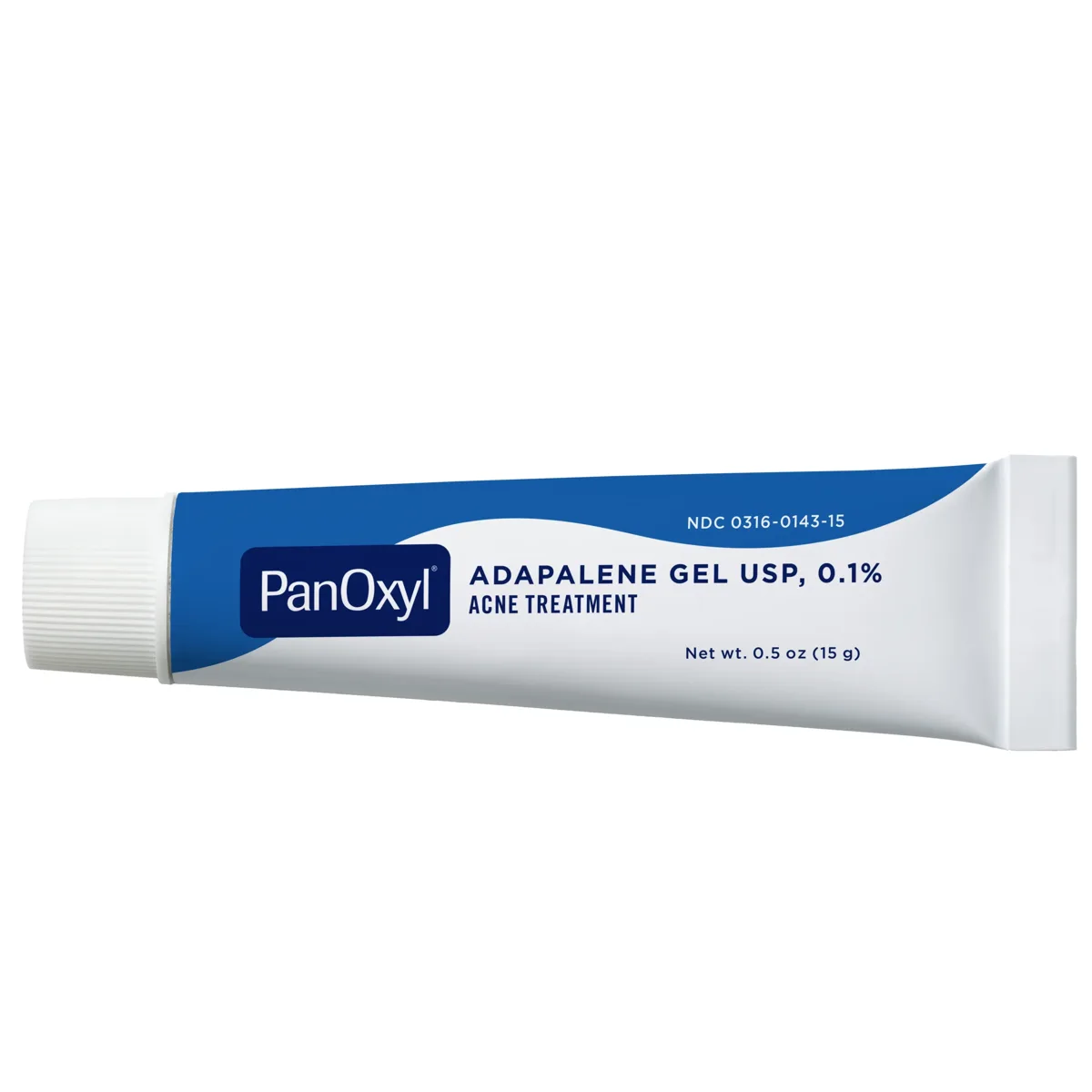
White squeeze tube with a small screw-top cap. The 1.6 oz size is standard for prescription and OTC retinoid treatments. Clean, clinical packaging consistent with the Effaclar line aesthetic.
Applies as a clear, thin gel that absorbs within a minute. During the first 2-4 weeks, expect some dryness, flaking, and potentially a mild stinging sensation on application. A purging phase where existing clogged pores surface as active breakouts is normal and indicates the product is working. These effects typically subside by week 6-8 as skin acclimates.
3-4 months with nightly facial application using a pea-sized amount
All Year
Adapalene was originally developed by Galderma — a company co-owned by L'Oréal, La Roche-Posay's parent — as a prescription retinoid in the 1990s. In 2016, the FDA approved adapalene 0.1% for OTC sale, making it the first new OTC acne active in over 30 years. La Roche-Posay launched its Effaclar version to bring the prescription-grade active under its established acne care umbrella.
La Roche-Posay was founded in 1975 near the thermal springs in central France and has been a dermatologist-recommended brand for nearly five decades. The Effaclar line is the brand's acne-focused range, developed with dermatologists for acne-prone skin.
Adapalene purging means the product is making your skin worse.
Purging is the acceleration of the skin's natural cell turnover cycle. Microcomedones — clogs already forming beneath the surface — are pushed to the surface faster than they would have emerged on their own. This temporary increase in visible breakouts during weeks 2-6 is a sign that adapalene is working. True worsening (allergic reaction or severe irritation) presents differently — widespread redness, burning, or swelling rather than localized breakouts in areas you typically break out.
You need to use adapalene every night from day one for it to work.
Gradual introduction reduces irritation without compromising long-term efficacy. Dermatologists recommend starting every third night for the first two weeks, then every other night for two weeks, then nightly. The adapalene's effects are cumulative over 12 weeks — the timeline for results is the same whether you ramp up gradually or suffer through nightly application from the start.
Expect visible improvement in blackheads and skin texture by weeks 4-8, with full acne-clearing benefits at 12 weeks. A purging phase (weeks 2-6) where existing clogs surface as breakouts is normal. Don't discontinue use during purging — this is a sign the treatment is accelerating cell turnover as intended.
Yes — both contain the same active ingredient (adapalene 0.1%) at the same concentration. Differin (by Galderma) was the original OTC adapalene product. La Roche-Posay's Effaclar version contains the same molecule in a similar gel vehicle. The difference is branding and minor inactive ingredient variations, not clinical efficacy.
Adapalene can be combined with benzoyl peroxide — use BP in the morning and adapalene at night for complementary acne-fighting mechanisms. Avoid combining with AHAs, BHAs, or other retinoids on the same night, as this increases irritation without additional benefit. Vitamin C serums are best used in the morning routine.
No. Adapalene is a retinoid and is contraindicated during pregnancy and breastfeeding. All retinoids carry a risk of birth defects and should be discontinued before conception. Consult your healthcare provider for pregnancy-safe acne alternatives like azelaic acid.
Yes. Adapalene increases cell turnover and has been shown to stimulate collagen production over time. While it's FDA-approved specifically for acne, many dermatologists recommend it for anti-aging benefits including improved texture, fine line reduction, and more even skin tone — making it a dual-purpose treatment for adults with both acne and early aging concerns.
Start by applying every third night for two weeks, then every other night for two weeks, then nightly. Apply to completely dry skin — wait 20 minutes after washing. Use the 'buffering' technique: apply a gentle moisturizer first, let it absorb, then apply adapalene on top. Always use SPF 30+ daily, as adapalene increases photosensitivity.
Recurring themes our editors read across retailer reviews of this product — summaries in our words, not quotations, and not a substitute for your own patch test.
Clears blackheads and whiteheads effectively
Noticeable improvement in skin texture within weeks
Anti-aging benefits beyond just acne clearing
Minimal, clean ingredient list
Oil-free gel texture suits acne-prone skin
Initial purging can be discouraging
Drying and peeling during adjustment period
More expensive than generic adapalene products
Contains methylparaben which some prefer to avoid
Requires patience — full results take 12 weeks
Verified answers from our questions library — the nuance a product page cannot carry.