La Roche-Posay Earns the Sensitive-Skin Claim. The Range Is What Trips People Up.
Four sub-brands, a spring in central France, and sunscreens whose best chemistry Americans still can't buy — a working map of which parts of the lineup are worth the premium and which are a commodity.
Read the preview
From the DermApproved blog, in Sensitive & Reactive Skin: that French pharmacy brand earns its sensitive-skin claim — not by what it puts in. Patch-test data: three of the five commonest allergens are things a formulator chose to add. Subtraction is the whole trick. But the range has grown to four, and that is where it goes wrong. For the full breakdown, visit dermapproved.com/blog.
Anyone can print 'for sensitive skin'. Almost nobody formulates for it.
There is no regulatory definition of a sensitive-skin product, which is why the phrase appears on scrubs, essential-oil serums and foaming washes that would strip a rhinoceros. What actually separates the honest versions from the decorative ones is dull and measurable: what has been left out.
The patch-test data makes the case bluntly. Across 4,121 patients tested by the North American Contact Dermatitis Group in 2019–2020, the most common positives were nickel at 18.2%, methylisothiazolinone at 13.8%, fragrance mix I at 12.8% and hydroperoxides of linalool — the oxidation products of a fragrance material found in a great many "natural" formulas — at 11.1%. Three of the top five are things a formulator chooses to include. No soothing botanical earns back the ground lost by adding them.
La Roche-Posay's claim to the category rests on having taken that seriously for a long time. The house was formalised in 1975 by a pharmacist working beside a thermal spa in central France that had been treating dermatology patients since the beginning of the last century; L'Oréal bought it in 1989 and, unusually for a pharmacy brand absorbed into a giant, largely left the constraints alone. Short ingredient lists, fragrance kept out of the reactive lines, preservative systems chosen for tolerance rather than cost, and a thermal-water base running through nearly everything.
That discipline is real. The complication is that a brand built on restraint now sells several hundred products across four sub-ranges, and the shelf no longer explains itself.
What is actually in the water
The thermal water is the brand's origin story and its most over-read ingredient. It is selenium-rich — measured at 0.053 mg/L — along with bicarbonate, calcium, silicate and strontium, and the reason anyone cares about the selenium is that it feeds glutathione peroxidase, one of the enzyme systems that mops up oxidative damage.
The published work behind it, reviewed in Clinical, Cosmetic and Investigational Dermatology, is more interesting than the marketing suggests: cells cultured in the water survived oxidative stress better, human skin studies showed fewer sunburn cells after UV exposure, and inflammatory and adhesion markers came down. There is balneotherapy evidence too, including meaningful psoriasis severity reductions in spa-treatment cohorts.
Now the caveat that the packaging will never carry. Much of that literature is brand-affiliated, some is in vitro, and spa balneotherapy — weeks of immersion and supervised care — is not the same intervention as a mist of the same water in a moisturiser. Treat the thermal water as a sensible, low-risk vehicle with a plausible antioxidant contribution, not as the reason a product works. What makes a La Roche-Posay product work is almost always the boring part of the formula: the emollients, the lack of fragrance, and whichever active the range is built around.
Four ranges, four different jobs
Toleriane is the reactivity line — the shortest ingredient lists in the house, aimed at skin that stings at things it shouldn't. Toleriane Double Repair is the workhorse, a ceramide-and-niacinamide cream with nothing in it to argue with, and Toleriane Hydrating Gentle Cleanser is the non-foaming counterpart for people whose skin tightens after washing.
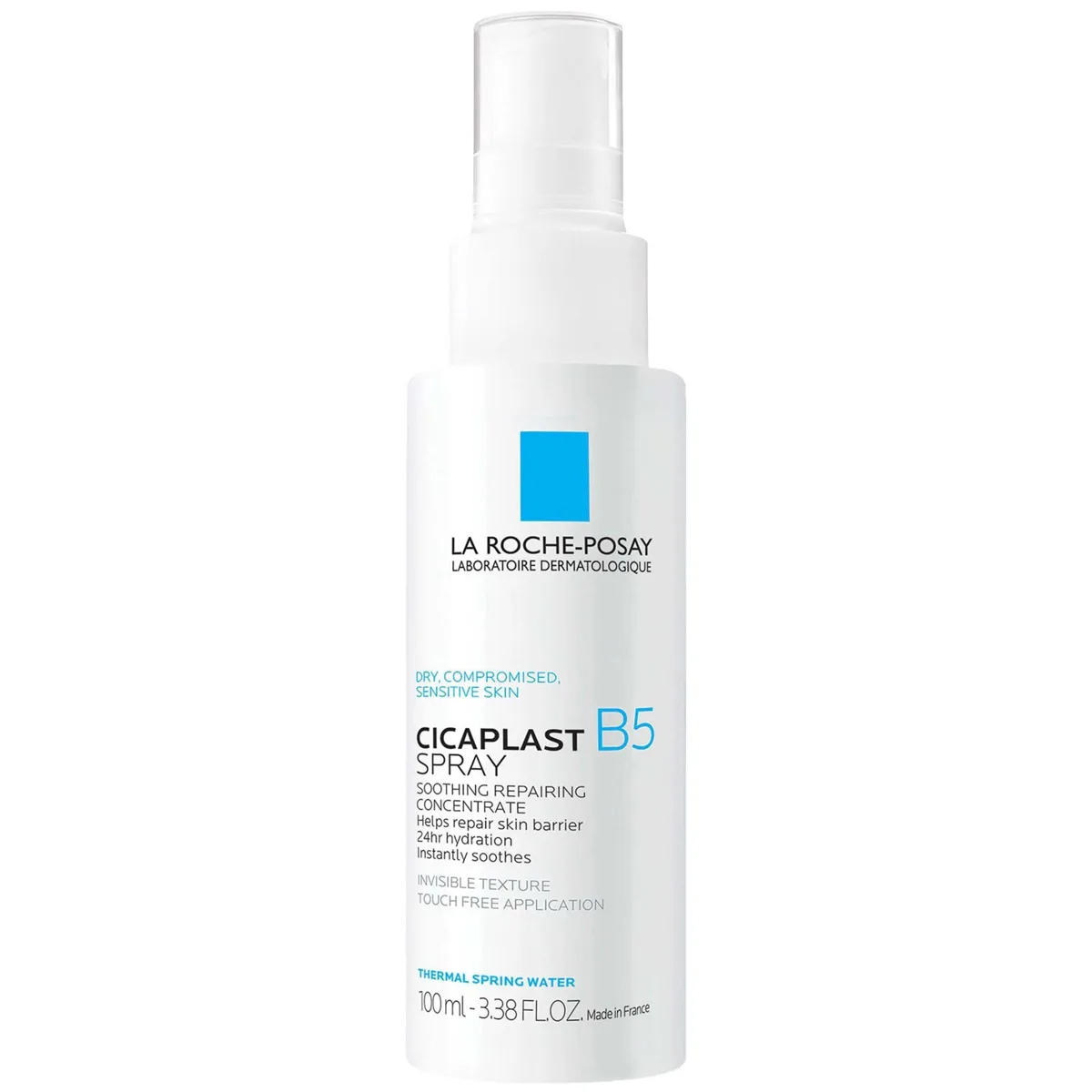
Cicaplast is the damage line: panthenol at a serious concentration, madecassoside, and a zinc-manganese complex, aimed at skin that has been broken, lasered, chapped or over-treated rather than skin that is merely fussy. The panthenol claim has decent independent support — a controlled human study found that a 2.5% dexpanthenol formulation applied twice daily for a week improved stratum corneum hydration and reduced transepidermal water loss against its own vehicle, which is exactly the mechanism you want after a procedure. A format like Cicaplast B5 Spray exists because touching freshly treated skin is the part people get wrong.
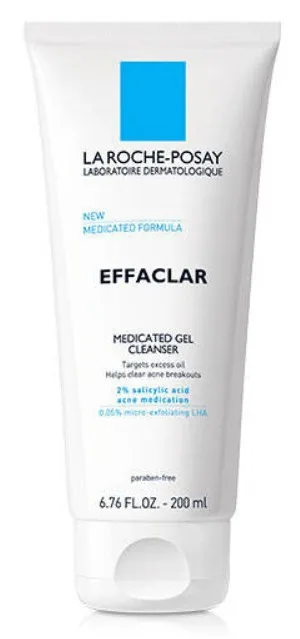
Effaclar is acne, and it is where the brand behaves least like a sensitive-skin house and most like a pharmacy: salicylic acid in Effaclar Medicated Gel Cleanser, benzoyl peroxide in the spot treatments, and a genuine retinoid in Effaclar Adapalene Gel 0.1%. Adapalene at that strength is the same molecule at the same dose wherever you buy it; what you are paying the brand for is the vehicle, which is not nothing — a tolerable base is often the difference between a retinoid used nightly and a retinoid abandoned in week three — but it is not a different drug.
Lipikar is the body and atopic line, and the one most often bought last and needed most. Lipikar Eczema Cream leans on colloidal oatmeal, the one over-the-counter skin protectant with a monograph behind it, while the AP+ washes exist because ordinary body wash undoes a day of barrier repair in ninety seconds.
The expensive mistake is treating those as tiers of the same thing — buying Cicaplast because it sounds strongest, or Toleriane because it sounds safest — instead of matching the range to the problem. Reactivity, damage, acne and atopic dryness are four different jobs, and only one of them is yours this month.
The sunscreens are the standout, and the American ones carry an asterisk
Anthelios is the reason dermatologists abroad talk about this brand the way they do, and the reason American visitors come home with a suitcase of it. The gap was never formulation skill; it was the filter list a formulator is legally allowed to use.
How big is the gap? When researchers measured 20 commercially available US sunscreens in vitro against both standards, critical wavelengths ran from 367 to 382 nm and UVA protection factors from 6.1 to 32 — most cleared the FDA's broad-spectrum requirement, but almost half would have failed the European Union's UVA rule. A later laboratory analysis of sunscreens sold in the US found in vitro SPF values below the labelled figure and, again, UVA protection weaker still. Broad-spectrum, as an American label term, has always been a floor rather than a promise.
That is finally changing. On 10 June 2026 the FDA issued a final administrative order adding bemotrizinol — the filter Europe has used for years, and one of the reasons the continental Anthelios reads differently — to the OTC sunscreen monograph at concentrations up to 6%, for adults and children six months and older, effective 9 August 2026. It is the first new active added to the US sunscreen monograph in more than twenty years, and the first cleared through the streamlined administrative-order route created by the CARES Act.
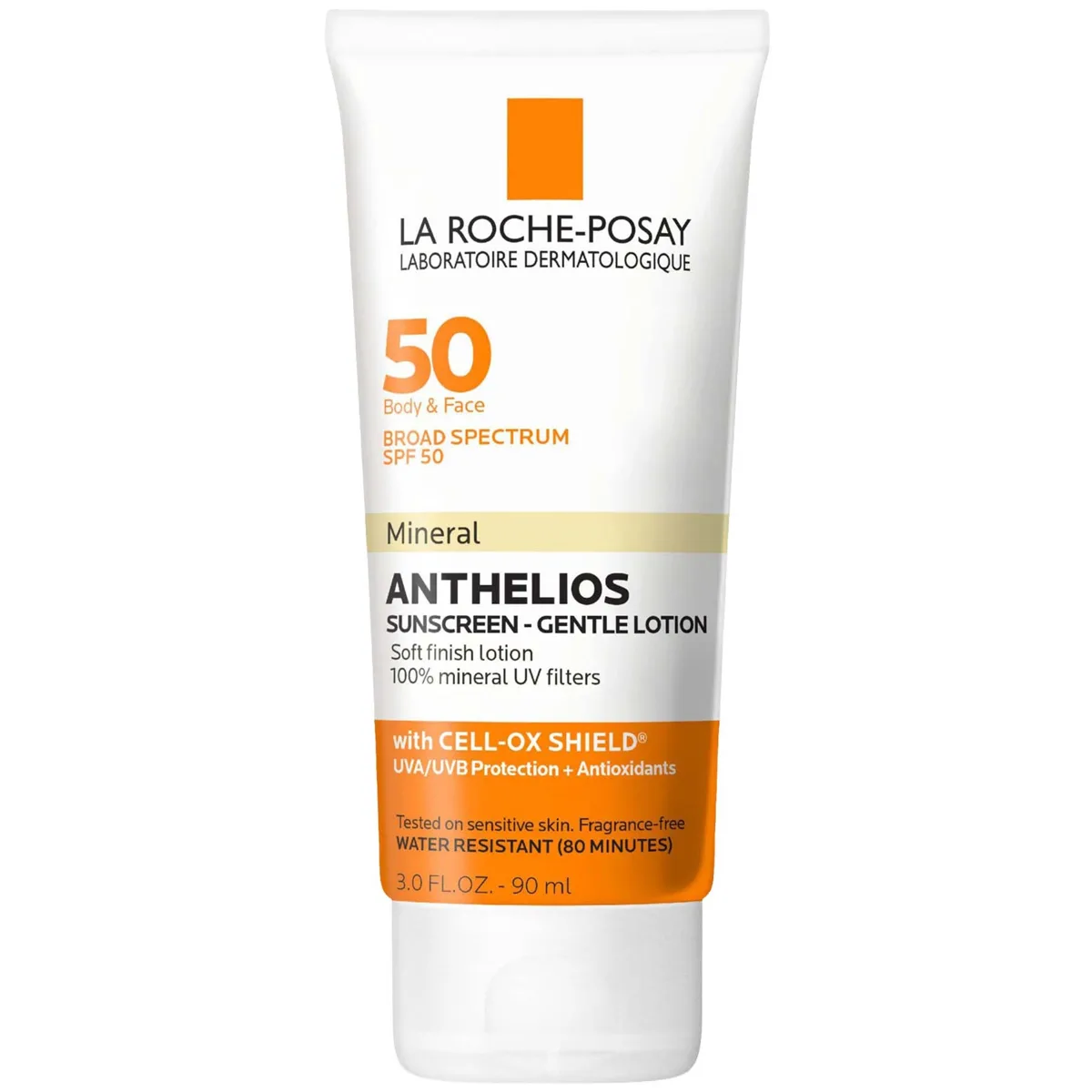
Restraint is warranted about what that means this summer. A monograph listing is permission, not a product; there is a period of marketing exclusivity for the ingredient's manufacturer before it becomes commonplace; and reformulating a sunscreen means re-testing it. The bottles on American shelves right now are still built on the older toolkit, which is why the domestic Anthelios line splits into avobenzone-based fluids like Anthelios Melt-In Milk SPF 100 and mineral versions such as Anthelios Mineral Gentle Lotion SPF 50 for skin that reacts to organic filters.
The practical point survives the regulatory news: the sunscreen you reapply beats the sunscreen that tests marginally better and sits in a drawer, and cosmetic elegance is the single most under-rated variable in real-world photoprotection.
Where the premium is defensible, and where you're buying a logo
Run the routine step by step and the value splits cleanly, because different steps have wildly different amounts of work to do.
A gentle cleanser is close to a commodity. It is on your face for under a minute, then it leaves; a well-made drugstore syndet with the same low-strip surfactant system and no fragrance does the identical job, and the branded version's advantage is mostly that the formula is predictable. Body lotion is the same argument at ten times the volume — the quantity required to cover legs and arms twice daily makes premium pricing hard to justify unless a specific active is doing something the cheap one cannot.
The steps that reward the spend are the ones where texture drives compliance or where the formula is doing real repair. Sunscreen is the clearest case: you need roughly two milligrams per square centimetre for the labelled protection, most people apply a fraction of that, and the reason they under-apply is almost always sensory. A fluid that disappears gets used generously. Post-procedure repair is the second case, because the window where skin is raw is short and you want a formula chosen for tolerance, not for price per millilitre. Medicated steps sit in between — the drug is the drug, and the vehicle is what you're paying for.
Which gives a simple rule for building the shelf: spend at the top of the routine where the formula must be elegant or tolerant, economise at the bottom where the product is rinsed off or spread thin. Our sensitive-skin routine is built on exactly that split, and if you want to see how far a single-brand approach gets you before it starts costing more than it returns, the La Roche-Posay routine lays it out step by step.
How to buy it without buying all of it
Start from your actual problem rather than the range names. If your skin flushes and stings at products others tolerate, that is one moisturiser and one cleanser from the reactivity line, plus a sunscreen — three products, not seven. If you are recovering from a procedure or a retinoid overshoot, the repair line for a fortnight, then back to normal; a rescue formula used indefinitely is money spent maintaining a state you have already left. If the concern is acne, the medicated line is doing pharmacological work and belongs on a schedule, not a whim. The Routine Finder will assemble the order for you, and the Sunscreen Finder is more useful than the shelf label if organic filters are what your skin objects to.
Whatever you add, add it alone. A four-product change makes an eventual reaction uninterpretable, and reactive skin is precisely the population that cannot afford an uninterpretable result. Two days on the inner forearm before anything goes on your face, logged in the Patch Test tool so that a failure becomes a permanent avoid rather than a vague memory, is the cheapest insurance in skincare.
And hold the brand to the standard that earned its reputation. The lines built on restraint are excellent and defensible. The far edges of the catalogue — the multi-step ranges, the third moisturiser variant that differs from the second by finish — are the same thing every large brand does under commercial pressure, and being sold in a pharmacy does not exempt a product from having to justify itself.
Products mentioned
Independently reviewed and scored — the real products behind this piece.




References
- North American Contact Dermatitis Group Patch Test Results: 2019-2020 — Dermatitis, 2023
- Thermal waters as cosmeceuticals: La Roche-Posay thermal spring water example — Clinical, Cosmetic and Investigational Dermatology, 2013
- Effect of topically applied dexpanthenol on epidermal barrier function and stratum corneum hydration. Results of a human in vivo study — Arzneimittel-Forschung, 2000
- Comparison of ultraviolet A light protection standards in the United States and European Union through in vitro measurements of commercially available sunscreens — Journal of the American Academy of Dermatology, 2017
- Laboratory testing of sunscreens on the US market finds lower in vitro SPF values than on labels and even less UVA protection — Photodermatology, Photoimmunology & Photomedicine, 2022
- Amending Over-the-Counter Monograph M020: Sunscreen Drug Products for Over-the-Counter Human Use (final administrative order OTC000039, bemotrizinol) — US Food and Drug Administration / Federal Register, 2026
Every cited link is verified to resolve to the paper named. Where a source could not be independently confirmed, it is listed without a link rather than pointing you somewhere wrong.
Frequently asked
Is European Anthelios genuinely better than the American version?
On UVA filter chemistry it has been, and the measurements support it: nearly half of a sample of US sunscreens tested in vitro failed the EU's UVA standard while passing the FDA's broad-spectrum rule. The formulation skill is the same on both sides; the legal filter list was not. With bemotrizinol added to the US monograph in June 2026, that gap should narrow — though products carrying it will take time to reach shelves.
Which La Roche-Posay range should I start with if my skin just reacts to everything?
The Toleriane line, and only two products from it — a non-foaming cleanser and the ceramide-based moisturiser — plus a sunscreen you find pleasant enough to reapply. Cicaplast is for skin that is damaged rather than merely reactive, and adding it alongside a new cleanser and moisturiser makes any flare impossible to attribute.
Does the thermal spring water actually do anything, or is it marketing?
It is a plausible supporting ingredient with published antioxidant and anti-inflammatory effects tied to its selenium content, measured at 0.053 mg/L. It is not the reason any given product works, much of the research is brand-affiliated, and spa balneotherapy studies involve an intervention nothing like applying a cream. Judge the formula by its emollients, its actives and what it leaves out.
Is Effaclar Adapalene worth buying over a generic adapalene gel?
The retinoid itself is identical — 0.1% adapalene is a fixed dose regardless of who packages it. What differs is the vehicle, and a base that keeps a beginner using a retinoid nightly instead of quitting in week three has real value. If a generic sits well on your skin, you are not missing an active ingredient by choosing it.
Where in a La Roche-Posay routine can I substitute something cheaper without losing anything?
The rinse-off and high-volume steps. A fragrance-free, low-strip cleanser is on your skin for under a minute, and body lotion is used in quantities that make premium pricing hard to defend. Keep the spend for sunscreen — where texture determines whether you apply enough — and for genuine repair after a procedure.