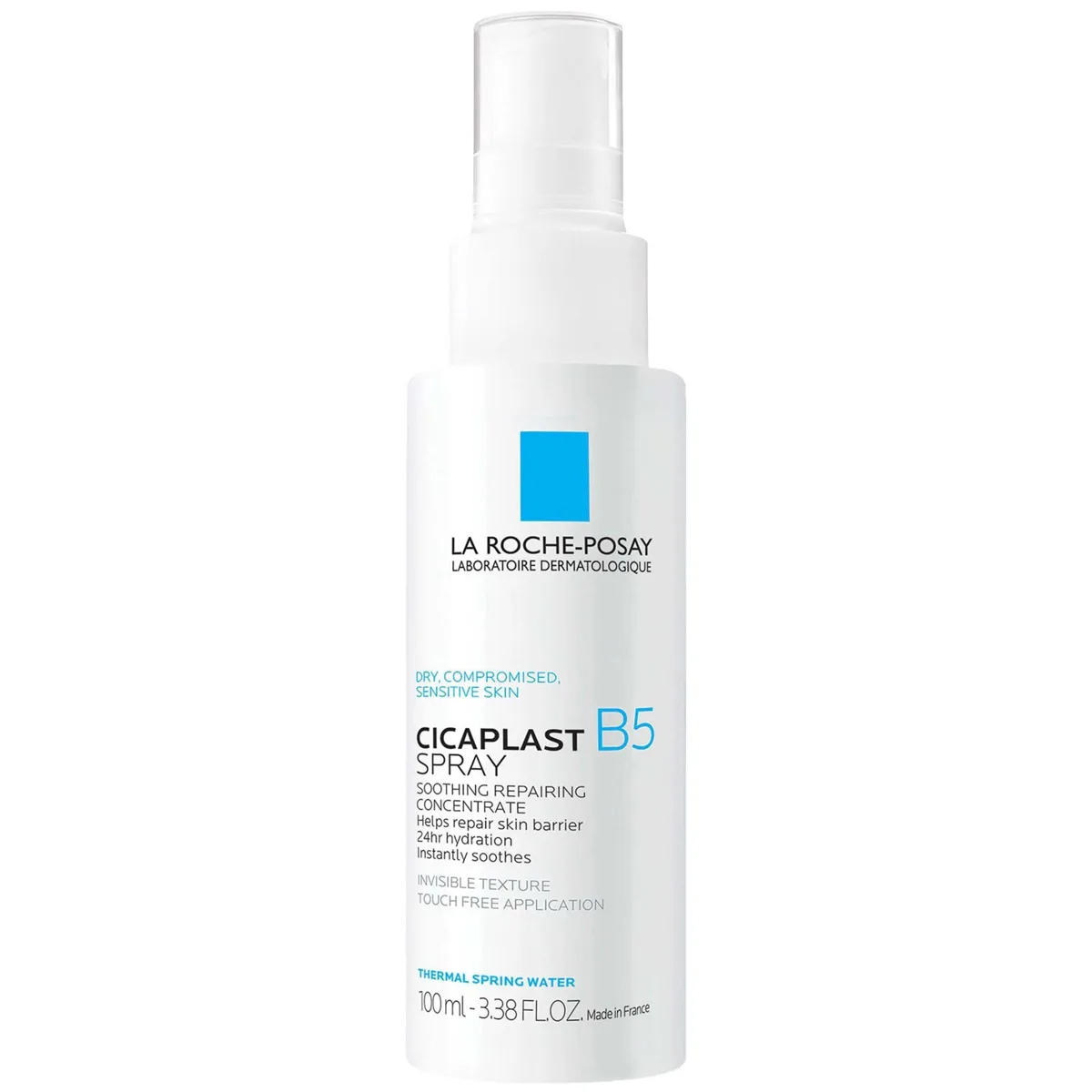
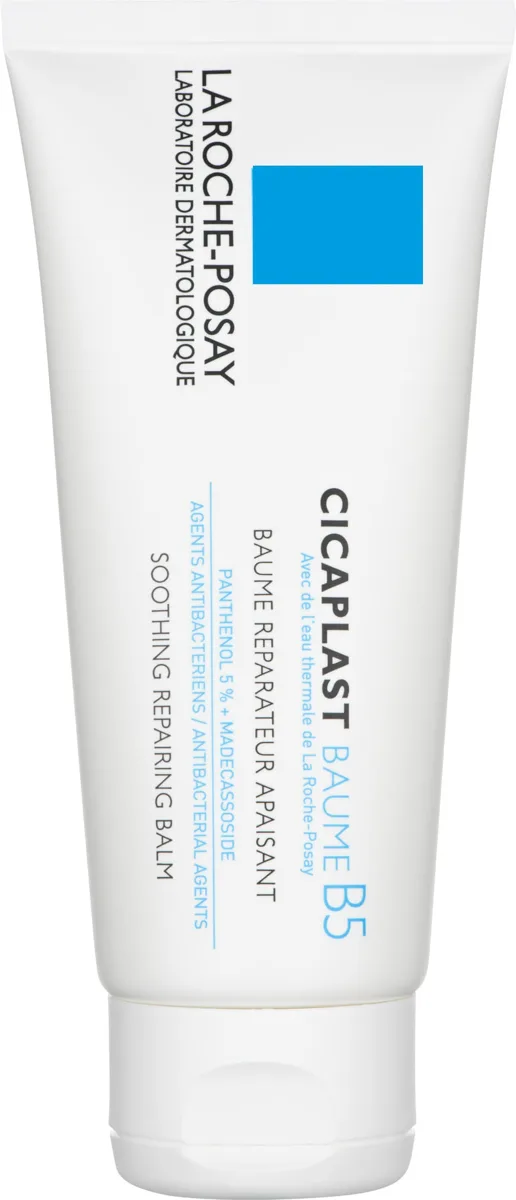
It takes La Roche-Posay's trusted Cicaplast soothing-repair formula — 5% panthenol and madecassoside — and delivers it as a touch-free spray. That format is the genuine point: when skin is sunburned, post-procedure, raw, or painfully irritated, a spray soothes and repairs it without the discomfort of rubbing a cream in, and covers large body areas easily.
A focused, genuinely excellent soothing-repair spray — 5% panthenol and madecassoside in a short, fragrance-free formula. The touch-free spray format is a real, practical advantage for compromised skin you should not rub. Gentle enough for babies, broadly useful, and fairly priced.
Note: The Cicaplast line and its core ingredients are well-established, while this spray format is a more recent addition. Our scoring blends ingredient analysis with the line's strong real-world track record. Treat the score as provisional until independent data catches up.
Verdicts
How well it fits each concern
Verdict by concern tap a concern for the case
Good choicefor SensitivityIn your profileYou chose · No fragrance, drying alcohol, declarable allergens or sensitising preservatives in this spray — the profile sensitive skin looks for.Not yet assessedGentle20 reviews collected
The case for it
Madecassoside has been researched for this concern and the evidence does not support it.
It is plausibly present at a working level, though the concentration is not declared.
The formula carries none of the triggers this concern is sensitive to.
What would change this: A declared concentration would move this to a firmer reading of the dose.
Same rule for everyone. “Good choice” is the verdict on 1,938 of 45,024 concern verdicts across the catalog; rule F2 decided 1,938 of them.
Unchanged since September 5, 2026, engine 5.1.1.
Promisingfor Post-ProcedureIn your profileYou chose · Panthenol (Vitamin B5) has trial-level evidence for post procedure but no guideline or regulatory standing yet — promising, short of a recommendation; the other actives here are not yet assessed for it.Moderate evidenceGentle20 reviews collected
The case for it
Panthenol has trial-level evidence for this concern but no guideline or regulatory standing yet.
It is present at an effective concentration, declared or high in the ingredient list.
The formula carries none of the triggers this concern is sensitive to.
What would change this: Guideline or regulatory standing for the active on this concern would move this from a promising bet to a recommendation.
Same rule for everyone. “Promising” is the verdict on 7,858 of 45,024 concern verdicts across the catalog; rule R9p decided 7,858 of them.
Unchanged since September 5, 2026, engine 5.1.1.
R9p — 0.5.0: 'Unproven' beside three filled dots read as one question answered twice with opposite words (7,018 rows). The chip measures standing, the dots measure trial volume; where the row carries at least one RCT or a tier-2 source (moderate dots) and the active is present at a working level, the honest word is Promising. Unproven is reserved for plausible-standing rows with limited or weak evidence, or an under-dosed form. Same rank as Unproven — a bet either way; the dots order them. · the full register
Carrying active
Panthenol
Standing
plausible — trials support it
Form
adequate (declared 5%) — studied range 0.5–2%, from the OTC monograph or label; needs leave-on contact
Tolerability
gentle
Row checked
against its sources on July 17, 2026 (evidence table ev-2026.09-r228)
Good choicefor DrynessIn your profileYou chose · Glycerin is a reference standard by mechanism for dryness; this spray carries it high in the ingredient list.Moderate evidenceGentle20 reviews collected
The case for it
Glycerin has trial-supported standing for this concern.
It is present at an effective concentration, declared or high in the ingredient list.
The formula carries none of the triggers this concern is sensitive to.
Same rule for everyone. “Good choice” is the verdict on 9,564 of 45,024 concern verdicts across the catalog; rule R5 decided 9,072 of them.
Unchanged since September 5, 2026, engine 5.1.1.
Also listed for Compromised Skin Barrier — the actives here (Glycerin, Panthenol (Vitamin B5) are in our research queue for that concern; there is no verdict until their evidence rows are written. That is a gap in our table, not a mark against the product.
Where our review and the verdict differ. The review below was written on the formulation and the published trials; the verdicts above apply the stricter standing test in our methodology — an active earns a recommendation only with guideline or regulatory standing for the concern. Where the two disagree, the verdict is DermApproved’s position.
A verdict is DermApproved’s assessment of how well a product’s ingredients fit a concern — never a claim about what the product treats. Evidence dots and collected reviews sit beside it and are never blended in.
Rules 0.5.1 · evidence table ev-2026.09-r228 · how we decide
Assessment
Pros & Cons
Pros
✓ 5% panthenol — a genuine, high dose of a proven soothing-repair ingredient
✓ Touch-free spray soothes compromised skin without painful rubbing
✓ Madecassoside adds a second well-evidenced calming active
✓ Short, fragrance-free formula — gentle enough for babies 2 months and up
✓ Covers large body areas quickly; pregnancy-safe and fungal-acne safe
✓ Fairly priced for a dermatologist-trusted repair product
Cons
✗ Lighter than the Cicaplast Baume B5 balm — less occlusive for intense repair
✗ Spray format is less targeted on small, precise areas
✗ A soothing adjunct, not a standalone everyday moisturizer
Review
Full Review
It's easy to roll your eyes at a spray, to assume it's just an existing cream repackaged into an aerosol so the marketing team has something new to launch. The Cicaplast B5 Spray is the case that earns the format honestly, because it solves a problem a cream physically cannot. When skin is sunburned, freshly post-procedure, raw, or painfully irritated, the very last thing it wants is to be rubbed — and a touch-free mist soothes and treats it without that friction. La Roche-Posay's Cicaplast line has been a trusted barrier-repair franchise for years, anchored by the well-loved Baume B5 balm; this extends that same soothing-repair philosophy into a format built specifically for the moments when smoothing a cream in by hand is impractical or simply hurts.
The formula is short, focused, and well chosen, which is exactly what you want for compromised skin. The headline ingredient is panthenol at a genuine 5% — provitamin B5, one of the best-evidenced soothing and barrier-repair ingredients in skincare. It converts to vitamin B5 in the skin, acts as a humectant, and has a solid research base linking topical use to reduced irritation and improved recovery of damaged skin. At 5% it's doing real work; this is a working concentration, not a token sprinkle for the ingredient list. Alongside it sits madecassoside, a purified triterpenoid isolated from Centella asiatica and the most-studied of that plant's actives, with documented anti-inflammatory and skin-soothing activity — using the isolated compound rather than a crude extract gives more consistent performance, and it complements the panthenol in settling irritated, barrier-impaired skin. Glycerin, placed second on the list, is a thoroughly evidenced humectant that matters here for a specific reason: compromised skin loses water too readily through an elevated transepidermal water loss, so a humectant that holds water in directly supports recovery. Manganese gluconate and mannose round things out, reflecting La Roche-Posay's long-running mineral-and-sugar soothing approach; their evidence is best called promising, and they play supporting rather than leading roles. No fragrance, no alcohol, and gentle enough to carry a suitable-for-infants rating from two months and up.
Reaching for it confirms the appeal. The spray throws a fine, cooling mist that settles evenly and absorbs quickly into an invisible, non-greasy finish, with no scent, no sting, and no residue. Irritated, tight, uncomfortable skin feels soothed almost immediately, and the touch-free application is a genuine relief on areas that are sore to the touch. It also covers large stretches of body — a sunburned back, a freshly waxed leg, a wide eczema patch — quickly and evenly in a way a cream simply can't match. Around a thousand reviewers rate it highly, and they consistently single out the instant soothing and the no-touch format as exactly the things that make it useful. The results timeline is honest and modest: uncomfortable skin feels calmer right away on application, and visible repair of dry, compromised, or irritated areas follows over the next few days of regular use as the barrier recovers.
What it doesn't do is a question of scope rather than quality. The spray lays down a lighter, thinner layer than the rich, occlusive Baume B5 balm, so for intense overnight repair of very dry, cracked skin, the heavier balm still does more — the two are complementary, not interchangeable. The spray is also less precise on small, targeted spots, where a dab of balm would be neater. And it works best as a soothing adjunct rather than a standalone everyday moisturizer; it's not built to be the only thing between your skin and the day. It's also not certified cruelty-free, which is worth noting for anyone who weighs that. None of these are flaws so much as boundaries of what a fine repair mist is meant to be.
Value is fair at around twenty-five dollars for 100ml. La Roche-Posay is a legacy pharmacy brand, founded in 1975 and one of the most widely dermatologist-recommended names in skincare, and the Cicaplast line carries that clinical trust into this product; you're paying a reasonable price for a genuinely well-formulated, derm-backed repair tool. The data confidence sits at medium only because there's no published trial on this exact spray — but its core actives are well established and the line's real-world record is strong.
It's worth being specific about the everyday scenarios where this earns its spot in the cabinet, because they're more common than the clinical framing suggests. A sunburned back or shoulders you can't comfortably reach to rub cream into; a freshly micro-needled or lasered face that the practitioner has told you not to touch; an eczema flare spread across a forearm that's too sore for friction; a toddler's wind-chapped cheeks where a no-touch mist is simply easier than wrestling a cream onto a squirming child; the tight, raw skin after an over-enthusiastic exfoliation session. In every one of these, the value isn't just the panthenol and madecassoside doing their soothing work — it's that you can deliver them without the mechanical stress that would make the irritation worse. That's a narrow but genuinely useful niche, and very few products fill it as cleanly.
For a household that regularly deals with sunburn, post-procedure skin, eczema flares, or large irritated areas — and especially for parents of small children — this is a genuinely excellent, fairly priced soothing-repair product, and one of the rare cases where a format change is the entire point and the format actually delivers on it. Keep the balm for deep overnight repair, and keep this for everything that shouldn't be touched. Between the two, you've got most of what irritated skin asks for covered.
Formula
Key Ingredients
The hero actives that drive this product's performance.
The headline ingredient at a genuine, high 5%. Provitamin B5 is a well-evidenced soothing and skin-repairing ingredient — it calms irritation, supports barrier recovery, and hydrates. At 5% it is doing real work, and it is the core of the spray's soothing-repair function.
An isolated, purified soothing compound from Centella asiatica — the most-studied of the plant's actives. It calms inflammation and supports skin recovery, working alongside the panthenol to settle irritated, compromised skin.
A humectant placed second on the INCI that draws and holds water in the skin. It delivers the spray's lasting hydration — important for compromised skin, which loses water too readily — without any heaviness.
Established mechanismfor Dryness · established mechanism
Manganese Gluconate
A mineral, part of La Roche-Posay's signature soothing mineral approach in the Cicaplast line. It contributes a calming, skin-conditioning effect that complements the panthenol and madecassoside.
A sugar that supports the skin's recovery and barrier processes. In a minimal repair-focused formula it is a sensible inclusion, reinforcing the spray's barrier-supporting intent.
Not yet assessed
Ingredient standings describe the active at treatment-level doses and
vehicles; this product's own condition grades weigh its actual formula.
Spray directly onto the affected area from a short distance — no rubbing or touching needed — and let it absorb. Use it on the face or body as often as needed on dry, irritated, sunburned, post-procedure, or otherwise compromised skin. It layers cleanly under or over other products, and a moisturizer can be applied afterward to seal in hydration on very dry areas.
Results Timeline
Irritated, uncomfortable skin feels soothed almost immediately on application. Visible repair of dry, compromised, or irritated skin follows over the next few days of regular use, as the barrier recovers.
The Cicaplast B5 Spray pairs a well-evidenced repair active with a delivery format that addresses a real clinical problem. The headline ingredient is panthenol at a stated 5%. Panthenol, the alcohol form of pantothenic acid, converts to vitamin B5 in the skin and has a solid body of research supporting its function as a humectant and as an aid to wound healing and barrier recovery; studies have associated topical panthenol with reduced irritation and improved repair of compromised skin, and 5% is a genuine working concentration rather than a marketing trace.
Madecassoside is the second well-supported active. It is a purified triterpenoid isolated from Centella asiatica, the most-studied of the plant's compounds, with documented anti-inflammatory and skin-soothing activity; using the isolated compound rather than a crude extract gives more consistent performance, and it complements the panthenol in calming irritated, barrier-impaired skin. Glycerin, placed second on the short ingredient list, is a thoroughly evidenced humectant, and it matters here because compromised skin shows elevated transepidermal water loss, so a humectant that holds water in the skin directly supports recovery. Manganese gluconate and mannose reflect La Roche-Posay's long-running mineral-and-sugar soothing approach; their evidence is best described as promising, and they play a supporting rather than leading role.
The format itself has a sound rationale. Sunburned, post-procedure, or acutely irritated skin should not be subjected to friction, and a touch-free spray avoids that mechanical stress while still delivering the formula evenly across large areas. The short, fragrance-free ingredient list keeps irritation risk low, which is why it is rated suitable for infants. No independent published trial on this exact spray is available, but its core ingredients are well established, and the line carries a strong real-world record.
Dermatologist Perspective
Dermatologists frequently recommend panthenol- and centella-based products for soothing and supporting the repair of compromised, irritated, and post-procedure skin, and the Cicaplast line specifically is among the barrier-repair products clinicians most commonly suggest. A minimal, fragrance-free formula with 5% panthenol and madecassoside aligns directly with what dermatologists advise for sensitive, reactive, and recovering skin. The touch-free spray format has genuine clinical logic: after procedures such as lasers or peels, and on sunburned or raw skin, minimizing mechanical contact is standard advice, and a spray allows soothing application without friction. That the product is suitable for infants two months and up reflects its very low irritation potential. Dermatologists would frame the spray as an excellent soothing and light-repair adjunct, while noting that for intensive occlusive repair of severely dry or cracked skin a richer balm is preferable. With no actives of concern, it is appropriate for sensitive skin and during pregnancy.
Guidance
Usage & Recommendations
How to Use
Hold the bottle a short distance from the skin and mist directly onto the affected area, no rubbing or touching needed, then let it absorb. Use it on the face or body as often as required on dry, irritated, sunburned, post-procedure, or otherwise compromised skin. It layers cleanly under or over other products. On very dry or cracked areas, follow the spray with a richer moisturizer or the Cicaplast balm to seal in hydration, since the mist itself leaves a lighter, thinner layer.
Value Assessment
At $24.99 for 100ml, the Cicaplast B5 Spray is fairly and accessibly priced for a dermatologist-trusted, well-formulated soothing-repair product — and the touch-free format adds genuine practical convenience that justifies the cost. Because it is a targeted soother used as needed on compromised areas rather than an everyday all-over moisturizer, a bottle lasts a good while, keeping the effective cost low. There is no novelty premium: La Roche-Posay prices accessibly, and the spray sits in line with the rest of the affordable, sensible Cicaplast range. For anyone who deals with sunburn, post-procedure recovery, irritation flares, or sensitive and baby skin, it is a genuinely good-value addition to the cabinet.
Who Should Buy
This earns a place for anyone who regularly deals with compromised skin, sunburn, post-procedure recovery, eczema flares, or large irritated patches, and for parents, since it is gentle enough for babies two months and up. Sensitive, dry, and reactive skin will find it a soothing, fragrance-free adjunct to keep on hand.
Who Should Skip
Those who need an intensive, occlusive overnight repair for severely dry, cracked skin will find a rich balm more effective than this lighter spray. Anyone wanting a single everyday all-over moisturizer should choose a moisturizer — the spray is a targeted soothing adjunct. Strict cruelty-free shoppers should note the brand's status.
A fine, lightweight water mist that absorbs quickly into an invisible, non-greasy finish
Scent
Effectively scentless — fragrance-free
Packaging
A 100ml spray bottle designed for touch-free application from any angle, including upside down. The spray format is the product's defining functional feature.
Finish
lightweightinvisiblefast-absorbing
What to Expect on First Use
Expect a fine, cooling mist that settles onto the skin and absorbs quickly with no scent, no sting, and no residue. Irritated, tight, or uncomfortable skin feels soothed almost immediately. There is no rubbing required, which is a relief on genuinely sore or compromised skin.
How Long It Lasts
Lasts in the two-to-three-month range regular use on compromised areas
La Roche-Posay's Cicaplast line is a long-trusted barrier-repair franchise, best known for the Cicaplast Baume B5 balm. The B5 Spray extends that soothing-repair formula into a touch-free format, designed for situations — sunburn, post-procedure skin, large irritated areas, delicate baby skin — where applying a cream by hand is impractical or uncomfortable.
About La Roche-Posay Legacy Brand (20+ years)
La Roche-Posay was founded in 1975 and is one of the most widely dermatologist-recommended pharmacy skincare brands, owned by L'Oreal. Its Cicaplast line is a long-trusted barrier-repair franchise, backed by the brand's clinical positioning and decades of use on sensitive and compromised skin.
Brand founded: 1975 · Product launched: 2024
Myth vs. Reality
Common Myths
Myth
A spray format is just a gimmick — a cream would do the same job.
Reality
For genuinely compromised skin, the spray solves a real problem. Sunburned, post-procedure, raw, or painfully irritated skin should not be rubbed, and a touch-free spray soothes it without that discomfort. It also covers large body areas quickly and evenly. The format is a practical feature, not a marketing flourish.
Myth
The B5 Spray can replace a barrier repair balm or moisturizer.
Reality
The spray delivers a lighter, thinner layer than the rich Cicaplast Baume B5 balm. It is excellent for soothing and light repair, but for intense overnight repair of very dry, cracked skin, a heavier balm is more occlusive. The spray and the balm are complementary, not interchangeable.
FAQ
Frequently Asked Questions
What does the La Roche-Posay Cicaplast B5 Spray do?
It is a soothing, barrier-repairing spray for dry, irritated, and compromised skin. It contains 5% panthenol (vitamin B5) and madecassoside to calm irritation and support barrier recovery, plus glycerin for hydration — all delivered in a touch-free spray, so skin that should not be rubbed can still be treated.
When should I use the Cicaplast B5 Spray?
Use it on dry, irritated, sunburned, post-procedure, chapped, or otherwise compromised skin, on the face or body. Its touch-free application makes it especially useful for skin too sore or sensitive to rub, and for covering large body areas. It is suitable for babies two months and up.
How is the spray different from the Cicaplast Balm?
Both use La Roche-Posay's soothing-repair formula, but the spray delivers a lighter, touch-free, fast-absorbing layer, while the Cicaplast Baume B5 balm is a rich, occlusive cream. The spray is better for soothing, light repair, and large or sore areas; the balm is better for intense, occlusive repair of very dry, cracked skin.
Is the spray gentle enough for sensitive skin and babies?
Yes. It has a short, fragrance-free formula built on well-tolerated soothing ingredients, is dermatologist-tested, and is suitable for babies two months and up. It is one of the gentlest, lowest-risk products you can use on irritated or compromised skin.
Can I use the Cicaplast B5 Spray on sunburn?
Yes — it is well suited to it. Sunburned skin is tender and should not be rubbed, so the touch-free spray application is ideal, and the 5% panthenol and madecassoside soothe the irritation and support recovery. It does not replace cool compresses and avoiding further sun, but it is a comforting addition.
Is the Cicaplast B5 Spray safe during pregnancy?
Yes. It contains no retinoids, acids, or other ingredients of concern — just panthenol, madecassoside, glycerin, and minerals. It is a low-risk, gentle product, safe to use during pregnancy and even on infants.
Reviews
What Reviewers Tend to Say
Recurring themes our editors read across retailer reviews of this product — summaries in our words, not quotations, and not a substitute for your own patch test.
Common Praise
Instantly soothes irritated, uncomfortable skin
Touch-free spray is perfect for skin you should not rub
Fragrance-free and gentle enough for babies
Covers large body areas quickly and evenly
Lightweight, invisible finish
Common Complaints
Lighter than the Cicaplast Balm — less rich for intense repair
Spray format can feel less targeted on small areas
Not certified cruelty-free
Best as a soothing adjunct, not a standalone moisturizer
Four sub-brands, a spring in central France, and sunscreens whose best chemistry Americans still can't buy — a working map of which parts of the lineup are worth the premium and which are a commodity.
Every cica, calming, and barrier product leans on the same three ingredients, and the real mechanisms are far more specific — and more limited — than 'soothing' lets on.
Jun 14, 2026· 6 min
Questions people ask about sensitive skin
Verified answers from our questions library — the nuance a product page cannot carry.
Products, answers, therapy guides, tools and articles in one search. Brand names,
slang and abbreviations all work — accutane finds isotretinoin, bacne finds truncal acne.