Everyone Says 'Patch Test First.' Almost Nobody Does It Right.
A dab on your wrist for five minutes isn't a patch test. Here's the two-week method that actually saves reactive skin from a full-face disaster.
Read the preview
From the DermApproved blog, in Sensitive and Reactive Skin: patch testing, done properly. Here's an uncomfortable truth — that little dab you put on the back of your hand for five minutes? It's basically theater. It tests for the wrong reaction, in the wrong spot, for the wrong length of time. The reaction that can actually wreck your face doesn't even show up for days, which means most people call the all-clear before the real danger has started ticking. So what does a real patch test look like? There's a method borrowed straight from contact-dermatitis specialists, a specific way to read whether your skin is merely annoyed or genuinely allergic — and one crucial rule almost everyone breaks when they try a new routine. Plus the moment DIY testing quietly stops being enough. The cheapest insurance your face will ever buy, at dermapproved.com/blog.
The instruction everyone gives and no one explains
'Patch test first.' It's printed on boxes, chanted in tutorials, and appended to every skincare recommendation like a legal disclaimer. And yet the standard interpretation — smear a bit on the back of your hand, wait a few minutes, see if anything happens — is close to useless. It tests for the wrong reaction, in the wrong place, for the wrong amount of time.
The reason a proper patch test matters comes down to biology. There are two different ways your skin objects to a product, and they run on completely different clocks. Irritation is fast and dose-dependent — a sting, a flush, a bit of redness that often settles. An allergy is something else entirely: a true immune response that, crucially, is delayed. A five-minute test can't detect a reaction that hasn't started yet.
So the goal of this piece is to replace the ritual with the method. Done right, patch testing is genuinely powerful — for reactive, sensitive, or allergy-prone skin, it's the difference between a small red patch on your arm and a swollen, oozing, week-ruining reaction across your whole face.
Why the 'quick dab' fails: the two clocks of a reaction
Your skin can react two ways, and telling them apart is the whole point of testing. Irritant contact dermatitis is a direct chemical insult — the ingredient is simply too strong, too acidic, or too concentrated for your skin at that moment. It tends to show up fast, within minutes to hours, as stinging, burning, or redness at the contact site, and it isn't an immune reaction. Plenty of people get mild irritation from a potent active and can still use it successfully at a lower frequency.
Allergic contact dermatitis is the dangerous one, and it's why speed testing fails. It's a delayed-type (type IV) hypersensitivity reaction, mediated by your immune system's memory T-cells. As a 2023 review in Frontiers in Medicine describes, symptoms of this reaction typically peak around 48 to 72 hours after exposure — sometimes longer on a first sensitization. In clinical practice, dermatologists reading formal patch tests check results at 48 and again at 72 to 96 hours precisely because the reaction unfolds over days, not minutes.
That single fact demolishes the back-of-the-hand ritual. A product can feel completely fine for five minutes, an hour, even a full day — and then, three days later, erupt into itchy, blistering dermatitis. If your 'patch test' ends before the allergic clock has even started ticking, you haven't tested anything.
The method that actually works
The gold-standard consumer approach borrows from how contact-dermatitis specialists evaluate real-world products: the repeated open application test, or ROAT. Instead of one brief exposure, you apply the product the way you actually would — repeatedly, over time — and watch. A 2015 survey of American Contact Dermatitis Society members in the journal Dermatitis found practitioners most often have patients apply leave-on products twice daily and continue for one to two weeks, testing on the forearm or the crook of the elbow. That's your blueprint.
Here's the practical protocol. Pick a spot that behaves like facial skin but is easy to observe and keep dry-ish: the inner forearm or the antecubital fossa (the soft crease of your elbow) beats the tougher, more exposed back of the hand. Apply a small amount of the product to that same spot twice a day for at least a week, ideally two, and simply live your life. Don't wash it off after five minutes — leave-on products are meant to stay on. Watch the site across the full window, especially the 48-to-96-hour mark and beyond, for redness, itching, bumps, or swelling.
Crucially, test one product at a time. If you patch test a new vitamin C, a new exfoliant, and a new retinoid simultaneously and your arm reacts, you've learned nothing about which one is the culprit. This staged discipline matters most with potent actives — the exact products that reward the patience. A high-strength vitamin C like e.l.f. Bright Icon Vitamin C + E + Ferulic or an exfoliating-and-soothing serum like Torriden Balanceful Cica Serum deserves its own clean two-week window before it ever touches your face. Our conflict-checker tool is a useful companion here: before you even start testing, it flags which of your actives genuinely clash, so you're introducing them in a sensible order rather than all at once.
Reading the result without panicking
A patch test is only as good as your ability to interpret it, and the irritation-versus-allergy distinction is what you're reading for. As a rough guide: a reaction that appears quickly — a sting or transient redness right after application that calms down within an hour or so — usually points to irritation. That doesn't automatically disqualify a product; it often means you should use it less often, buffer it with moisturizer, or work up to it slowly.
An allergic reaction reads differently. It tends to be delayed (appearing a day or more in), genuinely itchy rather than merely stinging, and inclined to spread beyond or intensify at the application site rather than fade. Bumps, small blisters, or swelling are red flags. A true allergy generally means retiring that product — and ideally identifying the specific ingredient, because you'll want to avoid it everywhere, not just in that one bottle.
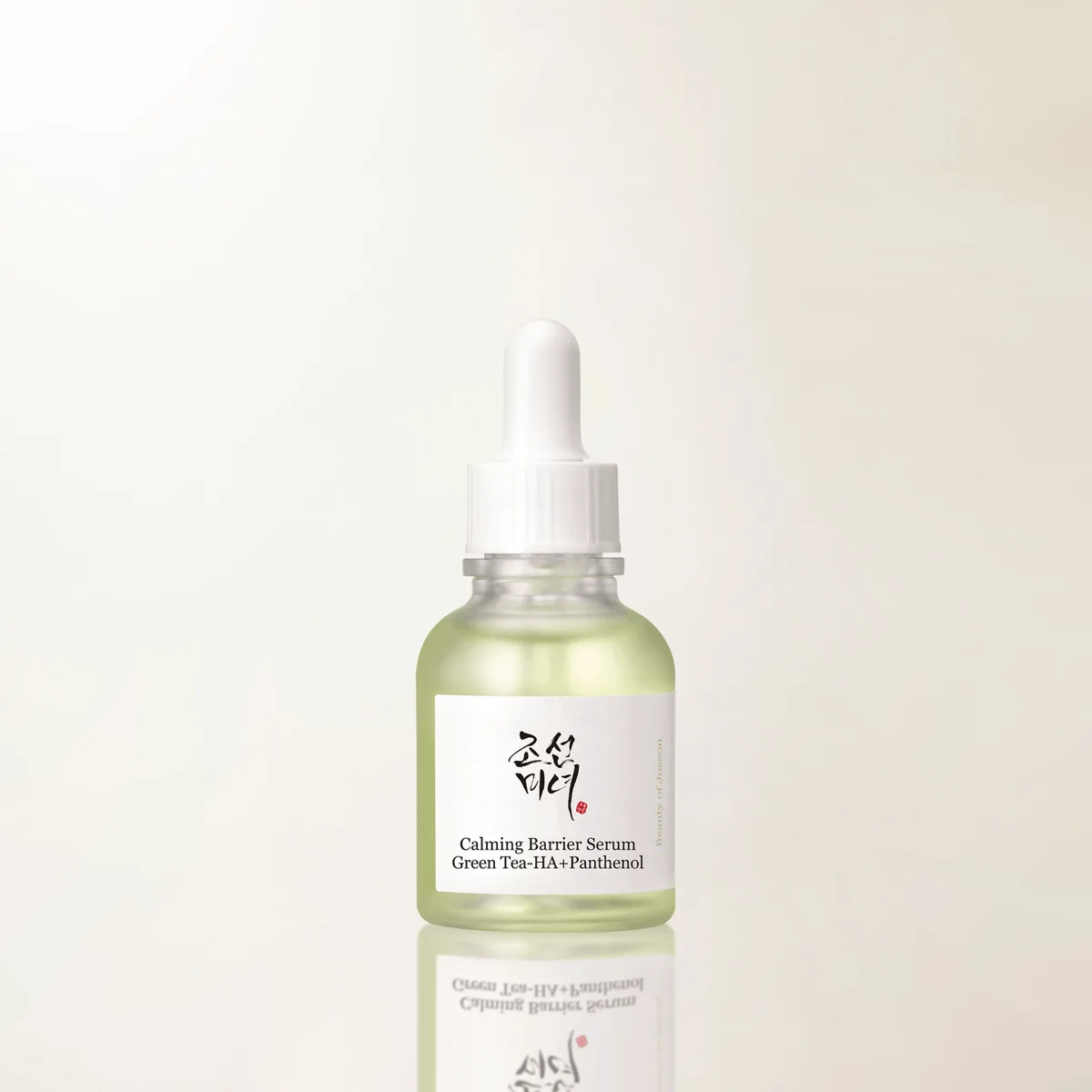
If a test site does flare, stop applying immediately and switch to damage control: a bland, soothing routine while the skin recovers. A calming centella serum like SKIN1004 Hyalu-Cica Blue Serum or a barrier-focused option like Beauty of Joseon Calming Barrier Serum is exactly the kind of gentle, non-active support to fall back on while inflammation settles. To keep the whole process organized — which product, which spot, which day, what you saw — our patch-test tool walks you through a structured schedule and reaction log so you're judging by evidence rather than memory.
The limits: when a patch test isn't enough
Honesty demands the caveats, because a home patch test is powerful but not infallible. First, some allergies only surface after repeated exposure over weeks or months — you can genuinely tolerate an ingredient for a while and then become sensitized to it, which no two-week test can predict. A clean patch test lowers your risk; it doesn't guarantee lifelong tolerance.
Second, arm skin and facial skin aren't identical. The face — especially the eyelids and around the mouth — is thinner and more reactive than the forearm, so a product that passes on your arm can still occasionally irritate more delicate facial zones. Treat a passed test as a green light to proceed cautiously on the face, starting on a small area, not as absolute permission to go all-in.
Third, if you have a history of significant reactions, eczema, or you keep reacting to products you can't pin down, home testing has a ceiling. That's where formal, dermatologist-administered patch testing earns its keep: a clinician can apply a standardized panel of common allergens and identify the exact culprit — fragrance component, preservative, or otherwise — that DIY testing can only hint at. Knowing you're allergic to a specific preservative lets you read ingredient lists for life.
None of that undercuts the core message. For the everyday question of 'will this new serum wreck my face,' a proper repeated test on the right spot, read over a real window, one product at a time, is the cheapest and smartest insurance in skincare. The five-second wrist dab was never the assignment.
Products mentioned
Independently reviewed and scored — the real products behind this piece.



References
- Advancing the understanding of allergic contact dermatitis: from pathophysiology to novel therapeutic approaches — Frontiers in Medicine, 2023
- Clinical Utilization of Repeated Open Application Test Among American Contact Dermatitis Society Members — Dermatitis, 2015
Every cited link is verified to resolve to the paper named. Where a source could not be independently confirmed, it is listed without a link rather than pointing you somewhere wrong.
Frequently asked
How long do I really need to patch test a new product?
Far longer than five minutes. Because an allergic reaction is delayed and can take 48 to 96 hours or more to appear, a meaningful test means applying the product to the same spot twice daily for one to two weeks and watching the whole window. A quick dab that you rinse off can't detect a reaction that hasn't started yet.
Where is the best place to patch test skincare?
Choose skin that behaves somewhat like your face but is easy to observe: the inner forearm or the crook of the elbow are the standard choices. The back of the hand is tougher and less representative of facial skin, and the face itself is too risky for an initial test. Keep the spot consistent so you can track any reaction accurately.
How do I tell irritation apart from a real allergy?
Timing and character are the clues. Irritation tends to be immediate: a sting or redness soon after applying that usually calms within an hour, and it often just means using the product less often. An allergy is typically delayed by a day or more, genuinely itchy, and tends to spread or intensify with bumps or blisters, which usually means stopping that product entirely.
Can I patch test my whole new routine at once?
You can, but you shouldn't. If you test several new actives together and your skin reacts, you won't know which ingredient caused it. Introduce potent products one at a time, each in its own testing window, especially strong actives like vitamin C, exfoliating acids, and retinoids. Staged introduction is the only way to identify a specific culprit.
If a product passes my arm test, is it definitely safe for my face?
It's a strong green light, not a guarantee. Facial skin, especially the eyelids and around the mouth, is thinner and more reactive than the forearm, so proceed cautiously and start on a small facial area. Also, some allergies only develop after weeks or months of repeated use, so a clean patch test lowers your risk without promising permanent tolerance.