


Two Milligrams per Square Centimetre: The Sunscreen Dose Nobody Applies
SPF is a number generated under laboratory conditions you have almost certainly never reproduced on your own face.
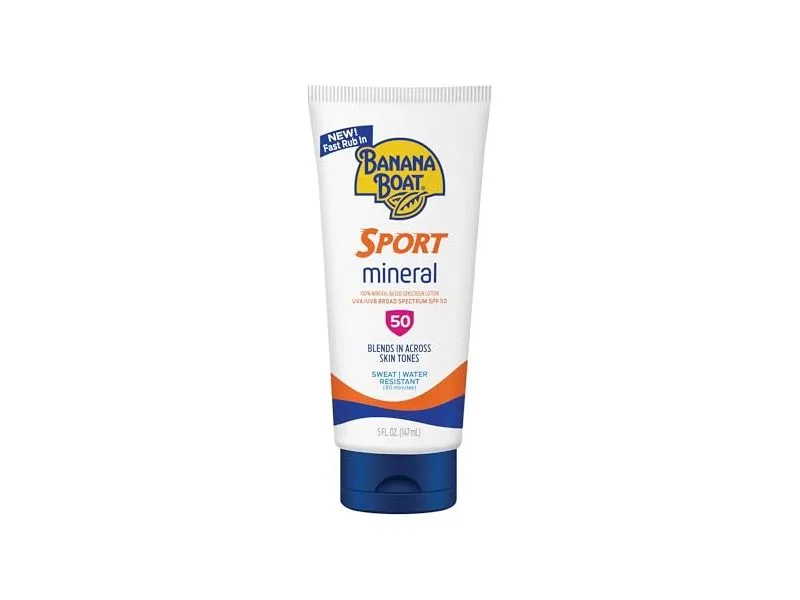
It is a 100% mineral, fragrance-free SPF 50 sport lotion that carries the National Eczema Association Seal of Acceptance, a genuinely meaningful third-party endorsement that most mass-market sport sunscreens lack. Pairing zinc oxide with titanium dioxide lets it reach high SPF and water resistance using only mineral filters, making it the gentle, sensitive-skin option in a lineup otherwise built on chemical sunscreens.
The sensitive-skin standout of the Sport range: a 100% mineral, fragrance-free SPF 50 that actually carries the National Eczema Association seal. Zinc and titanium dioxide deliver gentle, broad-spectrum, water-resistant protection that suits reactive and eczema-prone skin, with the usual mineral trade-offs of a white cast and a thicker feel to blend out.
The case for it
Same rule for everyone. “Full protection” is the verdict on 2,288 of 45,024 concern verdicts across the catalog; rule P1 decided 2,232 of them. Unchanged since September 5, 2026, engine 5.1.1.
Brand or formulator? Disclose a concentration or correct a fact →
The studies behind the evidence row
The case for it
What would change this: A researched evidence row for the lead active would replace this with a verdict.
Same rule for everyone. “Good choice” is the verdict on 1,938 of 45,024 concern verdicts across the catalog; rule F2 decided 1,938 of them. Unchanged since September 5, 2026, engine 5.1.1.
Brand or formulator? Disclose a concentration or correct a fact →
The case for it
What would change this: A researched evidence row for the lead active would replace this with a verdict.
Same rule for everyone. “Supporting role” is the verdict on 8,197 of 45,024 concern verdicts across the catalog; rule R8 decided 4,250 of them. Unchanged since September 5, 2026, engine 5.1.1.
Brand or formulator? Disclose a concentration or correct a fact →
Also listed for Eczema — the actives here (Titanium Dioxide, Zinc Oxide, Vitamin E) are in our research queue for that concern; there is no verdict until their evidence rows are written. That is a gap in our table, not a mark against the product.
Does the jobDoes what a sunscreen is for: UVA coverage, kind to the skin wearing it. Not measured from the label: pleasant enough to actually use.
A verdict is DermApproved’s assessment of how well a product’s ingredients fit a concern — never a claim about what the product treats. Evidence dots and collected reviews sit beside it and are never blended in. Rules 0.5.1 · evidence table ev-2026.09-r228 · how we decide
It is worth noticing what is different about this particular bottle before saying anything else, because it is the most credentialed product in its corner of the shelf. Most mass-market sport sunscreens make their case with marketing language, water-resistance minutes, and SPF numbers. This one carries the National Eczema Association Seal of Acceptance, a third-party endorsement that a product has been evaluated for use on sensitive and eczema-prone skin. That is not a marketing flourish you can simply print on a label; it is a meaningful signal, and it reframes the whole product. This is not just another sport sunscreen. It is the gentle, mineral, sensitive-skin option in a lineup otherwise dominated by chemical filters, and it should be judged by that higher standard. The actives are where the gentleness comes from. This is a 100% mineral sunscreen, meaning it contains no chemical UV filters at all, just zinc oxide at six and a half percent and titanium dioxide at four and a half percent. The two minerals work as a team: zinc oxide is the broader-spectrum performer, covering UVA and UVB and bringing its well-known soothing, low-irritation profile, while titanium dioxide handles much of the UVB and shorter UVA range. Splitting the work between two minerals is a smart formulation move, because it lets each one sit at a lower concentration than a single mineral would need, which keeps the white cast and the heaviness more manageable while still reaching a genuine SPF 50. Mineral filters protect by physically sitting on the skin and scattering and absorbing light, and unlike avobenzone they do not photodegrade, so there is no photostabilizer to worry about. For reactive skin, the appeal is straightforward. There is no fragrance, no oxybenzone, no chemical filters that can sting the eyes or trigger sensitivities, and the inactive list is clean and uncomplicated, with a little glycerin for slip and a touch of vitamin E as an antioxidant. Reviewers with sensitive and eczema-prone skin, and parents applying to children, consistently note that it does not sting and does not irritate, which is exactly what the eczema seal promises. If chemical sunscreens have ever burned your eyes or flared your skin, this is the kind of formula built to avoid that. Now the honest trade-offs, which are the classic mineral ones, not flaws unique to this product. It is thick. It goes on white and creamy and asks for deliberate rubbing to blend in, and it leaves a faint white cast that settles down as it sets but does not vanish entirely. On deeper skin tones, that cast is more noticeable and takes more effort and technique to work out, and pretending otherwise would not serve anyone. This is the central tension of nearly every non-nano mineral sunscreen: the same particles that protect you are the ones you can see, and there is no fully escaping that physics at SPF 50. The brand has clearly worked to minimize it with the two-mineral approach and a smoothing silicone-and-emollient base, and the result is better than many heavy mineral sticks, but it is still a mineral lotion and behaves like one. Expect a soft, slightly matte finish rather than a dewy glow, and budget a little extra blending time. The other practical notes are minor. It is a touch pricier than the brand's chemical lotions, which is typical for mineral formulas. The thick texture means you need to be deliberate about applying enough and rubbing it in evenly, since patchy mineral application leaves gaps. And like all sunscreens, the SPF 50 is only as good as the amount you use and how faithfully you reapply, every two hours and after swimming or the 80-minute water-resistance window. None of these are knocks against the formula so much as the nature of mineral sun protection. A couple of practical pointers make living with it easier. Applying it to slightly damp skin, or warming it briefly between your palms first, helps it spread and sheer out faster, cutting down on the cast and the effort. Layering it over a hydrating lotion rather than straight onto dry skin also improves the glide. And on deeper skin tones, a thin tinted base or tinted moisturizer underneath does more to neutralize the white residue than fighting the sunscreen itself ever will. None of this is unique to this product, it is the universal mineral-sunscreen playbook, but it turns the white cast from a dealbreaker into a manageable quirk. Put it all together and this is a genuinely good pick for a specific person: someone with sensitive, reactive, rosacea-prone, or eczema-prone skin who wants water-resistant, sport-strength SPF 50 without chemical filters or fragrance, and who is willing to accept some white cast and a thicker feel as the price of that gentleness. It is also a sensible choice for kids' faces and for anyone who simply prefers mineral sunscreens on principle. At around ten dollars for a 6 ounce bottle it is fairly priced for what it is, and the eczema seal makes it one of the more trustworthy gentle options at the drugstore. The white cast is the only thing standing between it and a near-universal recommendation, and how much that matters depends entirely on your skin tone and your patience for blending.
The hero actives that drive this product's performance.
| Ingredient | Function | Evidence |
|---|---|---|
| Zinc Oxide 6.5% (6.5%) | The broader-spectrum of the two mineral filters here, sitting on the skin to scatter and absorb UV across both UVA and UVB. Its inherent soothing, non-irritating profile is a big part of why this formula could earn the eczema seal, and it works with titanium dioxide to reach SPF 50 without any chemical filters. | Regulator-approved for Sun Damage · limited certainty |
| Titanium Dioxide 4.5% (4.5%) | Partners with zinc oxide to cover the UVB and shorter UVA range, contributing much of the SPF 50 burn protection. Using two minerals together lets each sit at a lower concentration, which helps keep the white cast and texture more manageable than a single high-load mineral would. | Regulator-approved for Sun Damage · limited certainty |
| Tocopheryl Acetate (Vitamin E) | A stable vitamin E derivative included at a cosmetic level as an antioxidant in the base, rounding out the gentle, fragrance-free positioning rather than acting as a primary sun filter. | Limited for Sun Damage |
Ingredient standings describe the active at treatment-level doses and vehicles; this product's own condition grades weigh its actual formula.
Active Ingredients: Titanium Dioxide 4.5%, Zinc Oxide 6.5%. Inactive Ingredients: Water, Caprylic/Capric Triglyceride, Isohexadecane, Butyloctyl Salicylate, Octyldodecyl Citrate Crosspolymer, Cetyl PEG/PPG-10/1 Dimethicone, Lauryl PEG-8 Dimethicone, C30-38 Olefin/Isopropyl Maleate/MA Copolymer, Sodium Chloride, Ethylhexyl Methoxycrylene, Dimethicone, Phenoxyethanol, Caprylyl Glycol, PEG-8, Alumina, Glycerin, Sodium Citrate, Tocopheryl Acetate
sunscreen
AM
Apply generously as the final morning step over moisturizer, and give it a minute to set before makeup. Because mineral filters can leave a cast, blend thoroughly and consider a slightly tinted base underneath on deeper skin tones.
Mineral filters protect essentially as soon as they are applied and evenly spread, with the label advising application 15 minutes before exposure. Water resistant for up to 80 minutes; reapply every two hours and after swimming or sweating.
This sunscreen relies entirely on the two mineral UV filters approved as broad-spectrum: zinc oxide (6.5%) and titanium dioxide (4.5%). Both are well documented in the literature; zinc oxide provides the broadest coverage across UVA and UVB and is recognized for a low irritation profile, while titanium dioxide is particularly effective in the UVB and shorter UVA range. Using them together is an established strategy to achieve high SPF, here SPF 50, while keeping each filter at a moderate concentration to limit the cosmetic downsides. A meaningful advantage of mineral filters is photostability: unlike avobenzone, zinc oxide and titanium dioxide do not degrade appreciably under UV exposure, so they do not require a chemical photostabilizer. The product's National Eczema Association Seal of Acceptance reflects an evaluation of its suitability for sensitive and eczema-prone skin, consistent with its fragrance-free, chemical-filter-free composition. As with all sunscreens, achieved protection depends heavily on application amount; SPF is measured at 2 mg/cm², and under-application is common, which is especially relevant for thick mineral lotions that people may apply sparingly to reduce white cast. The well-supported takeaway is that the mineral filter pair offers stable, broad-spectrum, gentle protection, with the main real-world variable being how generously and evenly it is applied. Tocopheryl acetate is present at a cosmetic antioxidant level rather than as a sun filter.
Mineral sunscreens using zinc oxide and titanium dioxide are frequently suggested for sensitive, reactive, rosacea-prone, and eczema-prone skin, as well as for children, because they tend to be well tolerated and are non-irritating to the eyes. A 100% mineral SPF 50 carrying the National Eczema Association Seal of Acceptance fits squarely within that guidance. In clinical contexts, the practical caveats raised about mineral formulas are cosmetic rather than protective: the visible white cast can discourage adequate application, particularly on deeper skin tones, so emphasis is placed on applying enough product and blending it well. Standard advice holds regardless of filter type, application 15 minutes before exposure, reapplication every two hours and after swimming or sweating, since photostable minerals still wear off physically. For those who react to chemical filters or fragrance, this kind of formula is a commonly recommended alternative.
Spread a generous, visible layer over all exposed skin about 15 minutes before sun exposure, then rub it in thoroughly to blend out the white cast. Because the texture is thick, take a moment to work it in evenly and check for missed spots, since patchy mineral application leaves gaps. On deeper skin tones, work it in a little longer or layer a tinted base underneath. Reapply at least every two hours, and immediately after swimming, toweling off, or heavy sweating. Give it a minute to set before applying makeup, and remove it at night with a gentle cleanser to avoid residue buildup.
At roughly ten dollars for a 5 oz tube, this sits a little above the brand's chemical lotions per ounce, which is typical for mineral formulas and reflects the cost of zinc and titanium dioxide. For sensitive, eczema-prone, or rosacea-prone skin, that small premium buys a fragrance-free, chemical-filter-free SPF 50 with a genuine eczema-association endorsement, which is good value within the gentle-sunscreen category. Smaller travel sizes are available for trying it or for portability. It is reasonably economical as a face and partial-body sunscreen; using it liberally for full-body coverage will deplete the bottle faster, though the gentle profile may justify that for reactive skin.
This is a strong pick for sensitive, reactive, rosacea-prone, or eczema-prone skin that wants water-resistant SPF 50 without chemical filters or fragrance, and for parents seeking a gentle mineral option for children. Anyone who prefers mineral sunscreens or has had chemical filters sting their eyes will appreciate it.
Those who dislike any white cast or want a lightweight, invisible finish, especially on deeper skin tones, may prefer a tinted mineral or a well-formulated chemical sunscreen. People who want the cheapest possible per-ounce protection or a fast-absorbing daily face SPF should also look elsewhere.
Ready to try Banana Boat Sport Mineral Sunscreen Lotion SPF 50?
Buy at Amazon ♥A thick, creamy white lotion that needs deliberate rubbing to blend in, settling into a soft, slightly matte finish.
Fragrance-free, with only the faint mineral-and-oil smell of the base and no added perfume.
A 5 oz squeeze tube with a flip cap, with other sizes also offered.
It goes on thick and white and asks for some patience to rub in, leaving a faint cast that fades as it sets. There is no fragrance and no sting, and once blended it wears comfortably; expect a soft matte rather than a glow, and plan a little extra blending time on deeper skin tones.
A 5 oz tube covers a season of regular facial and partial-body use; quicker if used for liberal full-body application as a primary sunscreen.
spring summer
As mineral sunscreen demand grew among sensitive-skin users and parents, the brand built a 100% mineral version of its Sport line to sit alongside the chemical lotions. Earning the National Eczema Association seal positioned it specifically for reactive, eczema-prone skin that wants sport-strength, water-resistant protection without chemical filters or fragrance.
Banana Boat, founded in 1971 and now an Edgewell brand, is a mass-market sun-care staple. This 100% mineral lotion carries the National Eczema Association Seal of Acceptance, a more rigorous third-party endorsement than most of the brand's chemical sunscreens hold.
Mineral sunscreens do not protect as well as chemical ones.
Zinc oxide and titanium dioxide are broad-spectrum filters fully capable of reaching SPF 50, as this formula does. The trade-off with minerals is usually cosmetic, white cast and a heavier feel, not weaker protection when applied properly.
A mineral sunscreen with a white cast must just be poorly made.
The cast comes from the mineral particles physically sitting on the skin, which is how they work. This formula uses two minerals at moderate levels to limit it, but some cast is inherent to non-nano mineral protection, especially on deeper skin tones.
It is a 100% mineral sunscreen using zinc oxide 6.5% and titanium dioxide 4.5%, with no chemical UV filters. The two minerals together deliver broad-spectrum SPF 50 protection.
Yes, it carries the National Eczema Association Seal of Acceptance and is fragrance-free with no chemical filters, which makes it suitable for sensitive and eczema-prone skin. As always, patch test if you have a history of reactions.
Yes, like most 100% mineral sunscreens it leaves a faint white cast that fades as it sets but is more noticeable on deeper skin tones. Blending it in thoroughly and using a tinted base underneath helps.
Yes, it is rated water resistant for up to 80 minutes. Reapply every two hours and after swimming, toweling off, or heavy sweating, since mineral filters still wear off physically.
Mineral sunscreens using zinc oxide and titanium dioxide are generally considered a good option during pregnancy since the filters sit on the skin's surface. This one is also fragrance-free, though you can confirm with your healthcare provider.
This version uses only mineral filters (zinc and titanium dioxide) instead of chemical ones like avobenzone, is fragrance-free, and carries an eczema-association seal, making it the gentler, sensitive-skin choice, with the trade-off of a white cast.
Recurring themes our editors read across retailer reviews of this product — summaries in our words, not quotations, and not a substitute for your own patch test.
Gentle on sensitive and eczema-prone skin
No fragrance
100% mineral protection
Doesn't sting eyes
Leaves a white cast
Thick and takes effort to rub in
Can feel heavy
Harder to blend on deeper skin tones
Verified answers from our questions library — the nuance a product page cannot carry.