Vitiligo, Measured: What VASI Tracks Through a Repigmentation Year
Repigmentation arrives as freckle-like islands around hair follicles rather than as a receding edge — which makes it nearly impossible to judge by eye, and makes the six-month verdict most people deliver on their own treatment badly premature.
Read the preview
From the DermApproved blog, in Vitiligo: repigmentation doesn't arrive as a shrinking patch. It arrives as freckles — islands around individual hair follicles, where the surviving pigment cells have been waiting. Which is why six months of treatment tells you almost nothing. In the phase-three trials, the one-year response rate was roughly double the six-month figure. For the full breakdown, visit dermapproved.com/blog.
Why anyone bothers scoring this
For most of the history of vitiligo care, precise measurement was beside the point, because there was very little to measure. That has changed. Narrowband UVB has a long track record, topical calcineurin inhibitors have an established role, and a topical JAK inhibitor has been through phase 3 trials with published repigmentation data. Treatment works often enough that the practical question is no longer whether anything can be done, but whether the specific thing being done to you is working.
That question is much harder to answer than it sounds, for a reason built into the biology. A patch of vitiligo does not shrink inward from its border like a healing wound. Pigment returns in scattered dots, and it returns slowly enough that week-to-week change is invisible and month-to-month change is arguable. The human eye is also badly calibrated for this task: we compare against a remembered image rather than a fixed reference, and we are all subject to the same bias in both directions — seeing improvement because we want it, or missing it because the patch is still obviously there.
The Vitiligo Area Scoring Index was introduced to make that judgement quantitative. It came out of work modelling narrowband UVB response, and the design goal was blunt: produce a number that a clinician can generate at the bedside without imaging equipment, that moves when the disease moves, and that different people scoring the same patient will roughly agree on.
The arithmetic, in full
VASI has two inputs per body region, and it multiplies them.
The first is area, estimated in hand units. One hand unit is the palm plus the volar surface of all the digits, and it is taken as approximately 1% of total body surface area. You count how many hand units of a given region are involved. Six body regions are scored separately — head and neck, upper extremities, trunk, lower extremities, hands, feet — and the face is often scored on its own as F-VASI, which is the endpoint most trials use because it is the region patients care about most and the region that responds best.
The second input is residual depigmentation, graded on a fixed ladder rather than a continuous scale: 100% means complete depigmentation with no pigment at all; 90% means specks of pigment; then 75%, 50% and 25% as the pigmented proportion grows; 10% means only specks of depigmentation remain; and 0% is normal skin. Multiply hand units by that percentage for each region, sum across regions, and the total-body VASI runs from 0 to 100.
The elegance is that it captures the two ways vitiligo actually changes. A patch can get smaller, or it can fill in without changing its outline — and repigmentation almost always does the second thing first. A scoring system that only measured area would register nothing for months while genuine repigmentation was happening inside the borders.
It is not a perfect instrument, and the reliability data is worth knowing honestly. In a study where 12 raters of varying experience scored the same patients, total-body VASI showed good inter-rater agreement at both rounds (ICC 0.843 and 0.837). Facial VASI started only moderate at 0.542 and improved to 0.811 in the second round after standardised training — and one novice rater's intra-rater reliability for F-VASI came out at 0.175, which is to say, essentially noise. The lesson is not that VASI is unreliable; it is that the number means what it means only when the same person scores consistently, with training, ideally against photographs taken the same way each time. Which is precisely what makes it usable for tracking your own treatment: you are always the same rater. The VASI Calculator tool runs the arithmetic, and the Photo Tracker tool solves the harder half — standardising the images you score against.
Freckles, not a receding edge
Watch a patch repigment and the pattern is startling the first time. Pigment does not creep in from the margin. It appears as scattered brown dots inside the white area, each one centred on a hair follicle, which gradually widen and merge — perifollicular repigmentation, the most common pattern and the one associated with the most durable result.
The reason is anatomical. Melanocyte stem cells sit in a niche in the bulge region of the hair follicle, protected from whatever destroyed the melanocytes in the epidermis above. Work going back to 1991 established the follicle as the principal reservoir for repigmentation, and the mechanism has since been filled in: treatment mobilises those immature pigment cells, which proliferate and migrate up the outer root sheath into the surrounding epidermis, then spread radially. The dots you see are the tops of those columns.
Three practical consequences follow, and each one explains a frustration people commonly report. First, the pattern predicts response — a lesion showing perifollicular pigment on early examination is a lesion with a working reservoir, and that is a favourable sign rather than a cosmetic annoyance. Second, sites with few or no follicles have less to draw on, which is part of why acral skin is so stubborn. Third, patches with white hairs in them signal that the follicular reservoir itself is depleted, and those respond poorly regardless of what you apply to the surface.
It also explains why the intermediate stage looks the way it does. A partly-repigmented patch is mottled and, to many people, looks worse than the uniform white patch it replaced. That is the appearance of the treatment working, and knowing it in advance changes how people sit with it.
Six months is an early read, not a verdict
No number in this subject is more useful, and it comes from the two phase 3 trials of ruxolitinib cream.
The primary endpoint was F-VASI75 — a 75% or greater reduction in facial VASI from baseline — at week 24. In the first trial 29.8% of the treatment group reached it against 7.4% on vehicle; in the second, 30.9% against 11.4%. Read at six months, that looks like a drug that works for roughly one patient in three.
Then the trials continued to week 52 with everyone on active treatment. Among patients who had applied ruxolitinib cream from day one, about 50.3% reached F-VASI75 by week 52. The response rate had not crept up. It had roughly doubled.
Sit with what that means for anyone assessing their own treatment at the six-month mark. A substantial fraction of the people who eventually respond had not yet met the endpoint at week 24. Stopping there — because six months of daily application produced a mottled, unfinished-looking face and no clear win — would have discarded a treatment that was in the process of working. The crossover arm makes the same point from the other direction: patients who switched from vehicle to active cream after week 24 reached 28.2% by week 52, roughly where the continuous group had been six months earlier. The clock starts when the treatment starts.
This is the argument for measuring rather than eyeballing, stated as plainly as it can be. The difference between 'no change' and 'a 30% reduction in VASI' is invisible to memory and obvious to arithmetic — and only one of those two readings leads to continuing a treatment that is quietly on track.
The map of what responds
Body region is the other variable that dominates outcome, and it is worth setting expectations by site before starting anything.
An analysis of repigmentation by body region across 52 weeks of ruxolitinib cream, using a VASI50 threshold, found head and neck regions responding fastest — 45.3% at week 24 rising to 68.1% at week 52. Trunk went from 26.4% to 48.4%, upper extremities from 33.2% to 56.7%, lower extremities from 29.5% to 54.5%. Hands reached 38.2% and feet 29.3% by week 52. Across the board, week 52 roughly doubled week 24; across regions, the ordering barely moved.
The same hierarchy shows up in the phototherapy literature, where face and neck respond in the large majority of patients while hands and feet respond in a small minority. The proposed reasons are consistent with the follicular story: lower baseline melanocyte density in acral skin, a smaller stem cell reservoir, less follicular density to draw from, and constant mechanical friction.
What to do with this is not 'give up on your hands', but 'do not score your whole treatment on your hands'. If facial patches are filling in and knuckles are not, the treatment is working as expected rather than failing. Scoring regions separately, which VASI does by design, is what keeps a good result at one site from being obscured by a stubborn one at another — and pale patches are not always vitiligo in the first place, which is worth ruling out early; how pale patches get confused with pigment disorders covers the overlap.
Sun protection is doing two different jobs
Photoprotection in vitiligo gets flattened into generic sunscreen advice, and it deserves better, because it is solving two distinct problems that pull in the same direction for different reasons.
The first is straightforward. Depigmented skin has no melanin, so it has none of the modest baseline defence that pigmented skin brings to UV exposure. It burns readily and it burns before the surrounding skin does.
The second is the one people are rarely told. Vitiligo exhibits the Koebner phenomenon — new lesions appearing at sites of skin trauma — and sunburn qualifies as trauma. A European position paper on Koebner's phenomenon in vitiligo set out how consistently it is observed and how variably it has been reported across studies, and the practical implication is unambiguous: a bad burn on uninvolved skin can seed new patches. Photoprotection here is not only about long-term photodamage. It is disease management.
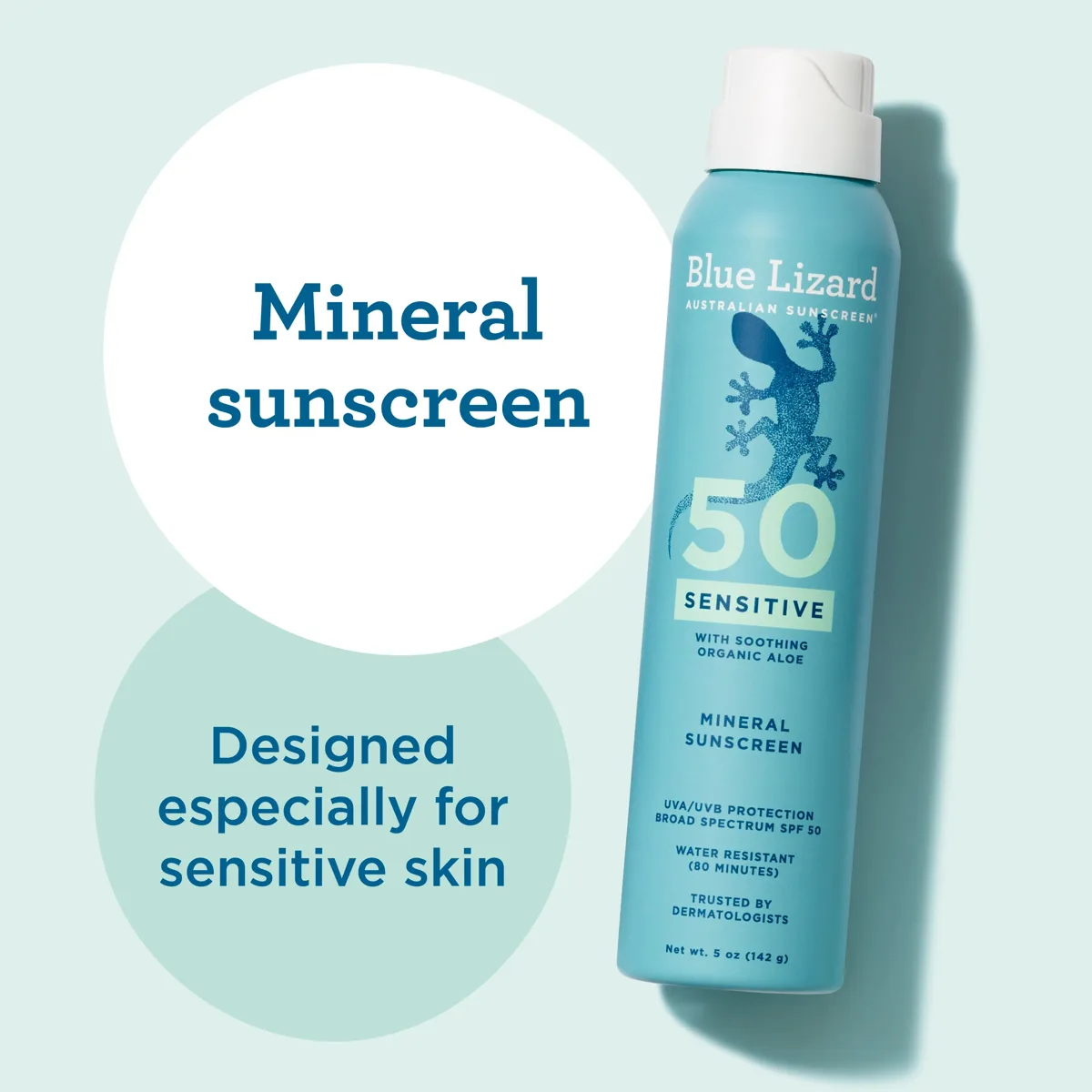
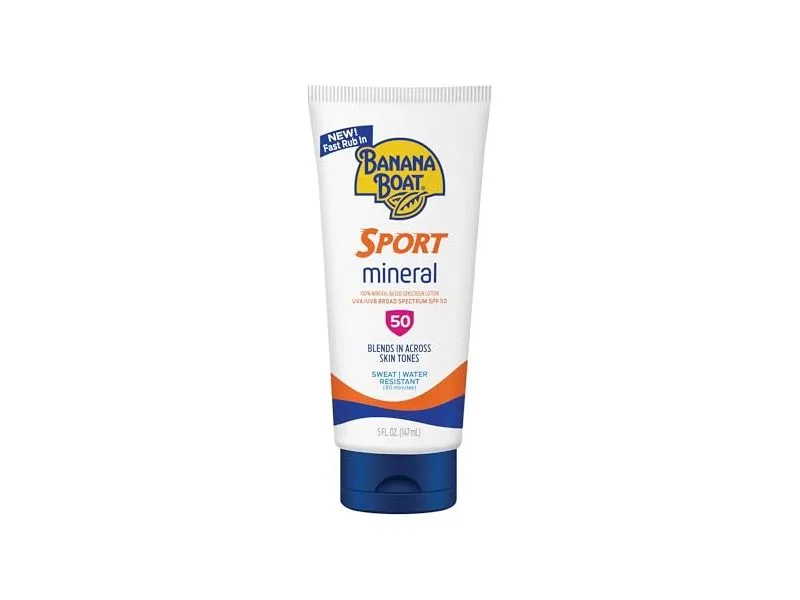
There is a third, purely visual argument that matters to a lot of people and is often left unsaid. Vitiligo is a contrast condition. Tanning the surrounding normal skin does nothing to the white patches and makes them dramatically more visible — so sun exposure worsens the appearance even when it causes no biological harm at all. A broad-spectrum mineral formula over the whole exposed area is doing contrast control as well as protection. Zinc oxide and titanium dioxide formulas like Blue Lizard Sensitive Mineral Sunscreen Spray SPF 50 or Banana Boat Sport Mineral Sunscreen Lotion SPF 50 cover body area without a fight, and for the face a lighter option such as Cetaphil Sheer Mineral Face Sunscreen SPF 50 or Hero Cosmetics Force Shield Superlight Sunscreen SPF 30 is likelier to be worn daily. Our rankings for mineral sunscreen and sunscreen for sensitive skin sort those on filter load and wearability; the Sun Safety tool covers reapplication dose, which is where most protection is actually lost.
Working the contrast problem from the other end is legitimate too. Dihydroxyacetone stains the stratum corneum directly and needs no melanocytes to work, which makes a self-tanner a genuine camouflage option rather than a cosmetic dodge — a controllable drops format like Pai Skincare The Impossible Tan Hydrating Self-Tanning Drops or a gradual lotion such as Jergens Natural Glow Daily Moisturizer Medium to Tan lets you build colour on the patch itself. It changes nothing about the disease and everything about the contrast, and unlike a tan it does not require the UV exposure that causes the problem in the first place.
What to actually track
A workable protocol is short. Photograph the same regions, in the same light, at the same distance, at a fixed interval — monthly is plenty, given how slowly this moves. Score those photographs rather than the mirror, using the same method each time, and record the number rather than the impression. Score regions separately so that a responding face and a stubborn pair of hands do not average into a false 'no change'.
Then read the number against the timeline the trials establish, not against hope. Six months is an early read. A year is a fair verdict for a topical, and even then the trial data shows response continuing to accumulate. If a region has moved measurably, that is the treatment working, however unfinished it looks; if a whole regimen has produced no measurable change across a properly-scored year, that is genuine information worth taking to a clinician rather than a feeling.
What makes VASI worth the effort is not precision for its own sake. It is that the pattern of repigmentation — dotted, internal, slow, mottled at the halfway point — is almost perfectly designed to look like failure while succeeding. A number that goes down is the only reliable defence against giving up six months into a twelve-month process.
Products mentioned
Independently reviewed and scored — the real products behind this piece.


- Ranked list Best Mineral Sunscreens Sorted on filter load and wearability, which is what governs applied dose.
- Ranked list Best Sunscreens for Sensitive Skin Relevant where treated skin is also reactive from topicals or phototherapy.
- Ingredient Zinc Oxide Broad-spectrum mineral filter for skin with no melanin of its own.
- Ingredient Titanium Dioxide The usual partner filter in mineral formulas used over large areas.
- Question What if I have pale patches as well as dark ones? Pale patches are not always vitiligo, and the distinction changes the whole plan.
References
- Parametric modeling of narrowband UV-B phototherapy for vitiligo using a novel quantitative tool: the Vitiligo Area Scoring Index — Archives of Dermatology, 2004
- Reliability of the Vitiligo Area Scoring Index measurement tool for vitiligo — JAAD International, 2024
- Two Phase 3, Randomized, Controlled Trials of Ruxolitinib Cream for Vitiligo — New England Journal of Medicine, 2022
- Repigmentation by body region in patients with vitiligo treated with ruxolitinib cream over 52 weeks — Journal of the European Academy of Dermatology and Venereology, 2025
- Role of hair follicles in the repigmentation of vitiligo — Journal of Investigative Dermatology, 1991
- Vitiligo and the melanocyte reservoir — Indian Journal of Dermatology, 2009
- Koebner's phenomenon in vitiligo: European position paper — Pigment Cell & Melanoma Research, 2011
Every cited link is verified to resolve to the paper named. Where a source could not be independently confirmed, it is listed without a link rather than pointing you somewhere wrong.
Frequently asked
What exactly does a VASI score mean?
It is area multiplied by how depigmented that area still is, summed across body regions. Area is counted in hand units of roughly 1% body surface each, and residual depigmentation is graded on a fixed ladder from 100% down through 90, 75, 50, 25 and 10 to 0. Total-body VASI runs from 0 to 100.
Why does my patch look mottled instead of shrinking?
Because pigment returns from melanocyte stem cells living in hair follicles, not from the edge of the patch. Each follicle produces a dot of pigment that widens outward, so a repigmenting patch goes through a speckled phase before the dots merge. That perifollicular pattern is a favourable sign, not a stalled result.
How long before I can tell whether treatment is working?
Longer than most people allow. In the phase 3 ruxolitinib cream trials, about 30% of patients hit the 75% facial improvement endpoint at week 24, but roughly 50% of the continuous-treatment group reached it by week 52. A six-month read that looks like failure often is not one.
Why do my hands never repigment when my face does?
Acral skin has lower baseline melanocyte density, a smaller follicular stem cell reservoir to draw from, and constant friction. In the 52-week body-region data, head and neck reached the response threshold in about two-thirds of patients while feet reached it in under a third. Score regions separately so one stubborn site doesn't mask progress elsewhere.
Do I need sunscreen if vitiligo patches can't tan anyway?
More than usual, for three reasons. Depigmented skin has no melanin defence and burns readily; sunburn is a form of trauma that can Koebnerise into new patches; and tanning the surrounding normal skin widens the contrast, making existing patches look markedly more visible.
Can a self-tanner actually help with vitiligo?
Yes, as camouflage. Dihydroxyacetone reacts with proteins in the outer dead layer of skin and needs no melanocytes to produce colour, so it works on a depigmented patch exactly as it works elsewhere. It changes nothing about the disease, but it addresses the contrast without any of the UV exposure that a tan would require.