Sunscreen and Skin Cancer: What the Evidence Actually Proves
'There's no proof sunscreen prevents cancer' is a favorite line online. There is proof — and the precise, honest version is far more useful than either the fear-mongering or the reassurance.
Read the preview
From the DermApproved blog, in Skin Cancer and Mole Checks: does sunscreen actually prevent skin cancer — or is that just what the industry wants you to believe? You've heard the viral line. There's no proof. It's all marketing. The chemicals soak into your blood. And here's the genuinely uncomfortable part — one of those claims isn't entirely wrong. So the skeptics feel vindicated, and everyone else feels vaguely guilty. But this argument doesn't have to be a shouting match, because someone actually ran the experiment. An entire sunny Australian town. People randomly assigned to slather it on daily, or not. And a decade later, they counted. What they found is far more specific — and far more interesting — than either side admits: sunscreen clearly stops some cancers, and pointedly not others. The honest answer is narrower than the slogan and stronger than the doubters. Plus a twist about the one thing sunscreen was never, ever meant to do by itself. The evidence, untangled, at dermapproved.com/blog.
The line that keeps going viral, and why it's wrong
Scroll far enough into wellness corners of the internet and you'll meet a confident claim: there's no real evidence sunscreen prevents skin cancer, so why smear chemicals on your face daily? It's a seductive argument because it contains a grain of truth — for decades, the direct randomized evidence really was thin, and most sunscreen studies were observational, which can't fully separate 'used sunscreen' from 'was cautious about the sun in general.'
But 'the early evidence was limited' is not the same as 'there is no evidence,' and the people repeating the viral version are usually a couple of decades out of date. The gap got filled by one of the most important experiments in dermatology, run not in a lab but across an entire sunny Australian town. Once you know what it found — and, just as importantly, what it didn't — the debate stops being a shouting match between 'sunscreen is essential' and 'sunscreen is a scam,' and becomes something more useful: a precise account of what this one tool actually does.
The Nambour trial: the experiment that settled the SCC question
In 1992, researchers in Nambour, a township in Queensland, Australia, did something you can't easily do with sunscreen: they randomized it. More than 1,600 adults were assigned either to apply broad-spectrum SPF 15+ sunscreen to their head, neck, arms, and hands every day, or to use it however they normally would. The trial ran for about 4.5 years, with beta-carotene supplements tested in the same design.
The result, published in The Lancet in 1999, was clear for one cancer: the daily-sunscreen group developed significantly fewer squamous cell carcinomas — roughly 40% fewer — than the discretionary group. Squamous cell carcinoma, the second most common skin cancer, turned out to be genuinely preventable through routine adult sunscreen use. Notably, basal cell carcinoma rates did not drop significantly over that window. That split matters: it's the difference between marketing ('prevents skin cancer!') and science ('reduces this specific cancer, on this timeline, by this much'). The honest claim is narrower and far more credible than the slogan. A broadly-protective daily formula like La Roche-Posay Anthelios UVMune 400 is the modern, higher-SPF descendant of exactly what was tested.
The melanoma follow-up that changed the conversation
Squamous cell carcinoma is rarely fatal. Melanoma is the one that frightens people, and it's where the anti-sunscreen crowd used to plant its flag, because melanoma's relationship to sun exposure is more complex and the early data were murky. Then the Nambour researchers kept watching.
A decade after the trial ended, they published a follow-up in the Journal of Clinical Oncology in 2011. Among the participants originally assigned to daily sunscreen, 11 new primary melanomas had appeared; in the discretionary group, 22 — about half the rate. The reduction in invasive melanoma specifically was even more striking. Because this came out of a randomized trial rather than a survey, it stands as the first strong experimental evidence that regular sunscreen use reduces melanoma, not just the easier-to-prevent keratinocyte cancers. It's fair to note the total melanoma numbers were small and one comparison brushed the edge of statistical significance — this is one excellent trial, not fifty. But 'one strong randomized trial plus a large, consistent body of observational and mechanistic data' is a real evidence base, and it points in one direction.
So is sunscreen 'toxic'? Untangling the scare
The other half of the online argument isn't that sunscreen fails — it's that it harms. Two claims recur. First, that chemical UV filters absorb into the bloodstream. That part is true and was confirmed by FDA studies: several organic filters are detectable in blood after application. But detectable is not the same as dangerous. A blood level tells you a molecule got in; it says nothing, by itself, about whether it causes disease. The FDA's own position is that detection triggers a request for more safety data, explicitly not a conclusion that the filters are unsafe or that anyone should stop using sunscreen.
Second is the fear of specific ingredients — oxybenzone especially. The human evidence for real-world harm at real-world use remains absent, and the trade-off is lopsided: UV radiation is a confirmed, class-1 human carcinogen with a randomized trial showing sunscreen reduces cancer, while filter 'toxicity' rests largely on high-dose animal or petri-dish studies that don't model how you actually use a lotion. If the absorption question genuinely bothers you, the tidy answer isn't to skip protection — it's to reach for a mineral sunscreen like EltaMD UV Clear SPF 46, whose zinc oxide sits largely on the surface. Our [sunscreen-finder] can match you to a filter system you'll actually be comfortable wearing every day, which matters more than any lab abstraction.
Why the winning strategy was never sunscreen alone
Here's the reframe that dissolves most of the argument: sunscreen was never supposed to be a solo act. It's the patch for the UV you can't otherwise avoid — the parts of a routine day, the drive, the walk, the skin you can't cover. It is genuinely imperfect: people apply roughly a quarter to half the amount used to earn the SPF on the label, forget to reapply, and miss patches. Those real-world shortfalls are precisely why relying on SPF as your only defense is a weak plan.
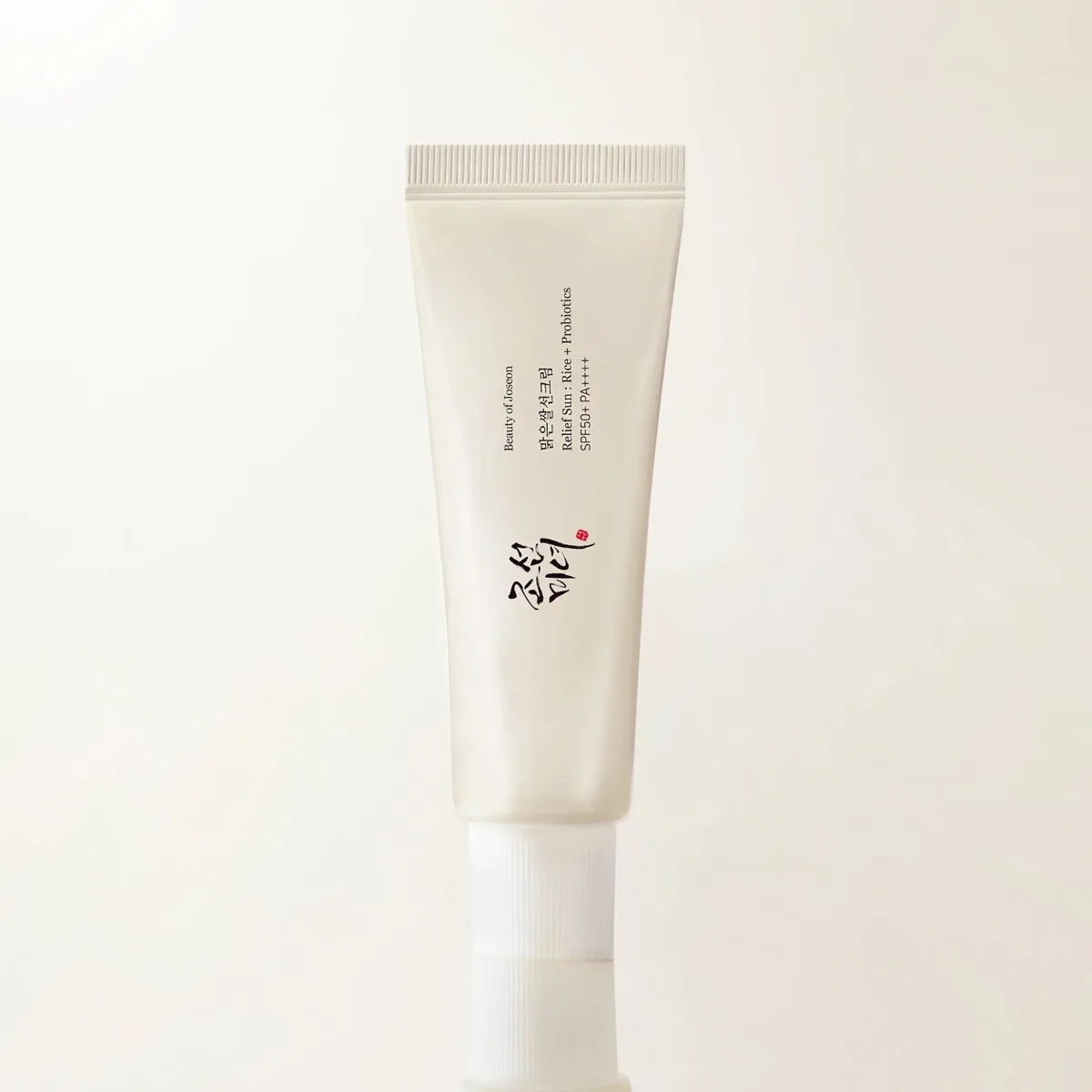
The strong plan stacks tools in order of reliability. Shade and timing remove UV exposure outright — seeking cover in the peak-UV middle of the day is free and more effective than any lotion. Tightly woven clothing, UPF fabrics, and a wide-brim hat physically block radiation, never wash off, and never need reapplying. Sunglasses protect the delicate skin around the eyes that people routinely forget. Sunscreen then handles the exposed skin those layers can't cover, and a well-formulated daily face SPF like Beauty of Joseon Relief Sun is the one most people will actually keep using, which is the whole point — the best sunscreen is the one that ends up on your face. Use our [sun-safety] tool to gauge the day's UV and plan around it. The evidence doesn't say sunscreen is magic or that it's poison. It says regular use measurably lowers your risk of two skin cancers, and that it works best as one layer in a stack. That's not a thrilling headline. It's just true — which, in this debate, is the rarest thing on offer.
Products mentioned
Independently reviewed and scored — the real products behind this piece.


References
- Daily sunscreen application and betacarotene supplementation in prevention of basal-cell and squamous-cell carcinomas of the skin: a randomised controlled trial — Lancet, 1999
- Reduced melanoma after regular sunscreen use: randomized trial follow-up — Journal of Clinical Oncology, 2011
- Sunscreen and melanoma prevention: evidence and expectations — British Journal of Dermatology, 2018
Every cited link is verified to resolve to the paper named. Where a source could not be independently confirmed, it is listed without a link rather than pointing you somewhere wrong.
Frequently asked
Is there actual proof that sunscreen prevents skin cancer?
Yes — the randomized Nambour trial in Australia found daily sunscreen use significantly reduced squamous cell carcinoma over about 4.5 years, and a 10-year follow-up found roughly half as many invasive melanomas in the daily-sunscreen group. That's genuine experimental evidence, not just observational correlation, though it's most robust for squamous cell carcinoma and melanoma specifically.
Does sunscreen prevent all types of skin cancer equally?
No, and that's an important honesty point. In the Nambour trial, daily sunscreen cut squamous cell carcinoma and later invasive melanoma, but basal cell carcinoma rates did not drop significantly over the study window. The evidence is cancer-specific, which is exactly why the careful claim is more credible than a blanket 'prevents skin cancer' slogan.
Are the chemicals in sunscreen actually toxic?
FDA studies confirmed some organic UV filters are absorbed into the bloodstream, but detectable levels are not the same as proven harm — the FDA asked for more data, not for people to stop using sunscreen. No filter has been shown to cause disease at real-world use, and UV itself is a confirmed carcinogen. If absorption worries you, a mineral zinc-oxide sunscreen is a reasonable choice.
If sunscreen works, why do I still need hats and shade?
Because sunscreen is imperfect in practice — most people apply far less than the amount needed to reach the labeled SPF and forget to reapply. Shade, timing, and clothing physically remove or block UV without depending on perfect application, so they're the most reliable layers. Sunscreen best covers the exposed skin those methods can't.
What SPF and type of sunscreen does the evidence support?
The Nambour trial used a broad-spectrum SPF 15+ sunscreen, and modern guidance favors broad-spectrum SPF 30 or higher for daily use. Both mineral and modern chemical filters are supported; the most important factor is broad-spectrum coverage and a texture you'll genuinely reapply, since consistent real-world use is what drives the risk reduction.