



The 'Sephora Kids' Problem: Your Child's Skin Needs Almost Nothing You're Being Sold
Pediatric skin has a short, boring, evidence-based list of needs — and a longer list of things that quietly harm it. The actives aren't on the first list.
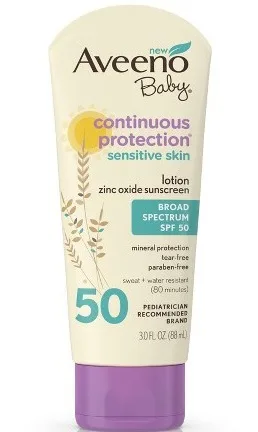
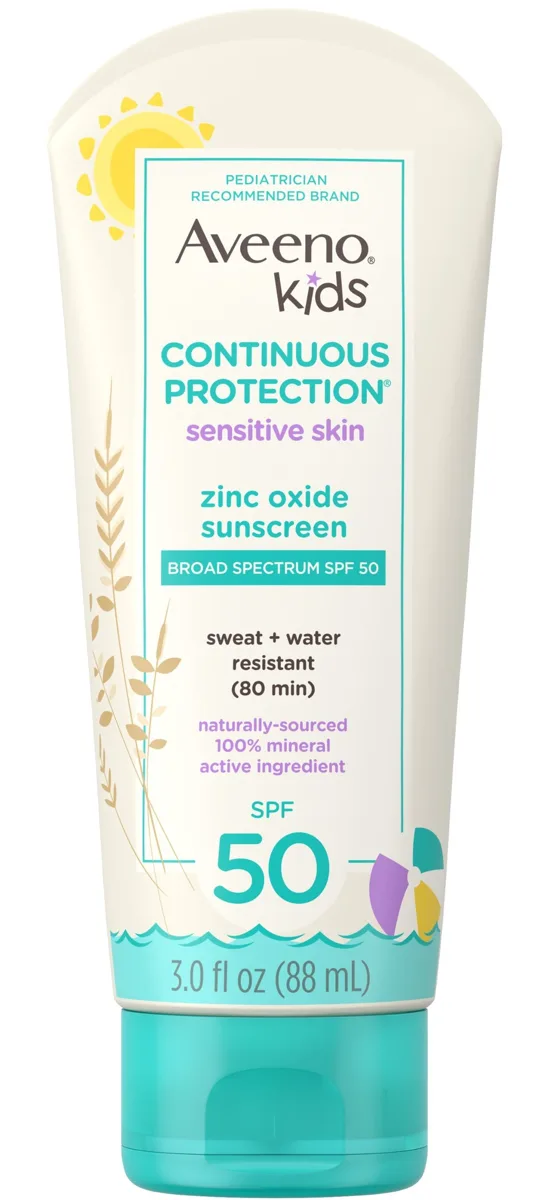
It pairs a high 21.6% zinc oxide load with Aveeno's oat-and-feverfew soothing duo, so it reads as a skincare-grade calming lotion that happens to be SPF 50 rather than a bare mineral block. The tear-free, fully chemical-filter-free formula is specifically tuned for infant skin that reacts to almost everything.
A genuinely sensitive-skin-friendly mineral sunscreen that earns its eczema seal: 21.6% zinc oxide for real SPF 50 protection, tear-free, and softened with oat and feverfew. The white cast and thick texture are the price of a single-active formula, and the small bottle makes it pricier per ounce than it looks.
The case for it
Same rule for everyone. “Full protection” is the verdict on 2,288 of 45,024 concern verdicts across the catalog; rule P1 decided 2,232 of them. Unchanged since September 5, 2026, engine 5.1.1.
Brand or formulator? Disclose a concentration or correct a fact →
The studies behind the evidence row
The case for it
What would change this: A researched evidence row for the lead active would replace this with a verdict.
Same rule for everyone. “Good choice” is the verdict on 1,938 of 45,024 concern verdicts across the catalog; rule F2 decided 1,938 of them. Unchanged since September 5, 2026, engine 5.1.1.
Brand or formulator? Disclose a concentration or correct a fact →
The case for it
What would change this: A declared concentration would move this to a firmer reading of the dose.
Same rule for everyone. “Strong choice” is the verdict on 1,459 of 45,024 concern verdicts across the catalog; rule R3 decided 567 of them. Unchanged since September 5, 2026, engine 5.1.1.
Brand or formulator? Disclose a concentration or correct a fact →
The studies behind the evidence row
Also listed for Compromised Skin Barrier — the actives here (Zinc Oxide, Glycerin, Colloidal Oatmeal, Feverfew) are in our research queue for that concern; there is no verdict until their evidence rows are written. That is a gap in our table, not a mark against the product.
Does the jobDoes what a sunscreen is for: UVA coverage, kind to the skin wearing it. Not measured from the label: pleasant enough to actually use.
A verdict is DermApproved’s assessment of how well a product’s ingredients fit a concern — never a claim about what the product treats. Evidence dots and collected reviews sit beside it and are never blended in. Rules 0.5.1 · evidence table ev-2026.09-r228 · how we decide
When the conversation about chemical UV filters and infant skin got loud a few years ago, a lot of parents quietly defaulted to one rule: if it is going on a baby, make it 100% zinc. This tube is what that instinct looks like in product form, and it is worth understanding why it became a default rather than just another option on a crowded shelf. The active here is zinc oxide at 21.6%, which is a serious load. There are no chemical filters hiding in the formula, no octinoxate or avobenzone doing quiet work in the background. What you protect with is what is on the front of the package, and that single-active honesty is most of the appeal for the audience it is aimed at. The rest of the formula is built around two ideas that Aveeno has leaned on for decades. The first is the silicone-and-ester base. C12-15 alkyl benzoate, several dimethicones, phenyl trimethicone, and polyhydroxystearic acid all exist to disperse the zinc evenly and lay it down as a water-resistant film rather than a streaky, patchy smear. This is the unglamorous engineering that separates a usable mineral sunscreen from a frustrating one, and it is why the formula survives 80 minutes of water and sweat as labeled. The second idea is the soothing layer: oat kernel flour and feverfew extract, both sitting low on the list, both there to calm rather than protect. On reactive infant skin, that calming intent is not marketing fluff. Oat is one of the few botanicals with a genuine track record for reducing irritation, and pairing it with a high mineral load is a smart acknowledgement that thick zinc films can feel heavy and occlusive on delicate skin. Now the honest part, because this product is not magic and the trade-offs are real. It is thick. It comes out white and stays white longer than you would like, and on darker skin tones that cast is more noticeable and harder to sheer out. You have to actually work it in, which is a comedy routine of its own on a baby who would rather be doing literally anything else. There is a slight tackiness before the film sets, and in humid heat it can feel a touch greasy until it dries down. None of this is unusual for a single-active mineral formula at this zinc percentage, but it is the experience you are signing up for, and pretending otherwise would do you a disservice. The tear-free claim, on the other hand, holds up and matters more than it sounds. Sunscreen migrating into a toddler's eyes during a meltdown is one of those small disasters that makes you abandon a product forever, and this formula genuinely does not sting on contact. That single quality-of-life detail is part of why it stays in diaper bags. Texture aside, the protection is the point and the protection is good. Mineral filters reflect and absorb UV effectively when you apply enough, and the persistent worry that zinc is somehow weaker than chemical filters is mostly a myth rooted in under-application. The catch is exactly that: you have to use enough, and the white cast that everyone complains about is actually your visual proof that you put on a protective layer. Skimp to avoid the cast and you quietly downgrade your SPF, which is the one mistake worth avoiding with any mineral formula. Where this product is genuinely vulnerable is value. The 3 fl oz travel size lands around eighteen dollars at full retail, which is a steep per-ounce figure when you are slathering a whole wriggling baby and reapplying every couple of hours. You burn through a small tube faster than you expect, and the convenience of the diaper-bag format comes at a real cost. If you are protecting more than the occasional outing, the math gets uncomfortable, and that is the single biggest knock against an otherwise excellent formula. So who is this for? It is for the parent who has decided, reasonably, that a single zinc active on sensitive or eczema-prone infant skin is the safest call, and who is willing to fight the white cast and the small bottle to get it. The eczema seal is not decorative here; the oat and feverfew additions, the fragrance-free formula, and the tear-free behavior all line up behind a baby whose skin reacts to almost everything. For that specific kid, this is one of the more thoughtfully built mineral options you can buy at a drugstore. It will not win any cosmetic-elegance awards, and it will not be the cheapest way to keep a child sun-safe over a long summer, but it does the one job it promises with a formula that respects how fragile the skin underneath it is. One more practical point that gets lost in the formula talk: this is a single-bottle solution for a household that wants to stop overthinking sun protection for the youngest, most reactive skin. There is real comfort in handing a babysitter or grandparent a tube with one active and no chemical-filter footnotes to explain. The fragrance-free, oat-soothed formula means you are not layering a scent onto a baby either, which matters for parents who keep everything in the nursery deliberately plain. And because it shares its formula with the kids version, families with children of different ages can standardize on one approach across the whole crew, which is the kind of small simplification that actually survives the chaos of a beach day. None of this changes the protection science, but it speaks to why a thoughtfully built, single-active mineral tube becomes the default rather than just another bottle in the rotation.
The hero actives that drive this product's performance.
| Ingredient | Function | Evidence |
|---|---|---|
| Zinc Oxide 21.6% (21.6%) | The sole active here at a high 21.6%, providing genuine broad-spectrum UVA/UVB coverage without any chemical filters. Coated and dispersed in the silicone-heavy base so it sits as a water-resistant film rather than a chalky paste, which matters on squirming infant skin. | Regulator-approved for Sun Damage · limited certainty |
| Oat Kernel Flour (Avena Sativa) | Aveeno's signature soothing agent, added low in the list to calm the kind of reactive, easily-irritated skin this baby formula is built for. It buffers the slight drag of the mineral film rather than driving sun protection. | Regulator-approved for Eczema · limited certainty |
| Glycerin | The lone humectant in an otherwise occlusive, silicone-rich system, pulling a little water into the upper skin so the heavy zinc layer does not leave baby skin feeling tight after application. | Clinically supported for Eczema · well-established certainty |
| Feverfew Extract (Chrysanthemum Parthenium) | A botanical anti-irritant included in trace amounts to complement the oat, aimed at reducing redness on the sensitive infant skin this SPF targets rather than contributing to the SPF value. | Not yet assessed |
Ingredient standings describe the active at treatment-level doses and vehicles; this product's own condition grades weigh its actual formula.
Active Ingredient: Zinc Oxide 21.6%. Inactive Ingredients: Water, C12-15 Alkyl Benzoate, Styrene/Acrylates Copolymer, Octyldodecyl Citrate Crosspolymer, Phenyl Trimethicone, Cetyl PEG/PPG-10/1 Dimethicone, Dimethicone, Polyhydroxystearic Acid, Glycerin, Ethyl Methicone, Silica, Cetyl Dimethicone, Triethoxycaprylylsilane, Phenoxyethanol, Glyceryl Behenate, Sodium Chloride, Acrylates/Dimethicone Copolymer, Chlorphenesin, Phenethyl Alcohol, Avena Sativa (Oat) Kernel Flour, Caprylyl Glycol, Cetyl Dimethicone/Bis-Vinyldimethicone Crosspolymer, Chrysanthemum Parthenium (Feverfew) Flower/Leaf/Stem Juice
sunscreen
AM
Smooth on as the last step over moisturizer, 15 minutes before sun exposure, and reapply every two hours or after swimming and towel-drying. A generous, even layer is needed for the labeled SPF 50.
Sun protection is immediate once the film sets after about 15 minutes. There are no cumulative skincare benefits to wait for; the value is purely photoprotection from the first correct application.
The case for this product rests on two well-studied pillars. Zinc oxide is a broad-spectrum physical filter that scatters and absorbs both UVA and UVB; at the 21.6% concentration used here, it comfortably supports the labeled SPF 50 when applied in an adequate, even layer. The persistent belief that mineral filters underperform chemical ones is largely an application artifact: photoprotection studies consistently show that real-world SPF falls dramatically when users apply less than the standard 2 mg per square centimeter, and mineral formulas are often under-applied precisely because users try to minimize the white cast. The second pillar is colloidal oatmeal and oat kernel components, which the U.S. FDA recognizes as a skin protectant and which have documented anti-inflammatory and barrier-supporting activity through avenanthramides. On the reactive, easily-disrupted skin of infants, that soothing function is a meaningful complement to a heavy occlusive mineral film. Feverfew extract adds a botanical anti-irritant with antioxidant activity, though the evidence base is thinner and its trace position in the list means its contribution is modest. The formulation logic that ties these together is sound: a high single-active zinc system handles photoprotection, the silicone-ester dispersion keeps that zinc water-resistant and evenly spread, and the oat layer addresses the one real downside of thick mineral films on delicate skin, which is the tendency to feel tight and occlusive. It is a formula where the science of the base matters as much as the science of the active.
For infant and pediatric skin, mineral-only sunscreens like this one are the standard clinical recommendation, in part because zinc oxide is not appreciably absorbed and avoids the systemic-exposure questions that surround some chemical filters. Pediatric dermatologists routinely favor fragrance-free, single-active zinc formulas for babies with eczema or reactive skin, and the National Eczema Association seal here reflects that suitability. Clinical guidance generally emphasizes that sun avoidance, shade, and protective clothing come first for infants under six months, with sunscreen reserved for skin that cannot be covered. The most common practical reminder from dermatology is application volume: the protection only holds if a thick, even layer is used and reapplied every two hours, a point that matters more for mineral formulas because users tend to under-apply to reduce the white cast.
Smooth a generous, even layer onto all exposed skin about 15 minutes before going outside, taking care to cover ears, the back of the neck, and the tops of the feet. Work it in fully so the white film sets rather than streaking. Reapply at least every two hours, and immediately after swimming, heavy sweating, or towel-drying. For infants under six months, prioritize shade and clothing and use sunscreen only on small areas that cannot be covered, ideally after checking with a pediatrician.
Value is the soft spot. At roughly eighteen dollars for a 3 fl oz tube at full retail, the per-ounce cost is high relative to the larger family-size mineral options on the market, and a baby plus proper reapplication empties a small tube quickly. The formula itself is worth a premium over bargain mineral sunscreens because the zinc load is honest and the soothing additions are real, but the travel size makes it a convenience purchase rather than an economical one. If you protect a child regularly through the summer, watch for the larger or multi-pack format, which brings the cost per ounce down substantially. As an occasional-outing tube it is reasonable; as your only sunscreen all season it gets expensive fast.
Parents who want a single-active mineral sunscreen for a baby or young child with sensitive or eczema-prone skin, and who value the tear-free formula and eczema seal enough to accept a white cast. It is also a sound pick for adults with reactive skin who simply prefer a gentle, fragrance-free zinc lotion.
Anyone who wants a cosmetically invisible finish or has deeper skin where the white cast reads grey should look elsewhere. Budget-focused families covering a child all summer will find the small bottle frustratingly expensive, and those who dislike thick, slow-to-absorb textures will not enjoy the application.
Ready to try Aveeno Baby Continuous Protection Zinc Oxide Mineral Sunscreen SPF 50?
Buy at Amazon ♥Thick, white, slightly tacky mineral lotion that needs working in; sets to a dry, water-resistant film once rubbed down.
No added fragrance; a faint mineral-and-oat smell from the base is all you get.
Squeeze tube/bottle in the travel-friendly 3 fl oz size, easy to toss in a diaper bag.
Expect a visible white layer that takes a minute of rubbing to sheer out, and a slight tackiness before it sets. No tears or stinging if it migrates toward the eyes, which is the whole point of the tear-free claim.
One 3 fl oz tube covers roughly 2-3 weeks of daily full-body application on an infant, or a long beach weekend with proper reapplication.
summer
Aveeno built the Baby line around its colloidal oatmeal heritage, and this mineral SPF exists to give parents a single-active zinc option after years of debate over chemical filters on infant skin. It carries the eczema seal precisely because babies with reactive skin were the target user.
Aveeno launched in 1945 and built its reputation on colloidal oatmeal research; its formulations carry the National Eczema Association Seal of Acceptance and are widely recommended by pediatric dermatologists for sensitive infant skin.
Mineral baby sunscreens do not really work as well as chemical ones.
At 21.6%, the zinc oxide here delivers real broad-spectrum UVA/UVB protection to the labeled SPF 50; mineral filters reflect and absorb UV effectively when applied in a sufficiently thick, even layer.
A white cast means too much product was used.
The cast is inherent to high-percentage uncoated-style zinc, not a dosing error. Using less to avoid it actually lowers the protection you get, so the cast is the trade-off for the SPF.
Yes. It carries the National Eczema Association Seal of Acceptance, uses only zinc oxide for protection, and is fragrance-free with soothing oat and feverfew, making it a common choice for reactive baby skin.
The 21.6% zinc oxide reflects UV light and is inherently white. The cast is the visible proof you applied enough; it is most noticeable on deeper skin tones and can be worked in but not fully eliminated.
No. It is formulated to be tear-free, and because it contains no chemical filters, it does not cause the stinging that some sunscreens do if it migrates toward a child's eyes during application.
Reapply at least every two hours and immediately after swimming, sweating heavily, or towel-drying. It is water resistant for 80 minutes, but that resistance does not replace regular reapplication.
Yes. The single-active zinc formula with oat and feverfew is gentle enough for sensitive adult skin, though the thick texture and white cast are the same trade-offs adults will encounter.
It uses only zinc oxide with no oxybenzone or octinoxate, the two filters most often flagged in reef debates. It is a fully mineral formula, which many consider a more reef-friendly choice.
Recurring themes our editors read across retailer reviews of this product — summaries in our words, not quotations, and not a substitute for your own patch test.
Gentle on reactive baby skin
No stinging if it gets near eyes
Genuinely water resistant
Trusted mineral-only formula
Thick and hard to rub in
Leaves a white cast
Small bottle for the price
Can feel greasy until it sets
Verified answers from our questions library — the nuance a product page cannot carry.