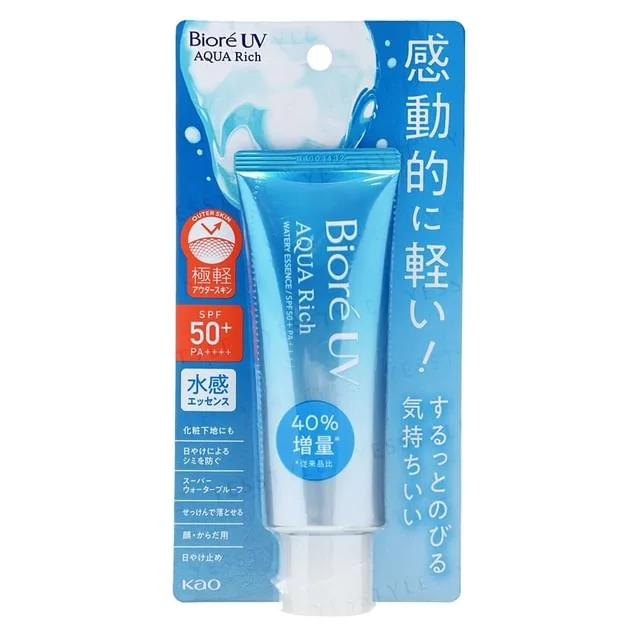
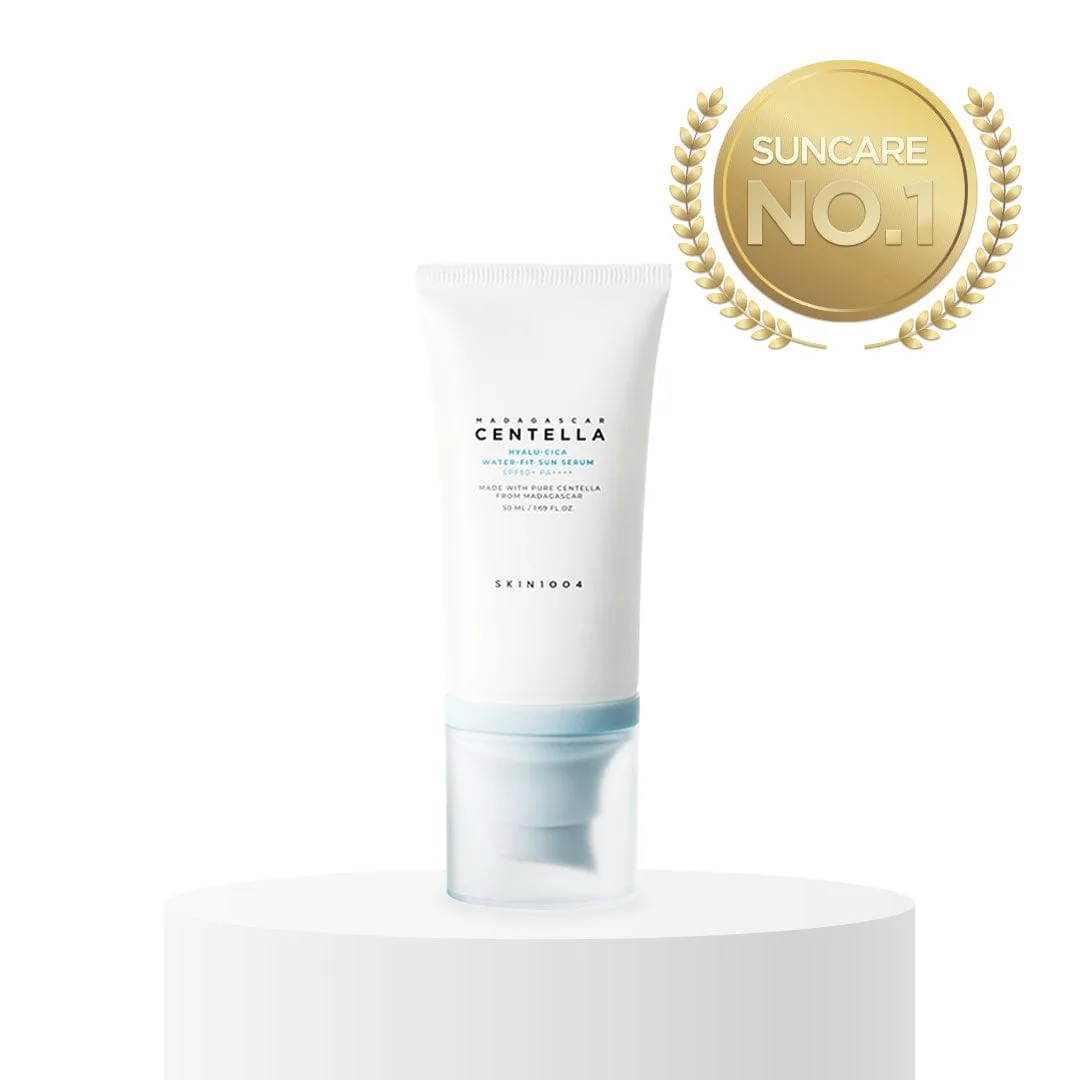
The filter system uses Uvinul A Plus and Tinosorb S Lite — modern photostable UV filters that are approved in Japan and Europe but not yet in the US. This gives the sunscreen true broad-spectrum UVA protection (PA++++) in a cosmetically elegant formula at a drugstore price point, a combination that's genuinely rare outside East Asian markets.
A benchmark affordable Japanese sunscreen built around modern photostable filters that the US FDA has not yet approved, delivering genuine PA++++ UVA protection in a lightweight milky emulsion. Exceptional value, with ethanol content and the small 40g tube being the only meaningful drawbacks.
Full protectionfor Sun DamageIn your profileYou chose · Broad-spectrum SPF 50 with zinc oxide, Uvinul A Plus, titanium dioxide: the protection sun damage calls for.Moderate evidenceGentleNo reviews collected yet
The case for it
Zinc Oxide is a first-line active — approved, monograph-listed or named in current guidelines — for this concern.
It is present at an effective concentration, declared or high in the ingredient list.
The formula carries none of the triggers this concern is sensitive to.
Same rule for everyone. “Full protection” is the verdict on 2,288 of 45,024 concern verdicts across the catalog; rule P1 decided 2,232 of them.
Unchanged since September 5, 2026, engine 5.1.1.
P1 — Photoprotection standing is regulatory (M020 / Annex VI filters; 21 CFR 201.327 attaches the early-skin-aging claim to tested broad-spectrum SPF 15+). SPF 30 is the AAD daily-use bar. · the full register
Full protectionfor AgingIn your profileYou chose · Broad-spectrum SPF 50 with zinc oxide, Uvinul A Plus, titanium dioxide: the protection aging calls for.Not yet assessedGentleNo reviews collected yet
The case for it
Zinc Oxide has no evidence row yet for this concern — it is in the research queue.
The formula carries none of the triggers this concern is sensitive to.
What would change this: A researched evidence row for the lead active would replace this with a verdict.
Same rule for everyone. “Full protection” is the verdict on 2,288 of 45,024 concern verdicts across the catalog; rule P1 decided 2,232 of them.
Unchanged since September 5, 2026, engine 5.1.1.
P1 — Photoprotection standing is regulatory (M020 / Annex VI filters; 21 CFR 201.327 attaches the early-skin-aging claim to tested broad-spectrum SPF 15+). SPF 30 is the AAD daily-use bar. · the full register
Full protectionfor HyperpigmentationIn your profileYou chose · Broad-spectrum SPF 50 with zinc oxide, Uvinul A Plus, titanium dioxide: the protection hyperpigmentation calls for.Not yet assessedGentleNo reviews collected yet
The case for it
Zinc Oxide has no evidence row yet for this concern — it is in the research queue.
The formula carries none of the triggers this concern is sensitive to.
What would change this: A researched evidence row for the lead active would replace this with a verdict.
Same rule for everyone. “Full protection” is the verdict on 2,288 of 45,024 concern verdicts across the catalog; rule P1 decided 2,232 of them.
Unchanged since September 5, 2026, engine 5.1.1.
P1 — Photoprotection standing is regulatory (M020 / Annex VI filters; 21 CFR 201.327 attaches the early-skin-aging claim to tested broad-spectrum SPF 15+). SPF 30 is the AAD daily-use bar. · the full register
Does the jobDoes what a sunscreen is for: UVA coverage, kind to the skin wearing it. Not measured from the label: pleasant enough to actually use.
A verdict is DermApproved’s assessment of how well a product’s ingredients fit a concern — never a claim about what the product treats. Evidence dots and collected reviews sit beside it and are never blended in.
Rules 0.5.1 · evidence table ev-2026.09-r228 · how we decide
Assessment
Pros & Cons
Pros
✓ Modern photostable UV filters (Uvinul A Plus, Tinosorb S Lite) deliver better UVA protection than most US drugstore sunscreens
✓ True PA++++ rating — highest UVA protection category available
✓ Lightweight, semi-matte finish with no white cast on most skin tones
✓ Cosmetically elegant enough for daily use under makeup
✓ Exceptional value at around $15 even with import costs
✓ Fragrance-free and fungal-acne-safe
Cons
✗ 40g tube runs out in 4-6 weeks of proper application
✗ Ethanol content can be drying or irritating on sensitive skin
✗ Contains octinoxate — not reef-safe for snorkeling or diving
✗ Methylparaben present for clean-beauty-averse buyers
✗ Requires importing or an Asian beauty retailer for US buyers
Review
Full Review
There's an awkward truth about sunscreen that most American buyers never have to think about, but that Asian beauty enthusiasts and dermatology-forward shoppers know well: the sunscreens you can buy at a Tokyo drugstore for the equivalent of ten dollars are, on average, better at protecting you from UVA radiation than the sunscreens you can buy at a US drugstore for twenty. The reason is regulatory, not commercial. The US Food and Drug Administration classifies sunscreen filters as over-the-counter drugs, which means new filters require extensive pharmaceutical-level approval processes that haven't meaningfully advanced since the 1990s. Japan, the EU, and much of Asia treat sunscreen filters as cosmetics, and over the last two decades those markets have approved a series of modern photostable filters — Tinosorb S, Tinosorb M, Uvinul A Plus, Uvinul T 150 — that deliver substantially better UVA protection than the older chemical filters still dominating American products. This sunscreen contains two of those modern filters, and they're the reason it punches well above its price class. It helps that the maker is no fly-by-night operation: the brand belongs to a Japanese pharmaceutical house founded in 1899, whose sunscreen line has been a Japanese drugstore staple through a decade of quiet reformulations.
The filter system is the story. On the active side, you have four distinct UV filters working together: zinc oxide as the mineral workhorse providing true broad-spectrum defense, ethylhexyl methoxycinnamate (octinoxate) as the primary UVB absorber, Uvinul A Plus (diethylamino hydroxybenzoyl hexyl benzoate) as a modern UVA1 filter that covers the longest wavelengths most other filters miss, and Tinosorb S Lite as a photostabilizer that keeps the chemical filters from degrading across wear time. The result is a genuinely hybrid sunscreen that delivers SPF 50+ PA++++ — the highest protection category on the Japanese scale — without the greasiness of high-zinc mineral sunscreens or the photoinstability of older chemical-only formulas. That PA++++ rating is the part that matters most and gets overlooked: it reflects strong UVA1 coverage, the wavelength range most responsible for photoaging, pigmentation, and cumulative collagen damage, and the range where many American 'broad spectrum' products are measurably weak. The idea that Japanese and US sunscreens are interchangeable simply doesn't survive a look at the filter lists.
Cosmetically, the formula delivers on the expectations you'd have for a modern Japanese sunscreen. The base is cyclopentasiloxane and water, which gives it the characteristic silky slip of J-beauty cosmetic products. It applies as a light milky emulsion, spreads easily, and dries down to a semi-matte finish within about a minute. There's no white cast on most skin tones, no greasy residue, and no heavy fragrance — the scent is essentially neutral. Under makeup it sits cleanly and doesn't interfere with primer or foundation, which is a meaningful everyday advantage over chunkier mineral sunscreens.
The hydration claim in the product name is modest but real. Glycerin, sodium hyaluronate, sodium acetylated hyaluronate, and hydrolyzed collagen collectively contribute a light humectant layer, enough to keep the sunscreen from feeling dehydrating over a normal day. It's not a replacement for a moisturizer — dry skin should still layer it over a proper cream — but it's more than a token claim.
The friction points are modest but worth naming. Ethanol appears on the INCI, which is common in Japanese sunscreens because it helps deliver the lightweight feel, but it can be drying or slightly irritating on reactive skin. Octinoxate is present, and for reef-conscious buyers, octinoxate is one of the filters flagged by reef-safe regulations — if you're snorkeling in Hawaii or the Caribbean, this is not the right sunscreen. The 40-gram tube is small relative to the dose you should actually be applying for proper facial SPF coverage (roughly one to two grams per application — the classic 'two finger-lengths' for face and neck), which means a single tube lasts only four to six weeks of daily use. And parabens are present, which matters to some buyers but has no established safety concern at cosmetic concentrations. The formula is fungal-acne safe and pregnancy-safe, for those auditing the full list.
Two application points deserve emphasis, because they decide whether the protection is real. First, dose it properly — the two-finger-length amount, not a thin smear — since under-application is what turns a labeled SPF 50 into an effective SPF 20. Second, wear it year-round: UVA penetrates cloud and glass, so daily use matters on overcast days and indoors near windows, not just on the beach. And a corrective on the SPF number itself: the jump from 30 to 50 is roughly 97 to 98 percent of UVB blocked, a marginal difference next to application amount, reapplication, and the UVA coverage this formula actually excels at.
For the broader Skin Aqua lineup, the Super Moisture Milk is the entry-level daily facial sunscreen — there are gel, essence, and barrier-specific variants in the same family with slightly different textures and actives. If you're new to Japanese sunscreens, this milk variant is the best starting point: cosmetically elegant enough to wear every day, strong enough on filters to actually protect, and cheap enough to experiment with. The thousands of Japanese-market and imported reviews it has accumulated — averaging in the mid-4s, with a Cosme Award to its name — echo the pitch almost verbatim: lightweight and elegant, genuinely broad-spectrum, and cheap for the quality, with the small tube, the faint ethanol dryness, and the octinoxate as the recurring gripes. Once you understand what a good hybrid Japanese sunscreen feels like, going back to heavy or underperforming alternatives is genuinely difficult.
This is a standout product in the affordable daily sunscreen category, and it earns that standing through formulation quality rather than marketing. For a buyer who values UVA protection, cosmetic elegance, and drugstore pricing — and who can either import easily or find it at an Asian beauty retailer — it's one of the easier recommendations in this entire category.
Formula
Key Ingredients
The hero actives that drive this product's performance.
A mineral UV filter that provides true broad-spectrum protection across UVB and UVA ranges. In this formula it's paired with chemical filters for a hybrid sunscreen approach, delivering SPF 50+ PA++++ without the heavy white cast of a pure mineral sunscreen.
Regulator-approvedfor Sun Damage · limited certainty
The primary UVB filter in this hybrid formulation, responsible for most of the SPF value. Paired with zinc oxide and Tinosorb M-type filters to compensate for its lack of UVA coverage on its own.
Regulator-approvedfor Sun Damage · emerging certainty
A modern photostable UVA filter that rounds out the PA++++ rating. It's absorbs in the UVA1 range where most older chemical filters are weak, which is why Japanese sunscreens with this filter outperform many US-approved sunscreens on UVA coverage.
Regulator-approvedfor Sun Damage · limited certainty
A newer photostabilizing filter that protects other chemical filters from UV-induced degradation. Its presence in this formula is why the sunscreen maintains its stated SPF across extended wear rather than fading rapidly like older chemical-only formulas.
Regulator-approvedfor Sun Damage · limited certainty
Two HA forms — sodium hyaluronate and sodium acetylated hyaluronate — added as humectant support so the sunscreen also delivers some light hydration, which is the 'moisture' in the product name. Paired with glycerin and hydrolyzed collagen for a mild skincare-plus-SPF positioning.
Not yet assessed
Ingredient standings describe the active at treatment-level doses and
vehicles; this product's own condition grades weigh its actual formula.
Final step in the morning routine. Apply two finger-lengths to face and neck. Reapply every 2 hours during direct sun exposure.
Results Timeline
Immediate UV protection on application. Long-term benefits (reduced photoaging, prevented hyperpigmentation) accumulate over months and years of consistent daily use.
The scientific case for Japanese hybrid sunscreens over many American drugstore alternatives comes down to the filter set. Tinosorb S and Uvinul A Plus — the modern organic UV filters used in formulations like this one — have been studied extensively in Europe and Asia since the early 2000s. Research reported in the Journal of the American Academy of Dermatology and Photodermatology, Photoimmunology & Photomedicine has shown that these newer filters provide substantially broader UVA1 absorption than older chemical filters like avobenzone, particularly in the 370-400 nm range where most American sunscreens have measurable weakness. Additionally, Tinosorb S Lite has documented photostability — it does not degrade on UV exposure — and it stabilizes other filters co-formulated with it, which is why the whole system holds its protection across the day.
The PA (Protection Grade of UVA) rating used on Japanese sunscreens is measured via the PPD (persistent pigment darkening) method. A clinical trial reported in the British Journal of Dermatology has validated PPD as a more reliable indicator of true UVA1 protection than the EU's UVA-PF calculation, and the PA++++ rating — the highest tier — indicates PPD of 16 or greater. This is meaningfully higher UVA protection than most US sunscreens labeled 'broad spectrum,' which have a much looser FDA threshold.
UVA protection matters because UVA radiation is the primary driver of photoaging, pigmentation, and cumulative skin damage, and it penetrates clouds and glass. Research in Archives of Dermatology has shown that UVA1 specifically is implicated in long-term collagen degradation and elastin damage, and sunscreens that excel at UVA1 coverage are functionally different products from sunscreens that only cover UVB and UVA2 well.
The zinc oxide addition in this hybrid formula contributes both mineral UVB/UVA defense and a backup filter redundancy that adds stability to the overall system. The combination of mineral and chemical filters in a single formula, when well executed, provides more robust protection than either approach alone.
Dermatologist Perspective
Dermatologists generally consider modern Japanese and European hybrid sunscreens — those containing Tinosorb, Uvinul A Plus, and similar filters — to be among the most effective cosmetic sun protection options available worldwide, particularly for UVA1 coverage. This formulation aligns with how dermatologists describe an ideal daily sunscreen: cosmetically elegant enough to be worn consistently, broad-spectrum enough to protect against both UVB and the full UVA range, and tolerable enough for daily use without heavy residue. It is commonly recommended by dermatologists in markets where it's available, and American dermatologists who travel to Asia or Europe often purchase sunscreens in this category for personal use. It is not typically recommended for patients with ethanol-sensitive skin or for use during reef-protected water activities where octinoxate is restricted.
Guidance
Usage & Recommendations
How to Use
Apply as the final step of your morning routine after cleansing, serums, and moisturizer. Use two finger-lengths of product for face and neck — roughly 1-2 grams total — to achieve the labeled SPF. Let it dry for about a minute before applying makeup. Reapply every 2 hours during prolonged direct sun exposure, or more frequently if swimming or sweating heavily. Can be used year-round, not just in summer — UVA penetrates clouds and glass, so daily use matters even on overcast days or when primarily indoors near windows.
Value Assessment
At approximately $15 (or less in the Japanese domestic market), this sunscreen is an exceptional value for the UV protection it delivers. Comparable US drugstore sunscreens at SPF 50 cost $15-25 but generally provide weaker UVA coverage due to the older filter sets they're limited to. Imported via Asian beauty retailers, this sunscreen often costs $15-20 with shipping, which still makes it more cost-effective than equivalent-quality products from luxury brands. The small 40g size is the main value drag — proper daily application depletes a tube in about 4-6 weeks — but even accounting for that, the effective cost per month of high-quality daily sun protection is lower than most mid-tier Western alternatives.
Who Should Buy
Users who prioritize UVA protection and cosmetic elegance at a budget-friendly price, particularly those with normal, combination, or oily skin who want a daily sunscreen that works under makeup. Good for users committed to Asian beauty or J-beauty routines and comfortable importing products.
Who Should Skip
Ethanol-sensitive users and reactive skin types should patch test carefully — the alcohol content can be drying. Reef-conscious divers and snorkelers should choose a reef-safe alternative. Users who can't easily import products or find Asian beauty retailers may find the logistics frustrating for a sub-$20 product.
Ready to try Skin Aqua UV Super Moisture Barrier Milk SPF 50+?
Skin Aqua launched in Japan as Rohto Mentholatum's affordable daily sunscreen line and became a drugstore staple through the 2010s. The Super Moisture Milk line positioned itself as the everyday facial sunscreen within the broader range, balancing strong UV protection with a moisturizing finish. Rohto itself, founded in 1899, is one of Japan's oldest pharmaceutical companies and operates across eye drops, skincare, and topical medications.
About Skin Aqua Established Brand (5–20 years)
Skin Aqua is made by Rohto Mentholatum, a Japanese pharmaceutical company founded in 1899. Skin Aqua is one of Japan's best-selling affordable sunscreen lines and has been refined across numerous reformulations with a consistent track record in the Japanese drugstore market.
Brand founded: 1899 · Product launched: 2020
Myth vs. Reality
Common Myths
Myth
Japanese sunscreens are the same as US sunscreens
Reality
They're not. Japan and the EU approve modern filters like Uvinul A Plus and Tinosorb S that the US FDA has not yet approved for cosmetic sunscreen use. This means Japanese sunscreens often outperform US sunscreens on UVA coverage at comparable SPF ratings, which is why PA++++ Japanese sunscreens are frequently imported by US buyers.
Myth
SPF 50+ is always better than SPF 30
Reality
SPF 50 blocks about 98% of UVB, SPF 30 blocks about 97%. The difference is small when applied correctly. Far more important is proper application amount, reapplication, and broad-spectrum UVA coverage — where this sunscreen excels.
FAQ
Frequently Asked Questions
Is this sunscreen worth importing from Japan?
For most users, yes. The combination of Uvinul A Plus and Tinosorb S Lite filters delivers better UVA protection than US-approved drugstore sunscreens at comparable SPF, and the cosmetic elegance is exceptional for the price. Importing costs add to the base price, but even at $15-20 total it's a strong value.
What does PA++++ mean?
PA++++ is the highest rating on the Japanese PA scale, which measures UVA protection via the PPD (persistent pigment darkening) method. Four plus signs indicate PPD of 16 or higher — the highest UVA protection category available. It's roughly equivalent to EU UVA-PF 16+.
Does it leave a white cast?
No — even though it contains zinc oxide, the zinc is in a micronized form and the formula is balanced with chemical filters to prevent whitening. It's cosmetically elegant on all but the deepest skin tones, where a faint cast may be visible.
Is UV Super Moisture Barrier Milk SPF 50+ gentle enough for reactive skin?
Mixed. The formula is fragrance-free and contains soothing arginine and hydrolyzed collagen, but it also contains ethanol high on the INCI and octinoxate, both of which can be drying or irritating for reactive users. Patch test before full-face use.
Can I reapply over makeup?
Yes, though reapplication with a milky sunscreen over makeup is tricky. Dab gently rather than rubbing, or consider carrying a Skin Aqua-compatible sunscreen stick or powder for easier midday reapplication.
Reviews
What Reviewers Tend to Say
Recurring themes our editors read across retailer reviews of this product — summaries in our words, not quotations, and not a substitute for your own patch test.
Common Praise
Lightweight and cosmetically elegant
True broad-spectrum UVA protection
Affordable for the SPF quality
Common Complaints
Small 40g size runs out fast
Slight initial drying feel from ethanol
Octinoxate content off-putting to reef-safe buyers
Notable Endorsements
Japan Cosme Award winnerPopular among Asian beauty editors
The blocker isn't chemistry — it's a classification. In the US a sunscreen is a drug, and that single word explains the empty shelf, the relabelled bottles, and what finally changed in June 2026.
IPL is a filtered flashlamp, a true vascular laser is one wavelength aimed at haemoglobin, and the choice between them turns on a distinction almost no consult makes: whether your redness is vessels or a state.
We have spent years praising Japanese filter chemistry while ignoring that the filter is the last line of a system built out of fabric, shade and timing — the part that needs no importing and does not depend on you remembering to reapply.
Aug 28, 2026· 10 min
Questions people ask about Hyperpigmentation
Verified answers from our questions library — the nuance a product page cannot carry.
Products, answers, therapy guides, tools and articles in one search. Brand names,
slang and abbreviations all work — accutane finds isotretinoin, bacne finds truncal acne.