



Octocrylene and Homosalate: The Filters America Is Stuck With
The critics are right about the data gap, and they are right that it took two decades to move. What follows from that is not the conclusion most people draw.
Triple modern photo-stable UV filter combination (Tinosorb M + Uvinul A Plus + Tinosorb S) at drugstore pricing — Tinosorb-grade photo-stability is typically reserved for luxury sunscreens at 5-10x the price. The quadruple-humectant system delivers genuinely hydrating finish in a chemical-sunscreen format. Fragrance-free formulation also rare among Japanese drugstore SPF.
Among the best Japanese drugstore face sunscreens available — triple Tinosorb-grade photo-stable filter system, quadruple hydration complex, genuinely fragrance-free, all at $11 for 110g. The alcohol and ethylhexyl methoxycinnamate are the only meaningful ingredient flags. Few products at this price tier deliver this level of formulation sophistication.
The case for it
What would change this: A declared concentration would move this to a firmer reading of the dose.
Same rule for everyone. “Full protection” is the verdict on 2,288 of 45,024 concern verdicts across the catalog; rule P1 decided 2,232 of them. Unchanged since September 5, 2026, engine 5.1.1.
Brand or formulator? Disclose a concentration or correct a fact →
The studies behind the evidence row
The case for it
What would change this: A researched evidence row for the lead active would replace this with a verdict.
Same rule for everyone. “Full protection” is the verdict on 2,288 of 45,024 concern verdicts across the catalog; rule P1 decided 2,232 of them. Unchanged since September 5, 2026, engine 5.1.1.
Brand or formulator? Disclose a concentration or correct a fact →
The case for it
What would change this: A researched evidence row for the lead active would replace this with a verdict.
Same rule for everyone. “Full protection” is the verdict on 2,288 of 45,024 concern verdicts across the catalog; rule P1 decided 2,232 of them. Unchanged since September 5, 2026, engine 5.1.1.
Brand or formulator? Disclose a concentration or correct a fact →
Does the jobDoes what a sunscreen is for: UVA coverage, kind to the skin wearing it. Not measured from the label: pleasant enough to actually use.
A verdict is DermApproved’s assessment of how well a product’s ingredients fit a concern — never a claim about what the product treats. Evidence dots and collected reviews sit beside it and are never blended in. Rules 0.5.1 · evidence table ev-2026.09-r228 · how we decide
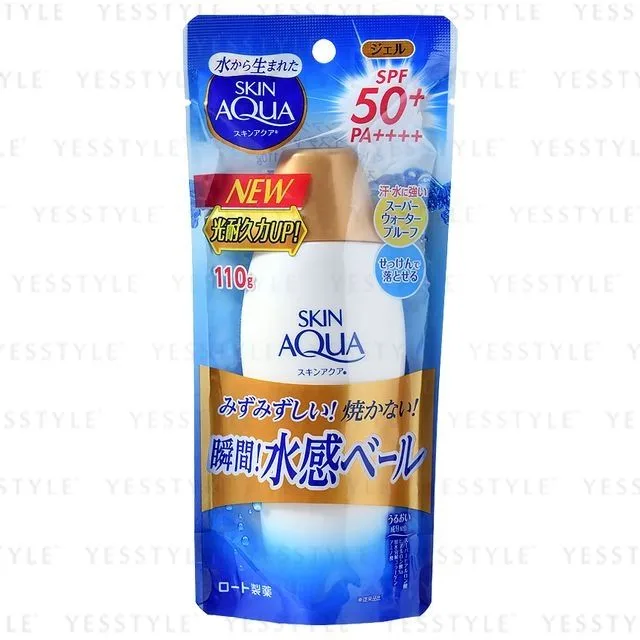
There is a quiet truth that ruins a lot of expensive sunscreen marketing: some of the best UV protection in the world comes off a Japanese drugstore shelf for the price of a sandwich. Rohto's Skin Aqua line is a prime exhibit, and the Super Moisture Gel is its flagship daily driver, a product that consistently lands near the top of independent Japanese beauty tests while costing about eleven dollars. The case here is not that drugstore sunscreen is acceptable for the money; it is that this particular formula genuinely rivals products charging five to ten times as much, and the filter system is where that argument is won.
Three modern photo-stable filters do the heavy lifting, working in combination rather than relying on any single one. Methylene bis-benzotriazolyl tetramethylbutylphenol, better known as Tinosorb M, is a particulate filter that both absorbs and scatters UV across the broad-spectrum range. Diethylamino hydroxybenzoyl hexyl benzoate, or Uvinul A Plus, soaks up long-wave UVA in the 340-to-380-nanometer band with excellent stability, which matters because long UVA is the wavelength most implicated in aging and pigmentation. Bis-ethylhexyloxyphenol methoxyphenyl triazine, Tinosorb S, rounds out broad-spectrum coverage with very high photo-stability of its own. Standard ethylhexyl methoxycinnamate handles UVB support. Together they deliver SPF 50+ PA++++ with reliability that holds through extended wear rather than degrading in sunlight, and this grade of filter selection is usually reserved for luxury sunscreens. Finding it on a drugstore tube is the genuinely unusual part, and it is the single strongest reason this formula punches so far above its price.
The second signature is the quadruple hydration complex that gives the Super Moisture line its name, and it is more than marketing. Sodium hyaluronate and acetylated sodium hyaluronate, the latter a modified form with better skin adherence and more sustained surface plumping, pair with hydrolyzed collagen for surface-conditioning protein and arginine as an amino-acid humectant. The combined load is what separates this from the typically drier feel of chemical sunscreens, and it shows in wear: the gel reads as hydrating rather than tight. Film-forming polymers including polysilicone-13 hold the filter coverage in place through the eighty-minute water-resistance claim, so the protection survives sweat and water exposure rather than sheeting off at the first sign of effort, while polystyrene microspheres help give the gel its semi-matte finish.
In practice the texture is the easy part to love. A lightweight clear gel with a watery feel absorbs in about a minute to a semi-matte finish, leaves no white cast, and pairs cleanly under makeup without the pilling that plagues a lot of sunscreen-and-foundation combinations. Apply roughly a teaspoon to the face after moisturizer in the morning, reapply every couple of hours during outdoor activity, and the daily-driver math works out well. The protection is immediate, as all sunscreen is, so there is no waiting period to factor in. The fragrance-free positioning is genuine here, with no masking perfumes and no botanical aromatics, which is meaningfully rare among Japanese drugstore sunscreens and a real upgrade for fragrance-reactive and sensitive-skin users. The formula is also free of the royal jelly that appears in some competitors, which keeps it vegan-friendly and removes a common irritant.
The ingredient flags are few and honest. Alcohol sits in the upper portion of the INCI as a solvent for the chemical filters, which is worth noting for chronically dry or alcohol-reactive skin that may find it drying despite the hydration complex. The ethylhexyl methoxycinnamate, octinoxate, has been debated in some markets over coral-reef concerns and certain regional regulations, so anyone avoiding it on personal or environmental grounds will want to look elsewhere. Rohto's distribution into China means the brand is not cruelty-free, which matters to some buyers. And the pump on certain variants can occasionally airlock mid-bottle, a minor annoyance rather than a dealbreaker. Beyond those, the formula is genuinely clean, with no fragrance, no parabens, and nothing that reads as filler.
Value is where this becomes almost difficult to argue against. At eleven dollars for 110 grams at Japanese pricing, the per-gram cost sits dramatically below luxury sunscreens, and the tube lasts roughly two to three months at daily facial use, putting the monthly outlay around four or five dollars. International markup at non-Japanese retailers can push the price toward eighteen to twenty-five, which dents but does not destroy the value proposition. As an established line, Japan's number-two drugstore sunscreen franchise launched by Rohto in the 2000s, it has the track record and the thousands of reviews to back the confidence rather than relying on novelty.
That low per-use cost also solves the quiet problem that undermines most sunscreen routines, which is under-application. The single biggest reason people fall short of their sunscreen's labeled SPF is using too little to make the bottle last, and a product cheap enough that you never have to ration it removes that temptation entirely. Applying the full teaspoon to the face and reapplying without flinching at the cost is far easier when the tube costs what this one does, and on a day-to-day basis that practical generosity arguably matters more than any single filter on the list. A sophisticated formula you actually apply at the right dose beats a prestige one you stretch too thin every time.
Who this suits is straightforward: anyone wanting advanced filter chemistry at drugstore pricing, daily users who prefer a hydrating finish over the typical dry chemical-sunscreen feel, fragrance-reactive skin, and cost-conscious routine builders who want protection that does not punish them financially. Who should skip it: chronically dry or alcohol-reactive skin, anyone specifically avoiding octinoxate, committed cruelty-free shoppers, and those who want mineral-only filters. For everyone in the target profile, this is among the best dollar-per-protection sunscreens you can buy anywhere, and that is not a sentence luxury marketing wants you reading.
The hero actives that drive this product's performance.
| Ingredient | Function | Evidence |
|---|---|---|
| Triple Photo-Stable UV Filter System (Tinosorb M + Uvinul A Plus + Tinosorb S) | Skin Aqua's distinctive sunscreen formulation uses methylene bis-benzotriazolyl tetramethylbutylphenol (Tinosorb M, particulate broad-spectrum), diethylamino hydroxybenzoyl hexyl benzoate (Uvinul A Plus, long UVA), and bis-ethylhexyloxyphenol methoxyphenyl triazine (Tinosorb S, broad-spectrum) alongside the standard ethylhexyl methoxycinnamate. The three modern photo-stable filters deliver SPF 50+ PA++++ with reliability that holds through extended wear. | Regulator-approved for Sun Damage · limited certainty |
| Quadruple Hydration Complex (Hyaluronic Acid + Super Hyaluronan + Collagen + Arginine) | Skin Aqua's signature four-ingredient hydration system that gives the line its 'Super Moisture' positioning — sodium hyaluronate, acetylated sodium hyaluronate (modified HA with better skin adherence), hydrolyzed collagen, and arginine (amino acid humectant precursor). The combination delivers the unusually hydrating finish that distinguishes Skin Aqua from drier chemical sunscreens. | Not yet assessed |
| Polysilicone-13 + Trimethylsiloxysilicate Film System | The film-forming polymer combination that holds UV filter coverage in place through sweat and water exposure. Important for the 80-minute water-resistance claim. | Not yet assessed |
Ingredient standings describe the active at treatment-level doses and vehicles; this product's own condition grades weigh its actual formula.
Water, Ethylhexyl Methoxycinnamate, Alcohol, BG, Isononyl Isononanoate, Methylene Bis-Benzotriazolyl Tetramethylbutylphenol, Sodium Hyaluronate, Acetylated Sodium Hyaluronate (Super Hyaluronan), Hydrolyzed Collagen, Arginine, Prunus Yedoensis Leaf Extract, Vaccinium Myrtillus Leaf Extract, Diethylamino Hydroxybenzoyl Hexyl Benzoate, Glycol Dimethacrylate Crosspolymer, Bis-Ethylhexyloxyphenol Methoxyphenyl Triazine, Polysilicone-13, PEG-40 Stearate, BisPEG-18 Methyl Ether Dimethyl Silane, Acrylates/C10-30 Alkyl Acrylate Crosspolymer, TEA, Decyl Glucoside, Polystyrene, Polyvinyl Alcohol, Xanthan Gum, Disodium EDTA, PG, Phenoxyethanol
sunscreen
AM
Apply 1.2g (a teaspoon) to face after moisturizer. The gel format absorbs faster than typical chemical sunscreen lotions and layers cleanly under makeup within 60 seconds.
Immediate SPF 50+ PA++++ protection; 80-minute water-resistance during sweat/water exposure.
The UV filter chemistry is genuinely sophisticated for drugstore tier. Methylene bis-benzotriazolyl tetramethylbutylphenol (Tinosorb M) is a particulate filter that combines absorption with scattering and reflection of UV radiation across the broad-spectrum range (280-400nm). Diethylamino hydroxybenzoyl hexyl benzoate (Uvinul A Plus) absorbs long-UVA in the 340-380nm range with excellent photo-stability. Bis-ethylhexyloxyphenol methoxyphenyl triazine (Tinosorb S) provides broad-spectrum coverage with very high photo-stability. The combination delivers SPF 50+ PA++++ with reliability through extended wear.
The quadruple hydration complex includes both standard and modified HA forms. Acetylated sodium hyaluronate has improved skin adherence compared to standard sodium hyaluronate, providing more sustained surface plumping. Hydrolyzed collagen contributes surface-conditioning protein. Arginine adds amino-acid humectant precursor character. The combined hydration load is what differentiates this from typical drier chemical sunscreens.
The film-forming polymers (polysilicone-13, glycol dimethacrylate crosspolymer, acrylates copolymer) provide the water-resistance through 80 minutes of sweat/water exposure. The polystyrene microspheres contribute to the gel's matte finish.
The Skin Aqua Super Moisture Gel is among the drugstore sunscreens most frequently suggested by Japanese dermatologists for daily face protection. Clinically the appealing characteristics are the modern photo-stable filter combination (genuinely advanced for the price tier), the genuinely fragrance-free formulation (rare in Japanese drugstore SPF), and the hydrating finish. The flags are the alcohol high in the INCI and the ethylhexyl methoxycinnamate inclusion (coral reef and personal-policy considerations). For most patients seeking accessible daily SPF, this is among the best options.
Apply 1.2g (a teaspoon) to face after moisturizer. Wait 60 seconds before applying makeup. Reapply every 2 hours during outdoor activity.
At approximately $11 for 110g at Japanese drugstore pricing, this is exceptional value — competitive with mainstream Western drugstore options and dramatically below luxury sunscreens. International markup pushes this to $18-$25.
Anyone seeking advanced sunscreen formulation at drugstore pricing. Daily-driver users who prefer hydrating sensorial. Fragrance-reactive users. Cost-conscious skincare builders.
Chronically dry or alcohol-reactive skin. Ethylhexyl methoxycinnamate avoiders. Cruelty-free purchasers. Users seeking mineral-only sunscreens.
Ready to try Skin Aqua Super Moisture Gel SPF 50+?
Buy at Amazon ♥Lightweight clear gel with watery feel; absorbs in 60 seconds with semi-matte finish.
Genuinely fragrance-free.
Standard plastic tube with twist cap or pump variant.
First use delivers SPF 50+ PA++++ protection with hydrating gel feel that's unusual in chemical sunscreens. Layers cleanly under makeup; pleasant fragrance-free daily application.
About 2-3 months at daily face use from the 110g tube.
All Year
Rohto launched Skin Aqua in the 2000s as the brand's drugstore sunscreen extension, with the Super Moisture line targeting consumers who wanted hydrating SPF without the heaviness of cream sunscreens. The Super Moisture Gel has been refined through multiple formulation iterations and remains the line's flagship daily-driver.
Skin Aqua is Rohto Pharmaceutical's Japanese drugstore sunscreen sub-brand under the Mentholatum line, launched in the 2000s as part of Rohto's expansion into UV-protection skincare. The line is Japan's #2 drugstore sunscreen franchise (after Bioré UV) and focuses on water-based, hydrating sunscreen formulations at accessible pricing.
Drugstore sunscreens can't include modern photo-stable filters like luxury alternatives.
They can — and Skin Aqua proves it. The Super Moisture Gel uses Tinosorb M, Uvinul A Plus, and Tinosorb S in combination at drugstore pricing. The luxury markup for sunscreens is largely brand-prestige rather than fundamental ingredient access.
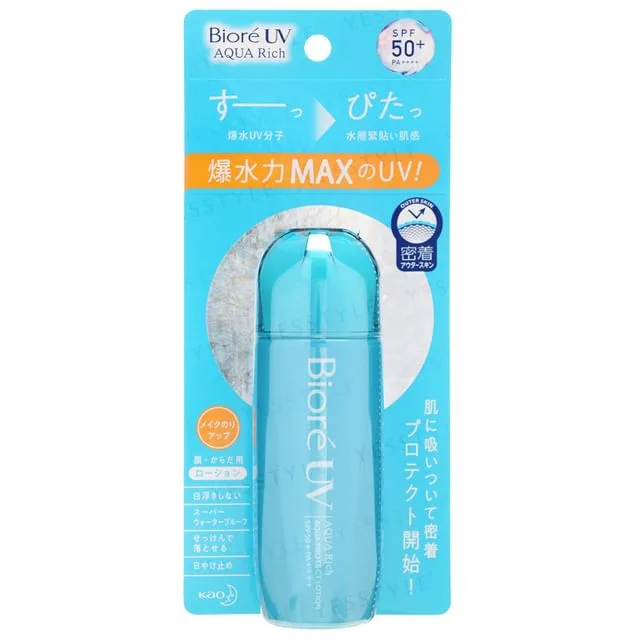
Both are top Japanese drugstore SPF franchises, with subtle differences. Skin Aqua tends to be fragrance-free and uses a triple Tinosorb-grade filter combination (Tinosorb M + Tinosorb S + Uvinul A Plus). Bioré UV often includes fragrance and royal jelly. For sensitive-skin users, Skin Aqua is generally the gentler choice; for users wanting maximum cumulative bioactive support, Bioré UV's royal jelly inclusion is the differentiator. Both deliver SPF 50+ PA++++.
More than most drugstore alternatives. The fragrance-free formulation removes one major sensitizer category. The alcohol high in the INCI is the main remaining flag — very dry or alcohol-reactive skin should still consider mineral-only alternatives.
No — the chemical filter system doesn't cast white. Even on deeper skin tones, the gel format absorbs invisibly.
Approximately 80 minutes through water/sweat exposure (standard regulatory claim duration). Reapply every 2 hours during outdoor activity.
No. Rohto Mentholatum distributes through mainland China retail channels where animal testing is required by local regulation.
Yes — the gel format is designed for makeup compatibility. Apply, wait 60 seconds, then layer foundation. The non-tacky finish prevents the typical sunscreen-and-foundation pilling.
Alcohol serves multiple functions in this chemical sunscreen — solvent for the UV filters, evaporation-accelerator for the quick-absorbing finish, and preservation support. Despite the alcohol position high in the INCI, the quadruple hydration system offsets the drying effect for most users.
Recurring themes our editors read across retailer reviews of this product — summaries in our words, not quotations, and not a substitute for your own patch test.
Excellent SPF 50+ PA++++ at drugstore pricing
Genuinely hydrating finish for a chemical sunscreen
Fragrance-free
No white cast
Gel format absorbs fast under makeup
Alcohol can dry very dry skin
Contains ethylhexyl methoxycinnamate (octinoxate)
Mid-bottle pump can sometimes airlock
Verified answers from our questions library — the nuance a product page cannot carry.