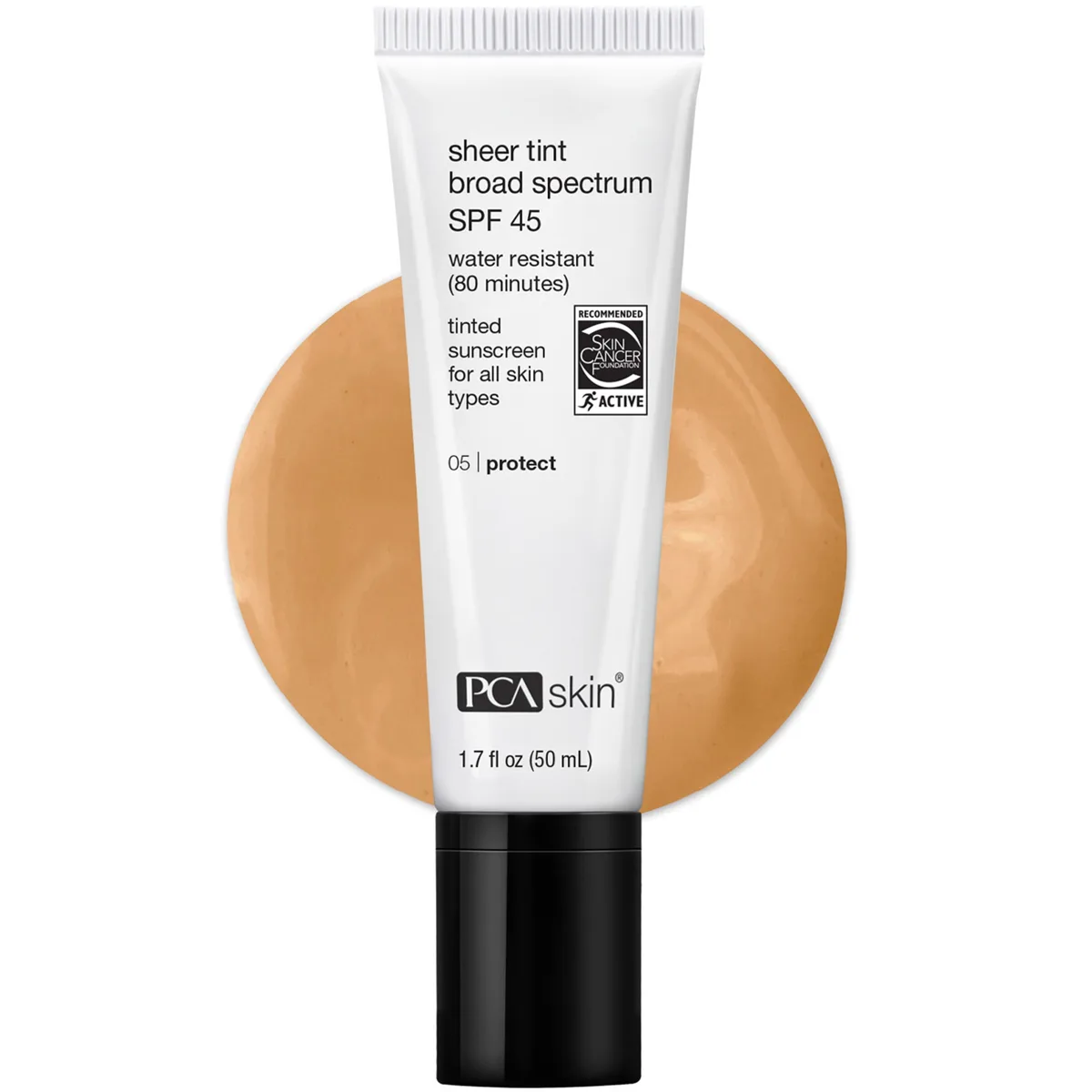
The combination of a purely mineral SPF 45 with iron oxides for visible light protection in a formula that actually feels elegant sets this apart from most mineral tinted sunscreens. The silicone crosspolymer system gives it a primer-like application that avoids the chalky, heavy feel that plagues many mineral SPFs at this protection level.
A refined, elegantly formulated tinted mineral sunscreen that does what so many mineral SPFs fail at — it actually feels good on the skin. The iron oxide inclusion for visible light protection gives it genuine clinical value beyond basic UV defense, though the $56 price for 1.7 ounces demands a premium for that sophistication.
Full protectionfor Sun DamageIn your profileYou chose · Broad-spectrum SPF 45 with titanium dioxide, zinc oxide: the protection sun damage calls for.Moderate evidenceGentleNo reviews collected yet
The case for it
Titanium Dioxide 7.6% is a first-line active — approved, monograph-listed or named in current guidelines — for this concern.
It is present at an effective concentration, declared or high in the ingredient list.
The formula carries none of the triggers this concern is sensitive to.
Same rule for everyone. “Full protection” is the verdict on 2,288 of 45,024 concern verdicts across the catalog; rule P1 decided 2,232 of them.
Unchanged since September 5, 2026, engine 5.1.1.
P1 — Photoprotection standing is regulatory (M020 / Annex VI filters; 21 CFR 201.327 attaches the early-skin-aging claim to tested broad-spectrum SPF 15+). SPF 30 is the AAD daily-use bar. · the full register
Carrying active
Titanium Dioxide 7.6%
Standing
first line — a regulator recognises it for this use; trials support it · per § 352.10 Sunscreen active ingredients. (U.S. Food and Drug Administration — 21 CFR Part 352 (Sunscreen Drug Products for Over-the-Counter Human Use), Code of Federal Regulations via GovInfo), opened July 27, 2026
Form
adequate (declared 7.6%) — studied range up to 25%, from the OTC monograph or label; needs leave-on contact
Tolerability
gentle
Row checked
against its sources on July 27, 2026 (evidence table ev-2026.09-r228)
21 CFR 352.10 — Sunscreen active ingredients — US Food and Drug Administration / Electronic Code of Federal Regulations (retrieved 2026-07-16; note stayed effective date), opened July 16, 2026
Full protectionfor HyperpigmentationIn your profileYou chose · Broad-spectrum SPF 45 with titanium dioxide, zinc oxide: the protection hyperpigmentation calls for.Not yet assessedGentleNo reviews collected yet
The case for it
Titanium Dioxide 7.6% has no evidence row yet for this concern — it is in the research queue.
The formula carries none of the triggers this concern is sensitive to.
What would change this: A researched evidence row for the lead active would replace this with a verdict.
Same rule for everyone. “Full protection” is the verdict on 2,288 of 45,024 concern verdicts across the catalog; rule P1 decided 2,232 of them.
Unchanged since September 5, 2026, engine 5.1.1.
P1 — Photoprotection standing is regulatory (M020 / Annex VI filters; 21 CFR 201.327 attaches the early-skin-aging claim to tested broad-spectrum SPF 15+). SPF 30 is the AAD daily-use bar. · the full register
Full protectionfor MelasmaIn your profileYou chose · Broad-spectrum SPF 45 with iron oxides for visible light — what melasma needs from a sunscreen.Not yet assessedGentleNo reviews collected yet
The case for it
Titanium Dioxide 7.6% has no evidence row yet for this concern — it is in the research queue.
The formula carries none of the triggers this concern is sensitive to.
What would change this: A researched evidence row for the lead active would replace this with a verdict.
Same rule for everyone. “Full protection” is the verdict on 2,288 of 45,024 concern verdicts across the catalog; rule P2 decided 56 of them.
Unchanged since September 5, 2026, engine 5.1.1.
Full protectionfor AgingIn your profileYou chose · Broad-spectrum SPF 45 with titanium dioxide, zinc oxide: the protection aging calls for.Not yet assessedGentleNo reviews collected yet
The case for it
Titanium Dioxide 7.6% has no evidence row yet for this concern — it is in the research queue.
The formula carries none of the triggers this concern is sensitive to.
What would change this: A researched evidence row for the lead active would replace this with a verdict.
Same rule for everyone. “Full protection” is the verdict on 2,288 of 45,024 concern verdicts across the catalog; rule P1 decided 2,232 of them.
Unchanged since September 5, 2026, engine 5.1.1.
P1 — Photoprotection standing is regulatory (M020 / Annex VI filters; 21 CFR 201.327 attaches the early-skin-aging claim to tested broad-spectrum SPF 15+). SPF 30 is the AAD daily-use bar. · the full register
Good choicefor SensitivityIn your profileYou chose · No fragrance, drying alcohol, declarable allergens or sensitising preservatives in this cream — the profile sensitive skin looks for.Not yet assessedGentleNo reviews collected yet
The case for it
Titanium Dioxide 7.6% has no evidence row yet for this concern — it is in the research queue.
The formula carries none of the triggers this concern is sensitive to.
What would change this: A researched evidence row for the lead active would replace this with a verdict.
Same rule for everyone. “Good choice” is the verdict on 1,938 of 45,024 concern verdicts across the catalog; rule F2 decided 1,938 of them.
Unchanged since September 5, 2026, engine 5.1.1.
Does the jobDoes what a sunscreen is for: UVA coverage, kind to the skin wearing it. Not measured from the label: pleasant enough to actually use.
A verdict is DermApproved’s assessment of how well a product’s ingredients fit a concern — never a claim about what the product treats. Evidence dots and collected reviews sit beside it and are never blended in.
Rules 0.5.1 · evidence table ev-2026.09-r228 · how we decide
Assessment
Pros & Cons
Pros
✓ Elegant silicone-based texture feels like a primer, not a sunscreen
✓ Iron oxides provide clinically meaningful visible light and HEV protection
✓ Universally flattering sheer tint eliminates white cast on most skin tones
✓ Fragrance-free and oil-free formula suitable for sensitive and acne-prone skin
✓ Purely mineral filters make it pregnancy-safe and post-procedure appropriate
✓ Mattifying finish controls shine for several hours without looking flat
✓ Water-resistant formula holds up during activity and sweating
Cons
✗ At $56 for 1.7 oz, the per-ounce cost is steep for daily sunscreen use
✗ Silicone-heavy oil-free base may feel drying on very dry skin types
✗ Tint may read too warm on very fair complexions or offer minimal tint on deeper tones
✗ Limited size options — only available in the single 1.7 oz tube
✗ Some users report batch-to-batch variation in tint shade and texture consistency
Review
Full Review
Walk into almost any esthetician's treatment room across the United States, and there's a decent chance you'll spot PCA Skin products on the shelf. The brand has spent over three decades building credibility through the professional channel — no flashy Instagram launches, no celebrity partnerships, just quiet formulation work that earns recommendations one licensed skincare professional at a time. The Sheer Tint Broad Spectrum SPF 45 is one of those products that reveals why that approach works.
The fundamental problem with mineral sunscreens has never been their protection — zinc oxide and titanium dioxide are proven, stable, broad-spectrum filters that sit on top of skin rather than absorbing into it. The problem has always been cosmetic elegance. Heavy white casts, thick pasty textures, pilling under makeup — these are the complaints that have driven millions of consumers toward chemical sunscreens despite the mineral camp's safety advantages. PCA Skin's formula attacks this problem with engineering rather than marketing.
The vehicle here is built on a sophisticated silicone crosspolymer system — dimethicone, dimethicone/vinyl dimethicone crosspolymer, and polymethylsilsesquioxane working together to create a slip that feels more like a primer than a sunscreen. You squeeze out a tinted cream that glides across skin with virtually no drag, and within a minute or two, it sets to a finish that's matte without looking flat. The iron oxides provide a universally designed sheer tint — warm enough to neutralize the white cast from the minerals, subtle enough that most skin tones from light to medium-tan can wear it without it reading as obviously tinted.
But the iron oxides are doing more than cosmetic work here, and this is where the formula earns its clinical stripes. Research has increasingly demonstrated that visible light — particularly the high-energy violet and blue wavelengths — can trigger hyperpigmentation in darker skin tones and worsen melasma. A 2020 review published in the Journal of the American Academy of Dermatology confirmed that tinted sunscreens containing iron oxides provide significantly better protection against visible light-induced pigmentation than their untinted counterparts. This makes PCA Skin's formula genuinely more protective than a comparable untinted mineral SPF, not just prettier.
The active filter combination — 8% zinc oxide and 7.6% titanium dioxide — achieves SPF 45 broad spectrum with a moderate mineral load. This is deliberate. Higher concentrations of these minerals would boost protection numbers but at the cost of wearability. By keeping the total mineral percentage under 16%, PCA Skin maintains a texture that doesn't feel like you're spackling your face. The trade-off is that you need to apply an adequate amount — the full recommended amount for face and neck — to actually achieve that rated protection.
Texture is genuinely one of this product's strongest selling points. It has that silky, almost liquid quality that mineral sunscreen skeptics don't expect from a zinc-and-titanium formula. There's no grittiness, no pilling when layered over serums, and no heavy occluded feeling by midday. For oily and combination skin types, the mattifying finish is a welcome bonus — it controls shine for several hours without drying out skin, thanks partly to the jojoba esters that add a touch of skin-compatible emolliency beneath the silicone matrix.
Where this formula may disappoint is on the dry end of the spectrum. The silicone-heavy, oil-free base prioritizes mattification and lightweight wear, which means it can emphasize dry patches or feel insufficiently hydrating for anyone whose skin craves more moisture. Layering a good hydrating serum underneath helps, but if you're naturally dry, this was simply designed for someone else's skin type.
The tint itself works remarkably well for what it claims — a universally flattering sheer wash of color. On lighter skin, it reads as a subtle warm veil. On medium tones, it disappears into skin convincingly. Very fair complexions may find it slightly warm, and deeper skin tones will get minimal visible tint. It's not foundation. It's not meant to be. It's a tinted sunscreen that makes the mineral filters invisible and adds a touch of evening to your complexion.
At $56 for 1.7 fluid ounces, this is squarely in professional-grade pricing territory. If you're applying the recommended amount daily, you'll go through a tube in two to three months — putting the annual cost of just your sunscreen step north of $220. Is it worth it? For someone who has struggled with finding a mineral sunscreen they'll actually wear consistently, the wearability alone may justify it. For melasma patients who need visible light protection, the iron oxides add genuine value you won't find in most drugstore mineral SPFs. But if you just need basic sun protection and white cast isn't a dealbreaker, the price premium is harder to justify on formulation alone.
The water-resistant claim adds practical value for active lifestyles, and the fragrance-free, minimal-irritant formulation makes it safe for post-procedure skin — a scenario where PCA Skin products are frequently used in dermatology offices. This is a sunscreen designed by people who understand that the best SPF is the one you'll actually wear. The Sheer Tint makes that easy.
Formula
Key Ingredients
The hero actives that drive this product's performance.
Provides broad spectrum UVA protection, including the longer UVA1 wavelengths that titanium dioxide alone misses. Combined with the titanium dioxide at these concentrations, the dual-mineral system achieves SPF 45 while maintaining a lighter, more wearable texture than zinc-heavy formulas.
Regulator-approvedfor Sun Damage · limited certainty
Handles the UVB and short-wave UVA filtration in this dual-mineral system. The balanced ratio with zinc oxide keeps the overall mineral load moderate, contributing to the sheer finish rather than the heavy white cast typical of mineral-only sunscreens.
Regulator-approvedfor Sun Damage · limited certainty
Serves a dual purpose in this formula — provides the universally flattering sheer tint while also offering protection against visible light and high-energy visible (HEV/blue) light, wavelengths that zinc oxide and titanium dioxide alone do not fully block. Particularly beneficial for melasma-prone skin.
Acts as the primary vehicle in this silicone-heavy formula, creating the smooth, mattifying slip that allows the mineral filters and iron oxides to spread evenly without pilling. The dimethicone crosspolymer system ensures the tint blends seamlessly rather than sitting on top of skin.
Provides lightweight emolliency that prevents the mineral filters from drying out skin, while mimicking skin's natural sebum composition. Balances the mattifying silicone base so the finish reads as skin-like rather than flat or chalky.
Not yet assessed
Ingredient standings describe the active at treatment-level doses and
vehicles; this product's own condition grades weigh its actual formula.
Apply as the closing step in your morning skincare routine, after moisturizer and before makeup. Can be worn alone as a light-coverage base. Allow 1-2 minutes to set before applying foundation or powder on top.
Results Timeline
Immediate sun protection upon application. The sheer tint provides instant skin-evening effects. Over weeks of consistent daily use, the visible light protection helps prevent worsening of melasma and hyperpigmentation.
Pairs Well With
niacinamide serumsvitamin C serumshyaluronic acidlightweight moisturizers
The dual-mineral active system in this formula leverages the complementary UV absorption profiles of zinc oxide and titanium dioxide. Titanium dioxide is particularly efficient at blocking UVB and short-wave UVA radiation, while zinc oxide extends protection further into the UVA1 range (340-400 nm) — the wavelengths most associated with photoaging and hyperpigmentation. A 2011 review in the Journal of the American Academy of Dermatology by Latha et al. confirmed that combination mineral filters provide broader spectral coverage than either mineral alone.
The inclusion of iron oxides adds a protective dimension that distinguishes this from untinted mineral sunscreens. Visible light, particularly in the 400-450 nm violet-blue range, has been shown to induce persistent pigmentation in individuals with Fitzpatrick skin types III-VI. A pivotal 2020 study by Dumbuya et al., published in the Journal of the American Academy of Dermatology, demonstrated that tinted sunscreens with iron oxides were significantly more effective at preventing visible light-induced pigmentation compared to non-tinted formulations. For melasma patients, this is clinically meaningful — Castanedo-Cazares et al. showed in a 2014 study in Photodermatology, Photoimmunology & Photomedicine that tinted sunscreens outperformed untinted ones in preventing melasma relapse.
The silicone crosspolymer vehicle (dimethicone/vinyl dimethicone crosspolymer) serves a photostability function beyond texture — it helps maintain uniform distribution of the mineral particles across the skin surface, preventing the clumping and migration that can create gaps in protection. This is particularly important for mineral sunscreens, where photoprotection depends entirely on even physical coverage rather than chemical absorption.
Dermatologists frequently recommend tinted mineral sunscreens for patients with melasma, post-inflammatory hyperpigmentation, and those undergoing depigmenting treatments. The purely mineral active system — zinc oxide and titanium dioxide — is considered the gold standard for sensitive and reactive skin by clinical dermatologists, as these filters sit atop the stratum corneum without systemic absorption concerns. The addition of iron oxides is increasingly recognized in dermatological practice as essential for comprehensive photoprotection, particularly in patients with Fitzpatrick skin types III-VI where visible light-induced pigmentation is a documented concern. PCA Skin's professional-channel heritage means this product is commonly dispensed in dermatology offices, and its fragrance-free, oil-free formulation is frequently recommended for post-procedure use — after chemical peels, laser treatments, and microneedling — when skin is most vulnerable to UV and visible light damage.
Guidance
Usage & Recommendations
How to Use
Apply liberally to face and neck as the last step in your morning skincare routine, at least 15 minutes before sun exposure. Use approximately a nickel-sized amount for face alone, more if extending to neck and chest. Can be worn alone for a light, natural-looking coverage or layered under foundation. Reapply every two hours during direct sun exposure, or immediately after swimming, sweating, or towel drying. For best results, apply over your moisturizer or serum once they've fully absorbed.
Value Assessment
At $56 for 1.7 ounces, this is priced for the professional skincare market rather than the mass consumer. That works out to roughly $33 per ounce — significantly above drugstore mineral sunscreens but in line with other professional-grade tinted SPFs. The iron oxide visible light protection, elegant silicone vehicle, and fragrance-free formulation justify some premium over basic mineral SPFs, but the value equation depends heavily on your specific needs. Melasma patients and those with sensitive post-procedure skin will find the premium worthwhile. For everyday sun protection without specific pigmentation concerns, comparable protection can be found at lower price points. No alternative sizes are available to bring down the per-unit cost.
Who Should Buy
This is ideal for anyone who has given up on mineral sunscreens because of white cast and heavy textures. Melasma and hyperpigmentation patients benefit most from the iron oxide visible light protection. Those with oily, combination, or sensitive skin will appreciate the mattifying, fragrance-free formula.
Who Should Skip
If you have very dry skin that needs a hydrating, dewy sunscreen, this matte formula will likely disappoint. Budget-conscious shoppers who don't have specific pigmentation concerns can find comparable mineral SPF protection at lower price points without the professional-channel markup.
Lightweight, silky cream with a smooth, almost primer-like slip. The tinted formula blends into skin with minimal effort.
Scent
Fragrance-free with no detectable scent.
Packaging
Squeeze tube with a flip-top cap. Professional, clean design consistent with PCA Skin's clinical aesthetic.
Finish
mattenon-greasynatural
What to Expect on First Use
Applies smoothly with a light tint that adjusts to most skin tones. Sets within a minute or two to a matte finish. No stinging, tingling, or adjustment period. Immediately wearable.
How Long It Lasts
About 2-3 months per unit with daily application to the face
PCA Skin built its reputation through professional skincare channels — dermatology offices and licensed esthetician practices — before expanding to broader retail. This tinted SPF reflects that clinical heritage: designed to be universally wearable, sensitive-skin-friendly, and sophisticated enough that skincare professionals would stake their reputation on recommending it.
About PCA Skin Established Brand (5–20 years)
PCA Skin was founded in 1990 by an aesthetician and developed with a dermatologist. Over 35 years, the brand has established itself as a professional-grade skincare line available primarily through licensed skincare professionals and dermatology offices, with formulations researched and executed by an in-house PhD chemist.
Brand founded: 1990
Myth vs. Reality
Common Myths
Myth
Mineral sunscreens always leave a white cast and feel heavy on the skin.
Reality
This formula uses a silicone-crosspolymer vehicle and iron oxides specifically to eliminate white cast. The balanced zinc oxide and titanium dioxide ratio keeps the mineral load moderate enough for a truly sheer finish.
Myth
Tinted sunscreens are just regular sunscreens with added color and no extra benefit.
Reality
The iron oxides in this formula provide protection against visible light and high-energy visible (HEV) light — wavelengths that untinted mineral and chemical sunscreens do not block. This is clinically meaningful for conditions like melasma.
FAQ
Frequently Asked Questions
Does PCA Skin Sheer Tint SPF 45 leave a white cast?
No — the iron oxides provide a universally flattering sheer tint that eliminates the white cast common with mineral sunscreens. The formula blends into most skin tones, though those with very fair complexions may notice a slight warmth to the tint.
Is PCA Skin Sheer Tint SPF 45 good for acne-prone skin?
Yes. This is a fragrance-free, oil-free mineral formula with no known comedogenic ingredients. The silicone base provides a non-greasy, mattifying finish that many acne-prone users prefer, and the mineral filters sit on top of skin rather than absorbing into pores.
Can I use PCA Skin Sheer Tint SPF 45 as a primer or foundation replacement?
Many users wear this as a standalone base thanks to the sheer tint that evens out skin tone and the silicone-based formula that smooths texture. It layers well under foundation for those who want additional coverage, essentially functioning as a hybrid sunscreen-primer.
Does PCA Skin Sheer Tint SPF 45 protect against blue light?
Yes — the iron oxides in this formula provide protection against high-energy visible (HEV) light, including blue light from screens and the sun. This is a meaningful advantage over untinted mineral sunscreens, which only block UV radiation.
Is PCA Skin Sheer Tint SPF 45 safe during pregnancy?
Yes. This is a purely mineral sunscreen using only zinc oxide and titanium dioxide as active ingredients — both considered safe during pregnancy by dermatologists. It contains no chemical UV filters, retinoids, or other pregnancy-contraindicated ingredients.
How does PCA Skin Sheer Tint SPF 45 compare to other tinted mineral sunscreens?
This formula stands out for its elegant silicone-based vehicle that avoids the thick, heavy feel of many mineral tinted SPFs. At $56 for 1.7 oz, it's positioned in the professional-grade range — you're paying for the refined texture and iron oxide visible light protection.
Reviews
What Reviewers Tend to Say
Recurring themes our editors read across retailer reviews of this product — summaries in our words, not quotations, and not a substitute for your own patch test.
Common Praise
Universally flattering sheer tint
No white cast
Lightweight and non-greasy
Great for sensitive and acne-prone skin
Works well under makeup
Common Complaints
Pricey for the size
May be too mattifying for very dry skin
Tint may be too dark for very fair skin tones
Some batch inconsistency reported
Notable Endorsements
Frequently recommended by licensed estheticiansPopular in dermatology offices
Every pigment-fading active runs against a re-pigmenting stimulus, and for melasma part of that stimulus is visible light — which broad-spectrum sunscreen does essentially nothing about unless you can see it on your face.
We have spent years praising Japanese filter chemistry while ignoring that the filter is the last line of a system built out of fabric, shade and timing — the part that needs no importing and does not depend on you remembering to reapply.
Aug 28, 2026· 10 min
Questions people ask about Hyperpigmentation
Verified answers from our questions library — the nuance a product page cannot carry.
Products, answers, therapy guides, tools and articles in one search. Brand names,
slang and abbreviations all work — accutane finds isotretinoin, bacne finds truncal acne.