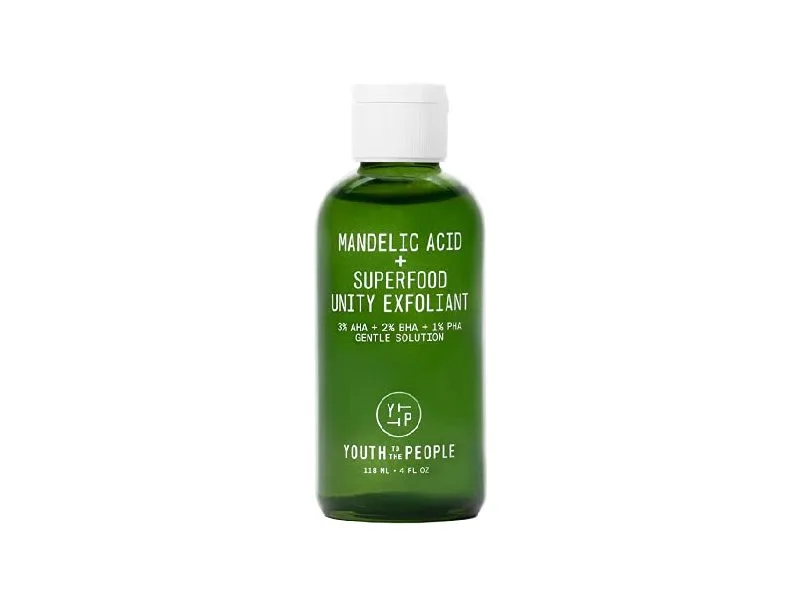
Adult acne is rarely just acne — it usually comes with post-acne marks, uneven texture and skin that cannot take the harsh treatments aimed at teenagers. This exfoliant answers that with a four-acid blend — BHA into pores, mandelic and glycolic AHAs on the surface and on marks, and a gentle PHA — at moderate strengths tuned to clear breakouts and fade marks without over-drying.
A well-built multi-acid exfoliant — a BHA, mandelic and glycolic AHAs, and a gentle PHA at moderate strengths — designed to clear breakouts and fade post-acne marks without over-drying. Fragrance-free, dermatologist-co-designed for adult acne, and sensibly priced. It is still a four-acid product, so sensitive skin should ease in.
Note: This serum launched in February 2026 and our assessment is based on limited real-world data. Our scoring weights ingredient analysis, formulation quality, and Neutrogena's track record in acne care. Treat the score as provisional until independent data catches up.
Verdicts
How well it fits each concern
Verdict by concern tap a concern for the case
Strong choicefor AcneIn your profileYou chose · Salicylic Acid is an approved or monograph active for acne; this serum carries it at 0.5%.Moderate evidenceGentle92% report improvement · n = 92
The case for it
Salicylic Acid 0.5% is a first-line active — approved, monograph-listed or named in current guidelines — for this concern.
It is present at an effective concentration, declared or high in the ingredient list.
The formula carries none of the triggers this concern is sensitive to.
Same rule for everyone. “Strong choice” is the verdict on 1,459 of 45,024 concern verdicts across the catalog; rule R2 decided 892 of them.
Unchanged since September 5, 2026, engine 5.1.1.
R2 — A regulator- or guideline-recognised first-line active, declared at an effective strength, in a form the claim supports. · the full register
Carrying active
Salicylic Acid 0.5%
Standing
first line — a regulator recognises it for this use; trials support it · per § 333.310 Acne active ingredients. (U.S. Food and Drug Administration — 21 CFR Part 333 Subpart D (Topical Acne Drug Products), Code of Federal Regulations via GovInfo), opened July 27, 2026
Form
adequate (declared 0.5%) — studied range 0.5–2%, from the OTC monograph or label; judge it after ~6 weeks
Tolerability
gentle
Row checked
against its sources on July 27, 2026 (evidence table ev-2026.09-r228)
Strong choicefor BlackheadsIn your profileYou chose · Salicylic Acid is an approved or monograph active for blackheads; this serum carries it at 0.5%.Moderate evidenceGentle250 reviews collected
The case for it
Salicylic Acid 0.5% is a first-line active — approved, monograph-listed or named in current guidelines — for this concern.
It is present at an effective concentration, declared or high in the ingredient list.
The formula carries none of the triggers this concern is sensitive to.
Same rule for everyone. “Strong choice” is the verdict on 1,459 of 45,024 concern verdicts across the catalog; rule R2 decided 892 of them.
Unchanged since September 5, 2026, engine 5.1.1.
R2 — A regulator- or guideline-recognised first-line active, declared at an effective strength, in a form the claim supports. · the full register
Carrying active
Salicylic Acid 0.5%
Standing
first line — a regulator recognises it for this use; trials support it · per 21 CFR § 333.350 - Labeling of acne drug products. (US Code of Federal Regulations (Legal Information Institute, Cornell Law School)), opened July 27, 2026
Form
adequate (declared 0.5%) — studied range 0.5–2%, from the OTC monograph or label; judge it after ~6 weeks
Tolerability
gentle
Row checked
against its sources on July 27, 2026 (evidence table ev-2026.09-r228)
The studies behind the evidence row
OTC monograph, Topical Acne Drug Products — salicylic acid 0.5–2% recognized as an acne treatment active — US Food and Drug Administration
Good choicefor Rough TextureIn your profileYou chose · Salicylic Acid is a reference standard by mechanism for rough texture; this serum carries it at 0.5%.Moderate evidenceGentle250 reviews collected
The case for it
Salicylic Acid 0.5% has trial-supported standing for this concern.
It is present at an effective concentration, declared or high in the ingredient list.
The formula carries none of the triggers this concern is sensitive to.
Same rule for everyone. “Good choice” is the verdict on 9,564 of 45,024 concern verdicts across the catalog; rule R5 decided 9,072 of them.
Unchanged since September 5, 2026, engine 5.1.1.
Promisingfor HyperpigmentationIn your profileYou chose · Glycolic Acid has trial-level evidence for hyperpigmentation but no guideline or regulatory standing yet — promising, short of a recommendation; the other actives here are not yet assessed for it.Moderate evidenceStandard tolerability250 reviews collected
The case for it
Glycolic Acid has trial-level evidence for this concern but no guideline or regulatory standing yet.
It is plausibly present at a working level, though the concentration is not declared.
The formula carries no trigger this concern is sensitive to, with the cautions noted.
Cautions: a photosensitising active — use sun protection.
What would change this: A declared concentration would move this to a firmer reading of the dose.
Same rule for everyone. “Promising” is the verdict on 7,858 of 45,024 concern verdicts across the catalog; rule R9p decided 7,858 of them.
Unchanged since September 5, 2026, engine 5.1.1.
R9p — 0.5.0: 'Unproven' beside three filled dots read as one question answered twice with opposite words (7,018 rows). The chip measures standing, the dots measure trial volume; where the row carries at least one RCT or a tier-2 source (moderate dots) and the active is present at a working level, the honest word is Promising. Unproven is reserved for plausible-standing rows with limited or weak evidence, or an under-dosed form. Same rank as Unproven — a bet either way; the dots order them. · the full register
Carrying active
Glycolic Acid
Standing
plausible — trials support it
Form
plausible — studied range 5–10%, from the OTC monograph or label; needs leave-on contact; judge it after ~8 weeks
Tolerability
standard — photosensitization
Row checked
against its sources on July 17, 2026 (evidence table ev-2026.09-r228)
Unprovenfor Excess OilinessIn your profileYou chose · Salicylic Acid has early or mechanistic evidence for excess oiliness — a reasonable bet, not a recommendation; the other actives here are not yet assessed for it.Moderate evidenceGentle250 reviews collected
The case for it
Salicylic Acid 0.5% has early or mechanistic evidence for this concern, not trial-backed standing.
It is present below the studied range.
The formula carries none of the triggers this concern is sensitive to.
What would change this: A concentration inside the studied range would raise this a step.
Same rule for everyone. “Unproven” is the verdict on 1,111 of 45,024 concern verdicts across the catalog; rule R9 decided 1,111 of them.
Unchanged since September 5, 2026, engine 5.1.1.
R9 — Plausible-tier actives alone do not earn a recommendation, and 'not for this' would overstate the case against them. 'Unproven' with the evidence dots lets the reader judge the bet (added 0.2.0 after the first shadow run put a 10% niacinamide serum at 'not for this' for hyperpigmentation). 0.5.0: the closing clause reads the other heroes — "nothing else here addresses it" only when every other active has a researched 'none' row; "not yet assessed" when that is the truth. Rows whose dots read moderate or better now reach R9p first. · the full register
Carrying active
Salicylic Acid 0.5%
Standing
plausible — trials support it
Form
sub threshold (declared 0.5%) — studied range 30%, from the trials on the row; needs leave-on contact; judge it after ~6 weeks
Tolerability
gentle
Row checked
against its sources on July 17, 2026 (evidence table ev-2026.09-r228)
A verdict is DermApproved’s assessment of how well a product’s ingredients fit a concern — never a claim about what the product treats. Evidence dots and collected reviews sit beside it and are never blended in.
Rules 0.5.1 · evidence table ev-2026.09-r228 · how we decide
Assessment
Pros & Cons
Pros
✓ Four-acid blend clears pores and fades post-acne marks together
✓ Moderate strengths and a gentle PHA exfoliate without over-drying
✓ Mandelic acid is well chosen for adult, reactive acne-prone skin
✓ Fragrance-free and fungal-acne safe
✓ Dermatologist-co-designed specifically for adult acne
✓ Affordable and widely available
Cons
✗ Still a four-acid product — too much for genuinely sensitive skin
✗ Must be introduced gradually to avoid irritation
✗ Cannot be layered with a retinoid in the same routine
✗ 1 fl oz size is modest for a daily-use treatment
✗ Post-acne mark fading requires patience over weeks
Review
Full Review
Walk down a drugstore acne aisle and look honestly at who the products are designed for. The harsh foaming washes, the high-strength spot gels, the formulas that strip your face until it squeaks, they are built for one customer: an oily-skinned teenager. For decades that was the entire premise of acne skincare. The problem is that a great many people with acne are not teenagers. Adult acne is extremely common, it often persists or first appears well into the twenties, thirties and beyond, and, crucially, it behaves differently. The Neutrogena Evenly Clear Acne Exfoliant is interesting because the whole line it belongs to was built to correct that decades-long oversight.
Here is what makes adult acne its own problem. Adult acne-prone skin is rarely just oily and breaking out. It is frequently doing several contradictory things at once: breaking out, yes, but also showing dryness in places, more reactivity and sensitivity than teenage skin, and often the first signs of aging. Treat that skin with a product designed to blitz a teenager's oil slick, and you do not clear it, you wreck the barrier, trigger more irritation, and end up with skin that is both still broken out and now red, flaking and miserable. Adult acne sufferers also tend to care about something teenagers rarely think about: the marks. The brown or red patches a breakout leaves behind, post-acne marks, often bother adults more than the active spots, and most teen-targeted acne products do nothing for them. The Evenly in Evenly Clear is a deliberate nod to exactly that concern.
This exfoliant, the line's resurfacing step and co-designed with dermatologists, is built around that adult reality, and the formula reflects it intelligently. It is a multi-acid serum, four acids, but the smart part is the choice and balance of them. There is salicylic acid at a low 0.5 percent: a BHA, oil-soluble, working inside the pore to dissolve the plugs behind blackheads. There is mandelic acid at 2.5 percent: an AHA with an unusually large molecule, which means it exfoliates the surface slowly and gently, with less irritation, exactly why it is favored for adult and reactive acne-prone skin, and it has a recognized role in fading post-acne marks. There is glycolic acid, the small, penetrating AHA, adding a more vigorous surface exfoliation and accelerating the turnover that clears discoloration. And there is gluconolactone, a PHA, the gentlest acid class, which both refines the surface and, being a humectant, adds hydration. Read that list again with the adult-skin brief in mind and it is coherent: clear the pores, smooth and even the surface, fade the marks, and, because of the moderate strengths and the gentle PHA, do it without the over-drying that wrecks adult skin.
In use, it delivers on the brief. The serum itself is lightweight and fast-absorbing, fragrance-free, with at most a brief mild tingle. Skin feels smoother within the first week or two, the brand cites a 77 percent reduction in breakouts at two weeks, and the post-acne marks fade on the slower timeline that pigment always follows, over eight to twelve weeks. Notably, the formula is clean enough to be fungal-acne safe, a genuine plus for the many adults juggling both concerns.
The shortcomings here are real but modest. Moderate strength is not gentle, this is still a four-acid product, and genuinely sensitive or rosacea-prone skin should be cautious, patch test, and start slow; for that skin a single gentle acid may be the better call. It must be introduced gradually, two or three nights a week, not nightly from day one, and it cannot be layered with a retinoid in the same routine, so they go on alternate nights. The 1-ounce size is modest. And, universally for acids: sunscreen the next morning is non-negotiable, both because acids increase sun sensitivity and because sun exposure deepens the very post-acne marks you are trying to fade.
The wear and feel are worth noting, because an exfoliant only earns its results through regular use. A lightweight, fast-absorbing serum, it sinks in with at most a brief, mild tingle and a faint silicone slip, fragrance-free, leaving a smooth, soft finish rather than the dry, papery tightness a harsh acid can produce. That gentleness of experience is the practical expression of the formula's adult-skin brief: a serum that does not punish the skin is one an adult will keep using two or three nights a week, month after month, which is exactly the cadence the slow fading of post-acne marks demands. An exfoliant that stings and flakes gets relegated to the back of the shelf, and a relegated exfoliant clears nothing. The unshowy comfort here is doing real work.
At around eighteen dollars, the value is genuinely good, a thoughtfully balanced, dermatologist-co-designed multi-acid serum at a drugstore price, from a brand with a longer track record in acne than almost anyone. For an adult whose acne-prone skin has been bullied by products that were never designed for it, this exfoliant is a smart, well-judged, affordable place to start treating your skin like the adult skin it actually is.
Formula
Key Ingredients
The hero actives that drive this product's performance.
The oil-soluble BHA and labeled acne active — it penetrates into pores to dissolve the keratin and sebum plugs behind blackheads and breakouts. At 0.5% it works inside the follicle while the AHAs handle the surface, the BHA half of a deliberately multi-pronged exfoliant.
Established mechanismfor Rough Texture · established mechanism
A large-molecule AHA that exfoliates the surface gently and slowly — its size limits irritation, which is why it is chosen for adult, often more reactive, acne-prone skin. It also has a recognized role in fading the post-acne marks this product targets.
The smallest, most penetrating AHA — it adds a deeper, more vigorous surface exfoliation than mandelic alone, accelerating the smoothing of texture and the cell turnover that helps clear post-acne discoloration.
Established mechanismfor Rough Texture · established mechanism
The gentlest exfoliating-acid class, included to round out the blend — PHA refines the surface with minimal irritation and, as a humectant, adds hydration, part of why this multi-acid serum exfoliates without the over-drying older acne products are known for.
Not yet assessed
Ingredient standings describe the active at treatment-level doses and
vehicles; this product's own condition grades weigh its actual formula.
Apply in the evening after cleansing, before moisturizer. Start two or three nights a week and build up as tolerated. Do not layer it with a retinoid or other strong exfoliants in the same routine. Sunscreen the next morning is essential — acids increase sun sensitivity.
Results Timeline
Skin often feels smoother within the first week or two — the brand cites a 77% reduction in breakouts at two weeks. Fading of post-acne marks and fuller texture improvement build gradually over 8-12 weeks of consistent use.
This exfoliant combines four well-characterized exfoliating acids, each contributing a distinct, evidence-based action. Salicylic acid is a lipophilic beta-hydroxy acid with strong evidence for penetrating sebaceous follicles and exerting keratolytic, comedolytic effects, at 0.5 percent it is a low but functional acne dose. Glycolic acid is the most-studied alpha-hydroxy acid, with robust evidence for surface exfoliation and improving texture and the appearance of hyperpigmentation. Mandelic acid is an AHA with a notably larger molecular size, which slows penetration and reduces irritation potential relative to glycolic acid; it has promising evidence for acne and for pigmentation, and is often selected for reactive or darker skin tones. Gluconolactone, a polyhydroxy acid, exfoliates gently at the surface and has humectant and antioxidant properties.
The formulation logic is sound: combining a pore-penetrating BHA with surface AHAs of differing strengths and a gentle PHA addresses both follicular congestion and surface texture and tone, while the moderate strengths and the humectant PHA mitigate the over-drying common to acne products.
The key, evidence-based caveats: AHAs increase photosensitivity, making daily sunscreen essential, and post-acne marks (post-inflammatory hyperpigmentation and erythema) resolve slowly, clinical improvement typically takes 8 to 12 weeks. Multi-acid products also carry a cumulative irritation risk if over-used or combined with retinoids, so gradual introduction and avoiding same-routine layering with retinoids are evidence-aligned precautions.
Dermatologist Perspective
Adult acne is well recognized in dermatology as distinct from adolescent acne — it more often coexists with skin dryness, sensitivity and early photoaging, and clinicians frequently caution against the harsh, stripping products marketed for teenage skin, which can compromise the barrier and worsen adult acne. A multi-acid exfoliant at moderate strengths aligns with how dermatology approaches this: salicylic acid is a first-line ingredient for comedonal acne, and AHAs, including mandelic acid, are valued both for texture and for post-inflammatory hyperpigmentation, with mandelic acid specifically favored for reactive and darker skin because of its gentleness. Dermatologists consistently emphasize gradual introduction of acids, not layering them with retinoids in the same application, and rigorous daily sun protection — both because acids increase photosensitivity and because UV deepens post-acne marks. The line's dermatologist co-design and Neutrogena's long history in acne are viewed positively. The standard clinical note applies: this is a sound option for mild to moderate adult acne, while persistent, painful or cystic acne warrants a dermatologist's evaluation.
Guidance
Usage & Recommendations
How to Use
Reach for it in the evening, after cleansing, on dry skin. Begin two or three nights a week, spreading an even layer over the face and steering clear of the eye area, then build up frequency only as your skin tolerates it. Follow with a moisturizer. Keep it out of the same routine as a retinoid or other strong exfoliants, alternating them on different nights instead. Apply a broad-spectrum sunscreen every morning, since the acids increase sun sensitivity and sun exposure darkens post-acne marks.
Value Assessment
At around $18 for 30 mL, this exfoliant is good value — a thoughtfully balanced, dermatologist-co-designed four-acid serum at a drugstore price. Used two to three nights a week as recommended, the bottle lasts roughly two months, which keeps the running cost low. The 1 fl oz size is modest, and there is no larger option. Compared with multi-acid exfoliants from mid-range and prestige brands, which often run $30 to $60, Neutrogena's pricing is notably accessible, and the brand brings one of the longest track records in acne care. The value is strong for adult acne-prone skin specifically — it delivers a genuinely multi-pronged, mark-fading treatment without the prestige markup, and without the over-drying that makes cheaper harsh acne products a false economy.
Who Should Buy
Adults with oily or combination, acne-prone skin who are dealing with breakouts alongside post-acne marks and uneven texture, and who want a treatment that clears without over-drying, are the intended audience. It is well suited to anyone who has found teen-targeted acne products too harsh for their skin.
Who Should Skip
Genuinely sensitive or rosacea-prone skin should approach with caution or choose a single gentle acid instead. Anyone already using a retinoid should plan to alternate rather than layer, and those wanting a fragrance-containing or richer treatment, or with only occasional mild breakouts, may not need a four-acid serum.
Ready to try Neutrogena Evenly Clear Acne Exfoliant?
A lightweight, fast-absorbing serum that spreads easily and sinks in to a smooth, soft, non-greasy finish with a slight silicone slip.
Scent
Fragrance-free with no detectable scent.
Packaging
30 mL bottle in the Evenly Clear line's clean design. The size is modest for a daily-use exfoliant; a dropper or pump aids controlled dosing.
Finish
lightweightfast-absorbingsatin
What to Expect on First Use
First use feels light and absorbs quickly, with at most a brief mild tingle from the acids. Skin often feels smoother within days. Some mild dryness or flaking can appear in the first week or two as skin adjusts — introduce it gradually two or three nights a week rather than nightly from the start.
How Long It Lasts
About 2 months using it two to three nights a week
Neutrogena launched the Evenly Clear line in 2026, co-designed with dermatologists, specifically for adult acne — a category long underserved by acne products built for teenage skin. This exfoliant is the line's resurfacing step, built around the reality that adults dealing with breakouts also want to address the marks and texture they leave behind.
About Neutrogena Legacy Brand (20+ years)
Neutrogena was founded in 1930 and is one of the most established and dermatologist-recommended skincare brands. Its Evenly Clear line, launched in 2026, was co-designed with dermatologists specifically for adult acne, reflecting decades of brand experience in the acne category.
Brand founded: 1930 · Product launched: 2026
Myth vs. Reality
Common Myths
Myth
Adult acne should be treated with the same strong products as teen acne.
Reality
Adult acne-prone skin is often simultaneously breaking out and showing dryness, sensitivity or early signs of aging — and the harsh, drying products built for oily teenage skin frequently make it worse. A moderate, multi-acid, non-over-drying approach like this one is better matched to how adult skin actually behaves.
Myth
More acids in a product means harsher exfoliation.
Reality
Not necessarily. This serum uses four acids, but at moderate strengths and chosen to complement each other — a gentle PHA and large-molecule mandelic acid alongside the stronger glycolic and a low-dose BHA. A thoughtfully balanced multi-acid blend can be gentler than a single high-strength acid.
FAQ
Frequently Asked Questions
What does the Neutrogena Evenly Clear Acne Exfoliant do?
It is a multi-acid exfoliating serum for acne-prone skin. It combines a 0.5% BHA that clears pores, mandelic and glycolic AHAs that smooth the surface and fade post-acne marks, and a gentle PHA. Together they clear breakouts and even out texture and tone without the over-drying of harsher acne products.
How often should I use the Evenly Clear Acne Exfoliant?
Start two or three nights a week and build up gradually as your skin tolerates it. Despite the moderate strengths, it is still a four-acid product, so introducing it slowly avoids irritation. Always follow with moisturizer, and apply sunscreen the next morning since acids increase sun sensitivity.
Can this exfoliant fade post-acne marks?
It is designed to. The mandelic and glycolic acids accelerate cell turnover, which gradually fades the dark or red marks left after breakouts. Results are not instant — expect visible improvement over 8 to 12 weeks of consistent use, and pair it with daily sunscreen, since sun exposure deepens post-acne marks.
Is the Evenly Clear Acne Exfoliant good for sensitive skin?
It is more moderate than many acid serums, fragrance-free, and includes a gentle PHA — but it is still a four-acid product. Genuinely sensitive or rosacea-prone skin should be cautious, patch test, and start once a week, or choose a single gentler acid instead.
Can I use this with a retinoid?
Not in the same routine. Layering a multi-acid exfoliant with a retinoid sharply raises the risk of irritation. Use them on alternate nights instead — for example, the exfoliant two or three nights a week and the retinoid on the other nights — and always moisturize and use sunscreen.
Reviews
What Reviewers Tend to Say
Recurring themes our editors read across retailer reviews of this product — summaries in our words, not quotations, and not a substitute for your own patch test.
Common Praise
Smooths texture and clears congestion without over-drying
Multi-acid blend targets breakouts and post-acne marks together
Fragrance-free and well-tolerated for a multi-acid serum
Affordable and widely available
Common Complaints
Still a multi-acid product — too much for sensitive or reactive skin
1 fl oz size is modest for a daily-use treatment
Results on post-acne marks require patience
Cannot be layered with a retinoid in the same routine
Notable Endorsements
Co-designed with dermatologists for adult acneSold at Ulta, Amazon and major drugstores
They all get sold as 'exfoliation,' but molecule size and oil-solubility make them genuinely different tools — and picking the wrong one is why so many people wreck their barrier.
Its molecule is roughly twice the size of glycolic's — and that single fact is why it's the exfoliating acid dermatologists reach for when irritation could cost you pigment.
The whole case for salicylic acid rests on one unglamorous fact of chemistry: it dissolves in oil. Understand that, and you know exactly when it beats a glycolic acid — and when it's overkill.
Polyhydroxy acids get filed under 'beginner exfoliant,' as if gentle meant weak. The truth is stranger: their bulk is exactly why they work for the skin everything else sets on fire.
Jan 10, 2026· 5 min
Questions people ask about Acne
Verified answers from our questions library — the nuance a product page cannot carry.
Products, answers, therapy guides, tools and articles in one search. Brand names,
slang and abbreviations all work — accutane finds isotretinoin, bacne finds truncal acne.